Webinar
November 26 2026 | 11:00 - 12:00
Why Electric Aircraft Should Be Built Twice?
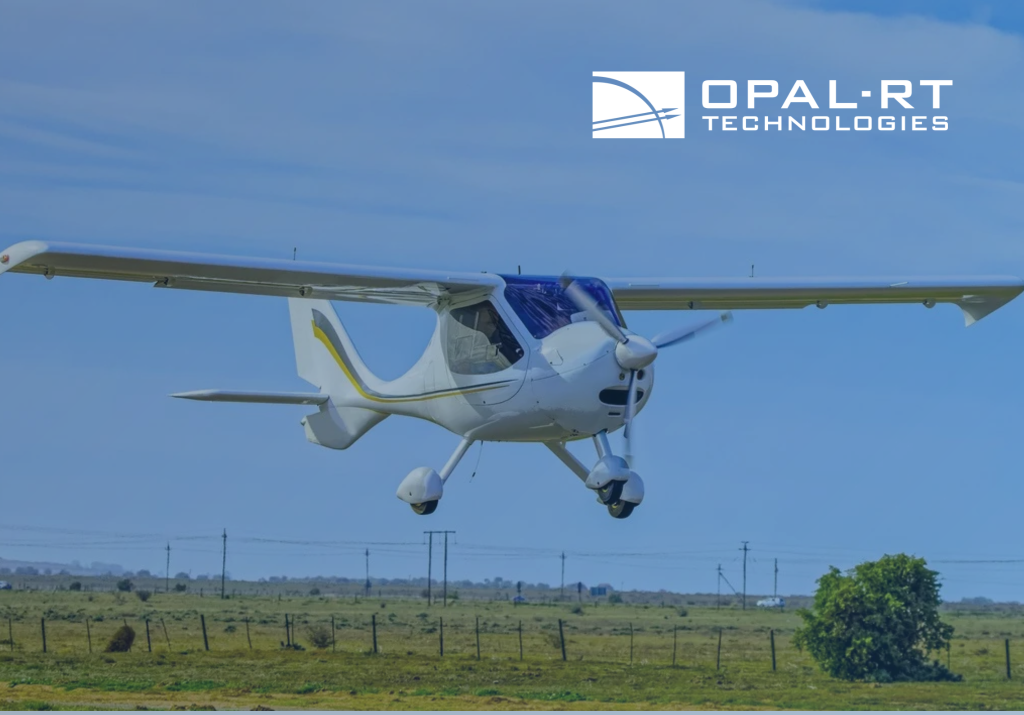
Discover how real-time simulation and Hardware-in-the-Loop (HIL) testing help aerospace engineers validate electric aircraft propulsion systems earlier, before complete physical hardware is available. Through a real-world magniX example, explore how SIL, HIL, PHIL, and FPGA-based simulation can accelerate development, identify integration issues, and reduce testing risks.
Kategorie
Webinare
Industrie
Luft- und Raumfahrt
Standort
Zoom-Webinar (online)
Über das Webinar
Electric aircraft are transforming the future of aviation, bringing new challenges for the development and validation of increasingly complex propulsion and electrical systems. As power electronics, electric motors, and embedded controls become more interconnected, aerospace engineers must ensure reliable system performance before complete physical hardware is available. Traditional testing approaches can delay the identification of integration issues, increase development costs, and introduce unnecessary risks.
In this webinar, we will explore how real-time simulation, Software-in-the-Loop (SIL), Hardware-in-the-Loop (HIL), and Power Hardware-in-the-Loop (PHIL) testing can help aerospace engineers validate electrified systems earlier in the development cycle. Using a real-world magniX electric propulsion example, attendees will discover how real controllers can be tested against simulated motors and inverters, identify potential integration issues, and reduce reliance on costly physical prototypes. The session will also highlight OPAL-RT’s FPGA-based simulation capabilities for fast-switching power electronics, along with the latest developments in High-Speed Converter Simulation (HSCS), CMDE, and multi-phase motor modeling.
Was zu erwarten ist
Vertiefen Sie Ihr Wissen mit den Webinaren von OPAL-RT
Gewinnen Sie wertvolle Einblicke mit den technischen Webinaren von OPAL-RT, die darauf ausgerichtet sind, Ingenieur:innen, Forscher:innen und Branchenexperten auf dem neuesten Vorteil der Innovation im Bereich der Energieversorgung zu halten. Diese Sitzungen bieten praktisches Wissen, praktische Demonstrationen und fachliche Anleitung zur Bewältigung von Herausforderungen in der Praxis. Die Teilnehmer verlassen die Veranstaltung mit umsetzbaren Fähigkeiten und einem besseren Verständnis für die gewinnen zunehmend an Bedeutung Technologien, was ihr berufliches Wachstum in einer schnell wachsenden Branche fördert.

Lernen Sie von Branchenexperten

Erkunden Sie reale Anwendungen

Der Zeit voraus sein
Treffen Sie die Moderatoren
Expertenwissen von OPAL-RT
Nehmen Sie an einer Fachveranstaltung mit unseren Experten teil, die sich auf technische Anwendungen konzentriert. Erfahren Sie, wie fortschrittliche Methoden und angewandte Forschung eine höhere Genauigkeit, schnellere Iterationen und eine zuverlässigere Systemvalidierung ermöglichen.

Manager für Geschäftsentwicklung
Jeferson Cintra

Melden Sie sich jetzt an und sichern Sie sich Ihren Platz
Explore the latest advancements in real-time simulation and electric aircraft propulsion testing. Gain practical insights into how HIL technology helps aerospace engineers validate complex systems, reduce development risks, and accelerate innovation in electrified aviation.
Veranstaltungen
Wir haben weitere Veranstaltungen, die Sie interessieren könnten
Suchen Sie nach weiteren Möglichkeiten, Kontakte zu knüpfen, zu lernen oder sich inspirieren zu lassen? Entdecken Sie das vollständige Programm der kommenden Veranstaltungen.