The Impact of Real-Time Simulation on the Development of Marine Power Systems at Aalborg University
Aalborg University
Academia, Energy
09 / 27 / 2016
The Company
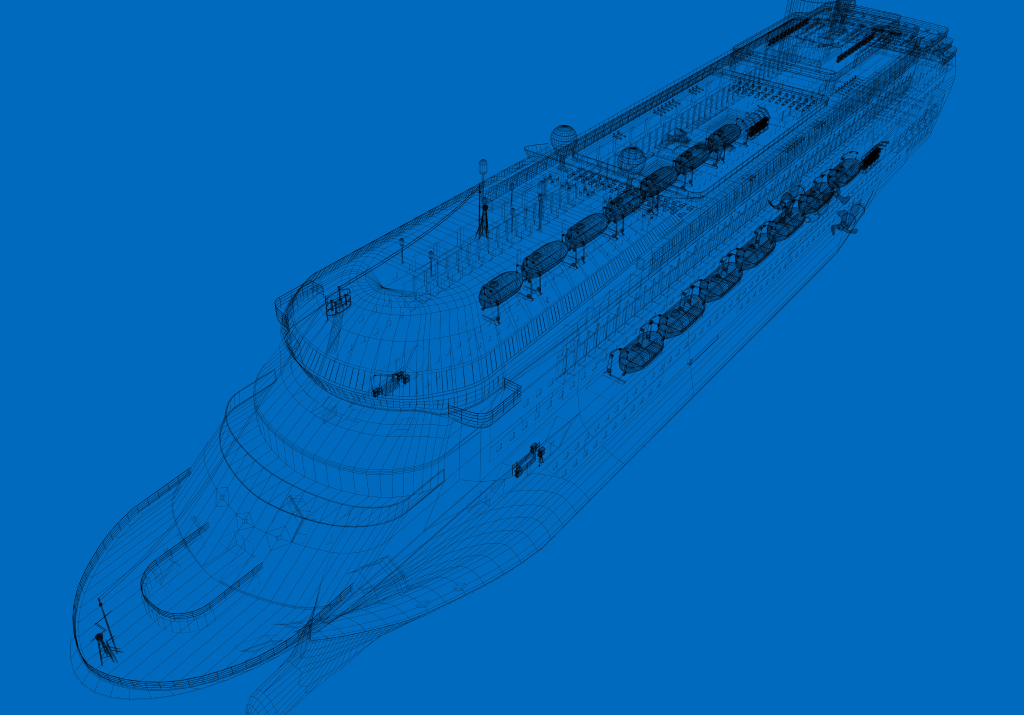
Aalborg University is a leading Danish university with strong research and education activities in energy and engineering. Aalborg University’s Marine Power Systems Laboratory uses real-time simulation and reduced-scale experimental platforms to design, test, and validate new technologies for drilling, transport, and naval vessels while complying with the latest marine class regulations.
The OPAL-RT simulator gives us the ability to make initial Hardware-in-the-Loop verifications of new functionalities based on latest maritime class regulations that are to be integrated on the shipboard power systems.
Dr. Tomislav Dragičević
Associate Professor and Head of Marine Power Systems Laboratory, Aalborg University
The Challenges
- Increasing System Complexity: Modern electric propulsion systems integrate multiple converters and control systems into shipboard electrical networks.
- Reliable System Validation: Marine power systems require extensive testing before deployment on operational vessels.
- Hybrid Power Integration: The growing use of hybrid propulsion systems increases the complexity of onboard power management.
The OPAL-RT Solution
- Real-Time Simulation Platform: Aalborg University uses an OPAL-RT 12-core real-time simulator fully compatible with MATLAB/SimPowerSystems.
- Power Electronics & HIL Testing: The platform supports FPGA-based converter simulation and Hardware-in-the-Loop testing with physical equipment and controller prototypes.
- Rapid Control Prototyping: Researchers use the simulator to develop and validate new control strategies for marine power applications.
The Results
- Detailed Converter Validation: The simulator enables detailed converter emulation and validation of control strategies.
- Faster Converter Development: Real-time simulation helps researchers design better converters in less time.
- HIL Verification: The platform supports Hardware-in-the-Loop verification of new shipboard functionalities.
- Training & Maintenance Support: Real-time simulation can be used for customer training and maintenance investigations.
Explore more success stories
Dive deeper into our full collection of success stories in the resource center.

Start building your own success story
Validate high-voltage systems with confidence. Discover how OPAL-RT’s real-time HIL simulation solutions can help you automate, accelerate, and future-proof your testing process for power electronics and grid applications.

Automotive
06 / 04 / 2026
New Breakthrough in Full Topology HIL Simulation Testing for On-Board Chargers
SHINRY
SHINRY Technologies leverages OPAL-RT’s high-performance HIL simulation solution—integrating the OP4800-IO series expansion units and eHS—to overcome the complex challenges of full-topology modeling and high-frequency testing for On-Board Chargers (OBC). This solution achieves nanosecond-level real-time simulation and supports switching frequencies of several hundreds kHz, significantly accelerating control algorithm verification and identifying hardware-software integration risks early in the development cycle.

Energy
01 / 21 / 2026
OPAL-RT HIL simulation for variable frequency drive R&D
Harvest
Harvest leverages OPAL-RT’s HIL simulation solution (integrating OP5707XG hardware, eHS and ARTEMiS software) to address complex MV VFD modeling and testing challenges. This solution accelerates control algorithm validation, enables safe and flexible multi-motor testing, and speeds up product development, empowering Harvest to deliver reliable, high-performance MV VFDs for global industrial applications.

Energy
03 / 17 / 2025
State-of-the-art prototype testing of PAC devices for the power industry
Protecta Electronics
Protecta Electronics leverages OPAL-RT’s real-time simulation technology to test and validate protection, automation, and control (PAC) devices for the power industry. By automating complex test scenarios, Protecta has streamlined R&D, ensured compliance with global standards, and improved coordination between protection relays—advancing grid safety and reliability.