Blog
Discover articles on real-time simulation, industry trends, and emerging technologies across key engineering sectors.
Power Electronics | Power Systems
04 / 30 / 2026
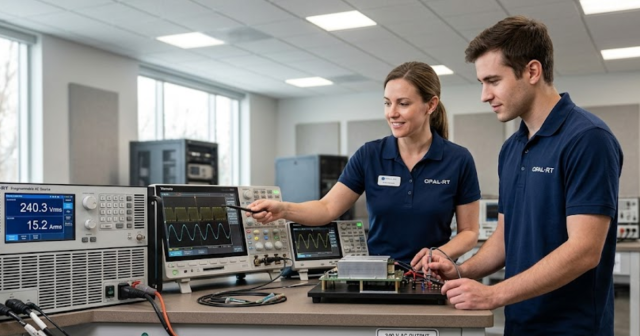
Why global labs are standardizing on 240V for power hardware validation
This guide explains why validation labs use 240 V, how regional mains standards differ, and what matters when adding a 240 V outlet for test work.

Power Electronics | Power Systems
04 / 29 / 2026
Why multi-phase machines are becoming increasingly popular
This guide explains why multi-phase machines suit industrial duty, with clear detail on torque, efficiency, supply fit, and wiring practice.
Power Systems
04 / 28 / 2026
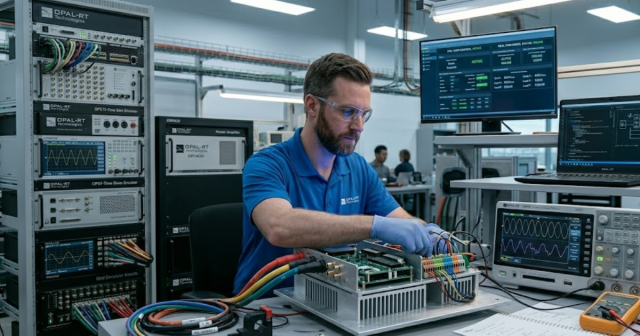
Why closed loop stability defines PHIL test accuracy
Closed-loop stability sets the limit for PHIL accuracy, especially when delay, bandwidth, interface choice, amplifier dynamics, and controller gain interact.
Power Systems
04 / 28 / 2026
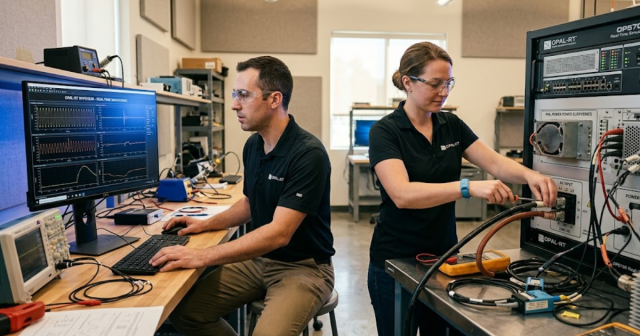
Complete guide to 240V PHIL test benches for modern power system validation
A clear explanation of how 240V PHIL test benches work, what sets closed-loop stability, and how teams choose a platform for accurate power validation.
Power Systems
04 / 27 / 2026
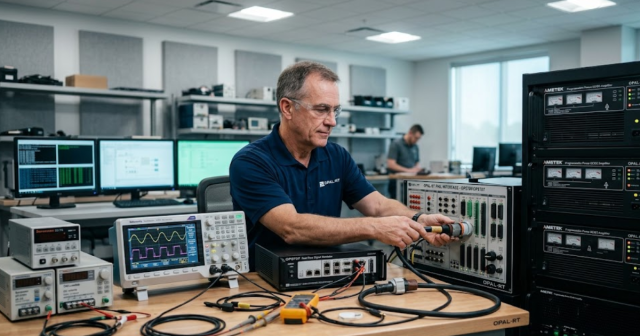
PHIL configuration playbook for multi-mode and multi-voltage testing
This guide explains how to configure PHIL systems for AC and DC testing with fixed interfaces, clear timing limits, defined protections, and traceable voltage changes.

Power Systems
04 / 24 / 2026
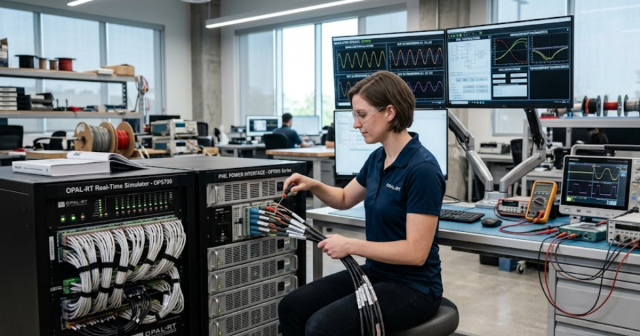
Accelerating R&D cycles using hardware in the loop testing
A clear guide to how hardware in the loop testing cuts validation time through earlier integration checks, better model fidelity, tighter timing control, and sharper test scope.
Power Systems
04 / 24 / 2026
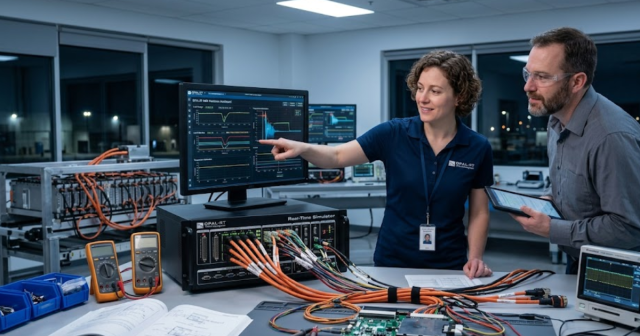
Flexible PHIL architectures that adapt to evolving power system requirements
A practical guide to flexible PHIL architecture, modular simulation systems, and test bench choices for power system validation.
Power Systems, Automotive
04 / 23 / 2026
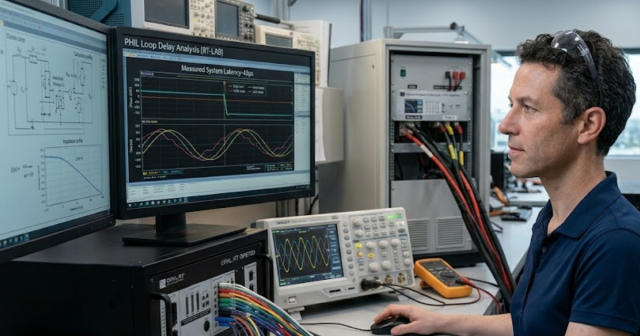
How real-time simulators enable hardware-in-the-loop testing for automotive battery systems
This piece explains how real-time simulators support hardware-in-the-loop testing for automotive battery systems and where battery testers and load testers fit in a staged validation flow.
Power Systems
04 / 23 / 2026
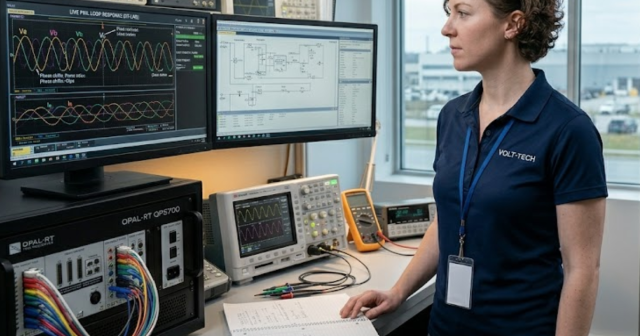
How to select a power amplifier for PHIL applications
A practical guide to choosing a power amplifier for PHIL based on loop stability, delay, ratings, four-quadrant power flow, output impedance, amplifier class, and protection settings.
Power Systems
04 / 21 / 2026
What 4 quadrant operation means in PHIL amplifiers
This piece explains how four-quadrant amplifier operation affects source and sink control, PHIL stability, and amplifier selection for regenerative tests.

Still need help?
Please contact us for more details or any inquiries. Our local team of experts will be pleased to promptly answer any of your questions.