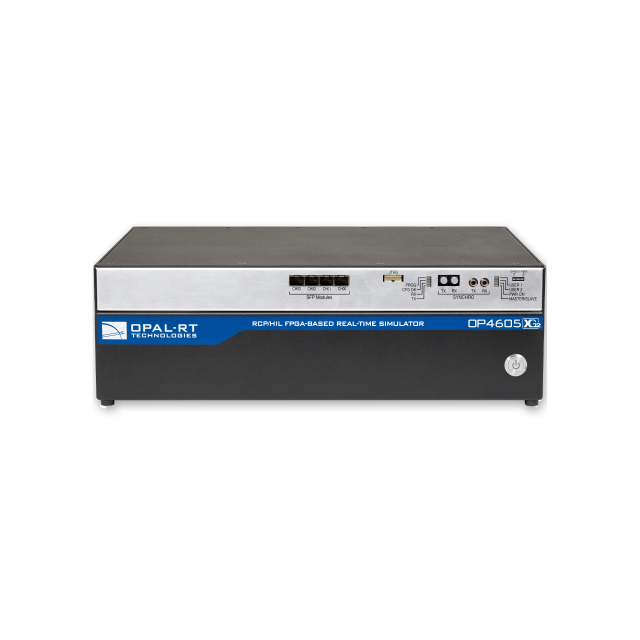
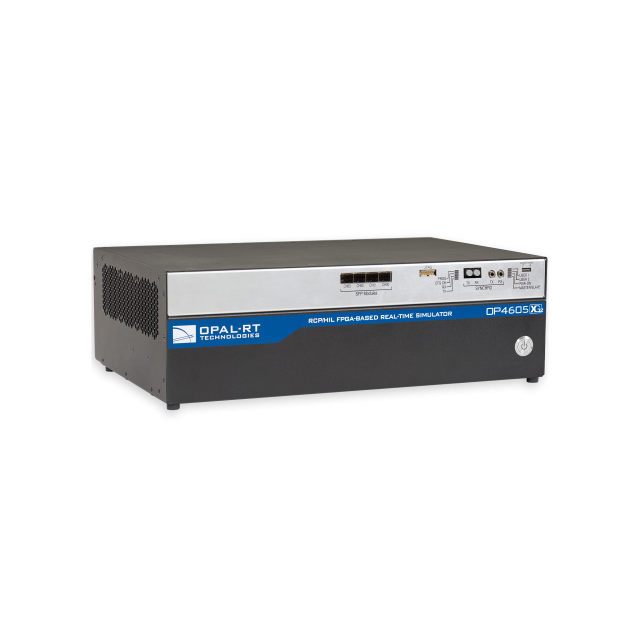
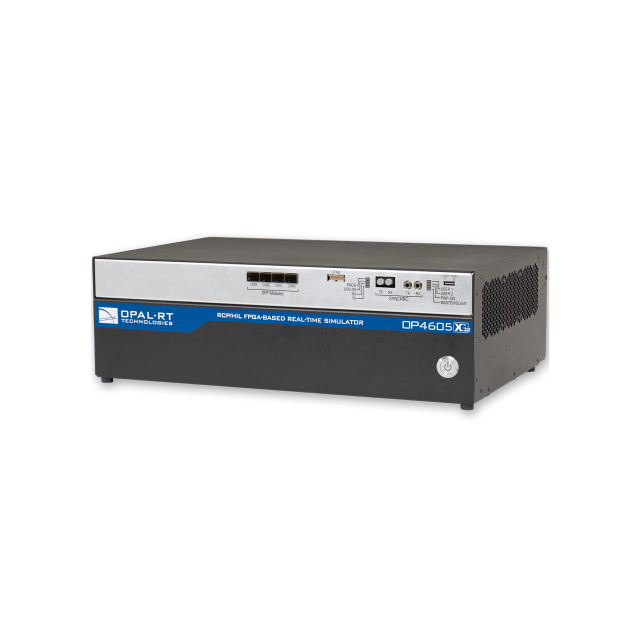
OP4605XG2
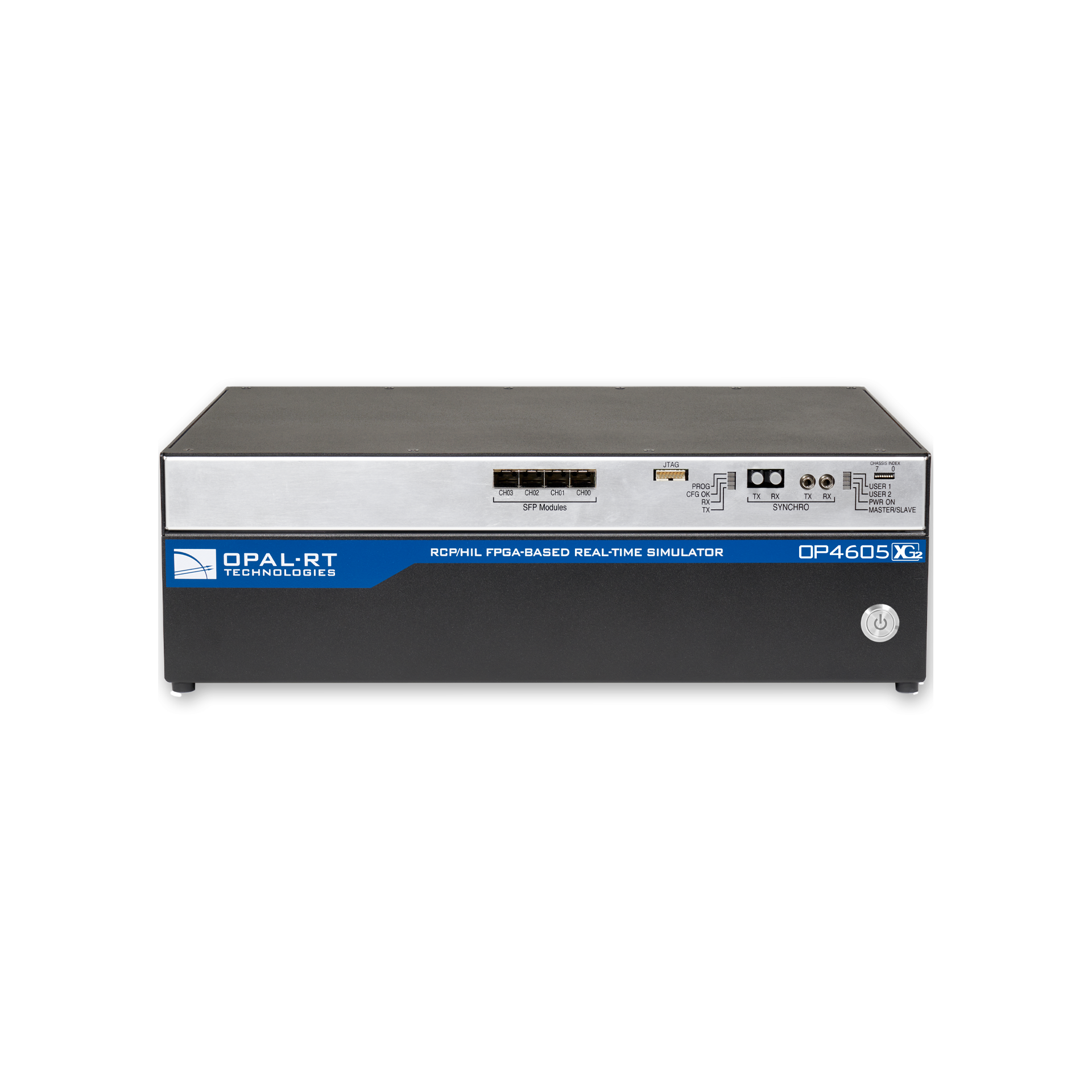
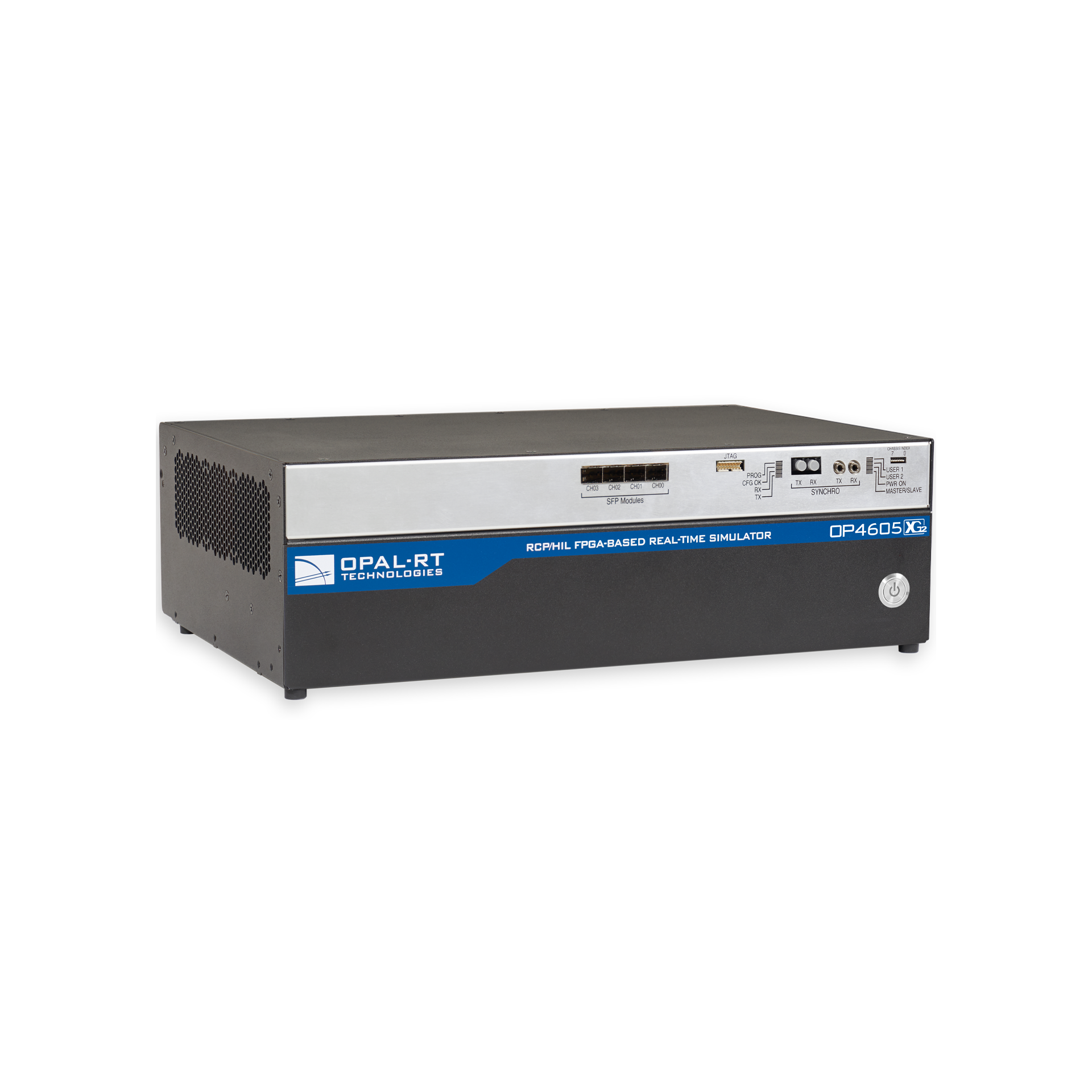
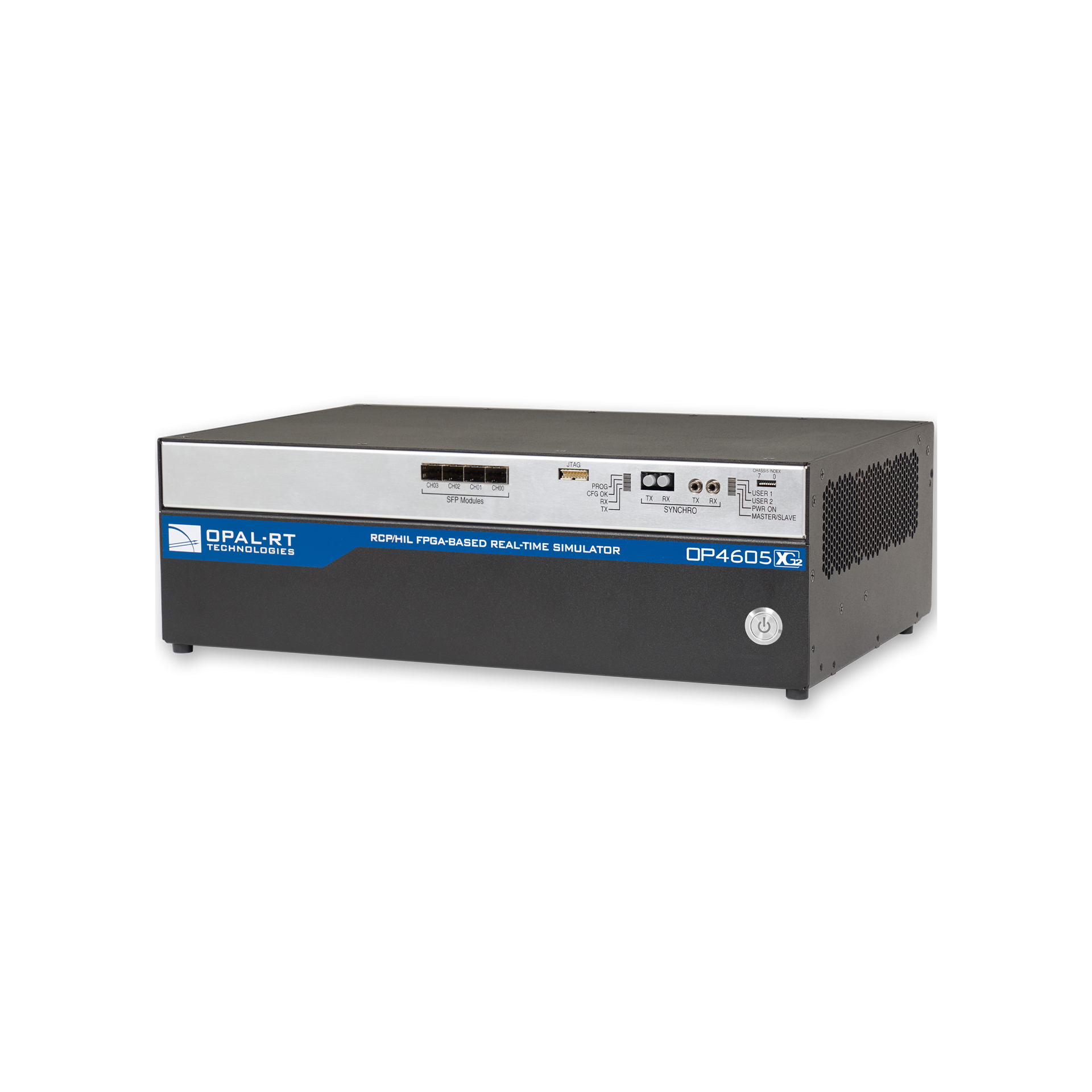
The OP4605XG2 is a compact, entry-level real-time simulator that combines all of our strengths in high-performance rapid control prototyping (RCP) and hardware-in-the-loop (HIL) simulation. This robust real-time power grid simulator offers the best performance at an affordable price.
Specifications overview
| Processor | CPU | Intel® Core™ i3, 4 cores, 3.5 GHz |
| FPGA | AMD Kintex™-7 410T | |
| Memory and storage | 8 GB RAM, 1 TB SSD drive | |
| I/O modules | Maximum 4 I/O modules per unit | Your choice of I/O modules from one of the standard configurations offered. |
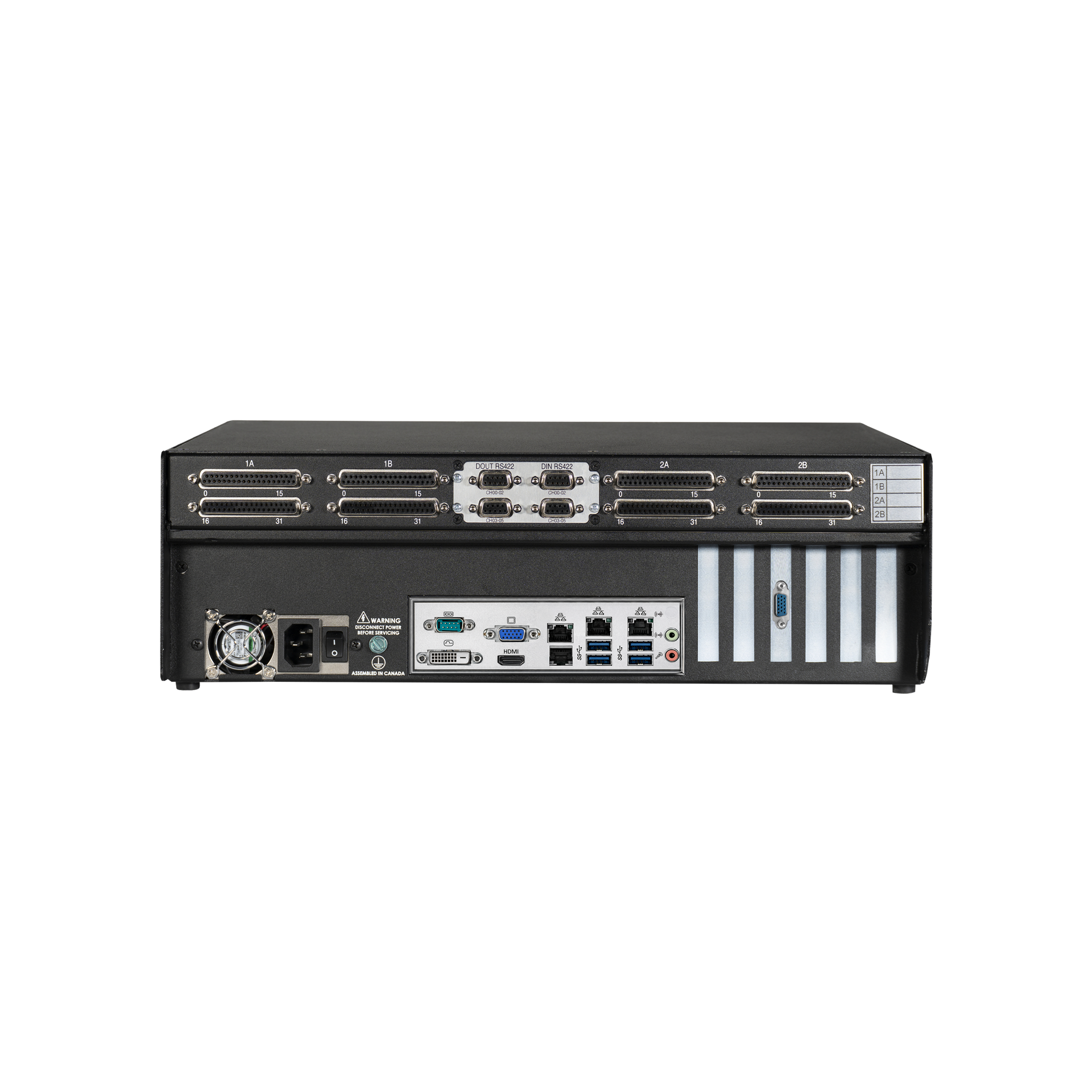
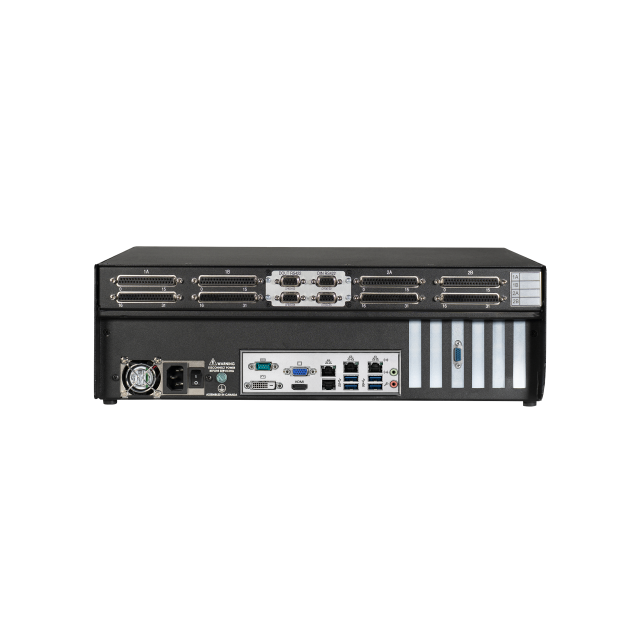
| Connectivity | Computer connectivity | 1x VGA video output port 1x Serial port 4x USB 3.2 Gen2 4x 10/100/1000 Mbps Ethernet ports, including one IPMI port |
| RS422 - Digital input/output (default expansion module) OR Optional fiber optic (alternative expansion module) | 2 channels for encoders or 6 PWM in / 6 PWM out or other applications requiring reading or generation of fast differential logic signals, 5 V OR 6 Tx/6 Rx 50 Mbps channels for digital I/O, and compatible with the ORION protocol developed by OPAL-RT |
|
| High-speed optical interface | 4 SFP socket, 1 to 5 Gbits/s optical fiber | |
| Optional | 2 PCIe free slot available for optional I/O communication cards. See the full list of communication protocols. | |
| Rack unit and mount type | 3U, tabletop or rackmount (mounting brackets included) |
FEATURES
Small but mighty
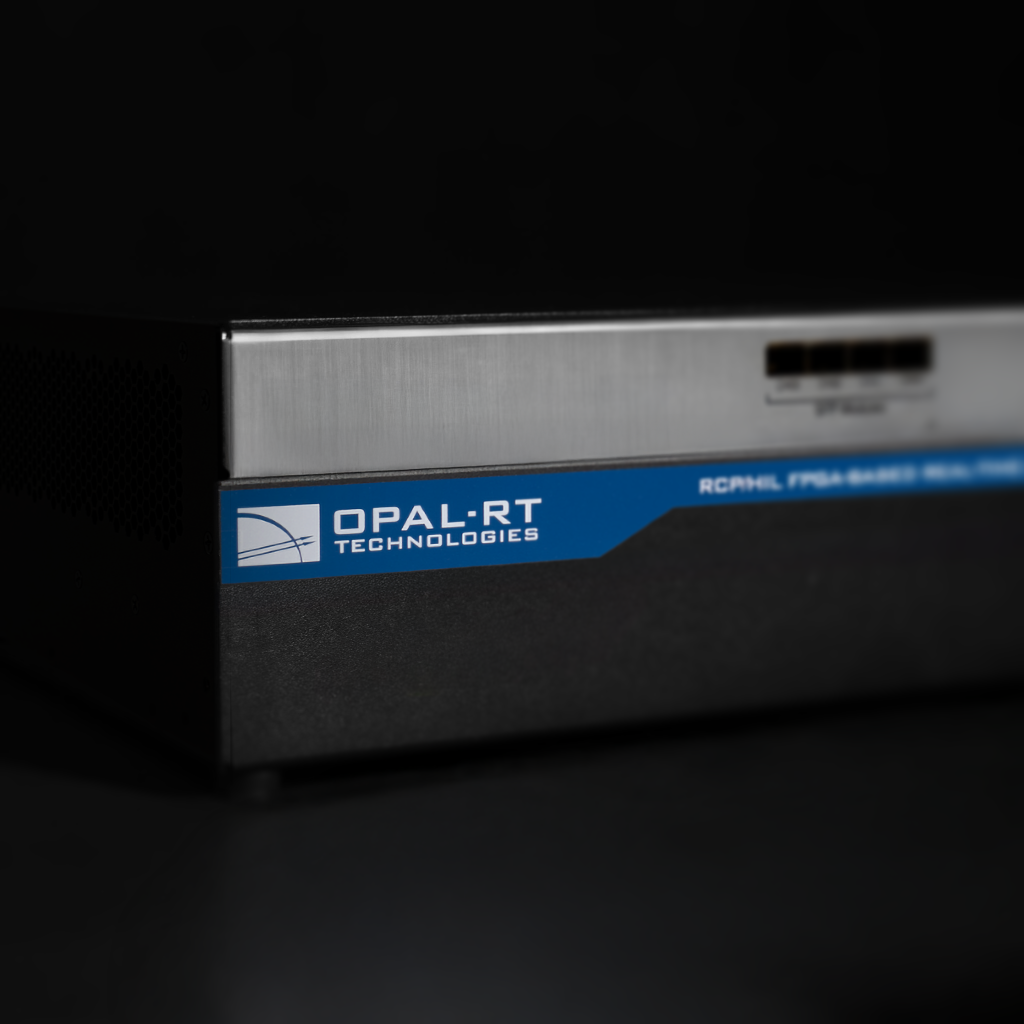
Equipped with a fast and reliable Intel® Core™ four-core processor and a powerful AMD Kintex™-7 410T FPGA, the OP4605XG2 delivers raw simulation power for CPU-based real-time simulation and sub-microsecond timestep power electronic simulations. Its 3U chassis is versatile for desktop or rack-mounted setups, offering up to 140 high-performance analog/digital channels with signal conditioning and 4 SFP-GTX optical high-speed links for seamless hardware interfacing.
HARDWARE DETAILS
Connections and interface
Simulator Architecture
Compact design, powerful simulation
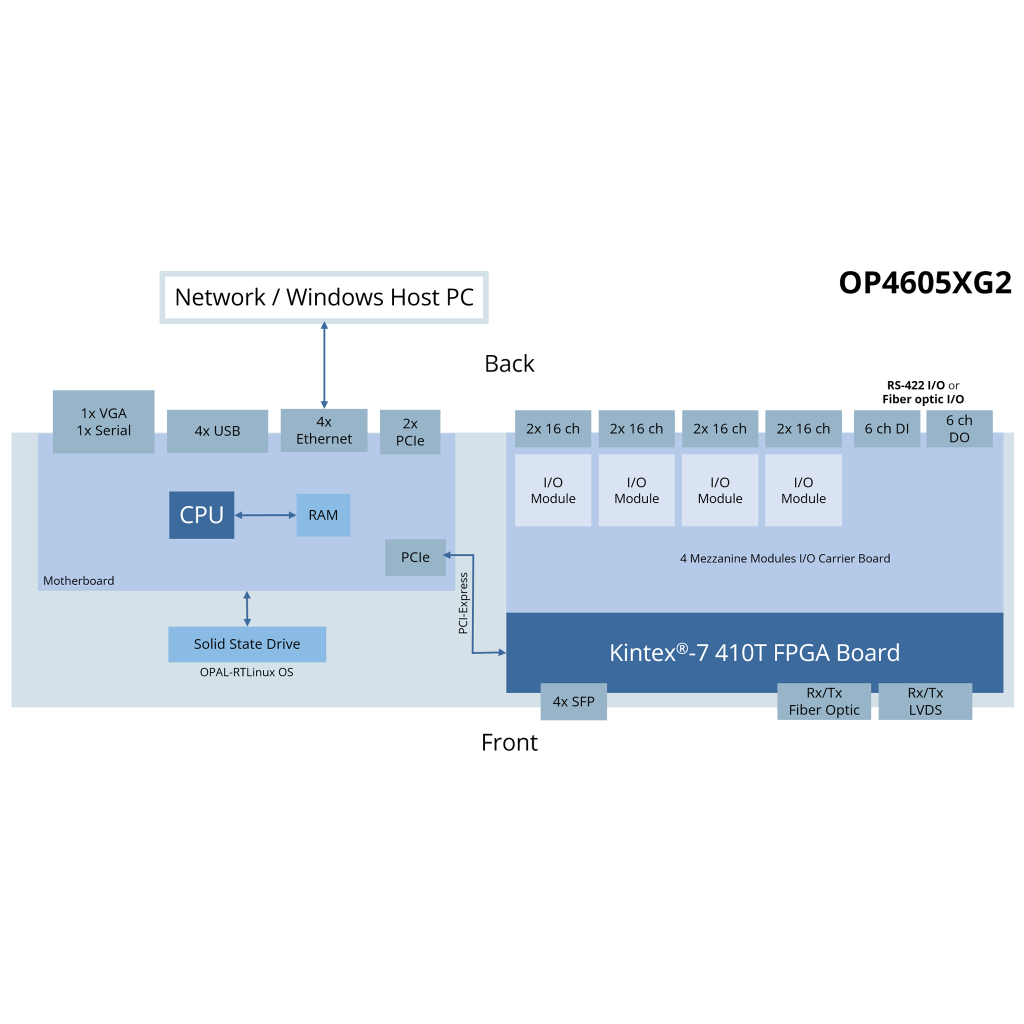
The OP4605XG2’s commercial off-the-shelf FPGA and CPU architecture delivers real-time simulation with low time steps. A high-speed PCI Express link enables seamless co-simulation between FPGA and CPU, allowing high-speed FPGA-based models—such as power converters and electric drives—to integrate with slower electrical and mechanical systems on the CPU for more detailed simulations. With low nanosecond timing resolution, the FPGA supports advanced RCP testing of high-speed PWM-based controllers on actual hardware. All this computing power is packed into a single, rack-mounted chassis.
SOFTWARE
Work with our compatible software platforms
Discover powerful solutions for HIL and RCP testing across power systems, power electronics, aerospace, and automotive sectors. With our software platforms, you can manage complex I/O configurations, communications protocols, and specialized applications—all designed to tackle time-to-market pressures and rising system complexity.

EMT Simulation and HIL Testing
HYPERSIM
High-fidelity platform for EMT simulation, SIL and HIL testing, ideal for validating control, protection, grid integration and large-scale stability across all stages of power system development.

Multi-Domain, Simulink®-based HIL
RT-LAB
Fully integrated with MATLAB/Simulink® and best combined with our various toolboxes to bring multi-domain Simscape™ Electrical™ and SimPowerSystems models to real time for fast control development.
resources
How can we help you?

Learning center

Support center
