DynaGrid Control Center: Power Grid Control Center of the Future
DynaGrid Control Center
Energy
05 / 27 / 2020
The company
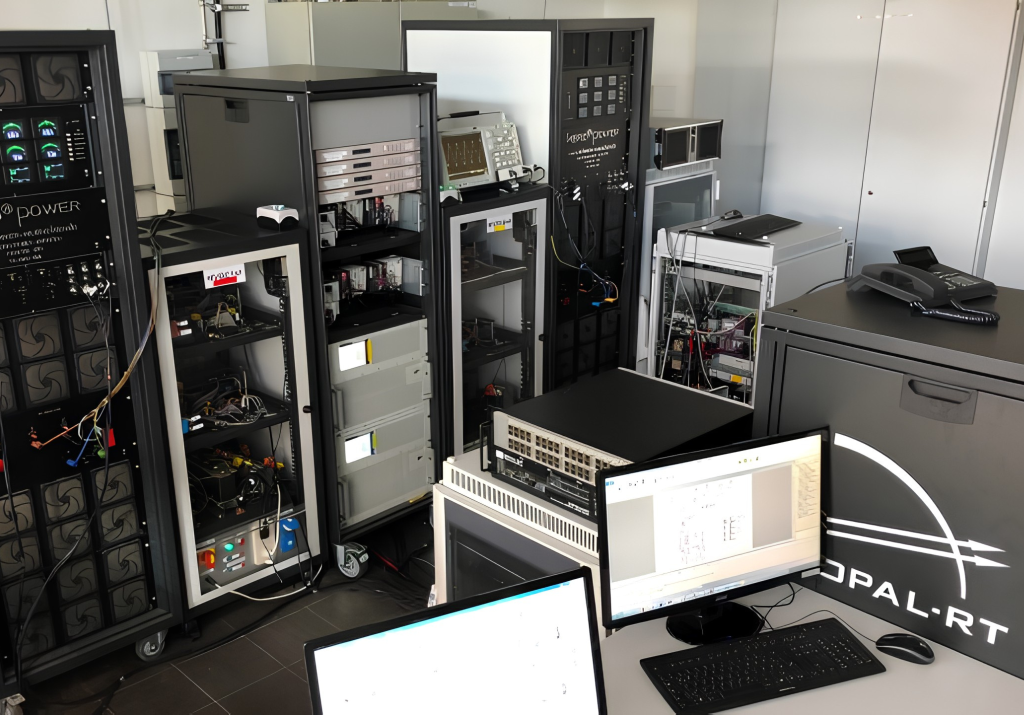
The DynaGrid Control Center (DGCC) is a pioneering research demonstrator co-developed by a consortium of Germany’s leading industrial and academic institutions, including Siemens AG, Ilmenau University of Technology (TUIL), and Otto-von-Guericke University (OvGU). Funded by the German Federal Ministry for Economic Affairs and Energy (BMWi), the project focuses on maintaining grid stability amidst the massive integration of renewable energy and the decommissioning of traditional nuclear and coal-fired plants.
Control rooms are the brain of the entire system that controls and monitors all processes in the grid. With the decarbonization of the entire energy system, the electricity infrastructure will change the way the grid operates. The visualization of periodic snapshots of the system status, which is state of the art today, will no longer suffice for future grid operation. We must move from “photos” to “movies”. In this respect, the “pictures have learned to move” in this project.
Prof. Dr.-Ing. Dirk Westermann
Principal Researcher and Project Manager, Ilmenau University of Technology

The challenges
- Increased System Dynamics: The shift to renewable energy and power electronics makes transmission grids increasingly complex and volatile, requiring split-second re-allocation decisions.
- Long-Distance Transmission Risks: As power plants are taken offline, energy must be transported over longer distances, increasing the potential for frequency and voltage instabilities.
- Manual Intervention Limits: Current state-of-the-art control rooms rely on periodic “snapshots” of system status, which are insufficient for managing the highly dynamic nature of future grids.
- Geographic Distribution: The project required a seamless interconnection between real-time simulators and control centers located in different cities (e.g., Magdeburg and Ilmenau, 200 km apart).
The OPAL-RT solution
The consortium implemented a distributed, hybrid AC-DC simulation environment using OPAL-RT’s advanced HIL technology:
- Real-Time Simulation Platform: OPAL-RT’s HYPERSIM and OP5707 were used for real-time simulation of a reduced model of the German transmission network and intelligent digital substations.
- Hardware-in-the-Loop (HIL) Integration: The team coupled the real-time AC grid simulation with physical laboratory-scale VSC-HVDC hardware to study real operating behaviors.
- Multi-Protocol Communication: Data exchange was managed via IEC 60870-5-104, C37.118 (PMU data), and IEC 61850, connecting the simulation environment to a real Siemens Spectrum Power 7 control center.
- Distributed ICT Infrastructure: The project enabled co-simulation across multiple labs, allowing data exchange and control signal transmission over long distances with high precision.
The results
The DGCC project successfully demonstrated the next generation of grid management:
- Automated Grid Control: Developed assistant systems for automated outage prevention and curative actions using VSC-HVDC, reducing reaction times to less than one second.
- Dynamic Security Assessment (DSA): Integrated machine learning and DSA to recognize impending bottlenecks by comparing real-time phasor measurements with simulated data.
- Adaptive Protection: Enabled the continuous optimization and communication of controller parameters based on current network status via IEC 61850.
- Validated Hybrid Models: Successfully simulated a large 400 kV AC transmission system including two hardware HVDC lines, verifying management concepts for inter-area oscillations.
- Future-Proof Methodology: Established a scalable methodology for integrating complex new technologies into existing grid structures while maintaining high supply reliability.
Explore more success stories
Dive deeper into our full collection of success stories in the resource center.

Start building your own success story
Ready to tackle complex power quality challenges with confidence? Discover how real-time simulation can help you validate, optimize, and scale your systems.

Automotive
06 / 04 / 2026
New Breakthrough in Full Topology HIL Simulation Testing for On-Board Chargers
SHINRY
SHINRY Technologies leverages OPAL-RT’s high-performance HIL simulation solution—integrating the OP4800-IO series expansion units and eHS—to overcome the complex challenges of full-topology modeling and high-frequency testing for On-Board Chargers (OBC). This solution achieves nanosecond-level real-time simulation and supports switching frequencies of several hundreds kHz, significantly accelerating control algorithm verification and identifying hardware-software integration risks early in the development cycle.

Energy
01 / 21 / 2026
OPAL-RT HIL simulation for variable frequency drive R&D
Harvest
Harvest leverages OPAL-RT’s HIL simulation solution (integrating OP5707XG hardware, eHS and ARTEMiS software) to address complex MV VFD modeling and testing challenges. This solution accelerates control algorithm validation, enables safe and flexible multi-motor testing, and speeds up product development, empowering Harvest to deliver reliable, high-performance MV VFDs for global industrial applications.

Energy
03 / 17 / 2025
State-of-the-art prototype testing of PAC devices for the power industry
Protecta Electronics
Protecta Electronics leverages OPAL-RT’s real-time simulation technology to test and validate protection, automation, and control (PAC) devices for the power industry. By automating complex test scenarios, Protecta has streamlined R&D, ensured compliance with global standards, and improved coordination between protection relays—advancing grid safety and reliability.