Global RT-Super Lab: A Real-Time Co-Simulation Across the Atlantic
Global RT-Super Lab
Energy
03 / 16 / 2021
The company
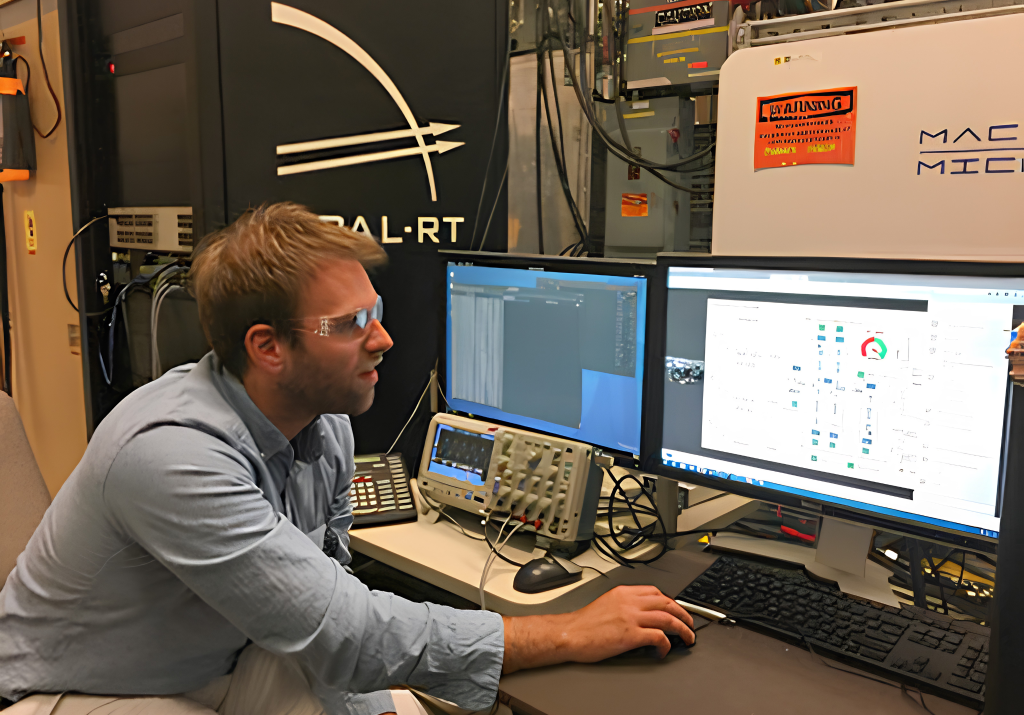
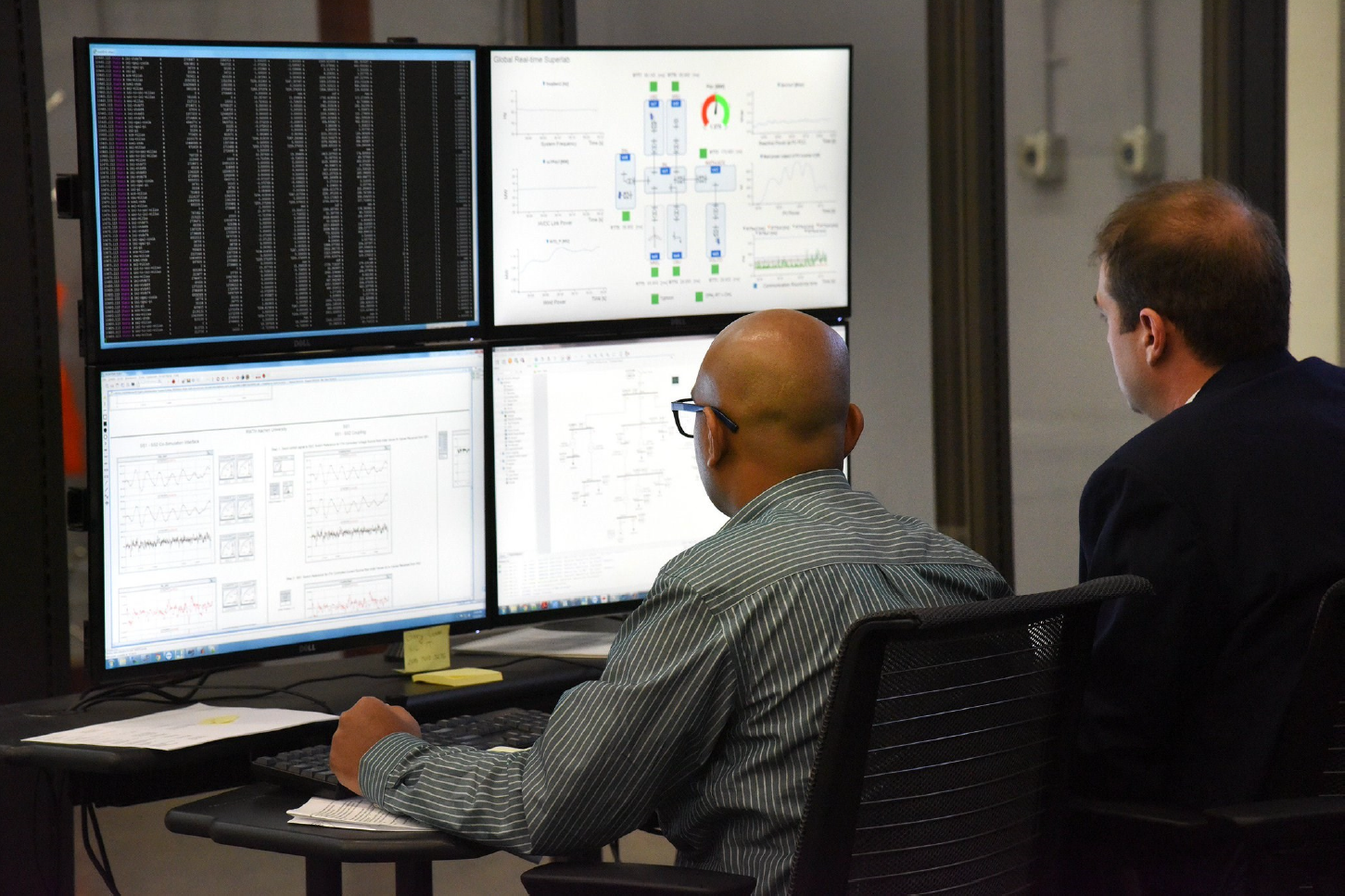
The Global RT-Super Lab is a vendor-neutral, distributed research platform established in 2017 through collaboration among three US national laboratories (NREL, Sandia, Idaho National Laboratory), three US universities (Colorado State University, University of South Carolina, Washington State University), and two European universities (RWTH Aachen University, Politecnico di Torino). Together, these institutions pool expertise and infrastructure to advance the understanding of power-electronics-dominated grids and next-generation energy networks.
The Challenges
- Unprecedented Complexity: Integrating Geographically Distributed Real-Time Simulation (GD-RTS) across eight labs, multiple vendors, and trans-Atlantic distances presented staggering coordination and technical challenges.
- Low-Inertia Grid Dynamics: The gradual installation of DERs via power-electronics-based interfaces fundamentally transforms power system dynamics, requiring new validation approaches for grids approaching 100% inverter-based sources.
- Energy Conservation at Interfaces: Accurate GD-RTS demands that no energy is generated or stored at subsystem interfaces—violating this principle invalidates simulation stability and fidelity.
- Confidentiality Constraints: Collaborating institutions, industries, and utilities needed to share simulation resources and run joint experiments without revealing proprietary or national grid data.
The OPAL-RT Solution
The consortium built a comprehensive co-simulation infrastructure connecting ten digital real-time simulators across eight labs:
- Multi-Vendor Real-Time Simulation: OPAL-RT simulators served as the backbone at multiple sites—including NREL (PHIL for PV inverters), Sandia (PHIL for wind turbines), CSU, USC, and POLITO—alongside units from other vendors, demonstrating true vendor-neutral interoperability.
- VILLAS framework: An open co-simulation framework enabled Internet-based interconnection of all DRTS units, managing data exchange of current and voltage variables while preserving energy conservation at every interface.
- HIL & PHIL Integration: The platform combined controller HIL and Power Hardware-in-the-Loop (PHIL) across sites, enabling comprehensive real-world testing of novel technologies against existing grid infrastructure.
- RT-LAB Implementation: OPAL-RT’s RT-LAB software provided the simulation environment for model implementation, partitioning, and real-time execution at participating laboratories.
The results
The September 2017 demonstration delivered a landmark achievement in distributed power system simulation:
- World’s Largest GD-RTS: Successfully performed the largest geographically distributed real-time simulation of a large power system ever conducted, spanning two continents.
- Transatlantic HVDC Validation: Demonstrated transatlantic HVDC interconnection of US and European benchmark transmission systems with local transmission-distribution interactions.
- Cost-Effective Resource Sharing: Enhanced computational capability at each lab without further investment, and enabled shared hardware/software facilities without local replication.
- Confidential Collaboration: Proved that joint research studies are feasible even under strict confidentiality constraints, with indirect data sharing protecting proprietary information.
- Lasting Influence: The demonstration’s methodology and framework influenced subsequent projects and established a blueprint for how large-scale power system simulations will be conducted for years to come.
Explore more success stories
Dive deeper into our full collection of success stories in the resource center.

Start building your own success story
Validate high-voltage systems with confidence. Discover how OPAL-RT’s real-time HIL simulation solutions can help you automate, accelerate, and future-proof your testing process for power electronics and grid applications.

Automotive
06 / 04 / 2026
New Breakthrough in Full Topology HIL Simulation Testing for On-Board Chargers
SHINRY
SHINRY Technologies leverages OPAL-RT’s high-performance HIL simulation solution—integrating the OP4800-IO series expansion units and eHS—to overcome the complex challenges of full-topology modeling and high-frequency testing for On-Board Chargers (OBC). This solution achieves nanosecond-level real-time simulation and supports switching frequencies of several hundreds kHz, significantly accelerating control algorithm verification and identifying hardware-software integration risks early in the development cycle.

Energy
01 / 21 / 2026
OPAL-RT HIL simulation for variable frequency drive R&D
Harvest
Harvest leverages OPAL-RT’s HIL simulation solution (integrating OP5707XG hardware, eHS and ARTEMiS software) to address complex MV VFD modeling and testing challenges. This solution accelerates control algorithm validation, enables safe and flexible multi-motor testing, and speeds up product development, empowering Harvest to deliver reliable, high-performance MV VFDs for global industrial applications.

Energy
03 / 17 / 2025
State-of-the-art prototype testing of PAC devices for the power industry
Protecta Electronics
Protecta Electronics leverages OPAL-RT’s real-time simulation technology to test and validate protection, automation, and control (PAC) devices for the power industry. By automating complex test scenarios, Protecta has streamlined R&D, ensured compliance with global standards, and improved coordination between protection relays—advancing grid safety and reliability.