Power System Reliability Studies & Simulations at Tenaga Nasional Berhad
Tenaga Nasional Berhad (TNB)
Energy
02 / 09 / 2021
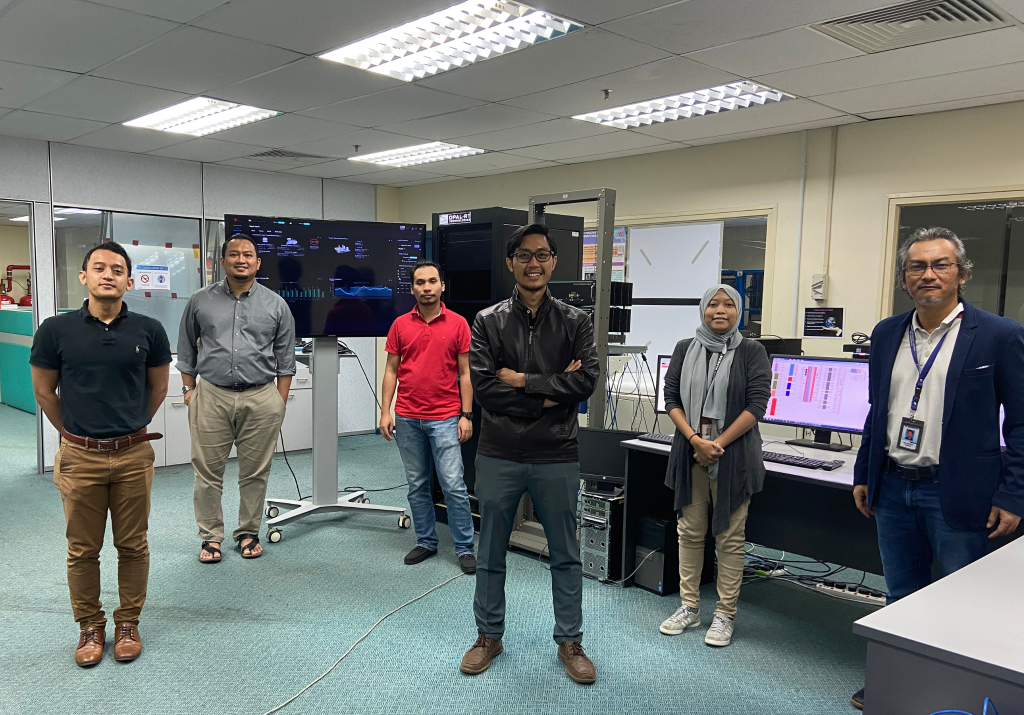
The company
Tenaga Nasional Berhad (TNB) is the Malaysian multinational electricity company and the only electric utility in Peninsular Malaysia. TNB Research (TNBR) serves as the in-house solution provider—a centralized, one-stop center for technical solutions and innovation. Backed by years of experience, TNBR specializes in power system reliability and efficiency through advanced studies and simulations, delivering outcomes that help TNB maintain a resilient, reliable, high-quality power grid.
The Challenges
- Large-Scale Network Simulation: TNB needed a real-time simulator capable of emulating the actual dynamic response of its large-scale power system network during interaction with protection systems.
- Complex SPS Development: Increasing levels of complexity in Special Protection Scheme requirements made traditional system-level testing approaches insufficient and costly.
- Pre-Deployment Validation: Complex protection systems designed to mitigate system-wide disturbances required comprehensive closed-loop testing in a controlled environment before deployment to the actual grid.
- Cost-Effective Computing: Simulating thousands of buses and generators in real time demanded a platform that could achieve high-speed execution without requiring excessive computing resources.
The OPAL-RT Solution
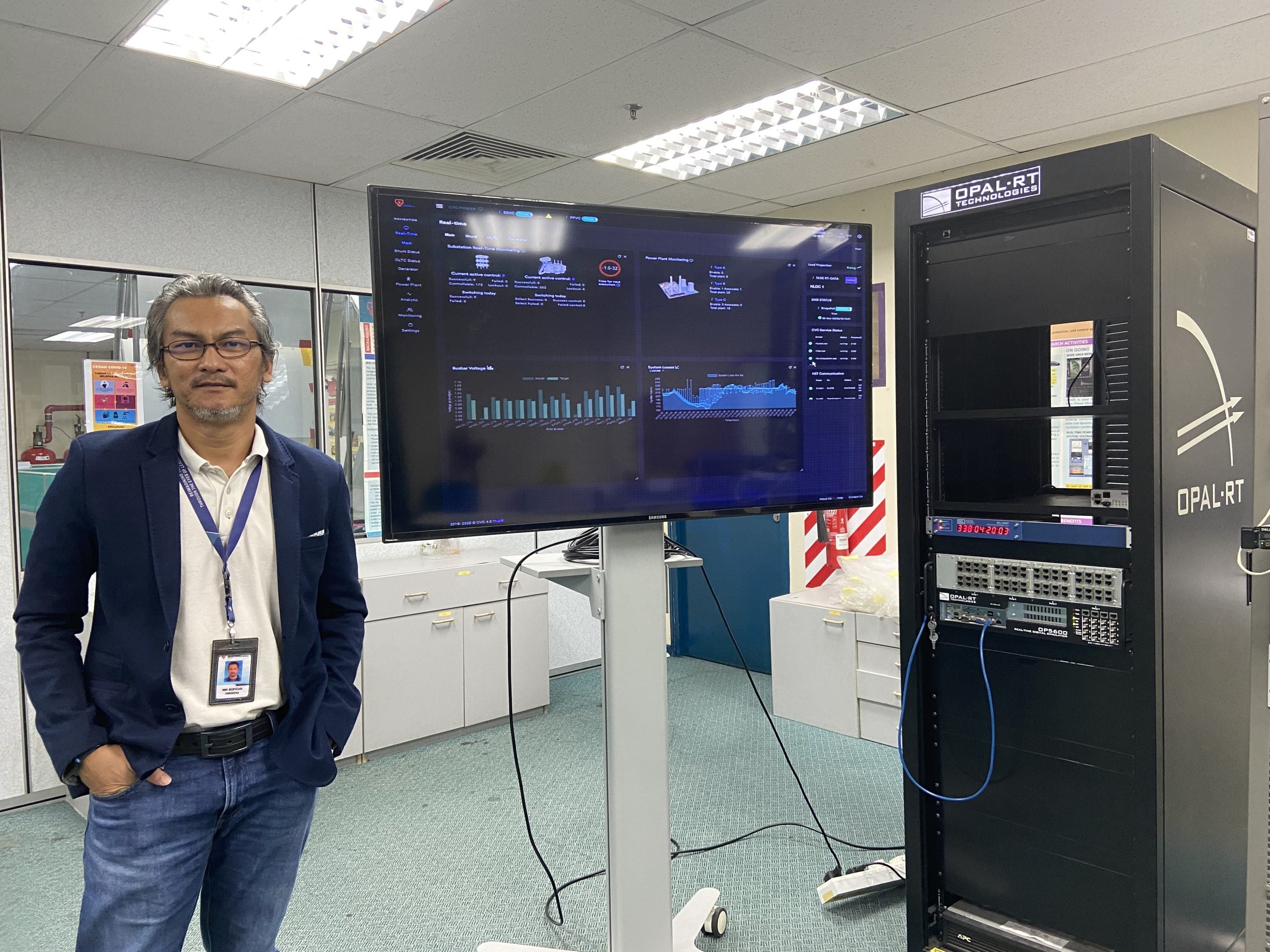
TNB implemented a comprehensive HIL testing platform for SPS validation using OPAL-RT’s phasor-domain simulation:
- ePHASORSIM Solver: Selected over other HIL simulators for its ability to vary simulation time-step duration—enabling large-scale power system simulation with reduced computing power while maintaining accuracy. Operating at a 10 ms time-step, it provides phasor voltage and current information for real-time grid emulation.
- RT-LAB & OP5600: The real-time simulation software and hardware platform enables model-based design that interacts with real-world environments, running MATLAB/Simulink models in real time.
- Complete HIL Infrastructure: The platform integrates analog signal amplifiers, SPS hardware (RTAP controllers), a PI Server for data archiving, GPS clock synchronization, WAMS applications, and physical IEDs connected via Ethernet—replicating TNB’s operational SPS architecture of 190 IEDs and 25 RTAPs.
The results
The HIL platform was validated with a full 1,100-bus TNB grid model as a case study:
- Full-Scale Grid Simulation: Successfully simulated the complete 1,100-bus TNB power system in real time, verifying the platform’s effectiveness for system-level SPS testing.
- Comprehensive Contingency Testing: Engineers can now test SPS systems under various grid conditions and contingencies in a controlled, repeatable environment.
- Faster Issue Detection: Significantly reduced the time required to detect design issues, lowering the risk of design errors or hidden failures.
- Increased Confidence: Enhanced statistical confidence in the protection system’s reliability before field deployment.
- Cost Reduction: ePHASORSIM’s phasor-domain approach reduced real-time simulator costs compared to full EMT-type simulations, while still capturing all relevant transient phenomena for SPS applications.
Explore more success stories
Dive deeper into our full collection of success stories in the resource center.

Start building your own success story
Validate high-voltage systems with confidence. Discover how OPAL-RT’s real-time HIL simulation solutions can help you automate, accelerate, and future-proof your testing process for power electronics and grid applications.

Automotive
06 / 04 / 2026
New Breakthrough in Full Topology HIL Simulation Testing for On-Board Chargers
SHINRY
SHINRY Technologies leverages OPAL-RT’s high-performance HIL simulation solution—integrating the OP4800-IO series expansion units and eHS—to overcome the complex challenges of full-topology modeling and high-frequency testing for On-Board Chargers (OBC). This solution achieves nanosecond-level real-time simulation and supports switching frequencies of several hundreds kHz, significantly accelerating control algorithm verification and identifying hardware-software integration risks early in the development cycle.

Energy
01 / 21 / 2026
OPAL-RT HIL simulation for variable frequency drive R&D
Harvest
Harvest leverages OPAL-RT’s HIL simulation solution (integrating OP5707XG hardware, eHS and ARTEMiS software) to address complex MV VFD modeling and testing challenges. This solution accelerates control algorithm validation, enables safe and flexible multi-motor testing, and speeds up product development, empowering Harvest to deliver reliable, high-performance MV VFDs for global industrial applications.

Energy
03 / 17 / 2025
State-of-the-art prototype testing of PAC devices for the power industry
Protecta Electronics
Protecta Electronics leverages OPAL-RT’s real-time simulation technology to test and validate protection, automation, and control (PAC) devices for the power industry. By automating complex test scenarios, Protecta has streamlined R&D, ensured compliance with global standards, and improved coordination between protection relays—advancing grid safety and reliability.