5 industries where hardware‑in‑the‑loop cuts costs and risks
Uncategorized
11 / 12 / 2025

Hardware-in-the-loop (HIL) stops costly surprises and helps you ship safer systems sooner. It connects your real controller to a high fidelity simulator that runs the plant in real time. That setup lets you push edge cases, insert faults, and automate repeatable tests long before a prototype is ready. The result is faster design cycles, less rework, and stronger confidence across teams.
If you build electric vehicle (EV) powertrains, flight control logic, or microgrid controllers, HIL fits your bench, your schedule, and your budget. You connect the controller under test, run plant models with strict real time constraints, and iterate with clear feedback. HIL also pairs well with software in the loop (SIL) and model in the loop (MIL), so projects move from desktop to rack with fewer surprises. The same method applies from early modelling to system validation, with measurable gains in cost, safety, and schedule confidence.
What hardware-in-the-loop testing means for engineers

Hardware-in-the-loop connects a real controller to a digital simulator that behaves like the plant. The simulator runs in real time, exchanges electrical and communication signals, and responds to your firmware as a physical system would. Typical HIL testing includes sensor emulation, actuator feedback, protocol buses, and power interfaces sized to your device. Engineers swap models as designs change, adjust I/O ranges, and keep test cases consistent across sprints.
A strong HIL setup supports fault insertion without risk to people or equipment. You can short phases virtually, brown out a supply, spoof a sensor, and observe recovery logic under tight timing. Closed loop behaviour shows up quickly, so tuning and calibration move faster with fewer lab hours. The approach scales from a single board to full racks, with the same models and test scripts reused across project
If you are new to the concept, start with a clear mental model first. Think of the simulator as the plant, the I/O as the wiring, and your controller as the device under test. Many engineering teams describe hardware-in-the-loop as the stage where simulation practice meets practical validation, a bridge that connects early modelling with commissioning. You can see this perspective reflected in industry discussions of HIL technology, which frame it as a method for aligning design intent with safe, repeatable testing.
Hardware-in-the-loop (HIL) stops costly surprises and helps you ship safer systems sooner.
5 industries where hardware-in-the-loop cuts costs and risks
HIL brings the most value where tests are dangerous, expensive, or hard to repeat. The pattern is consistent across control hardware that interacts with power stages, actuators, and field networks. Teams reduce trips to the bench, lock down regressions, and keep field issues from reaching production. Across these areas, the payoff shows up in shorter debug loops and higher confidence during validation.
1. Automotive and EV testing with hardware-in-the-loop
Automotive control stacks suit HIL automotive testing because timing, safety, and fault coverage are hard to achieve on a bench. EV testing with HIL lets you exercise traction inverter control, battery management logic, and charger communications under repeatable conditions. You can vary load, temperature, and supply limits in software while the control board interacts through I/O at full rate. Transient models, motor maps, and synthesis of sensor signals make control loops react just as they would in a vehicle.
This cuts prototype counts, protects scarce dyno time, and reveals integration bugs before the wiring looms arrive. Fault injection for sensor opens and shorts, contactor welds, and pack imbalances becomes routine, which is hard to do safely on physical packs. You also standardize acceptance tests for suppliers, log results automatically, and share traceable reports across teams. The net effect is lower risk during design validation, fewer field incidents, and tighter program forecasts.
2. Aerospace system validation and flight control testing
Flight control computers and actuation systems benefit from HIL when hardware limits and safety cases constrain testing. A simulator can reproduce airframe dynamics, actuator backlash, and sensor noise while the controller closes loops in real time. You can inject failure modes for sensors, power supplies, and communication links, then confirm detection and graceful recovery logic. Avionics buses, redundant channels, and timing supervision are all exercised under controlled timing and loads.
This approach reduces flight test exposure, shortens integration days, and lowers wear on expensive rigs. Regression suites run overnight after each software change, which compresses feedback loops without extra crew time. Engineers compare controller versions against the same scenarios, then decide with clear evidence before moving to the full actuation rig. The end result is better coverage, improved safety margins, and predictable schedules.
3. Power electronics and renewable energy simulation
Hardware-in-the-loop power electronics focuses on converters, inverters, and protection logic that sit between sources and loads. Switch level, averaged, and electromagnetic transient models run fast enough to stress control code under grid fault, load step, and thermal limits. This supports modelling and simulation in power electronics, and also aligns with common needs captured as modeling and simulation power electronics when teams plan their test flow. The approach adds I/O, latency, and quantization so the controller sees realistic behaviour, not idealized signals.
Engineers validate PWM gating, current limiting, and protection trips without risking silicon, transformers, or stacks. Wide bandgap designs benefit from fast models and fine time steps, which expose edge cases while keeping hardware safe. Firmware teams try new control structures, change parameters, and compare traces against previous baselines with the same test pack. The outcome is fewer damaged parts, clearer coverage of grid and load events, and faster release cycles.
4. Grid systems and microgrid stability testing
Grid controllers, protection relays, and microgrid energy managers benefit when HIL reproduces faults, switching events, and islanding. Controllers see frequency excursions, voltage sags, and harmonics as if they were connected to feeders, without risk to people or assets. Engineers stage load ramps, renewable ramps, storage dispatch, and feeder reconfiguration through the same scripts used later in the lab. Protection settings, ride through logic, and grid forming strategies are all proven against consistent cases.
This reduces truck rolls, improves commissioning plans, and trims outage risk during upgrades. Teams reuse models across substations and microgrids, then align utility acceptance tests with developer tests to avoid late rework. The same platform supports inverter control, relay logic, and microgrid control flow, which keeps training and maintenance light. This is how HIL reduces surprises for energy and power systems projects with complex protection and control.
5. Academic and research labs accelerating prototyping
Academic labs often need flexible setups that switch between teaching, prototyping, and thesis work without long reconfiguration. HIL supports safe work with powered stages, from motor drives to converters, while keeping equipment budgets under control. Students and researchers run repeatable experiments, save datasets for grading, and compare algorithms across years. Supervisors keep stricter safety policies in place since faults, shorts, and thermal stress can be simulated without damaging hardware.
Research groups share models, fixture pinouts, and scripts, so projects move faster when people rotate on and off topics. Small labs stretch budgets by focusing on strong I/O, reusable chassis, and good model libraries rather than multiple bespoke benches. Teams build momentum early with SIL and MIL, then move to HIL when control logic stabilizes. The repeatability helps students, principal investigators, and lab managers show progress with clear metrics.
Across these five areas, HIL lowers risk without slowing development. The same test assets shift from early checks to pre production validation, which avoids painful context switches. Cost savings come from fewer prototypes, safer failure testing, and predictable use of shared rigs. Most importantly, engineers keep control of scope, coverage, and timing as systems grow more complex.
Across these five areas, HIL lowers risk without slowing development.
How hardware-in-the-loop reduces project costs and risks
Cost control and risk reduction come from specific habits, not slogans. The items here focus on repeatable practices that map to budgets, schedules, and safety rules. Each one can be tracked with simple metrics, then adjusted as your setup matures. Use them to shorten loops, reduce lab time, and raise confidence before field work.
- Find defects early with closed loop stress and fault injection: HIL lets you hit edge cases before hardware is ready, which catches issues when fixes are cheap. That timing alone lowers spend, improves coverage, and reduces late rework.
- Cut prototype counts and material costs with virtual commissioning: Many tests move to the simulator, so you order fewer builds and reduce scrap. You still reserve physical builds for high value checks, which keeps spend targeted.
- Automate regression, coverage, and reports for every change: Scripts run the same cases after each commit, which keeps quality steady. Reports arrive with traceability, so leaders make clear choices using current data.
- Standardize supplier acceptance tests and interfaces: Shared scripts and I/O maps raise supplier quality without extra meetings. When parts arrive, they slot into known tests, which shortens integration days.
- Reuse models, I/O maps, and scripts across programs: Reuse turns one project’s effort into a multiplier across teams. The approach cuts calendar time, improves consistency, and simplifies training.
- Protect people and equipment during severe test cases: Simulated arcs, shorts, and over speeds keep dangerous conditions away from the lab. You prove protection logic without risking staff or assets.
- Improve coordination across simulation, controls, and test teams: A common bench creates shared artefacts, shared language, and shared goals. That alignment shortens handoffs, clarifies roles, and speeds root cause work.
These practices work best when teams agree on models, naming, and handoff rules. Start small, instrument results, and tune the plan as data arrives. Pick two, track results for a sprint, and review outcomes with stakeholders. Small wins compound into lower spend, fewer surprises, and stronger release confidence.
How OPAL-RT supports engineers with hardware-in-the-loop testing
OPAL-RT provides real time digital simulators that blend CPU and FPGA execution for low latency and high fidelity. Our platforms pair with model based toolchains that you already use, and they support FMI and FMU for model exchange. You can connect high density I/O, power interfaces, and communication buses, then tune timing to match your controller. Toolboxes such as eHS, ARTEMiS, and HYPERSIM serve motor drives, converters, and grid studies without forcing a single workflow. Open interfaces and modular chassis like OP4000 and OP7000 let you grow capacity as projects scale.
We help you plan a path from SIL and MIL to HIL, select the right I/O, and structure test assets for reuse. RT‑LAB orchestrates real time execution, scripting, and data handling, so you can keep test benches consistent across locations. Our application engineers share proven templates for EV testing, grid controllers, and power electronics, so your team gains time where it matters most. Support is local, responsive, and practical, with a focus on measurable outcomes. Teams across energy, aerospace, automotive, and academia trust OPAL-RT for precise, repeatable HIL.
Common questions about hardware-in-the-loop and testing
Engineers often want quick, direct answers before investing in a new bench. Common planning needs span controls, simulation, and test roles. The focus here is cost, risk, and time to result. Use the brief guidance to kick start internal discussions and budget requests.
Which industries use hardware-in-the-loop to reduce costs?
Automotive, aerospace, power electronics, grid systems, and academia capture the bulk of HIL value. Each relies on complex controllers that interact with power stages, actuators, or field networks that are hard to test safely on a bench. HIL moves high risk and high cost checks into real time simulation where conditions are repeatable and controlled. That shift cuts build counts, reduces lab hours, and brings issues to light when fixes are least expensive.
How does HIL testing reduce risk in automotive projects?
HIL automotive testing lowers risk by letting teams prove detection and response to faults without exposing staff or hardware to hazards. EV testing under HIL covers contactor faults, sensor failures, charger misbehaviour, and inverter transients using consistent scripts. The same bench validates timing budgets and communication links while the controller closes loops in real time. Development stays focused on debug and coverage, not on recovering from damaged parts or rushed rework.
How can HIL testing cut costs in energy and power systems?
HIL lowers costs for energy and power systems by shifting expensive commissioning tasks into the lab before field work. Hardware in the loop power electronics lets you push protection, gating, and thermal logic without risking converters or transformers. Teams align the process with modelling and simulation in power electronics, and many also tag requirements using the query modeling and simulation power electronics to keep scope clear. The result is fewer prototypes, fewer site visits, and tighter plans for outage windows.
What is the difference between SIL and HIL testing?
The main difference between SIL and HIL testing is the presence of physical control hardware. SIL runs code in a software simulator, which is fast, cheap, and great for early logic checks. HIL connects the actual controller to a real time simulator that mimics the plant, which exposes timing effects, quantization, and I/O nuances that SIL cannot show. Strong teams use SIL to shape features, then use HIL to qualify behaviour before touching a prototype.
What should a lab manager track to prove HIL value?
Track where defects are found, hours per regression run, number of prototypes built, and equipment damage rates. Add coverage metrics, pass rates, and mean time to detect plus mean time to repair. Compare these values before and after your HIL rollout, then repeat each quarter. Evidence like this supports budgets, clarifies staffing, and keeps goals aligned.
Clear answers help teams move from interest to action with less friction. Document your goals, pick a pilot, and measure outcomes against simple metrics. As confidence grows, expand scope to more controllers and add automation where it saves the most. The payoff is safer tests, lower spend, and shorter routes to production.
Real-time solutions across every sector
Explore how OPAL-RT is transforming the world’s most advanced sectors.
Simulation
03 / 11 / 2026
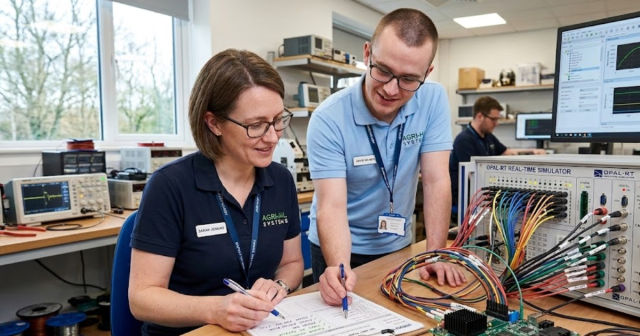
9 Common hardware in the loop testing pitfalls in embedded and control validation
Nine common hardware-in-the-loop testing pitfalls in embedded and control validation, with practical fixes for timing, model fidelity, solver stability, I/O integrity, protocol behaviour, automation repeatability, and configuration traceability.
Power Electronics
03 / 09 / 2026
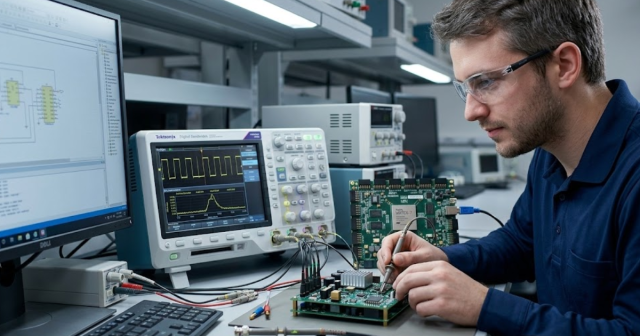
FPGA vs CPU for real time power electronics simulation
You’ll learn how to choose CPU, FPGA, or a split approach for real-time power electronics HIL simulation using time step targets, latency and jitter needs, switching model fidelity, partitioning, and workflow constraints.
Simulation
03 / 04 / 2026
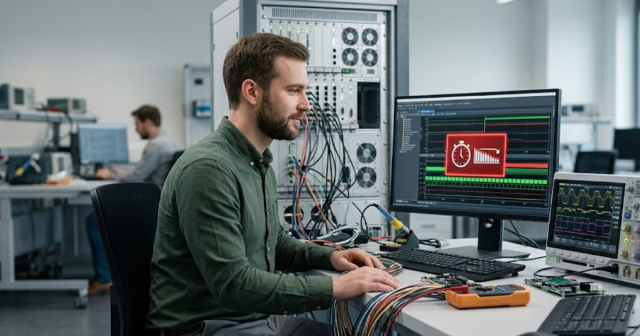
When to add FPGA acceleration to an existing real time simulator
Engineers can use timing symptoms, workload fit, and migration steps to decide when FPGA acceleration will resolve HIL deadline, latency, and jitter limits in an existing real-time simulator.
EXata CPS has been specifically designed for real-time performance to allow studies of cyberattacks on power systems through the Communication Network layer of any size and connecting to any number of equipment for HIL and PHIL simulations. This is a discrete event simulation toolkit that considers all the inherent physics-based properties that will affect how the network (either wired or wireless) behaves.