6 ways real-time grid simulation improves renewable integration
Simulation
11 / 06 / 2025

Key takeaway
- Real-time grid simulation reduces project risk by validating inverter-based resources, power electronics, and controls before site work.
- Weak-grid scenarios need specific tuning of PLLs, current loops, and droop settings to prevent trips and oscillations.
- Power quality and voltage regulation must be measured with waveform-level data and IEEE metrics to support interconnection.
- Hardware-in-the-loop and digital twins speed regression testing, improve traceability, and keep firmware changes under control.
- Hybrid plants benefit from coordinated storage and renewable controls that satisfy grid codes while protecting assets and schedules.
You need renewable projects to connect smoothly, safely, and on schedule. Interconnection studies, protection settings, and controller tuning often collide with tight budgets and even tighter timelines. Real-time grid simulation gives you a way to test ideas at full electrical bandwidth without putting assets at risk. Teams gain the data and confidence needed to move from models to energized systems with fewer surprises.
Solar, wind, and battery systems rely on power electronics, which respond in microseconds and interact with slower grid dynamics. Controllers shape behavior through phase-locked loops, droop settings, and protection logic, making validation complex. Grid faults, weak grids, and converter interactions can create oscillations, trips, or limits that only appear under specific conditions. Testing those edge cases early with closed-loop models shortens rework, reduces field issues, and accelerates commissioning.
Understanding renewable grid integration and inverter-based systems
Renewable grid integration focuses on connecting converter-based generation and storage to transmission and distribution networks without sacrificing stability, power quality, or protection selectivity. Modern plants rely on inverter-based resources that synthesize voltage and current through pulse-width modulation, filters, and control loops. Those devices are not passive machines; they are active controllers whose parameters, limits, and firmware choices dictate plant behavior under faults and disturbances. Accurate grid simulation and renewable modeling capture these interactions across time scales so you can judge response before steel meets concrete.
Power electronics interfaces inject harmonics, switch-mode ripple, and rapid current changes that interact with network impedances. Weak-grid conditions, long collector systems, and multiple converters can produce resonance that does not appear in average-value studies. Time-domain models with detailed control and protection logic clarify where voltage regulation margins, flicker, and neutral voltage issues may arise. A clear understanding of these behaviors informs settings, hardware choices, and acceptance criteria for successful interconnection.
Real-time grid simulation gives you a way to test ideas at full electrical bandwidth without putting assets at risk.
6 ways real-time grid simulation improves renewable integration

Engineers use real-time platforms to replicate grid events, controller timing, and device constraints at electrical time steps. This approach keeps converter dynamics, measurement delay, and communications latency faithful to field conditions. Teams can exercise renewable control schemes against weak-grid scenarios, rare faults, and protection actions without touching live equipment. Stronger evidence de-risks renewable grid integration, compresses project schedules, and aligns stakeholders on settings and performance.
1. Modeling inverter-based resources for accurate dynamic response
Converter models need fidelity in both controls and power stages to reproduce behavior during faults and setpoint changes. Average-value models capture DC-link dynamics and current controllers, while detailed switching models reveal harmonic content and filter stress. Real-time grid simulation balances these needs using solver choices, partitioning, and field-programmable gate array (FPGA) acceleration to maintain stability at small time steps. Parameter sets should reflect current limits, thermal foldback, and phase-locked loop (PLL) design so that oscillations and recovery paths match site expectations.
Validation benefits from staged renewable modeling that starts with model-in-the-loop (MIL), then software-in-the-loop (SIL), and finishes with hardware-in-the-loop (HIL) test runs. MIL proves control logic under idealized conditions, SIL adds compiled code behavior, and HIL closes the loop with physical input and output, power amplifiers, and input and output delay. A single plant model that swaps average and switching representations keeps results consistent across steps and prevents configuration drift. This structure gives you confidence that an inverter’s ride-through, current limiting, and ramp-rate logic will translate from development to commissioning.
2. Testing renewable control strategies under varying grid conditions
Weak grids expose controller choices that look fine in short-circuit-rich studies. Voltage-source inverter controls must balance fast current regulation with stable PLL tracking, especially with long feeder lines and high impedance. Real-time tests sweep strength, short-circuit ratio, and voltage unbalance while measuring overshoot, settling time, and stability margins. Results guide gains, droop settings, and ride-through logic so that you avoid nuisance trips during faults and switching events.
Resource coordination matters as much as individual tuning. Wind, solar, and storage controllers interact through plant controllers, communications links, and grid codes that impose reactive support, ramp limits, and power factor targets. Scenario libraries that include tap changes, breaker reclosing, frequency swings, and distributed energy resource (DER) variability reveal gaps long before field energization. Teams use these findings to update settings, structure alarms, and set safe operating envelopes for both study and operations.
3. Evaluating power quality and voltage regulation impacts
Power quality concerns often start with harmonics, flicker, and voltage unbalance created by power electronics switching and control actions. Detailed grid simulation produces waveform-level data that feeds Institute of Electrical and Electronics Engineers (IEEE) standard metrics, giving you objective evidence for interconnection studies. Harmonic impedance scans across operating points identify resonance risk, filter tuning gaps, and capacitor bank interactions. Voltage regulation tests quantify sensitivities to tap operations, dynamic volt-ampere reactive (VAR) systems, and converter reactive controls under changing irradiance and wind.
Field crews need more than single-number indices. Time-aligned plots of converter current, point-of-common-coupling voltage, and protection status tell you when and why excursions occur. Sensitivity analysis across grid strength, transformer connections, and grounding arrangements points to fixes that reduce adverse effects without overbuilding. Those insights feed acceptance reports that satisfy grid codes, plant owners, and communities in the surrounding neighborhood.
4. Validating protection and stability with fault and event scenarios
Protection needs clear coordination across converter current limits, plant controllers, and network devices. Real-time models drive staged faults, breaker failures, and oscillatory events to test relays, converter ride-through, and restoration sequences. Hardware interfaces bring protective relays, digital fault recorders, and plant controllers into the loop, which exposes timing and logic issues that offline studies miss. Engineers verify settings for sensitive earth fault, distance elements, and differential schemes while checking for unintended interactions like sympathetic tripping.
System stability spans sub-synchronous interactions up to electromechanical oscillations. Scenarios covering series-compensated lines, weak interties, and power system stabilizer behavior show where controller gains need refinement. Small-signal analysis aligned with time-domain replay confirms damping for converter modes, torsional concerns, and plant-controller coupling. Confidence grows when the same plant model predicts event playback from historical measurements within agreed tolerances.
5. Analyzing hybrid storage and renewable coordination in grids
Hybrid plants combine solar, wind, and battery energy storage to meet output guarantees, curtailment limits, and ramp-rate constraints. Coordinating state-of-charge management, active and reactive power targets, and grid code compliance requires closed-loop simulation under realistic dispatch profiles. Models include battery degradation proxies, converter current limits, and thermal constraints to reflect what operators and asset managers face each day. Results show how control splits between storage and generation affect interconnection capacity, headroom, and contract penalties.
Grid services add another layer. Frequency response, voltage support, and ride-through obligations vary across jurisdictions, which pushes control designs to adapt without sacrificing stability. Real-time studies quantify performance for automatic generation control (AGC) participation, droop response, and fault current contribution under multi-plant coordination. Evidence from these runs supports bids, compliance filings, and operations playbooks that keep performance predictable across seasons.
6. Accelerating validation through hardware-in-the-loop and digital twins
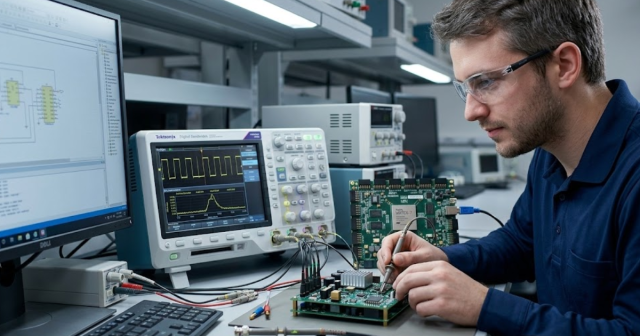
Hardware-in-the-loop (HIL) connects converters, controllers, and protection devices to a simulated grid so that timing, noise, and measurement filtering show up as they will during energization. Test plans scale from control boards to full cabinets using the same grid model, which keeps datasets consistent and comparable. Digital twins act as continuously updated replicas that help plan outages, tune settings, and evaluate firmware changes before deployment. When paired with strict configuration control, this approach compresses time from design to field acceptance while keeping risk in check.
Automation raises throughput for regression tests and acceptance checks. Scripting exposes edge cases, repeats timing-sensitive tests, and surfaces intermittent faults that manual testing might miss. Data pipelines move waveforms, phasors, and event flags into analytics tools for fast reporting and traceability. Teams finish with reusable test assets that shorten future upgrades, migrations, and extensions.
Real-time methods align models, code, and hardware around a single source of truth. Stakeholders see the same evidence, which speeds approvals and strengthens compliance filings. Project teams cut rework by catching control, protection, and power quality issues before equipment ships. The payoff is shorter schedules, fewer on-site surprises, and renewable projects that connect with confidence.
Practical uses of renewable modeling in research and utility projects
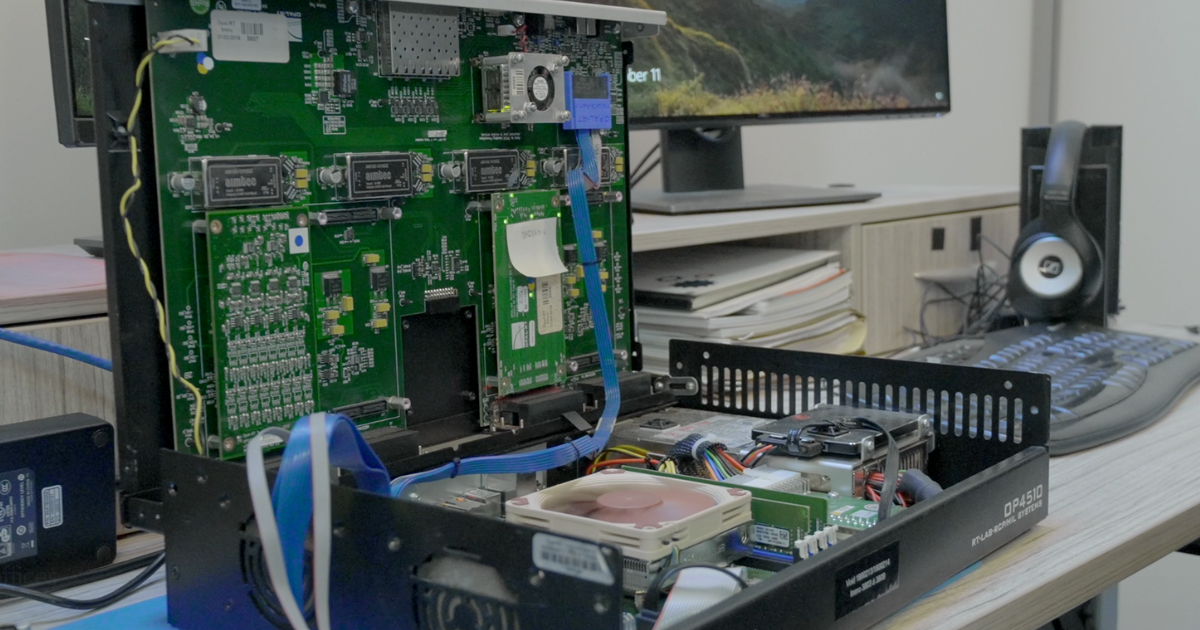
Researchers and utilities care about proof that stands up to peer review, field scrutiny, and regulatory checks. Real-time studies answer time-critical questions like controller stability, protection selectivity, and grid service performance. Teams can move from conceptual models to bench validation, then to site work with wiring diagrams and test points planned. Clear outputs, tight links to operational goals, and reproducible scripts keep technical work aligned with budgets, scopes, and schedules.
- Microgrid interconnection studies: Team size protection, set ride-through windows, and confirm power quality before energization. Real-time replay of outages and restoration verifies controller sequences and limits nuisance trips.
- Weak-grid tuning and stability margins: Plants with low short-circuit ratio benefit from PLL, current loop, and droop adjustments measured against oscillation damping. Evidence supports interconnection negotiations and settings approval.
- Distributed energy resource hosting capacity: Planners quantify how additional solar or storage changes voltage profiles, flicker, and protection. Grid simulation clarifies feeder upgrades that deliver the best improvement per invested dollar.
- Protection scheme validation: Engineers test sensitive earth fault, distance, and differential coordination with converter current limits in place. HIL brings protective relays into the loop so timing and logic match field reality.
- Power quality compliance testing: Waveform capture and IEEE indices show harmonic performance over load ranges and weather profiles. Reports explain where filters, var support, or control tweaks close gaps.
- Converter firmware regression: Automated campaigns check ride-through, ramp rates, and fault response across versions. Version-controlled test assets reduce the risk of hidden side effects.
| Use case | Who benefits | Primary goal | Typical models and I/O | Success metric |
| Microgrid interconnection | Utility engineers, plant owners | Verify stability and protection | Detailed feeder model, inverter and storage models, relay I/O, phasor capture | No misoperations across staged faults and switching |
| Weak-grid tuning | Control engineers, consultants | Improve damping and PLL stability | Average and switching converter models, impedance scans, HIL controller I/O | Adequate damping ratio under target short-circuit ratio |
| Hosting capacity | Planning teams | Quantify limits for added DER | Feeder variants, stochastic profiles, tap changer logic | Safe voltage bounds for target penetration |
| Protection validation | Protection engineers | Confirm selectivity with converter limits | Relay under test, digital fault recorder links, trip outputs | Correct operations for all scenarios |
| Power quality compliance | QA and commissioning | Meet IEEE limits | High-resolution waveform logging, harmonic scans | Indices within limits under operating envelope |
| Firmware regression | Lab teams | Catch performance regressions early | Controller hardware, event library, automated scripts | All tests pass across firmware versions |
Many teams search for “renewable modeling” resources during early planning, yet project success hinges on renewable modelling that reflects site impedances, controller limits, and grid codes. Real-time execution, hardware I/O, and structured test libraries keep studies relevant from the lab to the field. Utilities gain evidence they can trace to data and scripts, not slides and assumptions. Researchers produce results that translate to operating plants and clear, defensible publications.
Real-time methods align models, code, and hardware around a single source of truth.
How OPAL-RT supports renewable integration and grid simulation
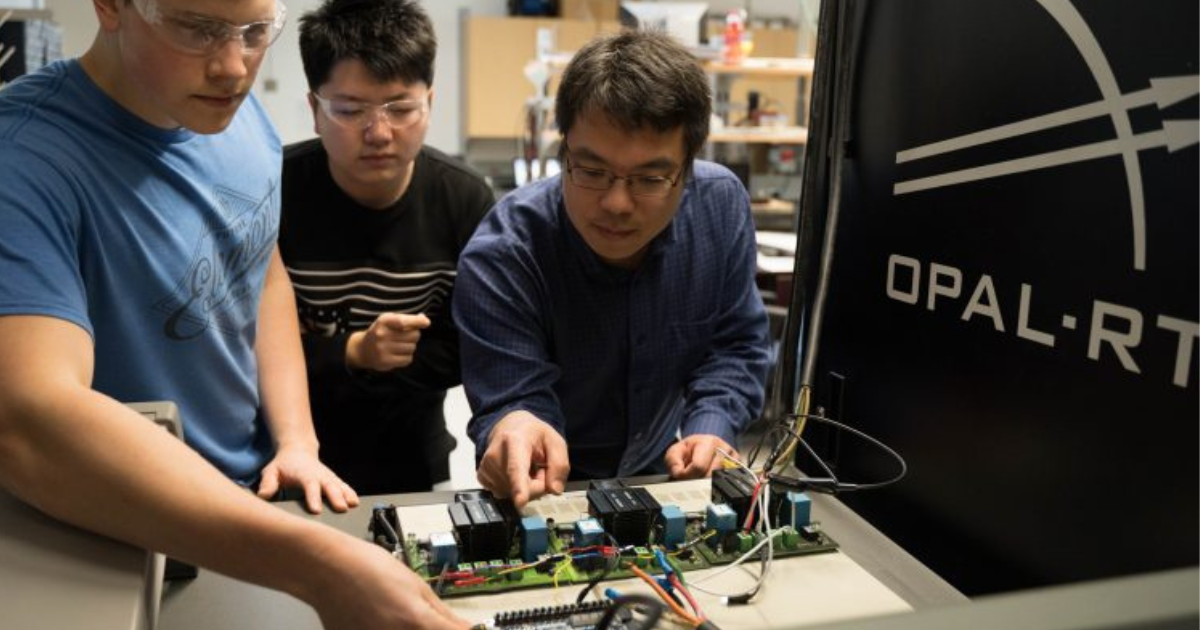
OPAL-RT helps you close the loop between models, controllers, and protection by supplying real-time digital simulators that run at electrical time steps with stable latency. Open toolflows accept standard models, co-simulate with external solvers, and speak common protocols for controllers and relays. Engineers bring plant controllers, converter control boards, and protection devices into HIL without reworking the study model, which preserves consistency and saves time. Teams move from average-value studies to switching-level checks while keeping the same scenario library, datasets, and acceptance criteria.
Project leaders care about throughput, traceability, and cost per tested feature. OPAL-RT provides automation hooks, structured data capture, and repeatable scenario execution so that regression campaigns run day and night with confidence. Utilities and researchers use these capabilities to validate weak-grid tuning, confirm power quality metrics, and prove protection selectivity under challenging conditions. A consistent, high-fidelity platform builds trust across engineering, lab, and operations stakeholders. OPAL-RT is a dependable partner for accurate, repeatable validation in renewable grid work.
Common questions
How is renewable energy integrated into the grid?
Projects interconnect through staged studies, controller tuning, and protection coordination that confirm stability, voltage limits, and power quality. Plant controllers implement reactive support, ramp-rate limits, and ride-through rules set by the interconnection agreement. Real-time testing exercises these functions against weak-grid conditions, switching events, and faults to expose settings that need refinement. Measured performance and clear reports help utilities approve energization with fewer iterations.
How do inverter-based resources affect power quality?
Inverter-based resources use power electronics that can introduce harmonics, flicker, and rapid current changes, especially under fast control actions. Filter design, switching strategy, and control tuning determine how those effects appear at the point of common coupling. Real-time grid simulation produces waveform data that feed Institute of Electrical and Electronics Engineers (IEEE) metrics, making the impact measurable. Corrective actions include retuning controllers, adjusting filters, and coordinating reactive power devices.
What is a weak grid, and why does it matter for inverter tuning?
A weak grid has relatively low short-circuit strength, which makes voltage and frequency more sensitive to converter actions. PLL tracking, current loop gains, and droop settings that work on a strong grid may cause oscillation or trips on a weak one. Real-time studies sweep strength and unbalance while measuring damping, limits, and recovery behavior. Results guide controller settings that keep performance stable without sacrificing responsiveness.
Which tests belong in a hardware-in-the-loop campaign for a solar or wind plant?
A strong campaign includes ride-through events, breaker reclosing, tap change sequences, frequency excursions, and voltage unbalance, plus communications delays. Protection checks cover sensitive earth fault, distance elements, and coordination with converter current limits. Power quality tests add harmonic scans, flicker profiles, and step responses across irradiance or wind variations. Automation scripts repeat these scenarios for firmware changes so regressions are caught early.
When should switching models be used instead of average-value models for converters?
Switching models are preferred when harmonics, filter stress, and electromagnetic interactions need detailed evaluation. Average-value models work well for control tuning, stability studies, and large scenario sweeps where speed matters. A practical workflow starts with average-value studies, then moves selected cases to switching detail for design and compliance. Maintaining a single parameter set across both models keeps results aligned and avoids configuration drift.
Real-time solutions across every sector
Explore how OPAL-RT is transforming the world’s most advanced sectors.
Simulation
03 / 13 / 2026
Modular architectures for building scalable real-time simulation platforms
Learn how to set requirements, define module contracts, manage deterministic time across nodes, scale execution, standardize interfaces, and monitor latency and numerical stability in distributed real-time simulation platforms.
Simulation
03 / 11 / 2026
9 Common hardware in the loop testing pitfalls in embedded and control validation
Nine common hardware-in-the-loop testing pitfalls in embedded and control validation, with practical fixes for timing, model fidelity, solver stability, I/O integrity, protocol behaviour, automation repeatability, and configuration traceability.
Power Electronics
03 / 09 / 2026
FPGA vs CPU for real time power electronics simulation
You’ll learn how to choose CPU, FPGA, or a split approach for real-time power electronics HIL simulation using time step targets, latency and jitter needs, switching model fidelity, partitioning, and workflow constraints.
EXata CPS has been specifically designed for real-time performance to allow studies of cyberattacks on power systems through the Communication Network layer of any size and connecting to any number of equipment for HIL and PHIL simulations. This is a discrete event simulation toolkit that considers all the inherent physics-based properties that will affect how the network (either wired or wireless) behaves.