8 improvements real-time inverter simulation brings to modern power conversion
Simulation
11 / 18 / 2025
Key Takeaways
- Real-time inverter simulation gives engineers a practical way to test power conversion, grid connection, and energy control decisions before hardware is at risk.
- Treating inverters as central elements in renewable systems helps align control tuning, protection logic, and communication protocols with strict grid requirements.
- Accurate inverter models are essential for reliable energy control, since they bridge the gap between design intent, controller firmware, and measured behaviour.
- Hardware-in-the-loop approaches for inverters reduce risk during firmware updates, hybrid plant integration, and grid code validation while shortening development cycles.
- OPAL-RT offers engineers a flexible real-time platform that supports detailed inverter studies, from early control concepts to full hardware testing for renewable projects.
Every time you connect an inverter to a renewable source or the grid, you are betting your reputation on what happens in the next few milliseconds. Those tiny windows of time decide if converters sync cleanly, keep power quality steady, and protect valuable hardware. When your models fall short or your tests skip edge cases, the risk shows up as flicker, nuisance trips, or unexplained controller behaviour in the lab or in the field. Engineers who work on power conversion and control know how stressful that can feel, especially when schedules, budgets, and compliance deadlines are all pressing at once.
Real-time inverter simulation gives you a way to see those fast interactions before hardware is at risk, and to shape control strategies with confidence instead of guesswork. Instead of relying only on offline plots or a few late-stage lab runs, you can exercise controllers across full operating ranges, grid events, and communication scenarios while logging every detail. This approach matters even more as renewable systems grow in capacity and complexity, and power conversion stages carry more responsibility for stability than mechanical assets ever did. The same tools that once felt optional for specialist teams now sit at the centre of how leading groups refine inverter behaviour, qualify designs, and keep field performance predictable over time.
Understanding inverter performance needs across renewable energy systems

Engineers working with renewable systems know that inverters are far more than simple DC to AC converters. They sit between photovoltaic strings, batteries, or wind turbines and the grid connection, and they shape voltage, current, and power quality every cycle. Each design must satisfy grid codes, handle wide operating ranges, and maintain energy control even when irradiance, wind, or load conditions move quickly. That mix of electrical, control, and compliance requirements creates a tight performance target that is hard to hit without precise modelling and systematic testing.
Performance expectations differ across use cases, yet the stakes stay high in each case. Utility-scale solar inverters must manage harmonics and ride-through behaviour during faults, while residential units might focus more on flicker and interaction with local protection devices. Battery energy storage converters juggle state of charge targets, power conversion limits, and fast active and reactive power control to support overall energy management. Hybrid plants that blend solar, storage, and sometimes wind rely on coordinated inverter control across assets so that the site behaves as a single, predictable resource from the grid operator’s point of view. To design confidently for all these situations, you need a way to test controllers, modulation strategies, and protection logic under realistic network and load conditions before field deployment.
Traditional testing on hardware alone usually arrives late, costs significant time, and still leaves blind spots around rare but important events. Offline simulations help with concept studies, yet they do not fully reflect the interaction between digital control, converter switching, and measurement delays in the closed loop. Real-time inverter models close that gap by letting you exercise controllers across the same timing constraints, I/O limits, and signal paths they will see in the lab or in the field. Once this foundation is solid, every additional experiment on power conversion behaviour, energy control strategies, or grid connection scenarios becomes clearer and more repeatable.
8 improvements real-time inverter simulation brings to modern power conversion
Real-time inverter simulation reshapes how you think about risk, debugging effort, and validation coverage for power conversion projects. Instead of building confidence mostly from a few full-power tests, you can accumulate thousands of scenarios that reflect grid connection limits, protection settings, and communication challenges. You also gain visibility into control strategies that were previously hard to stress, such as current limiting, synthetic inertia, or fast reactive support during voltage disturbances. The combined impact shows up as fewer surprises in the lab, smoother commissioning, and a stronger story when you need to explain performance to managers, partners, or regulators.
1. Better evaluation of power conversion accuracy under varied operating points
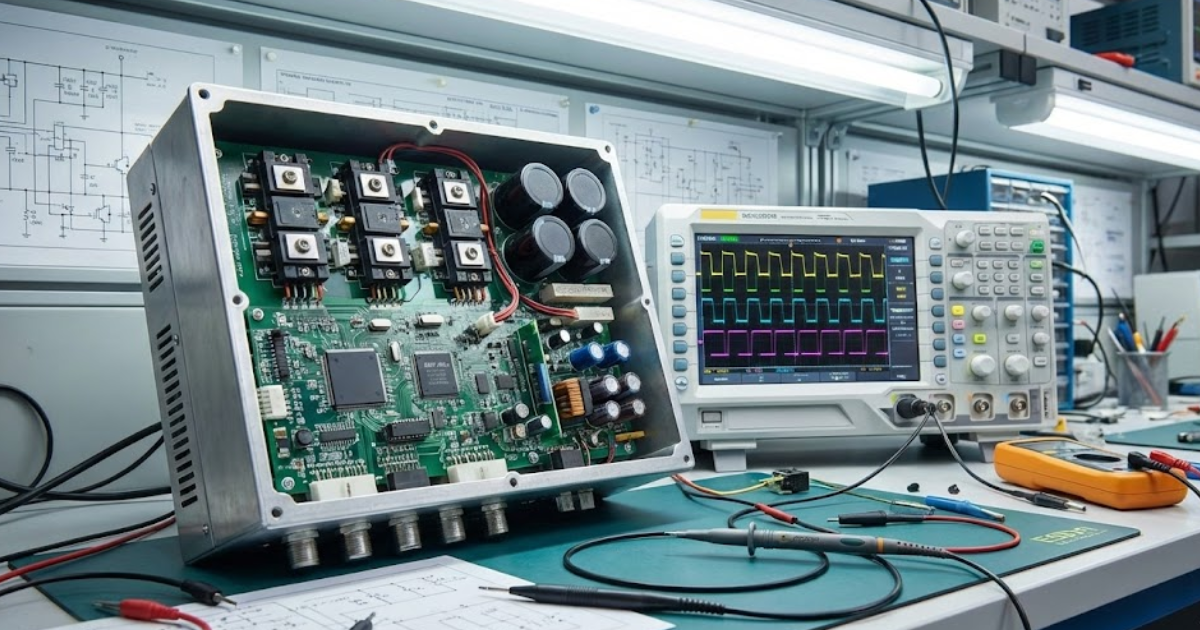
Offline simulations often assume a handful of operating points, yet real plants move across wide ranges of DC voltage, AC voltage, frequency, and load. When you use real-time inverter models, you can sweep these variables continuously while the controller executes on its target processor or on a close prototype. That combination reveals how modulation strategies, current controllers, and phase-locked loops behave when the system moves between light load, rated power, and overload situations. It also exposes subtle timing interactions, such as how ADC sampling instants, PWM updates, and communication delays stack up to affect power conversion accuracy.
For engineers responsible for converter efficiency and power quality, this richer view means you can tune gains, filter parameters, and limiters with real confidence instead of best guesses. You see directly how harmonics, total current distortion, and efficiency vary under each scenario, and you can check the results against project requirements or grid codes without reworking models each time. Because the simulation runs in real time, you can interact with tests the same way you would on a physical rig, adjusting references and monitoring waveforms live instead of waiting for post-processing. That feedback loop shortens the path between theory and hardware implementation, which reduces the chance that a subtle modelling assumption will later turn into an expensive hardware issue. Hardware-in-the-loop testing has become a standard method for this kind of converter assessment, because it joins high fidelity models with actual control hardware in a closed loop.
2. Clear insight into grid connection behavior for stable operation
Grid codes now expect inverters to stay connected and support voltage and frequency through a variety of disturbances, not just under ideal sinusoidal conditions. Real-time simulation lets you represent weak grids, unbalanced phases, faults, and switching events in detail while the converter control interacts with the network. You can reproduce low voltage ride-through profiles, test current injection limits, and evaluate how multiple inverters share responsibility at a point of common coupling. This testing helps clarify where stability margins sit and how much headroom your design has before oscillations or nuisance trips appear.
Stable grid connection is not only about control design, but also about how measurement filtering, PLL tuning, and protection thresholds interact with actual grid impedance. Using real-time models, you can adjust these parameters while watching active and reactive power, voltage, and frequency responses in conditions that mirror challenging grid locations. You also gain the option to scale up complexity gradually, starting from a single converter and growing to feeder models or transmission sections that include many inverter-based resources. The insights from this process reduce surprises during site acceptance tests and help system operators trust that new renewable systems will behave predictably under stress.
3. Improved control system tuning across renewable energy inputs
Control loops for current, voltage, and power must accommodate the fluctuations of solar irradiance, wind speed, and storage state of charge without creating instability. Practical experience shows that this means tuning PI regulators, feedforward terms, and limiters across a broad set of renewable energy inputs instead of a single design point. Real-time inverter simulation lets you feed measured or synthetic profiles for sun, wind, and load into your models while the controller executes in a closed loop. You get to see how fast ramps, shading events, or storage dispatch affect DC link voltage, AC currents, and energy control objectives under time-accurate conditions.
This approach is especially useful when sites combine several sources, since an adjustment that improves behaviour for one part of the plant can unintentionally degrade response elsewhere. With a real-time test bench, you can iterate on controller gains, droop characteristics, and scheduling logic while monitoring both local converter behaviour and plant-level metrics such as power factor or ramp rates. You can also exercise transitions between operating modes, for example from maximum power point tracking to curtailment or from grid-following to grid-forming behaviour. These experiments bring interactions to light early and help you converge more quickly on control settings that keep renewable systems stable, efficient, and responsive to operator commands.
4. Faster testing of inverter protection responses during stress events
Protection functions inside inverters often decide millisecond-scale outcomes during faults, overcurrent events, or abnormal frequency situations. Testing these responses only on physical hardware can be risky for equipment and difficult to repeat with the exact same fault shape each time. Real-time simulation lets you inject precisely shaped faults, overvoltage profiles, and frequency excursions while monitoring protections ranging from current limits to anti-islanding logic. You can run the same sequence many times as you tweak thresholds, timers, and coordination with external protection equipment, which would be hard to achieve with field tests alone.
Stress events rarely occur under perfect conditions, so it helps to vary parameters such as grid strength, load mix, and the presence of other converters while you exercise protections. Real-time testing gives you this flexibility while keeping the device under test safe, since the worst that can happen in the simulator is an unstable numerical step that you can diagnose and fix. Measured protection responses then serve as evidence for utilities, certifiers, or internal stakeholders who need assurance that grid connection requirements are met. Over time, these protection studies reduce the chance of unexpected trips, miscoordination, or undocumented behaviour that might otherwise show up only after commissioning.
“Treating real-time inverter simulation as a routine part of development turns testing from a late hurdle into a steady source of insight.”
5. Stronger assessment of energy control strategies in hybrid configurations
Hybrid plants that combine solar, storage, and sometimes wind or small rotating machines rely on layered energy control strategies. At the plant level, an energy management system allocates setpoints to different inverters, then each device applies its own current, voltage, and protection controls. Real-time simulation lets you represent this full stack, from dispatch algorithms down to switching events, while keeping communication delays and measurement latencies realistic. You can evaluate how the plant responds when grid operators change active or reactive power schedules, request frequency support, or trigger curtailment events during congestion.
Engineers can also study how hybrid sites behave during fuel-saving modes or transitions between different control hierarchies. For example, you might test how a battery inverter steps in to keep DC link voltage under control when a solar section ramps down quickly under cloud cover. Real-time tools make it possible to measure not just instantaneous currents and voltages, but also energy metrics such as battery throughput, state of charge swings, and cycling profiles under different control strategies. Those insights help you refine plant-level logic so that assets share stress fairly, energy targets are met, and long term equipment health stays within acceptable limits.
6. Reliable validation of communication protocols for modern inverters
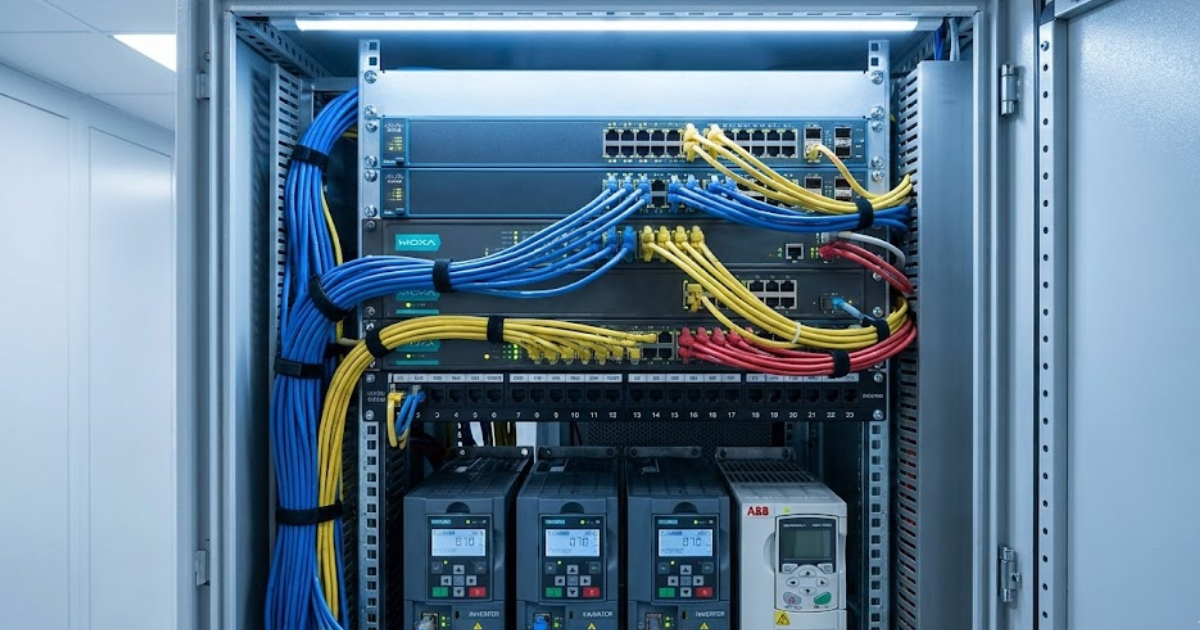
Modern inverters rarely operate as stand-alone units, since they typically connect to supervisory controllers, plant SCADA systems, or utility interfaces through standard protocols. Misunderstandings in these communication links can cause incorrect setpoints, delayed responses, or missed alarms that overshadow otherwise solid electrical design. Real-time simulation gives you a controlled context to test communication stacks, mapping, and timing under high traffic, faulty packets, and configuration changes. You can check that protocols such as generic device models, custom TCP or UDP interfaces, or serial links behave correctly while the inverter model responds just as a field unit would.
This approach makes it easier to reproduce rare communication glitches that operators report, then verify fixes before deploying new firmware. You can also run long-duration tests with scripted sequences that mix commands, faults, and data logging tasks, which can be difficult to schedule on physical test benches. Because the inverter control runs in a closed loop with the simulated grid connection, you see the full chain from a message on the wire to the effect on voltage, current, and power output. That traceability helps software, control, and protection teams work from the same evidence when deciding how to adjust priorities, timeouts, or controller behaviour.
7. Reduced risk when updating firmware and digital control functions
Once a converter ships, firmware updates become a sensitive topic for both suppliers and owners. A patch that aims to improve efficiency or add grid support functions can accidentally affect start-up sequences, protection timing, or compliance behaviour. Hardware-in-the-loop setups with real-time inverter models provide a safe way to exercise new firmware against a library of operating scenarios before touching any installed unit. You can reuse test sequences from previous validation campaigns, then add new ones that target changed functions, without rewriting the plant model each time.
For teams that maintain several product variants, this approach also supports regression testing, since you can swap control code or configuration files while keeping the rest of the setup consistent. You can hit corner cases such as unstable network voltages, extreme temperatures modelled as sensor offsets, or stressed cooling conditions that would be hard to reproduce on a bench. The outcome is a firmware release process that relies less on limited field trials and more on structured, repeatable evidence from your inverter simulation platform. Over time, this builds trust within your organisation that firmware updates will improve behaviour without introducing new failure modes.
8. More efficient prototyping cycles with earlier detection of issues
Early design phases often involve rapid iterations on control algorithms, switching strategies, and sensing concepts. When prototypes depend entirely on new hardware builds, every change costs weeks and ties up lab resources that could support several projects. Real-time inverter simulation shifts much of that effort into models and firmware that you can update in hours, which lets you try more ideas and discard weak ones before layout or manufacturing. Teams get feedback on stability, efficiency, and compliance behaviour long before they commit to power stages or magnetics, and they can reserve hardware testing for final confirmation.
Earlier detection of control or integration issues also reduces the likelihood of schedule slips that stem from late-stage rework. When a real-time simulator is part of your prototyping workflow, engineers can run automated test suites overnight, analyse results in the morning, and adjust models or code during the day. This rhythm keeps knowledge flowing across control, hardware, and systems engineers, because everyone can see data that reflects realistic grid connection and load conditions. As a result, prototypes arrive in the lab closer to a mature state, freeing lab time for final tuning, hardware validation, and training rather than debugging fundamentals.
| Improvement | What it focuses on | Key benefit for inverter projects |
| Better evaluation of power conversion accuracy under varied operating points | Full operating range behaviour and timing effects | Confident tuning of accuracy and efficiency across all operating points |
| Clear insight into grid connection behavior for stable operation | Grid strength, faults, and multi-inverter interaction | Better stability margins and fewer grid-related surprises |
| Improved control system tuning across renewable energy inputs | Controller performance under changing renewable and load profiles | Stable, responsive control across solar, storage, and wind inputs |
| Faster testing of inverter protection responses during stress events | Protection logic for faults, overcurrent, and abnormal frequency | Safer, more repeatable validation of protection settings |
| Stronger assessment of energy control strategies in hybrid configurations | Plant-level energy management across multiple assets | Better energy control decisions and fair stress sharing across equipment |
| Reliable validation of communication protocols for modern inverters | Protocol correctness, timing, and robustness | Fewer communication-related outages or misoperations |
| Reduced risk when updating firmware and digital control functions | Firmware regression and change management | More predictable firmware updates with evidence to support each release |
| More efficient prototyping cycles with earlier detection of issues | Early-stage control and integration testing | Shorter prototyping cycles and fewer late design changes |
Treating real-time inverter simulation as a routine part of development turns testing from a late hurdle into a steady source of insight. The same platform that checks power conversion accuracy can also stress grid connection behaviour, control tuning, protection responses, and communications under consistent conditions. As teams use these capabilities across projects, they build reusable models, test scenarios, and reporting patterns that raise the overall quality of their energy control solutions. This practice ultimately supports more reliable renewable systems, fewer surprises in the field, and a smoother path from concept to long-term operation.
“Every time you connect an inverter to a renewable source or the grid, you are betting your reputation on what happens in the next few milliseconds.”
Why accurate inverter models matter for reliable energy control
Accurate inverter models are the foundation for any serious real-time testing strategy. If the electrical behaviour or control logic in your model deviates too far from the physical converter, test results can create a false sense of security. For energy control applications, this mismatch can show up as incorrect responses to grid operator requests, poor tracking of power schedules, or unexpected behaviour during disturbances. High-fidelity models help you close that gap so that decisions based on simulation match what equipment will do when installed.
- Faithful electrical behaviour: Detailed switching, filter, and transformer representations capture harmonics, transients, and steady-state behaviour with enough accuracy for control and protection studies. This level of detail lets you examine power quality, thermal stress, and current sharing without guessing how the converter might respond under complex conditions.
- Consistent control implementation: Models that mirror firmware algorithms and sampling strategies ensure that tuning work in simulation carries over directly to embedded code. You avoid situations where gains that looked stable offline become oscillatory on hardware because discretization, delays, or limits were treated differently.
- Correct interaction with grid connection models: Inverter models that include realistic current limits, saturation behaviour, and ride-through logic interact properly with network equivalents and full grid models. These details matter when assessing voltage support, frequency control, and fault behaviour for renewable systems connected to weak or stressed grids.
- Credible energy control assessment: When plant-level energy controllers rely on setpoints, state estimates, and status flags from inverters, accurate models ensure those signals behave as they would in the field. This alignment supports reliable assessment of curtailment strategies, storage scheduling, and participation in ancillary service markets.
- Reusable validation assets: High-quality inverter models can support multiple projects, since they provide a trusted base for new topologies, ratings, or firmware variants without starting from scratch. Over time, this shared modelling library shortens new project setup and improves consistency across teams and sites.
- Stronger communication with stakeholders: Clear, accurate simulation results make it easier to explain inverter behaviour to utilities, certifiers, and internal leaders who must sign off on designs. Well-matched models and measurements show that your energy control strategies rest on solid technical evidence instead of optimistic assumptions.
Investing effort in accurate inverter models pays off every time you reuse them for new operating scenarios, firmware versions, or project proposals. The same model that supports early feasibility studies can later serve as the core for hardware-in-the-loop testing and grid connection assessments. As you refine these models against measured data and field feedback, confidence in their predictions grows, and teams begin to treat them as a shared reference. That confidence is essential when your energy control solutions are expected to keep critical loads supplied, support grid stability, and meet strict contractual commitments.
How OPAL-RT supports precise testing of inverter performance
OPAL-RT focuses on real-time simulation platforms that let you link detailed inverter models with actual controllers, communication stacks, and protection devices in a closed loop. For a power electronics or grid engineer, that means you can connect prototype control hardware to a simulator that reproduces grid connection conditions, renewable sources, and loads with microsecond time steps. You can trigger faults, vary network strength, or replay measured renewables data while recording how your inverter responds, then reuse the same test scenarios whenever firmware or settings change. Because the architecture is open and modular, you can integrate your preferred modelling tools and I/O hardware rather than rebuilding an entire lab around a closed test bench. This flexibility speaks directly to teams that juggle multiple converter platforms, communication protocols, and grid models across projects and cannot afford separate setups for each one.
OPAL-RT also supports practical workflows that matter day to day, such as automated regression testing of firmware, long-duration stability studies, and hybrid plant controller validation. Engineers can start from existing offline models, partition them for real-time execution, then grow step by step toward hardware-in-the-loop setups that run at full controller rates. Lab managers gain a single simulation and I/O platform that covers converter development, factory tests, and utility-facing studies, which simplifies training and maintenance. For organisations that treat inverter performance as a strategic asset, these capabilities provide a dependable path to deeper insight, fewer field issues, and stronger confidence in every release. That mix of realism, repeatability, and openness makes OPAL-RT a trustworthy partner for engineers who cannot compromise on how inverters behave once connected to the grid.
Common questions
What is the role of inverters in energy systems?
Inverters act as the interface between DC sources such as solar arrays or batteries and AC networks, which can be local microgrids or large utility systems. They convert DC power to AC with controlled voltage, frequency, and phase, and they increasingly provide reactive support, fault ride-through, and frequency services. Because mechanical inertia continues to decrease in many grids, inverters now carry more responsibility for stability, power quality, and protection coordination. Accurate models and real-time testing help you verify that these devices meet grid codes, interact correctly with protection schemes, and support wider energy control objectives.
How do inverters support renewable integration and grid stability?
Inverters connected to renewable systems regulate active and reactive power so that plants follow schedules, respect ramp limits, and respond to frequency or voltage changes. They also apply control modes such as volt VAR control, frequency watt control, or grid-forming operation to help keep voltages and frequency within acceptable bounds at the point of connection. During faults, well-designed controls inject current in line with grid code requirements and decide when to stay connected or disconnect. Real-time simulation lets you test these behaviours across a wide range of operating conditions, which is essential when integrating large shares of converter-based generation into existing grids.
How accurate should inverter models be for hardware-in-the-loop testing?
For hardware-in-the-loop applications, inverter models should represent electrical dynamics with time steps small enough to capture switching effects and controller interactions, typically in the microsecond range. At the same time, they need to follow the same control structure, limits, and sampling strategies used in firmware, so that tuning work carries over directly. You do not always need a fully detailed semiconductor-level representation, but you should include filters, transformers, and current limits in enough detail to reproduce key behaviours under faults and fast transients. Validation against measured waveforms from a prototype or existing product gives confidence that the model is suitable for closed-loop tests across your target scenarios.
When should you move from offline studies to real-time inverter simulation?
Teams usually start with offline studies while exploring concepts, but real-time inverter simulation becomes important once control structures, protection logic, and grid connection requirements are reasonably defined. At that stage, questions about timing, communication protocols, and interaction between multiple inverters or controllers become harder to answer with static simulations alone. Real-time platforms let you test controllers in the loop, exercise communications, and replay disturbance records, which gives a more complete picture of behaviour before committing to large hardware builds. If several groups need to share a limited number of prototypes, a simulator can also serve as a central asset that supports parallel development on firmware, protection settings, and energy management strategies.
How can teams get started with real-time inverter testing?
A practical starting point is to identify one or two inverter applications where grid connection tests or energy control studies are currently painful, then map the key models and I/O required. From there, you can build a first version of the inverter and grid model, connect a controller or processor-in-the-loop setup, and validate basic functions such as setpoint tracking and protection trips. Once this core behaves credibly, additional features such as communications, hybrid plant controls, and automated test sequences can be added step by step. Training engineers on the platform and capturing reusable test scripts early helps ensure that the simulator becomes a shared resource, not a specialised tool used only by one expert.
Real-time solutions across every sector
Explore how OPAL-RT is transforming the world’s most advanced sectors.

Automotive
01 / 29 / 2026
9 Motor drive fault injection scenarios for controller validation
Motor drive fault injection scenarios for HIL controller validation, with clear pass criteria and a practical order for running inverter and sensor faults.
Simulation, Microgrid
01 / 27 / 2026
Why simulation is vital for renewable microgrid design and cybersecurity
Practical guidance on renewable microgrid simulation and energy simulation cybersecurity, focused on controls, protection, transients, and cyber scenarios.

Power Systems
01 / 27 / 2026
Building a regression testing pipeline for HIL in electrification teams
Practical guidance on HIL regression testing and test automation for electrification teams, from pipeline setup and test design to CI integration, data handling, and failure modes.
EXata CPS has been specifically designed for real-time performance to allow studies of cyberattacks on power systems through the Communication Network layer of any size and connecting to any number of equipment for HIL and PHIL simulations. This is a discrete event simulation toolkit that considers all the inherent physics-based properties that will affect how the network (either wired or wireless) behaves.