A multiphase PMSM guide for high reliability electrified applications
Power Electronics
01 / 13 / 2026

Key Takeaways
- Fault tolerant drives succeed when partitions, detection, and derating rules are set before control tuning starts.
- A 12 phase motor buys ride-through and thermal margin, but only if you control non-torque currents and sensor health.
- High-fidelity modelling and real-time fault testing turn multiphase PMSM complexity into predictable behaviour.
A multiphase permanent magnet synchronous motor (PMSM) will keep useful torque available after faults that would stop a three-phase drive. That matters when a protection trip is not acceptable, even for a short window. Heat still sets the lifetime ceiling, and a 10°C rise in operating temperature cuts insulation life in half. Extra phases give you more ways to share current and stay inside thermal limits.
A 12-phase motor takes that idea to its logical end: spread power across more phases, partition the inverter, then control the machine so fault modes look like controlled derating instead of a hard stop. The upside is predictable fault response, smoother torque, and better current distribution under stress. The trade is engineering effort in control, sensing, and validation, and you will feel that effort early. Clear requirements keep the effort pointed at reliability, not complexity for its own sake.
“Fault ride-through is designed into the partitions, not bolted on later.”
Multiphase PMSMs redefine reliability limits of permanent magnet machines
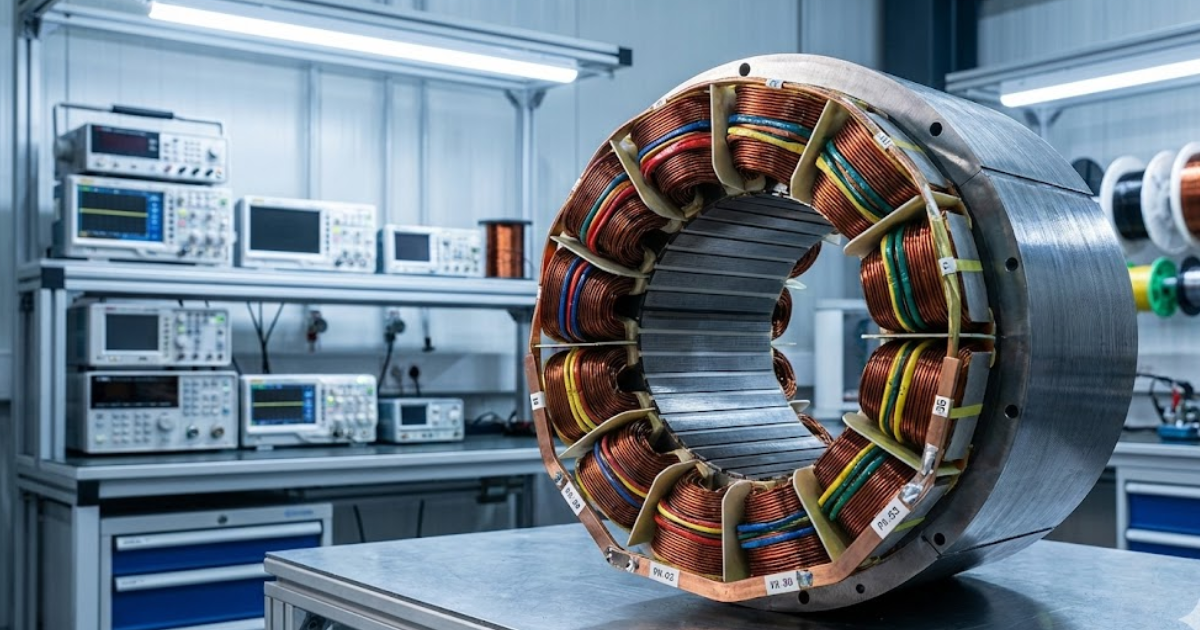
A multiphase PMSM is a permanent magnet synchronous motor with more than three stator phases. Extra phases create extra current paths, so a single open phase or a single inverter leg fault will not automatically mean zero torque. Operation continues by redistributing current among healthy phases. You accept reduced torque, not an immediate shutdown.
Picture an aerospace actuator that must keep moving during a single fault, because stopping mid-stroke creates its own hazard. A three-phase drive that detects an open switch often trips and waits for a reset. A 12-phase PMSM, split into independent phase groups, lets you isolate the bad group and keep the rest producing torque. The actuator still completes its motion, just with tighter limits.
That shift changes what “reliability” means at the drive level. Faults become operating modes with torque, speed, and time requirements. Supervision must also separate “fault, keep going” from “fault, stop now.” Multiphase hardware gives you the degrees of freedom, but disciplined fault design turns them into availability.
A 12-phase motor architecture changes fault tolerance assumptions
“Twelve phases do not create reliability on their own; disciplined execution does.”
Winding layout and inverter partitioning decide what faults you can survive and how cleanly you can isolate them. A common approach uses multiple phase groups fed by separate inverter segments, which turns a single failure into reduced capability. Fault ride-through is designed into the partitions, not bolted on later.
Take a high-power traction unit that must keep rolling after a switch fault. A segmented 12-phase layout disables only the affected segment and keeps the remaining segments active. The DC link stays up and supervision applies a torque cap. You get controlled motion without bypassing protection.
Five architecture decisions should be locked early, because they set the fault envelope and the wiring:
- Phase group partitioning
- Inverter segment boundaries
- Fault detection signals and timing
- Cabling and connector segmentation
- Derating and current limits
These choices lock in fault current paths and sensor requirements. When partitions match your safety goals, a fault becomes a managed state, not an outage. When they do not, extra phases will not save you.
Torque smoothness and current sharing improve thermal and lifetime margins
More phases reduce the current each phase must carry for the same power, which smooths torque and heat. Lower per-phase current reduces copper loss density and eases thermal gradients across the stator. Electromagnetic forces spread across more slots, cutting torque ripple and vibration in mounts and geartrains. Smooth torque protects hardware, not just comfort.
A good way to see this is a propulsion motor running at low speed with high torque. Three-phase torque ripple shows up as shaft speed ripple, then as gearbox noise and bearing loading. A 12-phase PMSM can push ripple frequency higher and reduce ripple amplitude, so the speed controller works less. Mechanical parts see fewer cyclic loads and the temperature rise is easier to cap.
Thermal margin is also the budget that buys you ride-through time. When one phase group is disabled, remaining phases carry more current and losses rise quickly. Multiphase current sharing spreads that penalty across more copper and iron, keeping hot spots lower. Your sizing target is the worst credible fault mode, not the clean healthy case.
Control complexity becomes the primary tradeoff engineers must manage
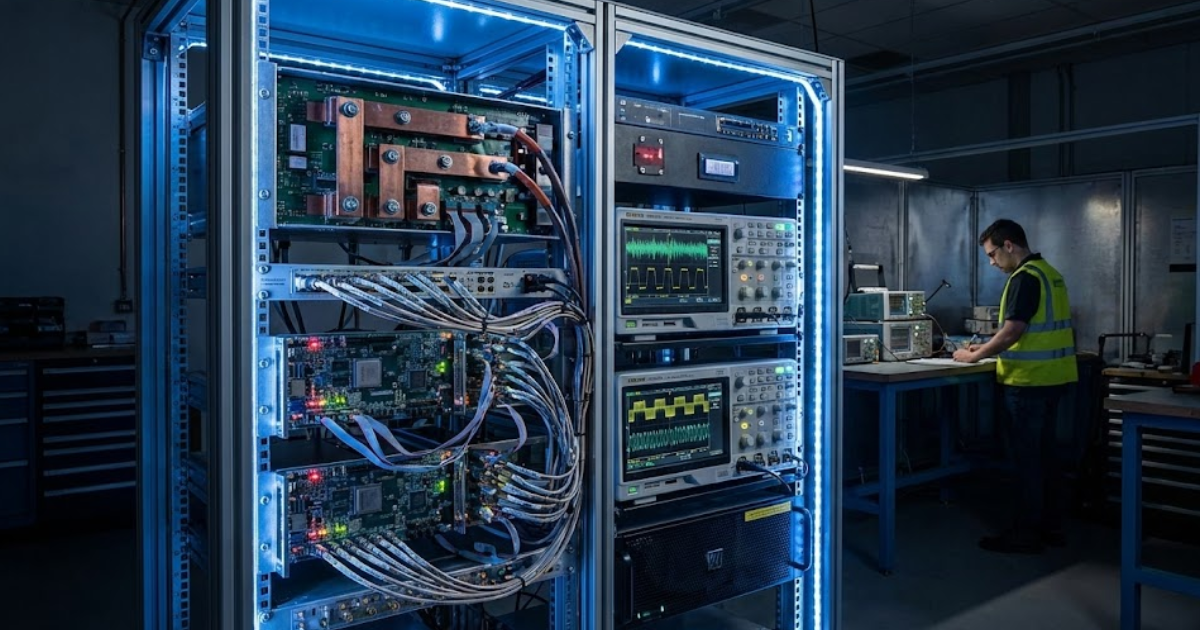
Control is the main trade for multiphase PMSMs because you manage more phase currents, more PWM channels, and more fault states. Extra control freedom can create non-torque currents that raise RMS heating without adding torque. Wiring or sign errors can hide until you hit a limit. Reliable behaviour comes from keeping those details bounded.
Consider a 12-phase inverter near its current limit when one current sensor drifts. If the controller trusts that signal, copper loss can rise with little torque change, then a false trip follows. When a phase group is isolated, gains and limits must switch cleanly to avoid torque steps. Slow switching shows up as overcurrent trips.
| Control focus | What must be right |
| Phase ordering and axis conversion | A sign error creates heating that is hard to notice |
| Non-torque current limits | Limit harmonic components so RMS heating stays bounded |
| Fault-mode switching | Keep stability when you isolate a segment |
| Sensor plausibility | Separate sensor bias from true phase faults |
| Test coverage | Test entry transient, fault operation, and recovery |
Define fault-mode limits first. Validate entry and recovery until plots are boring. Boring is the goal when fault tolerance is on the line.
Where multiphase PMSMs outperform three-phase machines in practice
Multiphase PMSMs outperform three-phase machines when your system must keep moving through a single fault. They fit safety-critical actuation and traction where a limp-home mode is required. The payoff is highest when inverter segmentation keeps the DC link stable and isolates only the failed segment. That keeps upstream converters and batteries out of trips.
A runway service vehicle that loses a power stage leg still needs to clear the area. With a 12-phase traction motor split into phase groups, the controller isolates the affected group and holds a reduced torque cap that keeps the axle turning. Operators get mobility without disabling protection. The same pattern fits industrial units where a trip forces a long restart and lost production.
Motor reliability also connects to energy use at scale. Electric motor systems were responsible for 53% of global electricity consumption. Smooth torque and controlled fault operation cut heat and stress cycles, which extends component life. You still need a cost case for extra inverter hardware and a test plan that matches the fault requirement.
Common misconceptions about cost, efficiency, and control overhead
The first misconception is that more phases mean efficiency gains. Extra phases can reduce current per conductor, but they also add copper, switches, drivers, and sensors that add loss. Efficiency improves only when the design uses extra phases to reduce ripple losses and thermal peaks without adding switching loss you cannot recover. A loss budget beats a rule-of-thumb.
You will also hear that multiphase is just redundancy, as if it is a spare motor hidden inside the stator. That framing misses the control reality. Redundancy needs stable control in each fault mode, and it needs a clean transition without torque steps that upset mechanics. A 12-phase motor that cannot transition safely into a fault mode is not fault-tolerant, it is simply complicated.
A third misconception is that fault tolerance comes “for free” once you choose a 12-phase winding. Shared cabling points, common busbars, or a single cooling bottleneck can erase your extra phases. A short at a common point can still take all phase groups offline. Cost and overhead pay back only when you remove single-point failures across the full chain from winding to inverter to control.
Why accurate modelling matters more for multiphase than three-phase drives
Multiphase machines punish simplified models because faults and phase imbalance excite dynamics a basic torque model hides. Coupling, saturation, and inverter non-idealities create current components a three-phase tuning workflow will miss. If the model is too clean, your controller will look stable in simulation and unstable on hardware. That gap shows up fast during the first fault injection.
Testing shows the problem in a simple open-phase scenario. A controller tuned on an ideal model can push current into remaining phases, then hit oscillation because cross-coupling and voltage limits were not represented. A fuller model will show the non-torque currents and the voltage headroom that collapses at high speed. That difference is the gap between smooth derating and a protective trip.
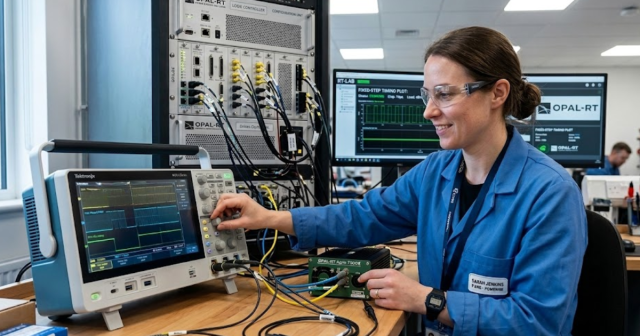
Hardware-in-the-loop makes this repeatable and safer. A real-time plant model lets you inject a phase open, a shorted switch, or a sensor bias without risking a prototype motor. OPAL-RT is one platform teams use for real-time multiphase machine modelling so the controller sees realistic transients and coupling. Accurate modelling does not guarantee success, but inaccurate modelling will guarantee rework.
Real-time simulation constraints shape viable multiphase control strategies
Real-time testing forces control strategies that stay stable under timing, quantization, and switching limits, not just in a solver. Step size and PWM update rates define what you can validate and what must be protected with margins. Fault ride-through is won or lost in the first milliseconds of mode entry. Those milliseconds are where timing, limits, and noise show up.
A practical workflow starts with a fault requirement matrix, then ties each fault to current limits, torque targets, and thermal timers. Hardware-in-the-loop runs the cases with repeatable fault injection and logging, so you see entry transients, steady fault behaviour, and recovery. Plots should show bounded currents and smooth torque. When they do, fault modes are predictable instead of scary.
Multiphase PMSMs pay off when you treat control and validation as part of the motor choice, not an afterthought. OPAL-RT fits when you need deterministic real-time fault testing so controller behaviour is proven under stress. If you cannot budget that discipline, a simpler three-phase system will be the safer choice. Twelve phases do not create reliability on their own; disciplined execution does.
Real-time solutions across every sector
Explore how OPAL-RT is transforming the world’s most advanced sectors.
Industry applications, Simulation
03 / 31 / 2026
Managing high-frequency switching in real-time EMT simulation
Precision in testing complex power systems is essential to avoid failures, accelerate innovation, and integrate new technologies safely.

Simulation
03 / 30 / 2026
Understanding timestep requirements for modern power converters
Practical criteria for selecting EMT and real time simulation timesteps for power converters, covering switching resolution, control and PWM timing alignment, multirate approaches, and verification checks.

Energy, Industry applications, Simulation
03 / 29 / 2026
Validating data center energy management systems using real-time HIL
This piece explains how AI workload variability affects data centre power stability and how closed-loop HIL testing helps validate EMS control behaviour under site and grid stress.
EXata CPS has been specifically designed for real-time performance to allow studies of cyberattacks on power systems through the Communication Network layer of any size and connecting to any number of equipment for HIL and PHIL simulations. This is a discrete event simulation toolkit that considers all the inherent physics-based properties that will affect how the network (either wired or wireless) behaves.