Hardware in the loop vs software in the loop guide for engineers
Power Electronics
08 / 21 / 2026

Key Takeaways
- Software-in-the-Loop fits early control validation because it exposes logic issues quickly and supports broad regression at low setup cost.
- Hardware-in-the-Loop becomes necessary once timing, I/O, and embedded interfaces can change controller behaviour.
- Teams get the best validation flow when SIL, PIL, and HIL share models, test intent, and pass criteria across stages.
Choose Software-in-the-Loop when your next risk sits in control logic, and choose Hardware-in-the-Loop when your next risk sits in timing, I/O, and embedded integration.
Teams lose time when they debate labels instead of matching the test stage to the fault they need to expose. Poor software quality cost the United States at least US$2.08 trillion in 2020. That number matters here because late defect discovery usually means bench rework, schedule slip, and repeated calibration. Strong validation moves from software models to compiled code to hardware timing in the order that removes the next risk with the least friction.
SIL validates control behaviour before physical I/O exists
Software-in-the-Loop checks controller logic against a simulated plant before a target controller or power stage reaches your bench. You run the control as model code or host software. Faults stay visible and easy to trace. SIL fits early design, calibration, and regression work.
A motor control team can use SIL to test current limits, torque ramps, and fault recovery long before inverter hardware is wired. The same applies to a flight control law that must reject sensor noise without causing oscillation. Each failed case points back to equations, gains, or state logic that you can inspect with full signal access. That visibility cuts the time spent guessing where behaviour went off target.
SIL also gives you cheap repetition. You can run thousands of scenarios overnight, change one parameter, and compare the output before lunch. That speed matters most when requirements are still settling and code moves daily. Bench hardware would slow that loop because every retest depends on flashing devices, wiring checks, and lab access.
HIL validates embedded interfaces under real time constraints

Hardware-in-the-Loop connects the actual controller to a plant model that runs in real time, so you verify software behaviour under the same timing and I/O conditions it will face in service. The focus shifts from algorithm intent to execution truth. HIL exposes missed deadlines, signal conditioning errors, and interface faults.
A brake controller offers a clear example. The plant model sends wheel speed, pedal input, and hydraulic states to the ECU, then receives valve commands back with strict cycle timing. Motor vehicle crashes claimed 42,514 lives in the United States in 2022. Safety functions need bench validation that catches timing and interface failures before vehicle or track testing starts.
HIL matters once your main unknown sits at the boundary between software and hardware. ADC scaling, PWM latency, CAN message handling, and fault pin responses often look fine in a desktop model yet fail on a bench. That gap is why teams treat HIL as an integration filter, not just a nicer simulator. It gives you evidence that the controller still behaves correctly when the clock is strict and the signals are physical.
Timing fidelity marks the boundary from SIL to HIL
“The main difference between Software-in-the-Loop and Hardware-in-the-Loop is deterministic timing plus electrical interaction.”
SIL checks logic with flexible execution on a host machine. HIL checks execution under fixed sample times and physical interfaces. That boundary determines which faults you will catch and which faults you will miss.
| Checkpoint | Software-in-the-Loop answer | Hardware-in-the-Loop answer |
|---|---|---|
| Where the controller runs | The control usually runs as model code or host software on a workstation. | The control runs on the actual embedded controller connected to a real-time simulator. |
| How time is handled | Execution speed can float because strict wall-clock timing is rarely the main test objective. | Execution must meet fixed sample times because late responses are part of the failure set. |
| What signals look like | Signals stay numerical and internal, so you can inspect nearly every state with ease. | Signals pass through physical I/O, so scaling, delay, and conditioning become test targets. |
| Which bugs appear first | Logic errors, unstable tuning, and mode-switch mistakes surface early and clearly. | Deadline misses, bus handling faults, and interface timing problems surface under load. |
| When the method pays off | This stage pays off when software changes quickly and hardware access is scarce. | This stage pays off when integration risk is high and bench timing must be trusted. |
A battery management controller shows the line clearly. Cell balancing logic can look perfect in SIL, yet the embedded unit can still mis-handle interrupt timing or analogue front-end scaling during HIL. That is why timing fidelity is the deciding factor, not the model name or team preference. Once clock accuracy and physical interfaces affect pass or fail, you have crossed into HIL territory.
SIL works best when code changes outpace hardware access
SIL is the right first stop when software revisions arrive faster than your bench can absorb them. You can validate functional intent, tune parameters, and expand regression coverage without waiting for boards, harnesses, or lab slots. That makes SIL the practical choice during active design churn. It keeps engineers focused on logic instead of setup overhead.
An energy storage control team can test charge limits, thermal thresholds, and mode switching with a plant model that represents the pack and converter. A new control branch can be checked the same day it lands in version control. Test cases can also be linked to requirements so a failed update points straight to the affected logic path. That kind of cycle is hard to match once a shared hardware bench enters the schedule.
SIL also suits fault campaigns that would be awkward or unsafe to force on physical equipment. You can inject impossible sensor spikes, broken state estimates, or extreme load transitions without risking hardware damage. Those cases sharpen the controller before interface work begins. Teams that skip this stage usually push basic logic faults into later benches where they cost more time to isolate.
HIL pays off when integration risk moves to interfaces
HIL earns its keep when your main uncertainty shifts from software logic to timing, wiring, buses, and embedded I/O. The bench will show if the controller still behaves correctly once schedulers, interrupts, converters, and communications all act at once. That answers a different question from SIL. It tests execution under pressure.
A power electronics controller illustrates the point well. Gate commands, trip signals, and current feedback can all look clean in a host model, yet the bench can reveal clipped ranges, late sampling, or incorrect dead time handling. Sensor emulation also lets you inject line faults, missing pulses, or noisy measurements without risking a high-power setup. Those tests matter because interface failures often hide until the controller meets physical signal paths.
HIL also supports sign-off conversations better than broad desk simulation alone. You can show exact response times, bus loads, and fault recovery at the controller pins. That evidence helps technical leads decide if a system is ready for dyno, rig, or field activity. The method costs more than SIL, but it pays back when integration issues are your top source of delay.
PIL checks compiled code before full hardware integration
Processor-in-the-Loop sits between software models and full hardware benches. It runs compiled controller code on the target processor or a processor-representative board while the plant remains in software. That exposes code generation issues, numerical differences, and basic timing effects. PIL answers whether compiled code still matches model intent.
A fixed-point control routine is a common case. The model can behave well in floating point, then show overflow, quantisation, or scheduler jitter once the compiled code runs on the processor. PIL catches that shift before you spend time wiring a complete HIL bench. It is especially helpful for auto-coded controllers where the model looks correct but the generated implementation needs proof.
PIL will not replace HIL because it does not cover full electrical I/O or bench-level interface behaviour. It will, however, remove a costly middle layer of uncertainty. Teams that use PIL well arrive at HIL with fewer code-generation surprises and cleaner timing baselines. That makes later integration work narrower and easier to debug.
Workflow continuity matters more than any single test stage
A broken handoff between SIL, PIL, and HIL wastes more time than a weak result inside one stage. You need consistent models, repeatable test cases, and comparable pass criteria so each stage adds evidence instead of forcing rework. The strongest workflows preserve intent from desktop simulation to bench execution. That continuity is where schedule discipline comes from.
A control team can keep one plant model, one scenario library, and one naming scheme across all stages. A torque limit test that fails in SIL should be recognisable in PIL and HIL without a fresh rewrite of the acceptance logic. OPAL-RT fits this execution need because teams can carry simulation work from model-based validation into real-time benches without rebuilding the full workflow each time. That continuity shortens debug loops and keeps failure evidence consistent across tools and labs.
You also protect engineering trust when the chain stays intact. If every stage uses different assumptions, the team spends review time arguing about setup instead of behaviour. Clean continuity makes escalation simpler because each failure has a traceable history. That matters to lab managers and technical leads who need proof, not just test activity.
Choose the test method that removes the next risk
“The method that deserves your next hour is the one that will expose the next failure with the least setup.”
The right verdict is simple. Use SIL for logic and calibration, use PIL for compiled code checks, and use HIL for timing plus interface proof. Teams get better results when they choose the next stage by failure mode, not by habit. That approach keeps cost, lab time, and debugging effort aligned.
- Pick SIL when model access and scenario volume matter most.
- Pick PIL when generated code needs processor-level proof.
- Pick HIL when sample time and physical I/O can change the result.
- Move forward only after the current stage removes its main unknown.
- Keep the same test intent across stages so evidence stays comparable.
A disciplined validation plan will look plain on paper, yet it saves the most time in practice. You do not win by putting every test on a hardware bench too early, and you do not win by staying in software after timing becomes the main risk. OPAL-RT makes sense in that context because some teams need both paths inside one execution flow, from early model checks to strict real-time benches.
Real-time solutions across every sector
Explore how OPAL-RT is transforming the world’s most advanced sectors.

Power Electronics
09 / 30 / 2026
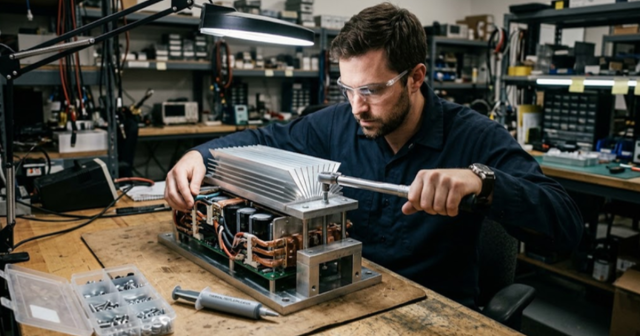
FPGA simulation for power electronics and motor drives
A technical comparison of CPU and FPGA solver architectures for power electronics and motor drive simulation, covering the timestep each reaches and how to split a model between them.
Power Electronics
09 / 29 / 2026
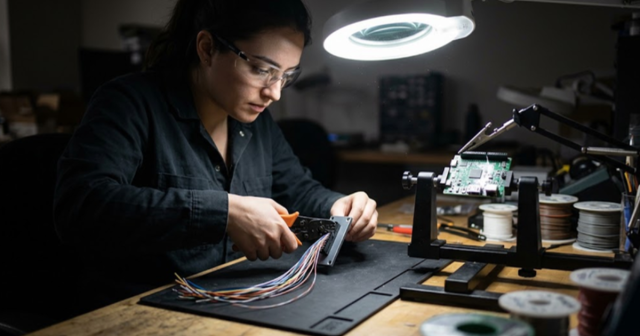
How to model and control a T-type three level inverter
An engineering overview of the T-type three level inverter leg, covering how it reaches three voltage levels, where device stress lands, and how neutral point balancing and modulation shape control.
Simulation
09 / 28 / 2026
How CHIL signal-level testing validates embedded controllers
A practical look at signal level controller hardware in the loop testing, covering I/O ranges, sensor emulation, latency and the setup checks that make embedded controller results trustworthy.