How traction inverter testing benefits from real-time HIL simulation
Simulation
06 / 20 / 2026

Key Takeaways
- Real-time HIL gives traction inverter teams closed-loop evidence before dyno work, which cuts late rework on controls, sensing, and protection.
- The value of inverter testing rises sharply when plant fidelity, switching detail, and latency budgets match the controller behaviour you are trying to validate.
- A staged validation plan that starts with timing-sensitive faults will produce more credible pass criteria than a bench-first process that waits for coupled faults to appear later.
Real-time HIL simulation will give you the fastest credible path to traction inverter validation before dyno and vehicle testing.
A traction inverter couples control code, switching hardware, sensors, and machine physics, so faults rarely stay isolated. Bench supplies and static loads verify basic function, yet they won’t show how torque commands, DC bus sag, estimator drift, and protection logic interact during launch or regen. Electric car sales passed 17 million in 2024, which put EVs above 20% of global car sales and raised pressure on validation teams to find faults earlier. Real-time HIL has moved into the main test flow because it lets you run the controller against a live plant model and judge timing limits before hardware damage or dyno rework.
Real-time HIL closes the main gap in traction inverter testing
“Real-time HIL closes the gap between static inverter testing and full powertrain validation because it keeps the controller in the loop while the motor, battery, and vehicle load are simulated at execution speed.”
A bench setup can confirm PWM output, current sensor scaling, and contactor sequencing. The same controller on HIL can face a sudden accelerator step, a bus-voltage dip from a battery model, and a motor speed reversal during regen. That sequence will expose estimator lag, torque overshoot, or nuisance protection trips that a static setup never triggers.
That difference matters because late inverter faults rarely come from a single block. They come from interactions across control loops, timing, and power stage limits. When you test those interactions early, you will cut rework on calibration, protection thresholds, and test scripts before the dyno becomes the first place a coupled fault appears.
Bench tests miss control faults that appear under load transients
Bench tests miss faults under load transients because most of them simplify the plant into a power source and a passive load. That setup will verify basic gating and protection, but it won’t reproduce rotor motion, back electromotive force, tire load shifts, or regen torque reversals.
Consider a vehicle that exits hard acceleration and enters regen on a low state of charge pack. The DC bus rises, phase current direction flips, and control software has milliseconds to clamp torque without tripping hardware protection. A static rig can show current limits, yet it will miss how the speed loop, observer, and bus controller react as the machine model fights the command.
These are the faults that waste dyno time. Teams often spend days asking if the issue sits in firmware, sensing, or the power stage because the original bench data lacked system context. HIL gives you that missing context before high-power testing, so root cause will narrow faster and your test evidence will carry forward.
A useful traction inverter HIL setup starts with plant fidelity
A traction inverter HIL setup starts with plant fidelity because the controller can only be judged against the physics you simulate. The minimum useful model will capture battery response, DC link response, machine dynamics, sensing paths, and the I/O timing that connects them to the control unit.
A useful setup for EV development usually includes a battery model with voltage sag, a motor model with speed-dependent back electromotive force, and sensor emulation with offset or noise. If your controller estimates rotor position from phase measurements, the model must feed that estimator with believable transients rather than ideal waveforms.
Fidelity does not mean maximum detail everywhere. You need detail where controller response depends on it, especially dead time, current reconstruction, resolver delay, and contactor timing.
| What deserves detail | Why it affects pass or fail |
| The battery model should reflect voltage sag and internal resistance during torque steps. | That detail shows if bus limits and torque control still hold when current rises quickly. |
| The machine model should reproduce back electromotive force and inertia across the speed range. | That response tells you if control loops stay stable during acceleration and regen reversal. |
| The sensor path should include offset, noise, and realistic conversion delay. | Those effects reveal estimator drift and current loop error before hardware is at risk. |
| The protection path should include threshold logic and trip timing. | You will see if a correct limit arrives too late to protect the power stage. |
| The I/O timing should match the controller task rate and output update scheme. | That alignment decides if the HIL result reflects the hardware timing you will ship. |
Fault injection should focus on timing limits first

Fault injection should start with timing limits because traction inverter failures often appear when a valid command arrives too late, a measurement lands one sample late, or protection takes one cycle too long. Those timing edges will corrupt control stability long before catastrophic faults appear on the bench.
A practical first pass usually targets five cases that stress the controller where it is most sensitive.
- DC bus sag during a peak torque request
- Current sensor offset near phase current reversal
- Resolver or encoder dropout during acceleration
- Gate inhibit delay after overcurrent detection
- Communication jitter between supervisory control and the inverter controller
Those cases matter because they expose the line between stable recovery and unstable control. A bus sag test will show if torque limiting, current control, and protection logic agree under stress. Once those limits are clear, later fault campaigns become more useful because you are testing priorities first.
SiC inverter programs need faster switching models
SiC inverter programs need faster switching models because the devices change current and voltage quickly enough that coarse model assumptions hide the behaviour you need to validate. If your simulation step, signal path, or dead-time representation is too rough, the control team will sign off on results that won’t survive hardware.
That matters more with SiC because silicon carbide can withstand electric fields nearly 10 times higher than silicon, which supports faster switching and tighter timing margins. A current loop tuned on an older inverter model can look stable at moderate frequency and then show ripple or false trips once a SiC power stage switches far faster than the original assumptions allowed.
You don’t need a research model for every device. You do need enough switching detail to preserve dead time effects, current sampling windows, and protection timing. Teams that skip this step usually end up retuning filters and thresholds after hardware arrives, when each reset and retest consumes far more lab time.
Latency budgets shape what your inverter results actually mean
Latency budgets shape inverter results because every sample, transport delay, solver step, and I/O conversion shifts the controller’s view of the plant. If you don’t account for those delays, a stable traction inverter on HIL can turn unstable on hardware, or a weak design can look clean in the lab.
Take a current loop designed around a 50 μs control period. Add solver delay, analog input delay, pulse output delay, and task jitter, and the loop can lose phase margin before anyone notices. The traces still look neat at moderate load, yet oscillation appears once speed rises and the bus sags.
“Latency work is less glamorous than model work, but it tells you what your results mean.”
You need a measured budget for sensing, computation, and actuation, plus acceptance limits tied to controller bandwidth. Teams that document those limits early will trust their HIL pass criteria and spend less time disputing the rig.
Open toolchains reduce rework across EV development stages
Open toolchains reduce rework because traction inverter development spans controls, plant models, automation, and data review across several teams. A platform such as OPAL-RT fits best when it accepts standard models and lab workflows, so you can keep test assets consistent from early controller checks through regression runs.
Picture a program where controls engineers tune field-oriented control, test engineers build automated fault sequences, and systems leads compare revisions across vehicle states. If each stage requires a new model format or a custom interface layer, the team spends its energy translating signals rather than validating the inverter. Open interfaces keep the same test intent alive across stages.
That matters because rework often hides in hand-built connectors, spreadsheet limits, and one-off scripts. When the toolchain accepts your existing models and automation approach, you will rerun cases faster, version results cleanly, and spot regressions before they leak into dyno planning.
A phased validation plan cuts risk before dyno testing
A phased validation plan cuts risk before dyno testing because it matches test depth to technical maturity. You start with control sanity checks, move to transient and protection cases, then push timing and fault coverage until the traction inverter has earned high-power time with clear pass criteria and traceable evidence.
One practical flow starts with sensor scaling and gating checks, then adds closed-loop torque steps, regen transitions, DC bus disturbances, and protection recovery. The dyno comes after the controller has already survived the fault cases most likely to damage hardware or stall debugging. That sequence keeps expensive equipment reserved for questions only physical power hardware can answer.
Good inverter testing comes from disciplined sequencing and clear evidence. Teams that treat HIL as a formal validation stage arrive at dyno testing with fewer arguments about model trust, timing, and protection intent. That is why groups working with OPAL-RT use real-time simulation as a proof step for execution quality instead of a presentation tool.
Real-time solutions across every sector
Explore how OPAL-RT is transforming the world’s most advanced sectors.

Power Electronics
09 / 30 / 2026
FPGA simulation for power electronics and motor drives
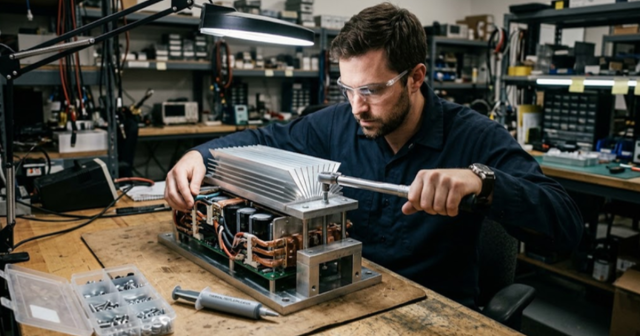
A technical comparison of CPU and FPGA solver architectures for power electronics and motor drive simulation, covering the timestep each reaches and how to split a model between them.
Power Electronics
09 / 29 / 2026
How to model and control a T-type three level inverter
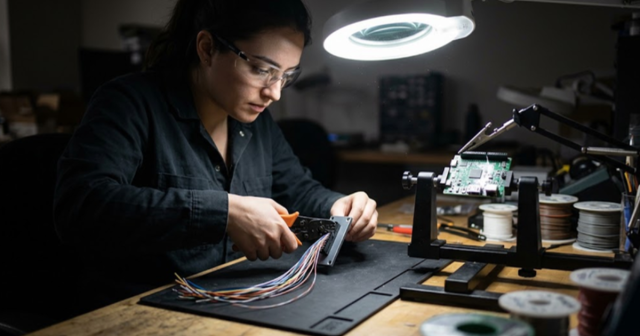
An engineering overview of the T-type three level inverter leg, covering how it reaches three voltage levels, where device stress lands, and how neutral point balancing and modulation shape control.
Simulation
09 / 28 / 2026
How CHIL signal-level testing validates embedded controllers
A practical look at signal level controller hardware in the loop testing, covering I/O ranges, sensor emulation, latency and the setup checks that make embedded controller results trustworthy.