
Key Takeaways
- PIL should verify compiled controller software on the target processor before scarce HIL bench time is spent on integration.
- HIL earns its place when timing, I/O, and interface behaviour become the main remaining sources of risk.
- Teams get faster fault isolation and steadier validation progress when fidelity rises in stages instead of all at once.
PIL and HIL serve different validation jobs, and using them in sequence will cut bench debugging and raise confidence.
Processor in the loop testing checks compiled controller code on the target processor before the full hardware bench is ready. Modern vehicles can contain about 100 million lines of code, which shows why late software discovery wastes time and money. The main difference between processor in the loop and hardware in the loop is simple: PIL verifies software execution on the processor, while HIL verifies closed-loop system behaviour under timing and input/output constraints. PIL should clear software faults first, and HIL should confirm system timing after that.
“PIL belongs earlier than HIL in the V-model because it isolates software execution before hardware integration adds noise.”
Processor in the loop targets compiled control software behaviour
PIL tests compiled control software on the target processor while the plant remains simulated. It tells you if generated or hand-written code still behaves correctly once it meets the actual instruction set, data types, memory limits, and scheduler timing of the production controller.
A motor control team can use PIL right after code generation from a control model. The software runs on the microcontroller, while a simulated motor and inverter feed inputs and receive outputs. That setup shows fixed-point overflow, compiler side effects, and task overruns before the power stage or sensor hardware is ready. You’re no longer trusting model-level results alone.
This matters because model behaviour and processor behaviour are rarely identical. Data type conversion, quantization, interrupt load, and compiler optimization shift results in ways a desktop simulation won’t catch. PIL isolates software faults while the rest of the bench is still virtual, which keeps later validation focused on system issues instead of basic code defects.
Hardware in the loop targets closed-loop timing under hardware constraints
HIL tests the controller hardware in a closed loop with a simulated plant and physical input/output interfaces. It answers a different question from PIL: will the actual controller, with its wiring, sensors, buses, and timing paths, behave correctly when it interacts with a high-fidelity system model in real time?
A traction inverter controller shows why this matters. The production controller reads encoder pulses, current signals, and fault inputs from the simulator, then sends gate commands back through real I/O. Latency, jitter, scaling errors, and communication delays now affect stability and protection logic. That level of interaction sits outside the scope of processor in the loop testing.
HIL validates integration under realistic constraints. Signal conditioning, bus traffic, actuator saturation, and fault handling all come into view. You’ll also see issues that appear only when several subsystems run as one, such as CAN scheduling conflicts or reset behaviour after undervoltage. HIL costs more bench time and setup effort, so it works best when software behaviour is already stable and the next risk sits in timing and interfacing.
The V model places PIL before HIL for clean isolation

PIL belongs earlier than HIL in the V-model because it isolates software execution before hardware integration adds noise. That sequencing keeps defect ownership clear. You can tie failures to code generation, processor limits, or scheduling choices first, then move to system timing and interface verification with fewer unknowns.
A typical flow runs from model-in-the-loop to software-in-the-loop, then PIL, then HIL. A battery management controller can clear control logic and processor execution in PIL before the team spends scarce HIL hours on fault injection and pack-level interface timing. That order protects lab time.
| Validation checkpoint | What you verify there | Why it belongs there |
|---|---|---|
| Model simulation comes first | Control logic behaves correctly while the plant remains software based. | This stage removes concept errors before code meets processor limits. |
| Software execution follows | Generated or hand written code matches expected algorithms in a host. | This stage catches translation issues without target hardware constraints. |
| PIL precedes bench integration | The target processor runs code with its own timing and memory limits. | This stage exposes processor specific faults while the plant stays easy to control. |
| HIL starts after software stabilizes | The controller hardware interacts with the simulated plant through real I/O. | This stage tests risks that appear only under closed loop timing. |
| System testing follows HIL | The full product proves behaviour against broader requirements and acceptance targets. | This stage should confirm readiness instead of serving as a code debug station. |
Teams that reverse this order often spend HIL time chasing issues PIL would have exposed earlier. Clean sequencing preserves cause and effect, which makes failures faster to diagnose and easier to fix.
Use PIL when code maturity exceeds hardware availability
Use PIL when the control software is ready for execution testing but the final hardware bench is incomplete, booked, or still unstable. PIL keeps validation moving because it uses the target processor as the main truth source for software behaviour without waiting for every sensor, actuator, and interface board to arrive.
An aerospace control team often reaches this point early. The flight control law has passed model simulation, the target processor board is available, and the actuator rig is still under assembly. PIL lets the team confirm code timing, stack use, numerical limits, and scheduler behaviour against a simulated aircraft model. That prevents long gaps between software maturity and bench readiness.
This approach matters most when your schedule risk sits in hardware readiness rather than code readiness. You still need a faithful plant model and disciplined test cases, but PIL keeps defects close to their source. If your firmware is still moving quickly and hardware is late, PIL is the right next step.
Use HIL when timing latency shapes controller performance
Use HIL when closed-loop timing, I/O handling, and interface behaviour will decide pass or fail. HIL becomes the right method once controller software is stable enough that the main remaining risks sit in sampling delays, communication timing, fault responses, and interactions with physical controller hardware.
A grid converter controller is a strong example. Protection trips, phase-locked loops, and PWM timing all depend on microsecond-level interactions with measured signals and communication events. A processor test alone won’t show what happens when analogue front ends, bus timing, and external faults hit the controller at once. HIL will show those edges clearly.
This is where execution infrastructure matters. OPAL-RT often sits in labs at this stage because the simulator must keep pace with strict timing while exposing accurate I/O and fault scenarios. If latency and interface fidelity will shape controller behaviour, HIL deserves the bench time.
Test fidelity should rise after software faults shrink
Test fidelity should increase only after lower-level software defects have narrowed to a manageable set. That progression keeps each validation stage efficient. You start with cheaper and more isolated checks, then raise fidelity when the unanswered questions truly require processor execution, hardware timing, or full closed-loop interaction.
A disciplined team looks for clear signals before moving up the ladder. The goal is matching test cost to the risk that remains. These five signs show that a controller is ready to move from PIL emphasis toward HIL emphasis:
- Code execution on the target processor is repeatable across your core test cases.
- Numeric scaling and fixed-point choices no longer create unexplained output drift.
- Task scheduling stays within budget under the expected interrupt load.
- Interface assumptions are documented well enough to wire the bench with confidence.
- Open defects now point to timing or integration rather than basic software logic.
This sequence protects budget and attention. You don’t want a full HIL rack proving that a lookup table was scaled incorrectly or a scheduler period was misconfigured. Higher fidelity earns its place after simpler tests stop finding simple faults.
Skipping PIL often turns HIL into a debugging bottleneck
“Skipping PIL usually forces HIL to absorb software debugging work that it was never meant to carry.”
The bench becomes crowded with mixed failure modes, and the signal you need gets buried under I/O setup issues, timing interactions, and basic code defects that should have been isolated earlier.
A powertrain team sees this quickly. The controller is wired to the HIL rack, a torque response looks wrong, and nobody knows if the issue comes from numeric conversion, ADC scaling, plant assumptions, or bus timing. Poor software testing infrastructure costs the U.S. economy an estimated $59.5 billion per year, which shows how expensive late defect discovery becomes when testing stages blend into one another.
HIL benches are expensive because they combine scarce equipment, plant models, and specialist time. When basic software faults reach that stage, diagnosis slows down. PIL removes those problems before they contaminate closed-loop investigation, so teams spend more time validating requirements that truly need hardware in the loop.
A staged validation path shortens time to system confidence
A staged path from software simulation to PIL and then HIL shortens time to confidence because each method answers a distinct question. PIL proves compiled software on the processor. HIL proves the controller under closed-loop timing and interface pressure. Used in order, they keep fault isolation sharp and lab time productive.
You can see the pattern across embedded programs that stay on schedule. They don’t wait for the full bench to expose code issues, and they don’t waste a processor test on questions that depend on analogue I/O or bus latency. The validation path stays disciplined, and the result is steadier progress when requirements tighten. That judgment matters more than any single tool choice.
OPAL-RT fits that mindset because the work is organized around execution fidelity, test timing, and confidence at each step. Teams that treat PIL and HIL as stages will validate faster and use benches more wisely.
Common Questions
How does Processor-in-the-Loop testing reduce development costs?
PIL helps you catch software inefficiencies early by executing code on the target processor. Fewer hardware prototypes lower overall expenses and streamline troubleshooting.
What makes Hardware-in-the-Loop essential for regulatory compliance?
HIL subjects real hardware to simulated conditions, so testers can confirm safety and performance against strict guidelines. Regulatory bodies trust this tangible evidence for validation.
Do PIL and HIL cover all stages of product design?
Many teams use PIL to refine software early, then switch to HIL for comprehensive checks with actual hardware. This combined approach tracks improvements across each critical design phase.
Why focus on real-time constraints with PIL vs HIL?
PIL allows you to test time-critical algorithms on the target processor, while HIL examines system-level timing with physical components. Both highlight response delays that could degrade performance.
How do these methods fit industries like automotive or aerospace?
Processor-in-the-Loop vs hardware in the loop suit complex control systems where safety and reliability matter. They help you deliver well-tested, high-quality solutions that adapt to growing technologies.
Real-time solutions across every sector
Explore how OPAL-RT is transforming the world’s most advanced sectors.
Power Electronics
09 / 30 / 2026
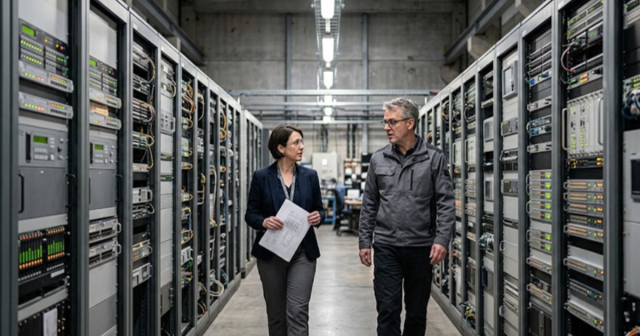
FPGA simulation for power electronics and motor drives
A technical comparison of CPU and FPGA solver architectures for power electronics and motor drive simulation, covering the timestep each reaches and how to split a model between them.
Power Electronics
09 / 29 / 2026
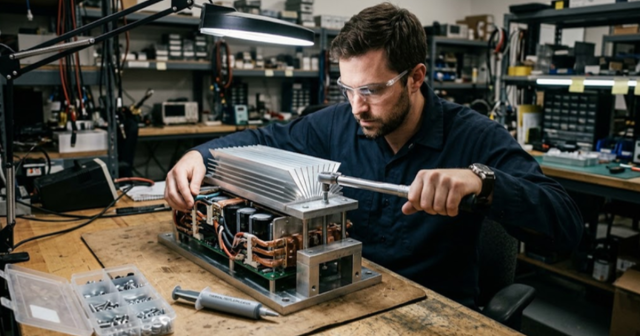
How to model and control a T-type three level inverter
An engineering overview of the T-type three level inverter leg, covering how it reaches three voltage levels, where device stress lands, and how neutral point balancing and modulation shape control.
Simulation
09 / 28 / 2026
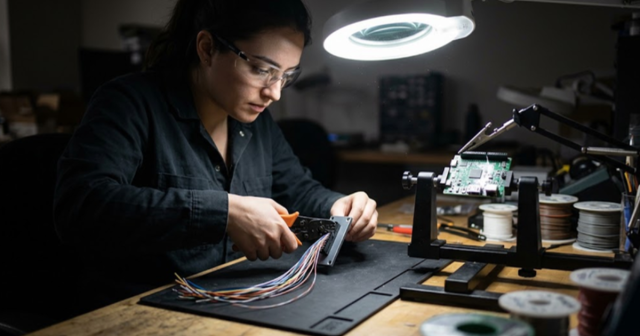
How CHIL signal-level testing validates embedded controllers
A practical look at signal level controller hardware in the loop testing, covering I/O ranges, sensor emulation, latency and the setup checks that make embedded controller results trustworthy.