
Key Takeaways
- HIL is the stage where software correctness meets actual ECU timing, I/O, and fault behaviour.
- Safety-critical automotive systems should reach HIL before costly vehicle tests because the bench can repeat dangerous cases without physical risk.
- Bench timing, interface quality, and toolchain openness shape HIL value more than bench size or visual complexity.
HIL testing in automotive puts the actual ECU against a real-time vehicle model so you can catch control, timing, and safety faults before track or road testing.
Automakers built 93,546,599 vehicles worldwide in 2023, so a small validation gap can repeat across millions of units. That scale makes validation discipline important. You’re no longer testing a diagram. You’re testing hardware that will sit in a production vehicle. HIL holds a specific place in that flow. It connects software checks to physical controller behaviour under closed-loop conditions. A battery controller, steering ECU, or camera controller can look stable in offline simulation and still fail once latency, scaling, or sensor dropouts appear. HIL is where those issues become visible while risk stays controlled.
What HIL testing means in automotive validation
HIL stands for hardware-in-the-loop. If you’re asking what is HIL in automotive, the short answer is this: the ECU stays physical while the rest of the vehicle stays simulated. The controller runs its production software on real hardware. The simulator supplies the plant, sensors, loads, and fault conditions in closed loop.
An engine controller makes the idea easy to picture. The ECU reads simulated crank position, throttle input, and manifold pressure, then sends ignition or torque commands back into the simulated powertrain. That loop runs at the timing the controller expects. You can repeat the same cold start, torque request, or sensor fault as many times as needed.
That repeatability is why HIL testing in automotive domain work matters. Bench tests show how a controller behaves when it meets actual I/O, bus traffic, and fault timing, not just ideal software conditions. You get a sharper answer than model-only testing and a safer answer than early vehicle testing. That’s the practical value of HIL.
“Good HIL work earns trust because it is specific.”
HIL enters validation after software level testing
HIL belongs after model-in-the-loop and software-in-the-loop, once the control logic looks correct and the next question is hardware behaviour. It sits before track and fleet work. That sequence matters because many failures come from interfaces and timing. Control equations alone won’t show those faults.
A traction control function can pass code tests and still mis-handle wheel speed pulses once the actual microcontroller reads noisy inputs through its real I/O path. HIL exposes that gap early. Engineers can replay the same split-friction launch ten times with identical wheel slip, bus load, and brake demand. The fault becomes traceable instead of anecdotal.
Skipping this step pushes hardware issues downstream. Test teams then spend expensive vehicle time chasing a missed interrupt, a bus overload, or a bad sensor scale. HIL shortens that loop because the setup is controlled and repeatable. You isolate cause faster, and you protect vehicle test time for questions that only a vehicle can answer.
Safety-critical ECUs deserve HIL before costly road tests
ECUs that affect safety, torque, energy flow, or perception deserve HIL before any costly vehicle campaign. Those controllers face fault cases that are hard to stage safely on a track. HIL lets you repeat them without physical risk. That’s why braking, steering, battery, inverter, and ADAS units are the first priority.
A brake ECU is a clear case. You can inject wheel speed dropouts, hydraulic pressure faults, and split-mu stops without putting a driver in danger. A battery management controller deserves the same treatment because cell imbalance, contactor faults, and thermal limits need closed-loop proof before pack tests scale up. The same logic applies to steering and propulsion control.
| System area | What HIL should confirm before vehicle testing |
|---|---|
| Braking controller | Slip control, sensor fault response, and fallback states stay stable during repeatable wheel events. |
| Electric power steering | Torque assist, communication timing, and fail-safe behaviour hold during abrupt steering inputs. |
| Battery management system | Contactor logic, cell limits, and thermal protection react correctly during charge and discharge events. |
| Inverter or engine controller | Torque requests, current limits, and transient response stay within calibration targets during launch and regen. |
| ADAS controller | Object handling, sensor timing, and fallback logic remain correct across rare traffic scenes. |
A useful HIL bench starts with latency budgets

A useful HIL bench starts with a timing budget for every signal path. If loop timing is wrong, even a good model produces bad answers. You need sample times, bus latency, I/O delay, and fault insertion timing defined up front. That’s what makes pass and fail results trustworthy.
A motor controller sampling current every 50 microseconds will react very differently if the bench feeds delayed values. Good teams map latency from plant execution to I/O, into the ECU, and back into the simulator. OPAL-RT often fits this stage because engineers need deterministic execution and open integration with existing modelling and automation tools. The platform matters less than timing discipline.
- Total closed-loop latency stays inside the controller design assumption.
- Analogue and digital I/O scaling matches sensor ranges and pin mapping.
- Network traffic reflects expected message timing and bus loading.
- Fault injection happens at the precise trigger point in the test case.
- Logs share one clock reference so cause and response line up.
Those checks stop phantom bugs from wasting bench time. They also show when you need faster I/O, a leaner model, or a different partition between processor and FPGA resources. Setup quality decides HIL usefulness long before the first scripted test runs.
Powertrain HIL depends on plant fidelity under transients
Powertrain HIL only works when the plant model stays credible during sharp transients. Steady-state accuracy isn’t enough. Launch torque, regenerative braking, gear shifts, and battery limits happen in milliseconds. Your ECU will react to those moments, so the simulator must react with matching timing and numerical stability.
An inverter controller can look perfect during a smooth speed ramp and then oscillate during a sudden pedal tip-in when DC bus voltage sags and motor current hits a limit. A transmission controller can show the same gap during a harsh upshift if clutch pressure and engine torque models are too soft. Drivers feel those events at once. That is why transient fidelity matters more than a neat steady trace.
Model detail has a cost, so you should spend it where control action is sensitive. Electrical switching detail matters for some inverter tests. Mean-value models are enough for many supervisory checks. Strong HIL programmes match model depth to the question being asked, then compare the bench response against measured traces from dyno or vehicle work.
ADAS HIL needs sensor models that match edge cases
ADAS HIL needs sensor and scene models that represent hard cases, not only clean detections. Camera, radar, lidar, and fusion software often fail at the margins. Those margins decide system behaviour. If the bench can’t reproduce occlusion, glare, clutter, or timing jitter, the pass rate doesn’t say much.
Front crash prevention systems cut police-reported front-to-rear crashes by 50% in vehicle pairs studied by IIHS, which shows why validation quality matters far beyond a bench metric. A useful ADAS setup will stage a pedestrian stepping from behind a parked van, a motorcycle entering from a narrow angle, or a cut-in during low sun. The controller then has to prove detection timing, object classification, and fallback logic under repeated conditions.
Sensor fidelity is only one part of the job. The full stack also depends on synchronized time stamps, actuator delays, and braking or steering response. Loose links can make perception look better than the system actually is. ADAS HIL earns its keep when the scene, the sensors, and the vehicle response all stay aligned in one closed loop.
Poor interfaces distort HIL results before vehicle testing
Poor interfaces can distort HIL results even when the controller and model are sound. Most bench errors start at the edges of the setup. Signal conditioning, grounding, scaling, and load emulation shape what the ECU sees. A false pass begins there just as easily as a false failure.
A throttle input scaled 0 to 5 V on the bench can hide a production sensor range of 0.5 to 4.5 V and shift the controller plausibility logic. A wheel speed input with clean square waves can miss the noise and missing teeth found on actual hardware. That is why interface boards, load boxes, and breakout harnesses deserve the same review as the plant model. They’re part of the test system.
You should treat interface validation as its own task. Pin mapping checks, calibration review, and dry runs of fault injection catch most bench-side mistakes before they waste a campaign. Once interfaces are proven, failures point back to ECU logic with far more confidence. That is the difference between useful HIL evidence and bench theatre.
Open toolchains keep HIL benches useful across vehicle programs
Open toolchains keep HIL benches useful because vehicle programmes move faster than lab budgets. Reusable models, scripts, and interfaces stop validation work from resetting every time an ECU or network changes. That matters more than loyalty to any one stack. It keeps bench effort tied to engineering value.
A lab that can swap a battery controller for an inverter ECU, keep the same automation scripts, and reroute I/O without rebuilding the bench will validate more cases with the same staff. That practical need explains the fit of platforms such as OPAL-RT, where openness and deterministic execution support reuse across powertrain, chassis, and ADAS work. Strong tools still depend on strong modelling assumptions and disciplined test design.
Good HIL work earns trust because it is specific. It proves timing, interfaces, fault handling, and control response under conditions you can repeat. When that discipline is present, HIL becomes the clearest bridge between software confidence and vehicle confidence. That’s the standard your lab should hold.
Common Questions
How is HIL testing different from traditional bench testing?
HIL testing integrates actual controllers with simulated vehicle models, creating a more accurate replication of operating conditions. Traditional bench testing typically relies on static scenarios, which may not reveal hidden software or hardware interactions.
Why focus on HIL testing in the automotive domain?
Modern cars incorporate advanced electronics, safety features, and power management systems that require comprehensive validation. HIL setups in the automotive domain help uncover system-level problems early, preventing expensive redesigns.
What is HIL in automotive, and is it only for ECUs?
HIL in automotive is a technique linking real components (often ECUs) to digital simulations for testing. It can extend to other modules like battery systems, sensors, and communication interfaces depending on development goals.
Does HIL testing help with cost-effectiveness?
The initial investment may be higher than simple lab setups, but the overall return on investment proves valuable. Teams can reduce prototype iterations, streamline software debugging, and avoid large-scale recalls.
Can HIL testing handle evolving vehicle software updates?
Yes, modern HIL platforms often accommodate frequent software revisions and new features. They offer flexibility for simulating over-the-air updates or fresh functionalities, ensuring each addition undergoes thorough evaluation.

Power Electronics
09 / 30 / 2026
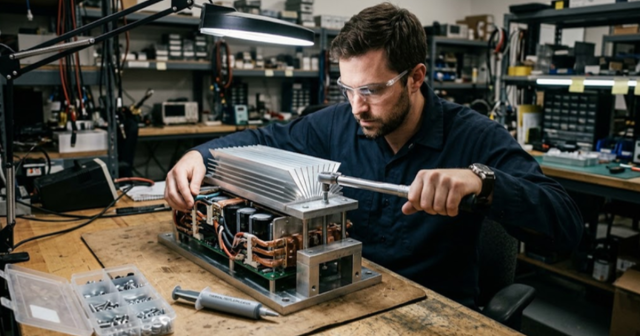
FPGA simulation for power electronics and motor drives
A technical comparison of CPU and FPGA solver architectures for power electronics and motor drive simulation, covering the timestep each reaches and how to split a model between them.
Power Electronics
09 / 29 / 2026
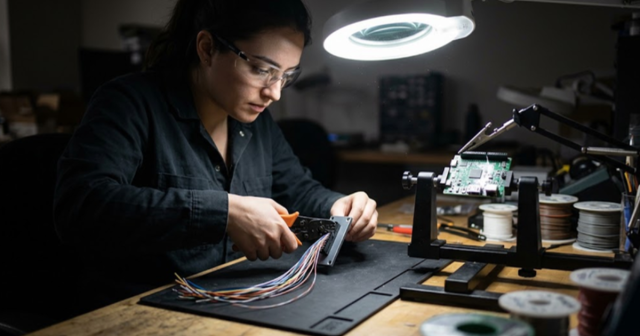
How to model and control a T-type three level inverter
An engineering overview of the T-type three level inverter leg, covering how it reaches three voltage levels, where device stress lands, and how neutral point balancing and modulation shape control.
Simulation
09 / 28 / 2026
How CHIL signal-level testing validates embedded controllers
A practical look at signal level controller hardware in the loop testing, covering I/O ranges, sensor emulation, latency and the setup checks that make embedded controller results trustworthy.