What is simulation software? A guide for engineers and innovators
Automotive, Power Electronics
05 / 19 / 2025

Key Takeaways
- Simulation software is most useful when it turns assumptions into measurable tests before lab or site work begins.
- Real time and offline simulation solve different problems, and timing needs should set your first software filter.
- Domain fit matters because power systems, automotive controls, and process plants require different model fidelity, interfaces, and test methods.
Simulation software lets you test system behaviour before hardware, code, or plants are exposed to risk.
That matters because the systems engineers build now mix software, power electronics, controls, sensors, and physical assets that interact in tight time windows. The International Energy Agency says electricity grids need more than 80 million kilometres of new or refurbished lines by 2040, roughly matching the entire existing grid. When systems scale like that, simulation stops being a side tool and becomes part of sound engineering work. You’ll use it to cut weak ideas early, prove requirements, and arrive at testing with fewer surprises.
“Simulation software is a computer model that reproduces how a system will behave under defined conditions.”
Simulation software predicts how a system will respond

Simulation software is a computer model that reproduces how a system will behave under defined conditions. It applies equations, logic, and constraints to estimate outputs before you run the physical system. Good software shows cause and effect clearly. It turns assumptions into testable results.
A motor drive team can model torque ripple during a voltage dip and see how control gains affect stability. A water utility can estimate how pump speed shifts pressure across a network before field staff touch a valve. A robotics group can test how extra payload affects joint heating and settling time. Each case uses a model to answer the same practical question: what will happen when inputs, faults, or loads shift?
That matters because prototypes cost time, materials, and lab hours. Simulation software won’t remove the need for bench or field proof, but it will expose weak assumptions long before a controller is flashed or a plant is started. You get a clearer technical baseline, and your later tests start from evidence instead of guesswork.
Engineers use simulation to test choices before hardware exists
Engineers use simulation software to compare design options before a physical prototype is ready. It helps you size components, tune controls, check fault response, and assess safety margins. That work happens early enough to prevent expensive redesign. It also gives teams a common set of results to review.
Consider an aerospace controls group testing actuator saturation during a gust case before a rig is assembled. A battery team can compare cooling plate layouts and see which design keeps cell temperatures within limits during a hard discharge cycle. A protection engineer can inject faults into a feeder model and confirm relay settings before any commissioning work starts. These aren’t academic exercises. They are direct checks on choices that will shape schedule, cost, and test effort.
You also get something less visible but just as important: shared technical language. Mechanical, electrical, and controls teams can look at the same plots and argue from the same baseline. That shortens review cycles and reduces the risk that a late lab failure comes from a mismatch between disciplines rather than a bad design.
Engineering simulation software connects models to measurable requirements
Engineering simulation software matters when a model must prove compliance against stated requirements. It links system physics to pass or fail criteria such as overshoot, current limit, thermal rise, or settling time. That connection makes simulation part of validation work. You are no longer just drawing curves for discussion.
Take a servo system that must settle within 50 milliseconds after a step input while staying under a motor current limit. A grid-tied converter can be required to ride through a short disturbance without tripping protection. A fuel system can be required to hold pressure during a cold start sequence. Those checks depend on models that reflect the behaviour you care about and on test cases that map back to requirements.
Good engineering simulation software also forces discipline. You have to define assumptions, initial conditions, solver settings, and acceptance criteria. That makes reviews tighter and handoffs cleaner. When someone asks why a design passed, you can point to a repeatable model and a measured threshold instead of a general impression that the response looked acceptable.
Process simulation software models plant behaviour before commissioning
Process simulation software focuses on plants, flows, and operating sequences rather than isolated components. It predicts how material, energy, and control actions move through a process over time. That makes it useful before startup, during optimisation, and while preparing operators for abnormal conditions. It gives you a safe place to test sequence logic.
Picture a water treatment team modelling chemical dosing, tank levels, and pump sequencing before the plant goes live. A thermal plant can rehearse startup ramps and trip recovery without putting equipment at risk. A food processing line can test batch timing to see where hold times or heat transfer create bottlenecks. Those models show how one change in flow, temperature, or setpoint will ripple across the plant.
Process simulation software earns its place when commissioning risk is high. Startup windows are tight, field crews are busy, and every delay affects several trades at once. When you have already tested sequence logic, alarm conditions, and control responses in software, site work becomes more focused. You still verify in the plant, but you arrive with a stronger operating plan and fewer avoidable surprises.
Real-time simulation matters when timing must match physics
Real-time simulation is required when the model must keep pace with the clock and exchange signals with physical devices on schedule. The solver has to finish each step within a fixed time budget. That makes timing accuracy part of the test itself. Closed-loop validation depends on this discipline.
A motor controller on a bench can’t wait for a slow model to catch up. It needs current, voltage, and fault signals at the exact rate expected by its firmware. The same rule applies to a protection relay that has to see waveform details at the right instant. Tools such as SPS Software help engineers build and validate detailed electrical power system and power electronics models before those models are taken into real-time or hardware-in-the-loop testing. Its libraries cover components such as machines, converters, transformers, transmission networks, protection systems, and controls, giving teams a consistent modelling foundation for studying faults and system behaviour without putting physical equipment at risk.
Timing is the difference. An offline model can show that a controller concept works in principle. A real-time model shows that the controller still works when execution delay, I/O exchange, and signal timing are part of the test. If your goal is controller proof, relay validation, or closed loop integration, clock-true execution will decide whether the result is credible.
Offline simulation fits early analysis when timing is flexible
Offline simulation runs as fast or slow as your computer allows. It suits early design work and long scenarios because the model does not need to keep pace with wall clock time. That freedom supports heavy computation and wide parameter sweeps. It answers broad design questions efficiently.
On the planning side, a team can run a year of microgrid dispatch in minutes to compare storage sizing options. A thermal engineer can execute many cooling cases to identify hot spots across a housing. A controls engineer can sweep dozens of gain sets and inspect stability margins before choosing a smaller set for lab work. Offline simulation is excellent when you’re after coverage, sensitivity analysis, or long time horizons.
| Testing situation | Best simulation mode | Reason the choice fits |
|---|---|---|
| Early control tuning across many parameter sets | Offline simulation fits this task well. | The model can run faster than the clock and cover many cases in one session. |
| Protection relay bench testing with live signals | Real-time simulation is the better fit. | The relay must receive voltage and current inputs on a fixed schedule. |
| Long planning studies for a microgrid or plant | Offline simulation will save more time. | Scenario length matters more than synchronised I/O timing. |
| Controller hardware connected to a plant model | Real-time simulation is required. | The physical controller has to interact with the model in closed loop. |
| Operator rehearsal before plant startup | Process simulation is often the strongest option. | Sequence logic, alarms, and operating states need to be checked safely before commissioning. |
Domain fit matters more than long feature checklists
Software choice starts with domain fit because each field cares about different equations, timing limits, and interfaces. A generic feature list will not tell you if a solver captures the behaviour that affects safety or performance. Power systems, automotive controls, and process plants do not stress models in the same way. Useful tools reflect that difference.
Power systems teams often need electromagnetic transient detail, fault studies, relay interaction, and converter behaviour under severe disturbances. Automotive teams care about plant models, controller integration, driveline response, thermal limits, and bus timing across many subsystems. That split matters more now because electric car sales exceeded 17 million in 2024. More electrified platforms mean more control software, more power electronics, and more validation pressure.
You can see the impact in lab planning. A microgrid engineer will care about fault ride-through and inverter interaction. A vehicle controls engineer will care about closed-loop timing between controller code and the plant model. If the software can’t represent the failure modes and interfaces that matter in your field, the extra features on the brochure will not help you.
“Start with the clock, the interfaces, and the level of proof your tests must deliver.”
Software choice should follow timing requirements before features
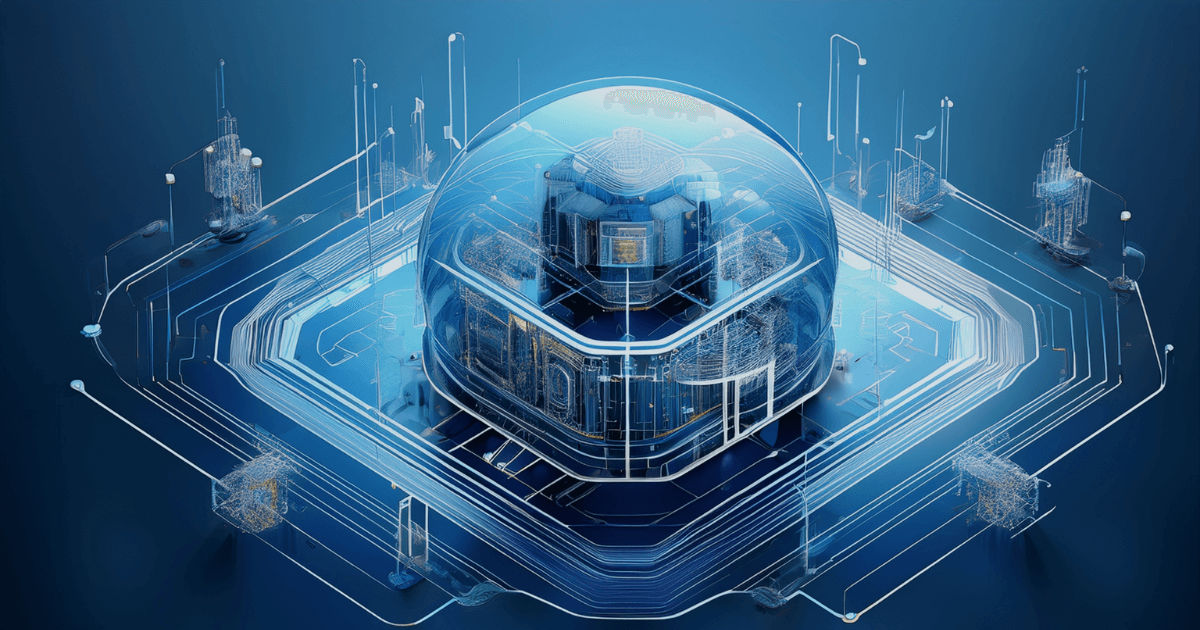
Start with the clock, the interfaces, and the level of proof your tests must deliver. Those three factors determine the class of simulation software that will fit your work. User interface, reporting, and licence structure still matter, but they come later. Timing and test intent set the useful options.
- Define the smallest fixed time step your tests must hold.
- List every controller, relay, sensor, or I/O point that must connect.
- State the model fidelity that affects pass or fail results.
- Identify the fault cases you must replay consistently.
- Confirm who will build, review, and maintain the models.
That sequence keeps selection grounded in engineering work instead of surface features. You’ll know sooner if you need offline analysis, process simulation software, or engineering simulation software built for clock-true execution. Teams that apply this discipline get cleaner requirements, tighter lab plans, and fewer late surprises when physical devices enter the loop. SPS Software fits this approach for electrical power system and power electronics projects by providing editable, physics-based models and libraries for machines, converters, grids, and control systems within one modelling environment. It helps teams investigate system behaviour, verify control strategies, and build a stronger technical foundation before moving into hardware validation.
Real-time solutions across every sector
Build better power system models with SPS Software

Automotive
10 / 21 / 2026
Megawatt charging system validation for heavy duty trucks
A practical look at how the megawatt charging system works, how it differs from CCS and how charger controls are tested before a truck site is energized.
Automotive
10 / 19 / 2026
Dynamometer testing and motor emulation compared for e-drive programs
A comparison of dynamometer testing and motor emulation for e-drive programs, covering what each method proves, what it costs and how teams sequence both.

Power Electronics
10 / 17 / 2026
How wide bandgap devices push converter power density
Wide bandgap devices raise converter power density through faster switching and smaller passives, and this guide traces that chain from device physics to thermal limits to validation.