Why HIL pre-commissioning defines engineering confidence
Industry applications
11 / 19 / 2025

Real confidence in grid integration comes from concrete evidence, not hopeful assumptions, and hardware-in-the-loop (HIL) pre-commissioning provides that proof by catching problems on a controlled test bench long before any site energization. Projects that skip this step often encounter late-stage surprises. Mismatches between controller firmware and simulation models or communication timing errors only surface during grid compliance tests, forcing costly on-site rework. HIL pre-commissioning flips this script by identifying issues early and producing repeatable test results that all stakeholders trust. In fact, large renewable plants have lost over AUD $100,000 in revenue for every day of delay, so shifting validation from the field to the lab is not just a technical improvement but a financial imperative. Making HIL pre-commissioning a formal project gate aligns original equipment manufacturers (OEMs), Engineering, Procurement and Construction (EPC) contractors, and asset owners on proven performance data, defining a new standard of engineering confidence.
Pre-commissioning makes validation a project deliverable

Treating validation as a required deliverable changes how projects approach commissioning. Instead of relying on last-minute field trials, teams now conduct a full dress rehearsal of the plant’s performance using HIL before any live connection. This formal pre-commissioning stage means the plant controller, protection devices, and other critical hardware must pass a battery of real-time simulated grid scenarios on the bench. The outcome is a set of tangible test reports and performance traces that stakeholders can review and sign off, providing a shared evidence base well ahead of on-site energization. Without this gate, the first true validation happens on site. Any design flaws discovered at that stage can stretch commissioning delays from months into years. By making HIL testing an official project milestone, organizations ensure no requirement is left unverified, aligning everyone (from EPC contractors to grid operators) around one clear standard of success. Australia’s renewable sector is pioneering this approach by using an HIL pre-commissioning platform to validate large solar farms, bridging the gap between early model approvals and final grid compliance tests.
Early HIL exposes control and integration gaps before site work
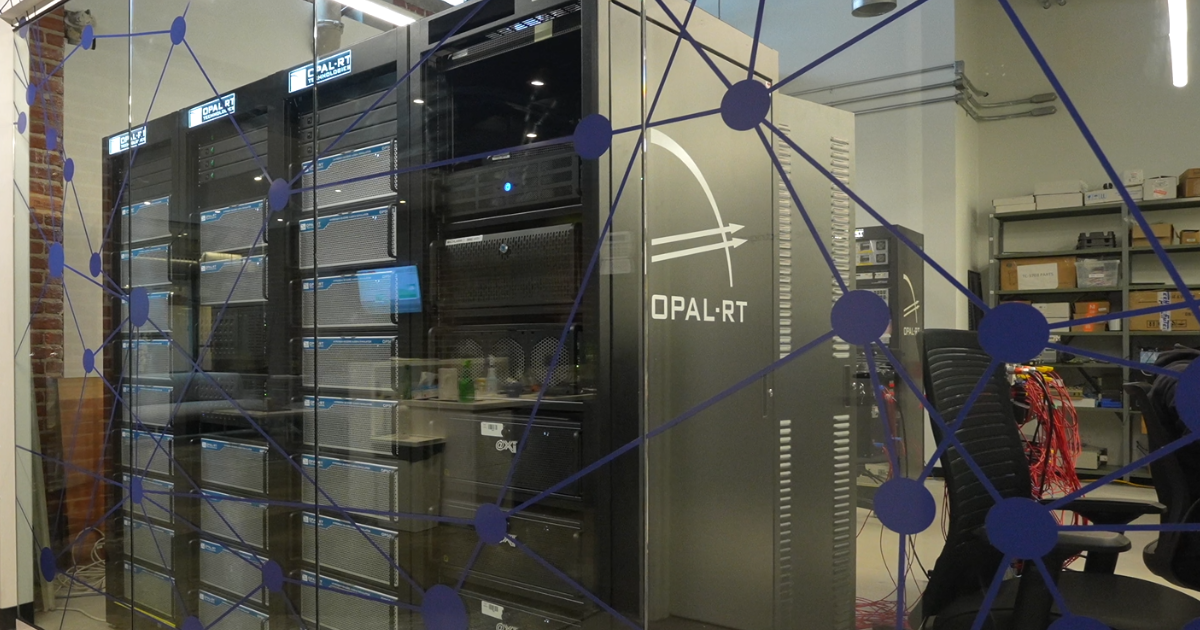
The real value of HIL pre-commissioning is that it exposes hidden problems in controls and system integration when fixes are far cheaper and simpler than in the field. Running actual controllers and devices against a high-fidelity real-time grid model early on allows engineers to reveal discrepancies that traditional design reviews often miss. Common issues exposed by early HIL testing include:
- Design architecture issues occur when certain equipment is inadequate for its intended purpose or simply unnecessary in the system.
- Communication delay mismatches in models can hide real communication latencies or incorrect controller timing, leading to overshoot or instability once the hardware is deployed.
- Model inaccuracies mean the simulated model behaves differently from real devices, often due to missing functions or unrealistic simplifications.
- Scaling or human errors (for instance, mistakes in converting units or settings from simulations to physical controllers) can throw off control tuning.
- Multi-vendor integration risks emerge when components from different suppliers struggle to work in concert, an issue only evident when the full system is assembled.
- Hardware or firmware bugs in control devices can remain unnoticed until power-up, undermining performance at site if not caught earlier.
Catching these gaps on a controlled test bench means they can be fixed long before equipment arrives on site. In a recent 50 MW solar project, this approach identified more than 15 such issues in the plant’s control system and saved approximately five months on the project timeline, avoiding last-minute design overhauls and even potential liquidated damages. Solving problems early not only keeps schedules on track; it also builds confidence among all project partners that there will be no unpleasant surprises during commissioning.
Real confidence in grid integration comes from concrete evidence, not hopeful assumptions, and hardware-in-the-loop pre-commissioning provides that proof by catching problems on a controlled test bench long before any site energization.
Repeatable hardware testing builds trust across owners and operators
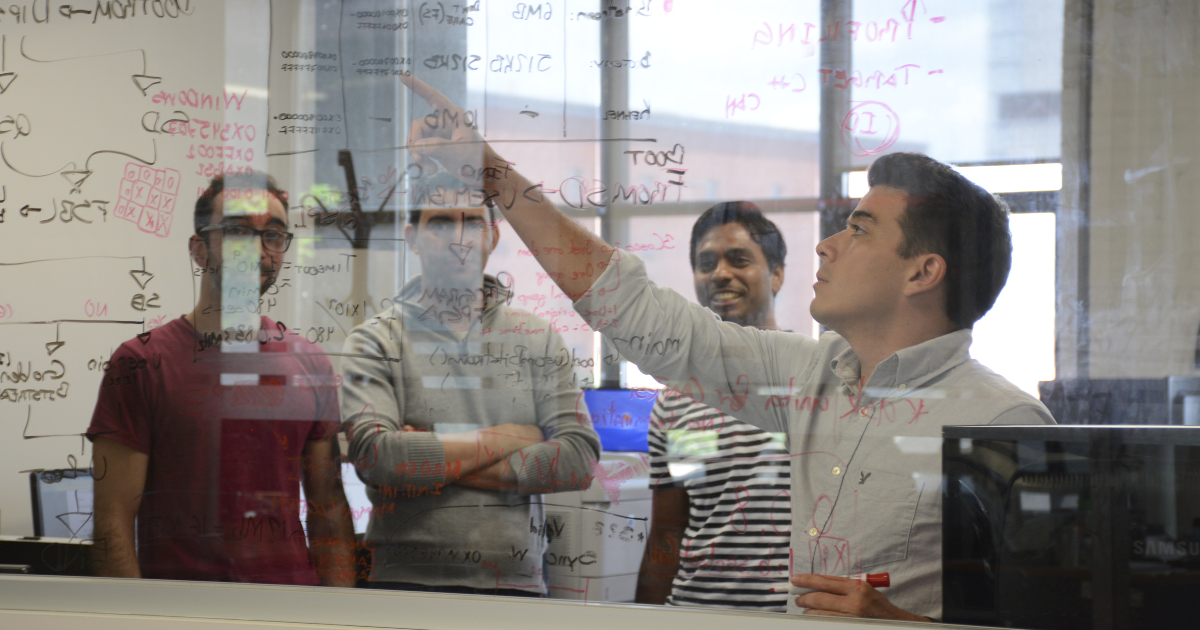
HIL pre-commissioning not only finds problems early, but also fosters trust through consistent, transparent testing that every stakeholder can witness.
Unified test bench as single source of truth
Bringing all relevant controllers and systems onto one HIL platform ensures every stakeholder is looking at the same performance data. Instead of each vendor or team testing their component in isolation (and later debating who is at fault), a unified HIL test bench provides a neutral setting where issues are identified collaboratively. The entire plant control system (from the plant controller to power quality (PQ) meters and supervisory control and data acquisition (SCADA) interfaces) runs in real time as one integrated system, so this bench becomes a single source of truth everyone can trust. Engineers spearheading this approach emphasize its neutrality. Rather than manufacturers testing in silos, a shared pre-commissioning stage finds the integration problems for all parties. As a result, equipment suppliers, EPC contractors, and owners are aligned on one set of proven results, reducing conflicts and uncertainty.
Transparent evidence for regulators and owners
HIL pre-commissioning produces an extensive record of how the asset performs under normal operation and fault conditions. These results can be directly shared with grid authorities and project stakeholders as proof of compliance. Early, repeatable tests mean fewer surprises during official grid acceptance – if a plant’s behavior doesn’t match its approved model during commissioning, it can be forced to curtail output and lose significant revenue. By validating the controller and protection responses ahead of time on the simulator, the team demonstrates that the facility will meet grid codes and reliability standards before ever connecting to the network. This transparency reassures regulators, who gain confidence that the project won’t jeopardize grid stability, and it assures owners, who see evidence that their investment is technically sound and compliant.
Replayable scenarios for confidence and speed
The repeatability of HIL tests means any scenario can be rerun whenever needed, giving engineers unmatched confidence in the consistency of their results. Control parameters can be fine-tuned in the lab and verified immediately by replaying the same grid event or disturbance (something that is impractical to do in a field test). Teams even simulate rare and dangerous events (such as grid faults or extreme transients) safely and as often as needed, proving the system can handle them under worst-case conditions. This approach accelerates projects by ironing out issues before on-site commissioning begins, so the site phase is shorter and more about verification than issue resolution. Ultimately, using the simulator instead of the live grid as a testing ground allows commissioning to move faster and with far less risk.
Bringing all relevant controllers and systems onto one HIL platform ensures every stakeholder is looking at the same performance data.
OPAL-RT platforms connect plant controllers, PQ meters, and SCADA on a single pre-commissioning rig

For engineering teams ready to integrate HIL pre-commissioning into their projects, OPAL-RT provides the real-time simulation stack needed to make it happen on one unified test rig. Its HYPERSIM software can emulate complex power grids in real time, while the FPGA-based eHS solver and XG series real-time simulators deliver the high-speed I/O and computational performance to interface directly with physical controllers, protection devices, and SCADA systems. This open, high-performance platform allows a plant’s controller, PQ meter, and SCADA to plug into a single hardware-in-the-loop testbed and operate exactly as they would in the field. Engineers can run through test scenarios, adjust parameters, and validate responses on this platform with confidence, then carry that proof straight into a smooth on-site commissioning.
Recent renewable projects demonstrate how this approach reduces risk and builds alignment. For example, EPEC Group’s HIL pre-commissioning workflow was implemented on the same real-time simulation platform for a large solar farm, allowing the team to test plant controls and grid events thoroughly before construction. This collaboration de-risked the grid connection process by resolving integration issues in advance and provided all stakeholders with one source of truth for performance data. With a capable real-time simulator in place, project teams ensure that the first day of commissioning is backed by evidence and free of surprises.
Common questions
Engineers and project managers often wonder how hardware-in-the-loop pre-commissioning works and why it matters. Many of their queries focus on what this approach means for project reliability and confidence. This section addresses a few of those concerns, illustrating how HIL testing improves outcomes and assures stakeholders.
Why does HIL pre-commissioning improve reliability?
HIL pre-commissioning improves reliability by ensuring that control systems are thoroughly vetted under realistic conditions before they ever operate on the grid. By testing with real controllers and simulated power networks, engineers can detect and fix issues (like unstable control responses or communication glitches) that would otherwise cause unreliable behavior in the field. This means the equipment and software delivered to site have already proven they can maintain stable operation and meet grid standards. In short, HIL testing catches problems early so that the final deployed system runs smoothly and reliably from day one.
How does HIL testing give engineers confidence?
HIL testing gives engineers confidence because it replaces guesswork with hard evidence. Instead of hoping that a controller will behave as expected, the engineering team actually sees it responding to a wide range of simulated scenarios in the lab. They can push the system to its limits — simulating faults, extreme loads, and abnormal events — and observe exactly how it performs. When the hardware and software pass these trials repeatedly, the team gains trust in their design decisions. That confidence carries over to the real commissioning, knowing they aren’t facing untested situations.
Why is HIL validation critical before commissioning?
Performing HIL validation before on-site commissioning is critical to avoid costly surprises and delays. If a problem is discovered only after equipment is installed (for example, a controller tuning issue or an integration incompatibility), it can halt the commissioning process and require urgent fixes under tight deadlines. HIL testing as a pre-commissioning step acts as a safety net. It verifies that all components and controls work as intended in a controlled setting. This proactive validation not only prevents last-minute scrambling, but also provides documentation and assurance to grid operators and project owners that the system is ready to perform.
What issues can HIL pre-commissioning catch that traditional tests miss?
HIL pre-commissioning can catch integration and dynamic issues that traditional test methods might overlook. For instance, purely software-based simulations might not reveal a timing mismatch between two devices, and factory tests of individual components won’t show how multi-vendor systems behave as a whole. In a HIL setup, the actual controller hardware, communications, and even firmware are exercised along with a simulated grid. Problems like improper scaling factors, unmodelled communication delays, or control instability under edge conditions become apparent. Essentially, HIL exposes any hidden incompatibility or oversight by testing the complete closed-loop system in conditions very close to reality.
How is hardware-in-the-loop testing implemented in pre-commissioning?
In a pre-commissioning setup, hardware-in-the-loop testing is implemented by connecting the real control hardware of the plant to a real-time digital simulator that represents the plant’s operating conditions. The process typically starts with creating a detailed real-time model of the power system or grid that the plant will connect to. The simulator runs that model and exchanges signals in real time with the actual controllers (such as the plant controller or inverter control units) via I/O interfaces or communication protocols. The controllers essentially believe they are interacting with a live system, while in reality they are interfaced with a high-fidelity simulated grid. Engineers then execute commissioning test procedures on this combined setup, observing how the hardware reacts and adjusting settings as needed. In this way, all commissioning steps, from normal operation to fault responses, are rehearsed and validated on the HIL platform before the real installation is energized.
HIL pre-commissioning is a major advancement for complex grid-connected projects. It elevates the reliability of the final system and instills a deeper level of confidence across engineering teams and stakeholders alike. With growing need for certainty and speed in project delivery, HIL testing is becoming a standard step to ensure smooth, successful commissioning. As a result, teams enter the field commissioning phase armed with proof and far fewer unknowns.
Real-time solutions across every sector
Explore how OPAL-RT is transforming the world’s most advanced sectors.
Industry applications, Simulation
03 / 31 / 2026
Managing high-frequency switching in real-time EMT simulation
Precision in testing complex power systems is essential to avoid failures, accelerate innovation, and integrate new technologies safely.

Simulation
03 / 30 / 2026
Understanding timestep requirements for modern power converters
Practical criteria for selecting EMT and real time simulation timesteps for power converters, covering switching resolution, control and PWM timing alignment, multirate approaches, and verification checks.
Industry applications, Simulation, Energy
03 / 29 / 2026
Validating data center energy management systems using real-time HIL
This piece explains how AI workload variability affects data centre power stability and how closed-loop HIL testing helps validate EMS control behaviour under site and grid stress.
EXata CPS has been specifically designed for real-time performance to allow studies of cyberattacks on power systems through the Communication Network layer of any size and connecting to any number of equipment for HIL and PHIL simulations. This is a discrete event simulation toolkit that considers all the inherent physics-based properties that will affect how the network (either wired or wireless) behaves.