
Your power system model deserves proof before it meets hardware. That proof grows from disciplined modelling, real-time execution, and repeatable tests. Teams across energy, aerospace, automotive, and academia value practical methods they can trust. Clear planning, faithful models, and measured validation turn ideas into results.
Real-time simulation lets you exercise control code, protection logic, and power hardware under safely reproduced stress. Hardware-in-the-loop (HIL) brings your controller into the loop at full speed, while the simulator enforces time steps and I/O timing. Open toolchains preserve your investment in MATLAB equivalents, Python scripting, and the Functional Mock-up Interface (FMI) with functional mock-up units (FMUs) that wrap plant models. Repeatable tests then feed design reviews, quality targets, and certification needs.
Your power system model deserves proof before it meets hardware.
Understanding why power system simulator matters
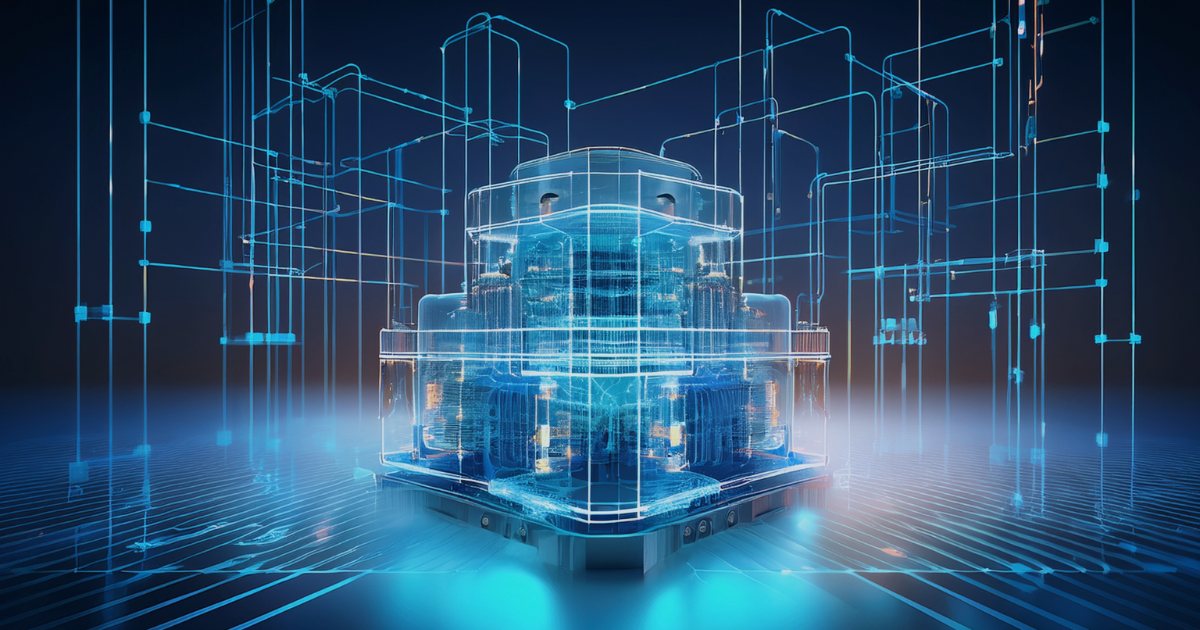
A power system simulator lets you study interactions across machines, converters, lines, and controllers without risking equipment. It helps you check designs across time scales and network sizes while keeping timing under control. With deterministic execution and high-fidelity models, you can isolate causes rather than guess. The result is stronger evidence for requirements, safety, and performance.
Senior simulation engineers gain insight into controller limits before prototypes leave the bench. Lab managers gain better scheduling, resource use, and repeatability that supports predictable testing. System architects see interactions across subsystems that often hide during field tests and production ramps. Researchers gain a credible baseline for comparing algorithms, hardware, and tuning strategies.
What real-time simulation of power systems delivers for your projects
Real time simulation of power system scenarios closes the gap between models and hardware. The approach supports controller testing under strict timing, fault studies at scale, and protection checks under realistic sequences of events. Results arrive while your team keeps control over risks and equipment limits. Clear benefits emerge across development, validation, and certification stages.
Closing the loop with hardware-in-the-loop
Hardware-in-the-loop (HIL) connects your controller to a real-time plant model at the correct electrical time scales. The simulator enforces fixed time steps, I/O latency budgets, and reproducible timing edges. That discipline preserves closed-loop behaviour and exposes limits that offline runs may hide. Engineers then tune gains, adjust filters, and harden state machines without risking high power hardware.
An inverter controller for a microgrid can run against a detailed electromagnetic transients (EMT) network under faults. Power hardware stays de-energized, yet control firmware experiences the same sequences, analog-to-digital conversion quantization, and communications traffic. Teams catch synchronization issues, race conditions, and converter limits before metal meets mains. The outcome reduces lab hazards and cuts unplanned rework.
Protection and automation timing you can trust
Protection relays and automation schemes depend on precise timing across sensing, logic, and breakers. A real-time simulator can inject voltage sags, current reversals, and breaker delays with microsecond control. Engineers verify pickup, coordination, and restoration without switching primary equipment. The process exposes miscoordination and timing drift that increase cost later.
Phasor-based models handle long-duration studies, while EMT targets fast transients in converters and arc events. Switching between these domains helps set the right time step and numerical methods. Test scripts collect timestamps, status words, and communications packets for audit trails. Those records stand up during factory acceptance, site checks, and regulator reviews.
Controller prototyping and tuning without high risk
Control engineers move faster when plant models run at hardware clock rates. You can try new filters, observers, and fault ride-through logic while the simulator keeps the grid model stable. Iterations become small, targeted, and measurable. Code quality improves because the team sees failures as data, not setbacks.
Model-in-the-loop (MIL) and software-in-the-loop (SIL) give early feedback before HIL. FMU compatibility through the Functional mock-up interface (FMI) protects previous work across teams. Once control gains settle, the same test profiles run in HIL and later in staged hardware tests. Consistency across levels makes reviews straightforward and reduces subjective debate.
Faults, contingencies, and edge-case coverage
Many failures arise from sequences that are rare, short, or hard to set up in a lab. A real-time platform can combine voltage dips, flicker, and controller resets while recording detailed traces. You can ramp impedances, vary line parameters, or disturb clocks to probe weak spots. Stress profiles grow into a reusable library for projects, tenders, and audits.
Energy storage control, converter phase-locked loops, and governor models all respond to these stressors. Your group learns how timing margins interact with computational budgets. The simulator helps you decide where to add filtering, rate limiters, or watchdogs. The end result is confidence grounded in measured response across difficult conditions.
High-quality data for validation and compliance
A credible validation record needs synchronized measurements, metadata, and context. Time-aligned logs from the simulator, controller, and communications links let you correlate cause and effect. Calibration records for sensors, amplifiers, and wiring add the detail that auditors expect. Dashboard views then summarize pass or fail against requirements.
Export data in formats accepted by your quality system and partners, including CSV, HDF5, and Parquet. Store the full run recipe with model version, parameters, and elapsed time. Those records pay off during peer reviews, factory acceptance, and site commissioning. People sign off faster because the evidence is structured, complete, and easy to share.
Real-time work is most useful when timing, I/O, and models operate as one coherent system. Careful scenarios reveal weak links long before a project reaches high power wiring. Teams then adjust requirements, budgets, and controls with clear evidence. The payback shows up as fewer delays, lower risk, and higher confidence.
Designing models that reflect complex power systems accurately
Accurate modelling begins with scope and clarity. For converter-heavy networks, electromagnetic transients often guide controller behaviour, so an EMT approach and small time steps are appropriate. For wide-area studies, phasor-domain models with longer steps can capture flows, setpoints, and slower modes. Many projects mix both, and they stitch domains using validated interfaces that preserve causality.
Parameter quality drives outcomes more than clever diagrams. Use test data, datasheets, and manufacturer curves to set saturation, loss, and thermal limits. Treat sensors, dead times, and communications noise as part of the plant rather than footnotes. Document assumptions, solver choices, and version history so future you can defend choices with confidence.
Choosing power system simulation software that fits your lab needs
Software defines what you can model, test, and trust. Your choice of power system simulation software affects performance, compatibility, and team adoption. Aim for tools that support real-time execution, HIL, and open interfaces without locking you into closed stacks. Licensing, support, and validation pipelines deserve the same attention as feature lists.
- Deterministic real-time performance: Look for guaranteed step times, low jitter, and clear profiling so you know when overruns occur. Field programmable gate array (FPGA) acceleration should be available when sub-microsecond behaviour matters.
- Model authoring and compatibility: Ensure the platform supports common modelling tools, code generation from C or C++, and scripting with Python. Co-simulation through the Functional mock-up interface (FMI) and functional mock-up units (FMUs) preserves portability across teams.
- I/O and plant-ready interfaces: Confirm support for analog and digital I/O, low-level encoders, and high-level communications like IEC 61850, Modbus, and CAN. Scalable signal conditioning and amplifier compatibility simplify trips from desk to lab.
- Scalability and licensing: Growth from a single node to a cluster should not require a model rewrite. Flexible licensing helps students, pilot projects, and large teams share assets without blocking progress.
- Model libraries and solvers: High-quality libraries for machines, converters, and grids speed up early work. Multiple solvers for EMT and phasor domains, plus clear guidance on step sizes, help you keep fidelity high.
- Usability and collaboration: Versioning, diff tools for models, and readable logs improve teamwork. Clear run management, templated scenarios, and permission controls keep quality consistent.
- Security, safety, and compliance: User roles, signed binaries, and network segmentation protect rigs and data. Features like safe stop circuits, watchdogs, and alarm logging support lab policies and audits.
Selecting software is easier when your team agrees on goals, constraints, and test coverage. Short trials with real models reveal performance and workflow costs faster than slides. Reference projects and measured latency numbers tell a stronger story than claims. Once you see predictable run times and clean I/O, confidence follows.
Integrating power system simulator for engineering into your workflow

Strong outcomes come from process, not chance. A power system simulator for engineering earns its keep when it fits daily habits and lab realities. Good integration starts with shared goals, clean interfaces, and repeatable steps. Clear ownership prevents drift across models, rigs, and scripts.
Define targets and acceptance criteria early
Clarity on outcomes shapes models, tests, and timelines. Write measurable targets for stability margins, protection pickup, and communications latency. Link each target to a test procedure with stimuli, thresholds, and pass or fail logic. Review these targets with controls, protection, and lab teams so everyone agrees.
Acceptance criteria guide choices about step time, solver, and required I/O. If a controller needs 50 microseconds, the model structure must respect that budget. Hardware limits, such as amplifier current and sensor ranges, shape safe operating points. A shared view avoids rework and supports smoother reviews.
Build a shared model library
Reusable components reduce effort and raise consistency. Create well-documented blocks for machines, converters, networks, and measurements, then tag versions. Include unit tests for each block so updates do not break expected behaviour. Teach newcomers how to assemble systems from approved parts.
A curated library speeds peer review since teams recognise standard pieces. Parameter sets tied to datasheets make swaps safer and faster. Template projects give students and new hires a starting point that meets lab rules. Over time, the library becomes a quality asset as valuable as hardware.
Connect controllers and I/O with care
I/O planning deserves the same discipline as modelling. Map signals, units, and scaling before wiring, then review ranges and offsets. Add rate limiters, saturations, and watchdogs in the plant model to protect prototypes. Use interlocks and safe stop circuits to bound energy during faults.
Communications add another layer of timing. Test protocol stacks for throughput, jitter, and error handling before long runs. Log packet loss and sequence counters so you can diagnose issues without guesswork. Keep a reference wiring and I/O map under version control so rigs remain consistent.
Automate runs, data capture, and traceability
Automation turns good practice into habit. Use scripts to load models, set parameters, execute scenarios, and save results with unique IDs. Capture simulator logs, controller traces, and protocol traffic in synced timebases. Store metadata such as model versions, firmware hashes, and calibration dates.
Automation also frees experts to focus on analysis. Overnight batches can sweep many cases while keeping power hardware safe. Failing runs still produce useful data, since the trail is complete and structured. Leaders get audit-ready reports without manual stitching.
Scale from desktop to lab rigs
Great teams start small, then scale when evidence says it is time. Begin with model-in-the-loop on a workstation, move to HIL with low-voltage I/O, then add amplifiers when tests call for power. Keep one model hierarchy with profile switches for desktop, rack, and field test rigs. That approach preserves behaviour while adapting to different compute targets.
Scaling also includes people and process. Shared templates, coding standards, and checklists reduce friction as more engineers join a project. Continuous integration for models catches issues before they hit the lab. A simple rule helps: one source of truth, many repeatable deployments.
Strong integration feels almost invisible because the work just flows. Teams spend less time fixing mismatches, and more time improving designs. Managers see fewer surprises in schedules and budgets. The simulator becomes a trusted part of everyday engineering.
Common challenges in power system simulation and how to solve them
Even strong teams face recurring hurdles during modelling and testing. Many issues stem from timing, numerics, or incomplete data. Others arise when rigs grow faster than processes. Practical fixes exist, and they start with measurement and clarity.
- Numerical stiffness and convergence problems: Tight electrical coupling can force tiny steps and slow progress. Split models into appropriate domains, adjust solver options, and validate against measured responses to protect fidelity.
- Overruns and latency budgets: Real-time overruns erode trust, and hidden jitter misleads testers. Profile hotspots, move fast paths to FPGA fabric when needed, and track budgets for each loop.
- Parameter uncertainty: Missing or vague parameters lead to correct-looking results that are wrong. Use identification experiments, vendor curves, and sensitivity analysis to box uncertainty and set safe ranges.
- Model drift between versions: Small edits can change behaviour in subtle ways. Lock versions, review diffs, and keep unit tests for blocks so changes remain controlled.
- I/O noise and grounding issues: Measurement paths can inject offsets that confuse controllers. Add proper shielding, filtering, and calibration routines, and record artefacts so analysis stays honest.
- Protocol integration gaps: Misused data types or time sync issues break systems under load. Test conformance, verify byte orders, watch timestamps, and keep a traffic capture for later review.
- Team skills and onboarding: New contributors can slow projects without structure. Provide short playbooks, mentoring, and small training rigs so confidence builds quickly.
Addressing these challenges early prevents schedule shocks and lab incidents. Evidence-based fixes also support cleaner reviews with leadership and partners. Over time, the same playbook shortens projects and raises quality. People trust results because the process stays visible, measured, and fair.
How OPAL-RT can support your modeling and simulation of complex power systems

OPAL-RT helps you shorten cycles and raise confidence for modeling and simulation of complex power systems. Our real-time digital simulators combine CPU and FPGA compute so you can hold tight step times under demanding scenarios. Open APIs, Python scripting, and FMI support protect your model assets and preserve your toolchain choices. High-performance I/O, signal conditioning, and communications stacks connect controllers and amplifiers without surprises.
Engineering teams value practical help when schedules tighten and rigs grow. OPAL-RT brings hands-on guidance across HIL setups, test automation, and data workflows that fit your quality system. You gain predictable performance, detailed profiling, and support that stays focused on measurable outcomes. Projects move from concept to lab validation with evidence you can present to peers, suppliers, and regulators. Trust OPAL-RT for performance you can measure, expertise you can access, and a partner you can rely on.
Common Questions
How do I know if I need a power system simulator for my project?
If your team is testing complex control systems, protection logic, or converter behaviour, a simulator provides a safer and faster path to validation. Instead of relying only on hardware tests, you can study scenarios under precise timing and reproducibility. This gives you evidence for safety and performance while avoiding costly hardware risks. OPAL-RT supports you by providing real-time platforms that bring these insights into your lab with reliable accuracy.
What are the benefits of real time simulation of power system studies?
Real time simulation of power system studies allows you to replicate grid behaviour, disturbances, and timing interactions without exposing equipment to high-risk conditions. This helps you validate algorithms, test protections, and refine controller behaviour under repeatable circumstances. The ability to control and monitor timing directly strengthens trust in your results. OPAL-RT ensures you achieve this with open, scalable simulation solutions tailored to your workflow.
How do I choose power system simulation software that suits my lab?
Choosing the right software means focusing on performance, compatibility, and scalability. Your simulator should support hardware-in-the-loop tests, standard modelling tools, and strong I/O integration. Flexible licensing and high-quality libraries also help keep your projects on track. OPAL-RT offers software ecosystems that fit these needs, giving your lab the tools to run accurate, reproducible studies.
What are the most common challenges with modeling and simulation of complex power systems?
Typical challenges include solver stability, missing parameters, timing overruns, and protocol integration gaps. These issues can slow down projects and reduce trust in test outcomes if not handled early. Strong processes like parameter validation, profiling, and automation help you overcome these barriers. OPAL-RT provides guidance and tested platforms that simplify this work while maintaining fidelity.
How does a power system simulator for engineering fit into everyday workflows?
A simulator integrates best when it becomes part of daily processes like controller prototyping, validation tests, and fault analysis. Teams can script automated runs, reuse standard model libraries, and gradually scale from desktop to high-power rigs. This reduces friction between modelling and lab work, keeping results consistent and useful. OPAL-RT supports this integration with open architecture and proven support that fits engineering priorities.
Real-time solutions across every sector
Explore how OPAL-RT is transforming the world’s most advanced sectors.
02 / 28 / 2026
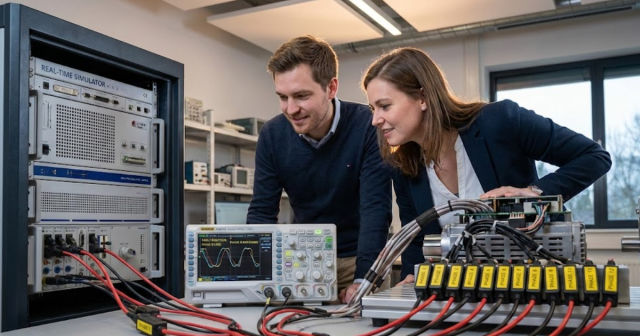
12 phase PMSM validation checklist for mission critical drives
A practical 12 phase PMSM validation checklist covering acceptance criteria, 12 tests, multiphase HIL fault injection, pass fail evidence, test sequencing from SIL to dyno, and common setup errors.
Power Electronics
02 / 27 / 2026
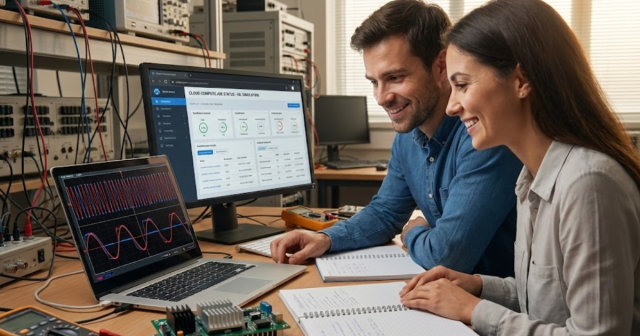
Cloud Simulation for Power Electronics Development
Covers how cloud simulation supports power electronics modeling, faster run cycles, control validation, and the cost and security tradeoffs when selecting a cloud stack.
Simulation
02 / 26 / 2026
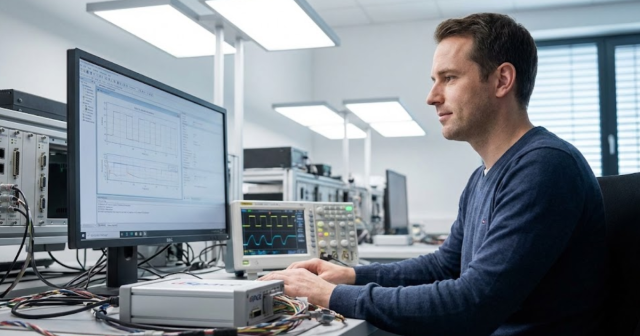
CPU versus FPGA simulation for high speed motor drive testing
Compares CPU and FPGA real-time simulation for high speed motor drive HIL testing, focusing on timing limits, solver step size, switching fidelity, I/O latency, and acceptance criteria.
EXata CPS has been specifically designed for real-time performance to allow studies of cyberattacks on power systems through the Communication Network layer of any size and connecting to any number of equipment for HIL and PHIL simulations. This is a discrete event simulation toolkit that considers all the inherent physics-based properties that will affect how the network (either wired or wireless) behaves.