Mitigating risk in data center commissioning with HIL testing
Power Systems
10 / 21 / 2025
Key takeaways
- HIL turns risky on-site trials into safe, repeatable lab scenarios that surface issues early.
- Integrated simulation exposes interface faults that isolated tests miss, improving reliability from day one.
- Commissioning confidence grows when test scripts target failure modes, not just happy paths.
- A simulation-led plan reduces schedule pressure, costly rework, and post-handover disruptions.
- Evidence gathered during HIL shortens debates, accelerates signoff, and strengthens stakeholder trust.
Commissioning a data center without thorough testing is like walking a tightrope without a safety net—one slip can cause a devastating outage. The stakes are incredibly high: data center downtime costs average $11,500 per minute, so a single oversight can quickly spiral into millions lost and a shattered reputation.
At OPAL-RT, we believe commissioning should never be a leap of faith. Modern data centers require simulation-led testing so that going live is a confirmation of performance, not an experiment. Hardware-in-the-Loop (HIL) techniques allow teams to shift critical tests into a high-fidelity lab simulation. In this controlled environment, engineers can find and fix issues long before the facility goes live. The result is systems that perform as expected from day one, ensuring launch day is a confident culmination of preparation rather than a risky trial by fire.
At OPAL-RT, we believe commissioning should never be a leap of faith.
Data center commissioning is a high-stakes, risk-prone process.
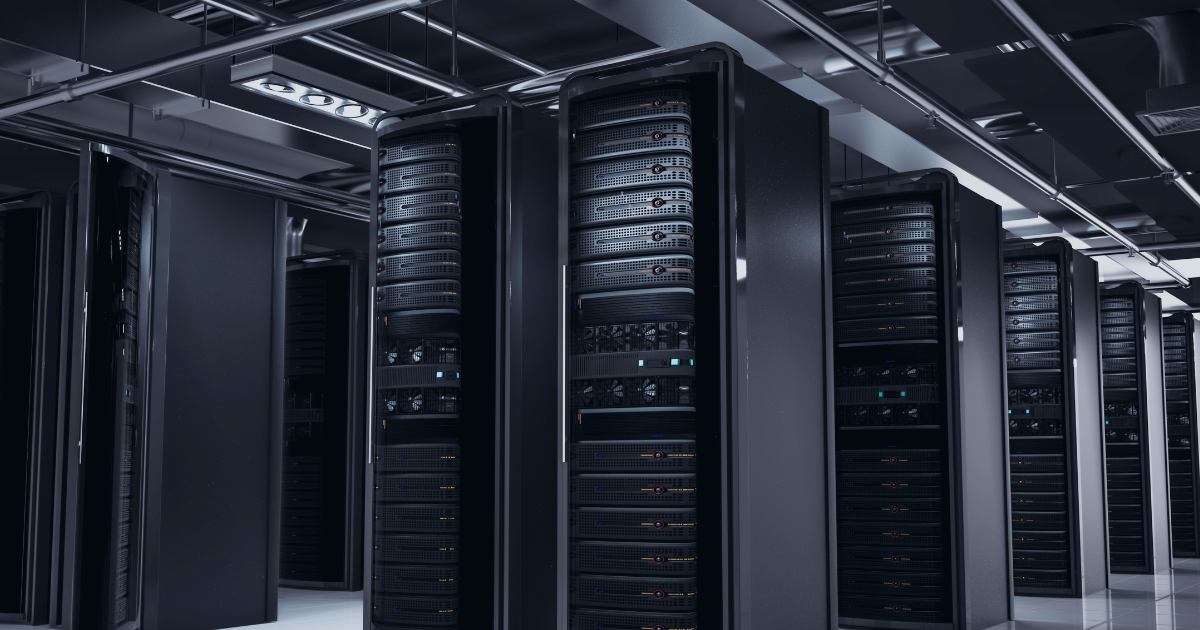
Power, cooling, backup generators, and control software all converge in a data center, forming an intricate system that must work flawlessly together. During commissioning, engineers carry the responsibility of verifying that every piece of this puzzle functions under actual operating conditions without faltering. The process is high stakes because even a single overlooked fault can trigger cascading failures. For instance, a misconfigured cooling system might let temperatures spike, causing servers to overheat and critical equipment to shut down within minutes. The fallout from such an incident isn’t just technical—it threatens service availability and can put both assets and safety at risk.
Commissioning teams also face intense time pressure and scrutiny. Facilities are often on strict deadlines to go live, so commissioning engineers work against the clock to meet launch dates. This urgency can make it difficult to test every scenario, yet any shortcut invites trouble. When an untested failure mode slips through and causes an outage after handover, the result is chaos: emergency repair crews, unplanned downtime costs, and a loss of trust among stakeholders. No data center operator wants a grand opening marred by a preventable incident, especially when critical services and company reputations are on the line.
Traditional testing leaves critical failure modes untested.

Despite best intentions, conventional commissioning methods tend to test only a fraction of potential scenarios. In a typical project, engineers verify a sample of components and assume identical units will perform the same. They might functionally test one cooling unit per type, check a few backup generators, and run primary control sequences—but not every redundancy or edge case. This sampling approach leaves significant blind spots. Many failure modes are simply too risky or impractical to test on site, so they remain untried and lurking in the background.
Examples of critical scenarios that often go untested include:
- Simultaneous equipment failures: Testing usually isolates one failure at a time, leaving the facility unproven against multiple concurrent issues (for example, two backup generators failing at once).
- Control system edge cases: Uncommon combinations of sensor signals or sequence steps might never be manually exercised, yet a minor software bug in these areas can paralyze operations.
- Integration mismatches: Interfaces between subsystems (like a generator and an uninterruptible power supply) may not be fully tested together, so a subtle configuration mismatch can prevent a seamless handover during an outage.
- Repeated power disturbances: Commissioning might test a single power failure and recovery, but not rapid-fire grid fluctuations or multiple outages in succession that could confuse automated transfer systems.
- Extreme load and weather conditions: On-site tests rarely push systems to worst-case extremes, such as peak IT load on the hottest day of the year with a simultaneous utility power loss. Unverified, these stressful conditions can reveal weaknesses later.
When such scenarios are skipped during testing, they remain ticking time bombs that can trigger real outages down the road. It’s telling that 79% of data center outages have been traced back to components or sequences not directly tested during commissioning. In other words, most major failures stem from the very situations traditional tests overlook. These gaps highlight the need for a more comprehensive approach—one that can cover every critical contingency without endangering the actual facility.
HIL testing shifts risk into the lab for safe, thorough validation.
Hardware-in-the-Loop testing moves the most dangerous and complex trials out of the field and into a controlled laboratory setting. The idea is straightforward: connect the real control systems—such as the building management system, generator controllers, and cooling PLCs—to a real-time digital simulation of the data center’s electrical and mechanical infrastructure. In effect, the simulator behaves like a virtual data center. The controllers “see” all the normal voltages, temperatures, and sensor inputs, but those signals come from the simulation rather than actual equipment. This means engineers can rigorously test scenarios that would be too risky to attempt on real hardware.
With HIL, commissioning teams can unleash every failure scenario their imagination (and experience) can conjure. They can cut the virtual power feed to simulate a blackout, overload the simulated cooling system, or make multiple subsystems fail at once—all without harming any real equipment. This level of stress testing ensures that backup generators kick in on cue, cooling systems respond correctly to sudden heat spikes, and safety controls engage exactly as designed. Crucially, HIL testing also checks interactions between systems that traditional methods might overlook. One industry study found that 46% of backup power failures occurred at integration points between components that individually passed their standalone tests. Simulating the entire power and control chain as one system means engineers can catch these subtle interface issues well before they cause trouble in a live facility.
Another advantage is efficiency. Because tests take place in the lab, they can be repeated or automated as often as needed without tying up the actual site. If a software bug is discovered in a control sequence, developers can patch it and rerun the scenario immediately—no waiting for a maintenance window or risking downtime. HIL accelerates the learning curve: mistakes are revealed and resolved early, reducing last-minute surprises during on-site commissioning. In the end, this approach turns testing into a proactive exercise, shrinking the uncertainty and timeline crunch that commissioning engineers typically face.
Hardware-in-the-loop testing moves the most dangerous and complex trials out of the field and into a controlled laboratory setting.
Simulation-based commissioning lets you launch with confidence.
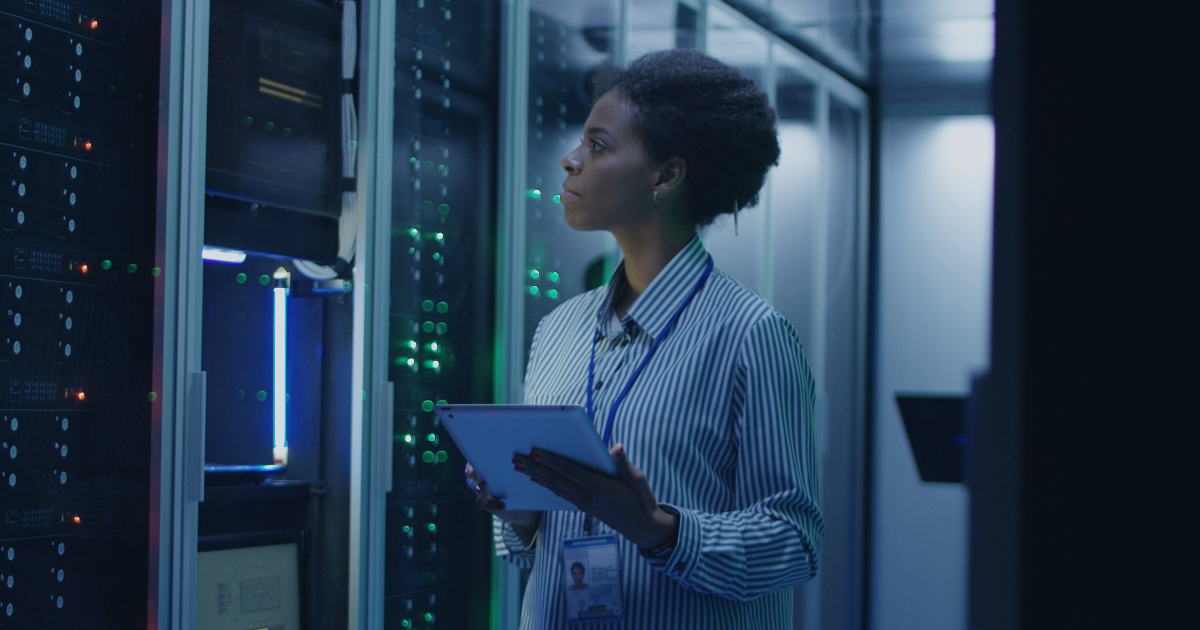
The ultimate payoff of simulation-led testing is a worry-free launch day. Engineers and commissioning teams walk into go-live knowing every critical scenario has already been rehearsed and resolved in the lab. Early adopters of comprehensive HIL-driven commissioning have seen dramatic improvements: one analysis of 50 data centers found 85% fewer critical incidents in the first year of operation when thorough simulation-based methods were used. Instead of scrambling to put out fires during the first weeks of operation, the team can trust that power, cooling, and controls will perform exactly as intended from the start.
This confidence reverberates beyond the engineering team. Data center owners, operators, and even end-users gain peace of mind from the hard evidence gathered during HIL testing. Everyone from project managers to facility stakeholders can move forward without the anxiety that normally accompanies a new facility going live. In effect, simulation-led commissioning eliminates those unknowns, turning the cutover of a data center into a proud milestone rather than a perilous leap of faith. It establishes a new standard of reliability where surprises are virtually eliminated and uptime is assured from day one.
OPAL-RT champions simulation-first data center commissioning

This simulation-first philosophy is central to OPAL-RT’s approach to real-time simulation technology. We have spent decades developing open, high-performance platforms that allow engineers to validate complex systems without risking downtime. Our real-time digital simulators and HIL tools allow commissioning teams to plug in their actual controllers and watch how the entire power and cooling infrastructure responds under every possible condition. The goal is to give you concrete evidence and confidence in system performance well before any critical facility goes live.
As a trusted partner in power system and electronics testing, we believe that going live should be a confirmation of performance, never an experiment. Our engineers collaborate with industry and research leaders to ensure that simulation models precisely mirror reality, from electrical transients to control logic intricacies. We make high-fidelity testing practical and accessible, helping data center professionals eliminate guesswork and sleep better at night knowing that when the new facility is switched on, nothing is left to chance.
Common questions
It’s natural to have questions when planning data center testing and commissioning. Many people wonder about the importance of testing, the steps involved, and the role of the commissioning engineer. Answering a few of the most frequent inquiries can help clarify the fundamentals of data center commissioning and highlight why thorough testing is so critical for a successful launch.
Why is data center testing essential?
Data center testing is essential because it ensures all critical systems will work reliably before the facility goes live. Data centers support vital services, so any untested flaw could lead to downtime, financial losses, or safety hazards. Through comprehensive testing, engineers can identify and fix hardware or software issues in power, cooling, and control systems ahead of time. This process provides confidence that backup generators, cooling units, and fail-safes will operate correctly during emergencies, ultimately protecting the uptime and reputation of the data center.
What steps are involved in data center commissioning?
Data center commissioning involves a series of systematic steps to verify the facility’s readiness. It typically begins with planning and design review, ensuring all requirements are understood. Next comes equipment installation verification and individual component testing—checking that each UPS, generator, cooling unit, and control system functions properly on its own. After that, integrated systems testing is performed, where all the subsystems are operated together under simulated load and various scenarios to confirm they interact correctly. Finally, the process concludes with documentation, training, and a handover to operations, signifying that the data center is fully tested and ready to support live workloads.
What happens during data center testing and commissioning?
During testing and commissioning, engineers rigorously verify each critical system’s performance under conditions similar to actual operation before the facility goes live. They perform controlled trials on the power infrastructure (such as simulating utility outages to see if generators and UPS units kick in), test cooling systems at different loads and temperatures, and validate that monitoring and safety controls respond correctly to faults. The process involves both isolated checks of individual components and comprehensive exercises where all systems run together. Essentially, it’s a full-scale rehearsal of the data center’s operations, designed to expose and correct any issues in a safe environment.
What does a data center commissioning engineer do?
A data center commissioning engineer is responsible for planning and executing the tests that ensure all facility systems are ready for reliable operation. They develop the commissioning plan, coordinate the testing schedule, and oversee tests on electrical, mechanical, and control systems. This engineer verifies that backup power kicks in, cooling units maintain proper temperatures, and monitoring systems detect and alarm correctly during trials. They also troubleshoot issues found during testing, document the results, and confirm that any problems are resolved before the data center goes live.
How does hardware-in-the-loop testing benefit data center commissioning?
Hardware-in-the-Loop (HIL) testing adds significant value to data center commissioning by enabling safe and exhaustive testing in a simulated environment. In HIL testing, real control hardware (like the data center’s power and cooling controllers) is connected to a computer simulation of the facility. This setup lets engineers simulate extreme conditions—such as sudden power loss, multiple equipment failures, or spikes in demand—without risking damage to actual equipment. HIL testing can uncover hidden weaknesses and software bugs that might not appear in standard on-site tests, thereby increasing confidence that the data center will handle emergencies as designed once it’s operational.
Thorough testing and methodical commissioning are the foundation of a truly reliable data center. Each stage—from initial design verification through full system integration—plays a vital role in preventing outages and ensuring everything works as intended. Modern techniques like simulation and HIL further strengthen these efforts by catching issues early and providing proof of performance. With these practices in place, a new data center can launch with the confidence that it will deliver the uptime and performance everyone expects.
Real-time solutions across every sector
Explore how OPAL-RT is transforming the world’s most advanced sectors.
Industry applications, Simulation, Energy
03 / 29 / 2026
Validating data center energy management systems using real-time HIL
This piece explains how AI workload variability affects data centre power stability and how closed-loop HIL testing helps validate EMS control behaviour under site and grid stress.
Industry applications
03 / 28 / 2026
Control algorithm validation using real-time HIL
A practical look at how real-time HIL testing validates embedded control algorithms through closed-loop simulation, fault reproduction, digital plant models, and disciplined integration.
Simulation
03 / 27 / 2026
Real-time simulation for validating autonomous and ADAS systems
Explains why autonomous and ADAS validation relies on deterministic real-time simulation and hardware-in-the-loop, what scenarios matter, how to assess simulator stacks, and where simulation programs commonly fail.
EXata CPS has been specifically designed for real-time performance to allow studies of cyberattacks on power systems through the Communication Network layer of any size and connecting to any number of equipment for HIL and PHIL simulations. This is a discrete event simulation toolkit that considers all the inherent physics-based properties that will affect how the network (either wired or wireless) behaves.