The future of cybersecurity testing in digital power grids
Power Electronics
11 / 17 / 2025
Key takeaways
- Digital power grids face rising cyber threats as connectivity grows, and testing must match the speed and sophistication of modern adversaries.
- Traditional compliance checks and isolated device tests leave important gaps that can hide system level weaknesses.
- Real-time digital twins allow you to rehearse attack scenarios safely and reveal issues before they reach the operational grid.
- AI improves cybersecurity readiness by detecting subtle anomalies, predicting attack patterns, and guiding incident response.
- Continuous simulation supported by advanced tools from OPAL-RT strengthens resilience and gives you more confidence in your defence posture.
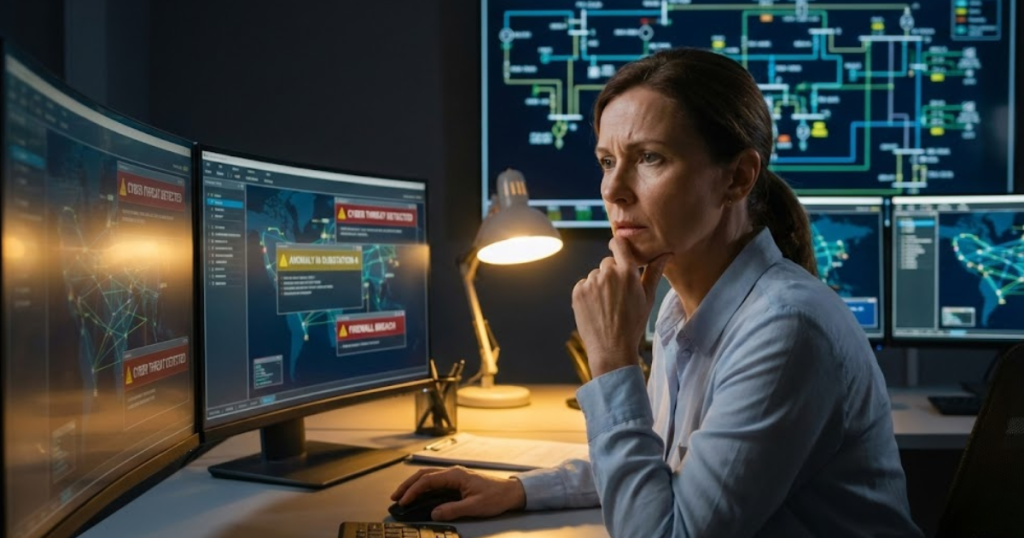
Imagine entire neighbourhoods plunged into darkness because a hacker infiltrated the power grid – this nightmare scenario shows why grid cybersecurity testing must fundamentally change. Cyberattacks on utilities are skyrocketing, with one report finding a 200% surge in attacks in 2023. Yet defenders can’t experiment with these threats on the live grid without risking real outages. We believe the only reliable solution is to continuously rehearse those attacks on a high-fidelity digital twin of the grid itself, augmented by artificial intelligence (AI) to spot anything humans might miss. In short, the future of power grid cybersecurity testing will be proactive: anticipating and neutralizing threats before they cause any disruption.
Digital power grids present a bigger target for cyber attacks
Today’s power grid isn’t just poles and wires – it’s a vast digital ecosystem of intelligent devices, sensors, and remote controls, all linked by communication networks. This digital transformation brings efficiency and flexibility, but it also expands the attack surface dramatically. Each new IoT sensor or remote substation interface is a potential entry point for hackers. Threat groups ranging from criminal gangs to nation-state hackers have already seized on this expanded surface. A stealthy malware implant in a transformer controller or a coordinated denial-of-service strike on grid communication links can trigger havoc across multiple regions. Grid defenders are dealing with highly sophisticated adversaries, so they must stay one step ahead at all times.
“We believe the only reliable solution is to continuously rehearse those attacks on a high-fidelity digital twin of the grid itself, augmented by artificial intelligence to spot anything humans might miss.”
Conventional security tests leave critical blind spots

Traditional approaches to securing the grid often fail to show how systems will hold up under a full-scale cyber onslaught. Some of the most serious blind spots include:
- Checklist compliance mentality: Meeting standards like NERC CIP might satisfy regulators, but compliance alone is only a minimal defense. Checklist audits don’t mimic real attackers, so critical gaps can go unnoticed.
- Isolated device testing: Utilities often test equipment in isolation (for example, a single relay in a lab), but these siloed checks miss problems that only appear when devices work together as a system.
- No realistic attack drills: Utilities rarely simulate a full-scale multi-stage cyberattack on the actual grid – the risk to operations is too high. This lack of live-fire practice means both the system and staff are largely untested in crisis conditions, so operators can be caught off guard when a real coordinated attack strikes due to limited hands-on experience.
Conventional testing gives a false sense of security by overlooking complex failure modes. In short, you can’t truly know your grid’s cyber resilience if you never practice against the kind of attacks that hackers are actually planning.
Real-time digital twins let grid operators test defenses without risking the live grid
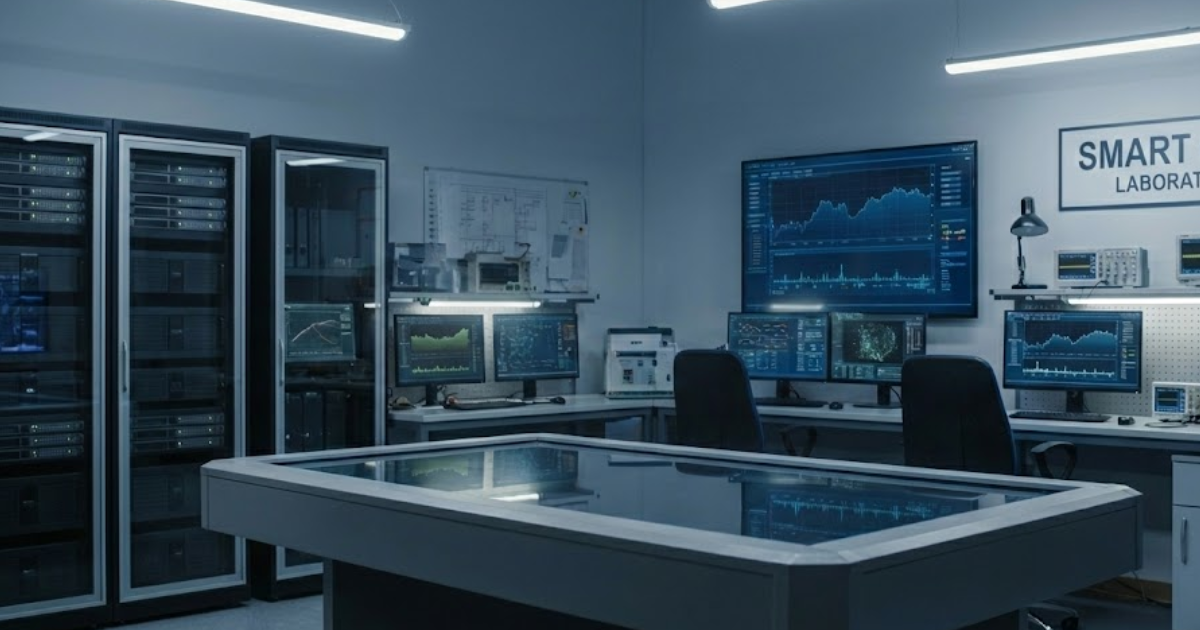
A real-time digital twin of the power grid offers a safe but incredibly realistic way to war-game cyber threats. This isn’t a paper exercise – it’s a high-fidelity replica of the grid’s electrical and communications systems running in sync with real time. The huge advantage is that worst-case attack scenarios can be played out on the twin without causing any harm, allowing the team to observe every failure point and fix it in advance.
Creating such a digital twin involves modeling everything from generators and transformers down to the network protocols linking control centers to substations. According to the U.S. Department of Energy, digital twins help utilities understand weaknesses, detect problems quickly, and address them effectively without risking the operational grid. In other words, engineers can unleash devastating cyber “attacks” on their grid twin – tripping a power plant offline or sending spoofed control commands across dozens of substations – and see exactly how the system would react, all with zero consequences for customers.
Equally important, the digital twin serves as a training ground for operators. Staff can practice their cyber incident response on the simulator using the same tools as in the real control room, honing their skills in a no-risk setting. After training on realistic attack scenarios, teams become more confident and faster at handling actual cyber emergencies.
AI adds predictive insight to grid cybersecurity testing
“A real-time digital twin of the power grid offers a safe but incredibly realistic way to war-game cyber threats.”
Even with advanced simulation, the sheer complexity of power grids means subtle warning signs can be missed. This is where artificial intelligence amplifies grid cybersecurity, by crunching data and spotting patterns far faster than any human. AI algorithms can recognize the digital fingerprints of an attack as it’s forming and even predict what an attacker might do next. The result is earlier warnings and more effective responses. Key ways AI is enhancing digital grid security testing include:
Real-time anomaly detection
Modern grids generate a massive stream of sensor and network data. AI anomaly detection serves as a high-tech sentinel, watching for the slightest hints of malicious activity amid all that information. Machine learning models learn the grid’s normal patterns and instantly flag anything that looks off. This catches stealthy attacks that would slip past manual monitoring. Nearly half of industrial companies said AI adoption had improved their security posture.
Predictive threat modeling
AI doesn’t just react – it anticipates. By studying many attack scenarios and past incidents, AI can learn the likely playbook of attackers and flag vulnerabilities that might be targeted next. This helps defenders harden those weak points and fix issues proactively. In this way, emerging attack patterns can be neutralized before they ever reach the real grid.
AI-guided incident response
During an actual cyber crisis, AI serves as a real-time advisor. It rapidly analyzes incoming data and suggests optimal response actions – or even automatically initiates containment – helping to blunt an attack before it spirals out of control. Ultimately, having AI systems and human operators in sync makes incident response much faster and more effective.
OPAL-RT and the move toward proactive grid cybersecurity testing
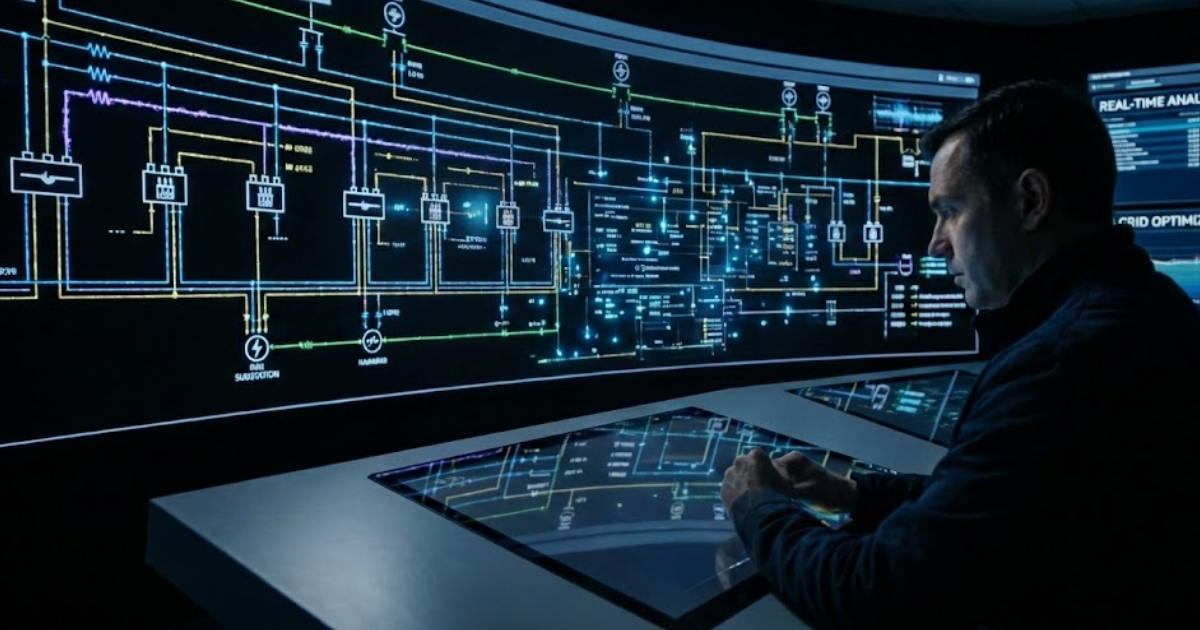
OPAL-RT provides the real-time simulation platforms that make it possible to replicate an entire digital power grid – electrical network and communication links and all – at full fidelity. Engineers worldwide use these open hardware-in-the-loop simulators to safely expose their systems to advanced cyberattack scenarios and verify that their defenses hold strong. These testbeds even allow teams to plug real control devices into the simulation and rehearse scenarios – for instance, a malware infection on a substation relay – in a safe setting where even worst-case failures don’t cause any real outages.
Our solutions are built for continuous testing – utilities can keep refining their models as new threats emerge or the grid changes. Our technology also integrates with AI-based monitoring to instantly flag any odd behavior during a cyber stress test, so engineers can diagnose and fix weaknesses on the fly. We believe that empowering energy providers with this kind of proactive testing is the key to a truly resilient grid – one that stays secure and keeps the lights on.
Common Questions
What is the future of cybersecurity testing in digital power grids?
It will be continuous and simulation-driven. Grid operators will maintain live digital twins of their systems and run cyberattack simulations on them regularly, rather than relying on occasional audits. This proactive, always-on testing approach means potential exploits get discovered and fixed in the simulator before attackers can find them, making the actual grid much harder to compromise.
How can AI improve digital grid cybersecurity?
AI acts as a force multiplier for grid defense. It can monitor vast amounts of grid data in real time and instantly flag anomalies that hint at a cyber intrusion – far faster than human eyes. AI also learns from past incidents and simulations, so it can predict likely attack strategies or vulnerable targets and alert operators ahead of time. During an attack, intelligent systems can even automate certain responses (like isolating a compromised device), helping contain the threat before it causes serious damage.
What is a digital twin in the context of power grid security?
It’s essentially a virtual replica of the entire power grid used for safe testing. A digital twin simulates the grid’s equipment and its control systems in real time, so it behaves just like the physical grid. This allows engineers to simulate cyberattacks or failures on the twin without risking any real outages. By launching all kinds of attack scenarios at the digital twin, utilities can spot weak points and fix them in advance – all while the real grid keeps running normally.
How do grid operators train for cyberattacks on the power grid?
They prepare by running realistic cyberattack drills on high-fidelity grid simulators rather than the live grid. This lets operators practice detecting and responding to breaches using their actual control systems, but in a no-risk environment. When a real attack occurs, the team can act swiftly and confidently because they’ve effectively rehearsed it beforehand.
Real-time solutions across every sector
Explore how OPAL-RT is transforming the world’s most advanced sectors.
Industry applications, Simulation
03 / 31 / 2026
Managing high-frequency switching in real-time EMT simulation
Precision in testing complex power systems is essential to avoid failures, accelerate innovation, and integrate new technologies safely.
Simulation
03 / 30 / 2026
Understanding timestep requirements for modern power converters
Practical criteria for selecting EMT and real time simulation timesteps for power converters, covering switching resolution, control and PWM timing alignment, multirate approaches, and verification checks.
Energy, Industry applications, Simulation
03 / 29 / 2026
Validating data center energy management systems using real-time HIL
This piece explains how AI workload variability affects data centre power stability and how closed-loop HIL testing helps validate EMS control behaviour under site and grid stress.
EXata CPS has been specifically designed for real-time performance to allow studies of cyberattacks on power systems through the Communication Network layer of any size and connecting to any number of equipment for HIL and PHIL simulations. This is a discrete event simulation toolkit that considers all the inherent physics-based properties that will affect how the network (either wired or wireless) behaves.