Electrifying everything starts with trust: battery management, system complexity, and the race to scale electrification.The next energy transition is already underway.
Georg-Friedrich Graf CEO, Munich Electrification

Electrification is not a single-industry transition. What began in automotive is now expanding across power systems, infrastructure, and industrial applications. As this shift accelerates, one layer is becoming central to performance, safety, and scalability: the battery management system (BMS).
To explore how this layer is evolving, we spoke with Georg-Friedrich Graf, CEO of Munich Electrification, a Germany-based company specializing in battery management systems for both electric vehicles and stationary energy storage systems. Munich Electrification brings deep expertise in BMS design and offers a valuable perspective on how electrification is unfolding across sectors.
What emerges is clear. Electrification is progressing but scaling it introduces a new level of complexity.
At the center of that challenge is trust.
From automotive innovation to energy systems
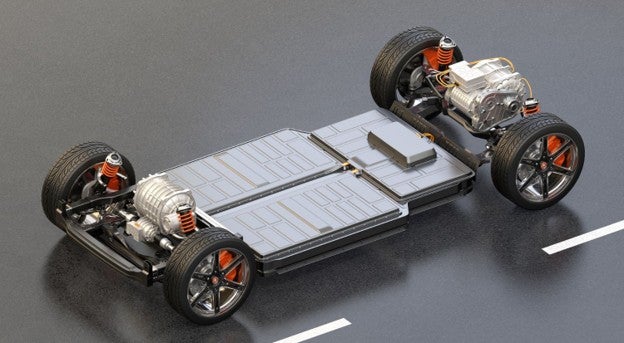
Battery innovation over the past decade has been largely driven by the automotive sector. Investments in electric vehicles accelerated improvements in cell chemistry, manufacturing scale, and system integration. As a result, battery costs declined significantly, enabling broader adoption across industries.
This foundation is now driving rapid growth in stationary energy storage.
“Historically, storage was more of a backup solution,” says Graf. “Now we’re building systems that actively participate in the grid.”
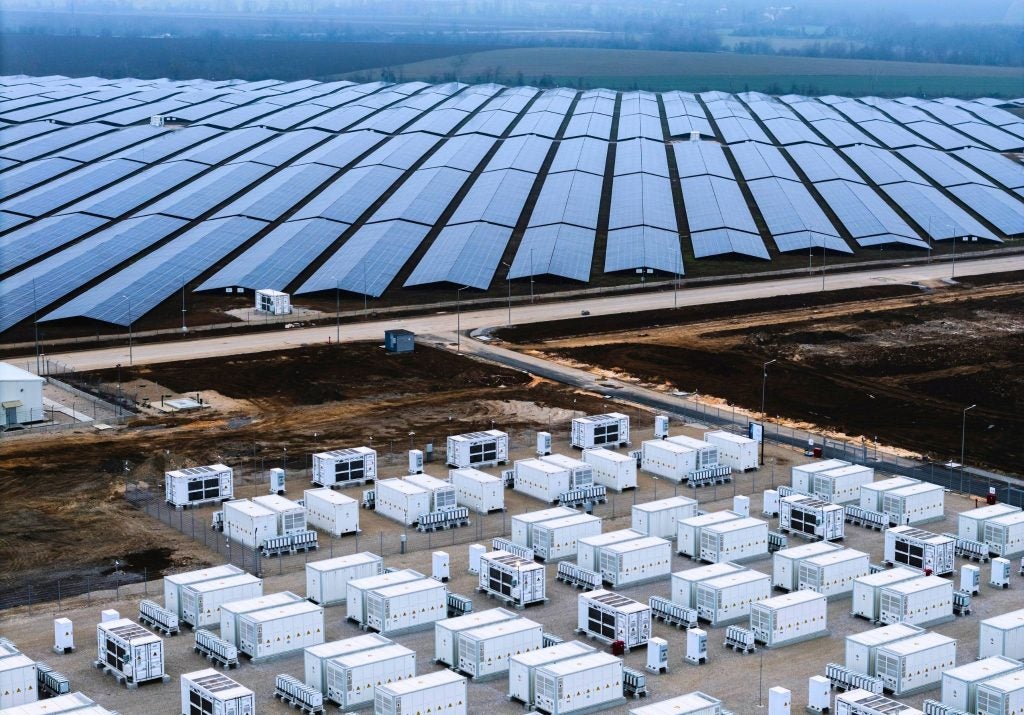
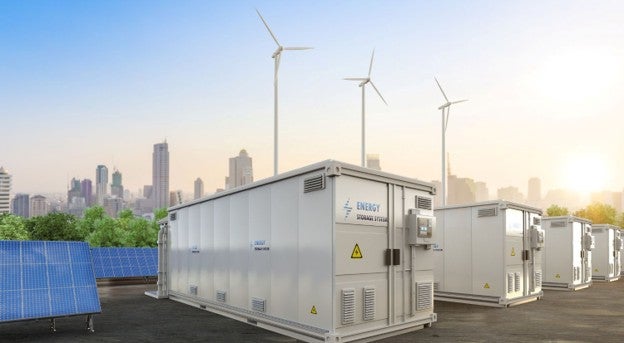
In markets with high renewable penetration, batteries are increasingly used to balance supply and demand. Solar energy generated during the day can be stored and dispatched in the evening, reducing reliance on peaker plants and improving grid stability.
This marks a shift from passive to active energy systems. Batteries are no longer just supporting infrastructure. They are operational assets within the grid.
When battery intelligence becomes economic value
As batteries take on revenue-generating roles, expectations on battery management systems increase.
In automotive applications, estimation errors in state of charge or state of health impact range and user experience. In stationary storage, those same errors directly affect how much energy can be dispatched and monetized.
“In a truck, if your estimate is off, maybe you drive a few miles less,” Graf explains. “In storage systems, every kilowatt-hour you can sell is money.”
This shift changes how performance is defined. Accuracy is no longer a comfort metric. It is an economic one.
As a result, the industry is pushing toward improvements in:
- State of charge (SoC), state of health (SoH), and power estimation
- Measurement fidelity and sensing techniques
- Cell balancing and system-level optimization
This is driving deeper integration between hardware and software and increasing the importance of system-level understanding of battery behavior.
In stationary storage, every kilowatt-hour you can sell is money.
Architecture evolves with system-level thinking
As electrified systems scale, their architecture is evolving.
Traditional BMS designs rely on distributed intelligence within each battery pack. Emerging systems are moving toward hybrid architectures that balance local control with centralized intelligence.
“Safety must stay in the battery,” says Graf.“The battery has to be safe whether it’s connected or not.”
Core protection and safety functions remain at the edge. Security is increasingly handled locally as well, ensuring system integrity regardless of external dependencies.
At the same time, higher-level functions are being centralized. These include:
- State estimation and diagnostics
- Data processing and analytics
- System-level coordination
This shift reflects a broader move toward software-defined systems, where functionality is decoupled from physical components and managed at the system level.
The challenge is not building one system. It’s building many systems efficiently.
The real bottleneck: variability at scale
One of the most significant challenges in electrification is not a single technology, but the variability of systems.
Different applications require different voltage levels, power profiles, communication protocols, and configurations. Even within a single platform, multiple battery variants may exist.
This variability creates complexity across the entire development lifecycle.
It affects:
- System design and integration
- Software architecture and configuration
- Validation and testing strategies
The challenge is not building a high-performing system once. It is building many variations of that system efficiently, without compromising safety or performance.
Addressing this requires structured approaches:
- Platform-based hardware design
- Modular and layered software architecture
- Clear separation between reusable components and application-specific logic
This is where system-level thinking becomes essential. Performance is no longer defined by individual components, but by how they interact under real operating conditions.
Testing becomes the foundation of trust
As system complexity increases, validation becomes a central challenge.
“We cannot ensure a battery system is safe without proper testing,” says Graf. “For us, hardware-in-the-loop testing is fundamental.”
In automotive, validation follows structured processes. Systems are tested through defined stages and validated in real-world operation before reaching production.
In stationary energy storage, the situation is fundamentally different.
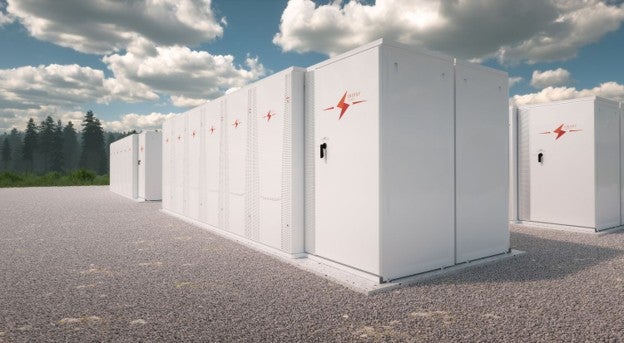
Large-scale systems, often reaching gigawatt-hour levels, cannot be fully replicated in laboratory environments. The first time a system operates at full scale may be during commissioning at the customer site.
“You only see the full system once it’s installed,” Graf explains. “So, everything you do before that has to be solid. It can feel like you’re building the first truck at the customer site.”
This shifts where confidence must be built.
Validation must happen earlier, using a combination of:
- Model-based simulation (SIL)
- Hardware-in-the-loop testing (HIL)
- Scaled system validation
HIL plays a critical role as the integration layer between software and physical systems. It enables engineers to validate control strategies, system interactions, and edge cases within a controlled environment.
As electrified systems become more interconnected, HIL is no longer just a testing tool. It is a core capability for system integration and risk reduction.
Safety and security converge
Battery systems are increasingly embedded within critical infrastructure.
“Safety has always been the cornerstone,” Graf says. “Now security comes on top of that.”
This includes:
- Secure communication between components
- Protection against unauthorized access
- Assurance of software integrity
These requirements are particularly important in grid-connected systems, where reliability extends beyond individual assets to the stability of the broader network.
Building expertise in a complex ecosystem
Munich Electrification has built its position by focusing deeply on battery management systems.
The company combines hardware, software, and testing expertise within a specialized and international team. This allows them to address increasingly complex system requirements across industries.
“We focus on one thing and go into it in depth.” Graf says.
As electrification evolves, this level of specialization is becoming essential.
Scaling electrification requires system confidence
Electrification will continue to expand. The question is no longer whether it will happen, but how reliably and how quickly it can scale.
At the center of that challenge is the ability to validate complex systems before they exist physically.
Battery management systems are not just part of that story. They are one of the systems that determine whether electrification succeeds at scale.
Without confidence in how systems behave under real conditions, scaling becomes risky.
With it, electrification becomes possible.
Gain deeper insights into BMS technology at www.munichelectrification.com