
Key Takeaways
- Simulation earns its place when it changes commissioning scope, test order, or acceptance limits before site work starts.
- A digital twin stays useful only when operating data, sequence updates, and retest rules remain tied to the commissioned baseline.
- Testing should focus first on power continuity, cooling response, and control logic because those paths hide the costliest failures.
Data center simulation matters only when it prevents expensive failures before commissioning starts.
Power draw, cooling load, and control behaviour now affect larger budgets than they did a few years ago. Data centres consumed about 415 TWh in 2024, about 1.5% of global electricity use. That scale means a weak model or a thin test script will show up as lost capacity, unstable cooling, or a failed turnover. You need simulation and testing to act as one chain of proof, with each step giving the next step something solid to trust.
Data center simulation earns value when it reduces commissioning risk

Data center simulation earns its value when it cuts risk before field crews touch live systems. A useful model answers specific commissioning questions about power continuity, cooling response, control logic, and fault recovery. If it cannot change a test script, a design choice, or an acceptance limit, it is overhead. You should expect that direct link.
A common case is a new hall with 2N power, row cooling, and strict temperature limits. The model should show what happens when one UPS module trips during peak IT load and when one cooling valve sticks half closed. That scenario tells you where to place meters, which alarms matter, and which sequences deserve witness testing. It also shows where spare capacity is only theoretical.
That is why simulation belongs beside commissioning planning and should happen before design freeze. You are not building a polished picture of the site. You are building a testable argument about how the facility will behave under strain. Teams that keep that purpose clear spend less time polishing visuals and more time finding weak points. That focus is what turns modelling into usable evidence.
“If it cannot change a test script, a design choice, or an acceptance limit, it is overhead.”
A data center simulator models failure before equipment arrives
A data center simulator works by turning design assumptions into interacting models for electrical flow, thermal response, control logic, and equipment limits. It then runs normal states and faulted states before hardware arrives. The result is a controlled way to test failure paths that a live site cannot safely rehearse first. That is the practical meaning of a data center simulator.
Picture a utility loss at full load. The simulator can step through breaker status, UPS ride through time, generator start, transfer timing, battery depletion, and cooling recovery. You can see if control delays push room temperature beyond your limit before backup systems settle. You can also test nuisance trips that only appear when several events line up within seconds. Those are exactly the failures that are expensive to find on site.
The model only helps if its assumptions match actual design intent. Equipment curves, protection settings, and control deadbands must be explicit, or the output won’t mean much. You also need to know which details matter and which ones don’t. A simulator built for failure rehearsal should favour sequence accuracy over visual polish. That keeps the work tied to commissioning rather than presentation.
A data center digital twin extends simulation into operations
A data center digital twin is a live operational model linked to site data after commissioning starts. It extends earlier simulation with measured loads, temperatures, alarms, and control states. The point is not a prettier dashboard. The point is a model you can keep checking against actual facility behaviour. That is what most teams mean when they say digital twin data center.
Consider a hall that passes staged load testing in summer but starts running hotter at the same rack density six months later. A digital twin can compare current fan speeds, chilled water temperatures, and rack load distribution against the commissioned baseline. That comparison shows if the issue comes from control drift, clogged filters, a new airflow pattern, or a bad sensor. You’re no longer guessing from a single alarm screen.
The limit is data quality. A twin fed with poor point naming, missing telemetry, or stale setpoints turns into a false sense of certainty. You also need a rule for recalibration after equipment swaps or sequence edits. Without that upkeep, the model becomes a record of what the facility used to be. With it, the twin stays useful for operations, maintenance planning, and retesting.
Software choice depends on the question you must answer
Data center simulation software should be chosen by the question you need answered first. Electrical fault studies, airflow analysis, control validation, and operator training do not need the same solver speed or model detail. A single package rarely handles every job well. Your software stack should reflect the test plan you expect to run.
Cooling can account for up to 40% of total data centre energy use. That single number explains why thermal tools deserve the same scrutiny as electrical models. A team sizing CRAH units needs airflow and heat rejection detail, while a controls team validating switchover logic needs timing, I/O mapping, and event playback. Those are different jobs, so the software shouldn’t be judged by one feature list.
Teams that need closed-loop controller testing usually add a real-time execution layer rather than forcing every task into one model. OPAL-RT fits that stage when electrical or control behaviour must run against actual I/O and strict timing limits. A planning model, a physics model, and a commissioning test model can share assumptions without becoming the same file. That separation keeps software selection honest.
| Question you need answered | Capability your software must support |
|---|---|
| Will the power chain ride through a utility loss? | The software needs time domain electrical models with event sequencing, transfer timing, and protection logic. |
| Will cooling hold setpoints after a sharp IT load step? | The software needs thermal and airflow solvers linked to control loops and equipment performance curves. |
| Will control logic issue the right commands during faults? | The software needs closed-loop execution with I/O mapping, alarm testing, and repeatable scenario playback. |
| Will operators respond correctly under pressure? | The software needs resettable training scenarios that show system state clearly after each action. |
| Will the model stay useful after turnover? | The software needs calibration support, data links, and version control so the operating model stays current. |
Testing should start with the highest consequence systems
Data center testing should start with systems that can drop capacity, damage equipment, or hide coupled failures. That usually means power continuity, heat rejection, control interlocks, and failover logic. Minor cosmetic checks can wait. High-consequence paths need proof before the site reaches full staged load. That order keeps effort tied to risk.
A practical sequence keeps teams from spending early test days on low-risk checks while major interactions stay untested. These five areas usually deserve the first scripted attention:
- Utility loss and transfer timing across the power chain
- Generator start stability under staged block loading
- Cooling plant response after abrupt IT load steps
- Control interlocks that prevent conflicting breaker or valve states
- Alarm paths that operators will use during abnormal conditions
Each item matters because it sits close to a service interruption or a hidden safety margin. A transfer test can look clean on paper yet fail once real breaker delays and sensor lag enter the sequence. A cooling test can pass at partial load and still miss a hot aisle excursion at target density. When you set priorities this way, the first results tell you where deeper commissioning work must go. That makes the rest of testing sharper.
Commissioning proves performance under scripted site conditions
Data center commissioning proves that installed systems perform as specified under planned site conditions. The process moves from document review and factory checks to pre-functional inspection, functional testing, integrated systems testing, and final turnover. Each step tightens the evidence. Each failed step triggers correction and retest before the next step begins.
A typical sequence starts with confirming submittals, setpoints, protection settings, and control narratives against the installed equipment. The team then checks wiring, sensor calibration, valve action, breaker status, and communications before any full sequence test starts. Functional testing follows, such as verifying a CRAH unit responds to a temperature step or a generator accepts block load. Integrated systems testing then strings those parts into site events like utility failure, chilled water loss, or emergency shutdown.
The value of this structure is discipline. You can’t prove an integrated response if a simple I/O point is wrong, and you shouldn’t accept a passing trend if the underlying sequence drifted from design intent. Good commissioning records each test precondition, each observed result, and each retest after correction. That record is what makes turnover credible. Without it, a pass is only a memory from test day.
Testing exposes the gaps your models could not predict
Data center testing and commissioning will expose gaps that no model can settle on its own. Installation tolerances, bad sensor scaling, swapped I/O points, slow actuators, and unexpected operator actions show up only when the site runs. Those findings do not weaken simulation. They show where the model needs correction or tighter assumptions.
One site can illustrate this clearly. The electrical model may show a smooth transfer to backup power, yet field testing reveals a breaker auxiliary contact reports the wrong state for two seconds. That tiny delay can hold a control sequence in the wrong branch and block the next command. The simulation was still useful because it framed the expected sequence, but the test found the physical detail that the model never had.
You should treat those misses as valuable evidence that deserves follow-up. Each discrepancy tells you something concrete about model fidelity, installation quality, or sequence design. The discipline is to feed the result back into the model, the script, and the operating record. That loop is what makes later troubleshooting faster. It also keeps the next facility from repeating the same mistake.
“Each discrepancy tells you something concrete about model fidelity, installation quality, or sequence design.”
Weak handoff rules break validation after go-live
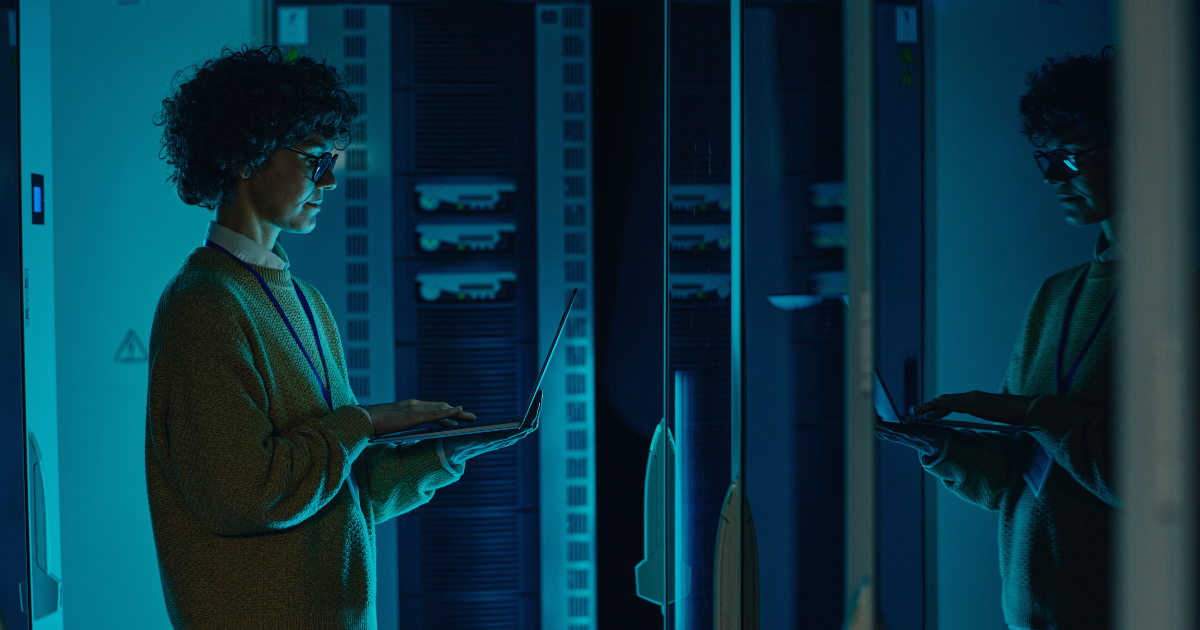
Weak handoff rules break validation after go-live because the operating team loses the logic behind the tests. Setpoints drift, sequences get patched, and no one updates the model or test records. A valid site on day one can become an uncertain site a few months later if evidence stops moving with the facility. That failure comes from process gaps rather than technical limits.
A strong handoff assigns owners for model files, point naming, sequence revisions, retest triggers, and acceptance limits after maintenance. If a chiller staging rule changes, the digital twin should be updated, the impacted test should be rerun, and the baseline should be replaced with the new approved record. If a UPS firmware patch changes timing, the site should not rely on last year’s test result. You need a living record of proof that stays current after each major change.
That judgement also explains where OPAL-RT belongs. It fits when teams need model execution, controller interaction, and test evidence to stay aligned after turnover. The facilities that stay dependable are not the ones with the nicest diagrams. They are the ones where simulation, commissioning, and operations keep sharing the same disciplined record of behaviour. That habit is what protects confidence long after go live.
Real-time solutions across every sector
Explore how OPAL-RT is transforming the world’s most advanced sectors.

Power Electronics
10 / 17 / 2026
How wide bandgap devices push converter power density
Wide bandgap devices raise converter power density through faster switching and smaller passives, and this guide traces that chain from device physics to thermal limits to validation.
Power Electronics
10 / 15 / 2026
Flying capacitor converter simulation for multilevel designs
How a flying capacitor converter balances its capacitor voltages through switching, where that balance breaks, and what a switching-accurate simulation has to capture.

Industry applications
10 / 12 / 2026
Validating eVTOL electric propulsion before the first flight article
A walk through motor, inverter and battery validation for eVTOL aircraft and the points where real-time simulation carries propulsion evidence ahead of flight test.