How hosting capacity analysis determines where new solar connects to the grid
Simulation
06 / 08 / 2026

Key Takeaways
- Hosting capacity analysis works best as a feeder operating study tied to clear limits rather than as a generic circuit score.
- A hosting capacity map helps you screen solar siting risk quickly, but clean data and time-series modelling still decide how trustworthy that screen will be.
- Many solar limits come from voltage and control behaviour, so validated control changes often raise feeder capacity before major rebuild work starts.
Hosting capacity analysis tells you which feeders can take new solar without breaking operating limits.
Utilities use hosting capacity analysis as a screening tool that turns feeder physics into an interconnection answer. At the end of 2023, U.S. interconnection queues held about 2,600 GW of generation and storage, including roughly 1,570 GW of solar. That volume makes quick, defensible screening essential long before a full interconnection study starts. A weak screening process pushes too many projects into slow manual review.
The useful way to read a hosting capacity map is simple. Treat it as a feeder-specific operating limit tied to voltage, thermal loading, protection, and local control behaviour. The value only makes sense with those assumptions attached. When utilities treat hosting capacity as an operating study instead of a paperwork exercise, solar siting gets faster and interconnection answers get far more credible.
Hosting capacity analysis estimates feeder headroom for new solar
Hosting capacity analysis estimates how much additional solar a feeder can absorb before it violates a defined operating limit. Those limits usually include voltage range, thermal loading, protection coordination, and power quality. The result is a headroom estimate. That estimate is always local to the model and assumptions used.
A utility studying a 12.47 kV feeder might add 50 kW rooftop systems at each service point until end-of-line voltage crosses its limit on a clear spring afternoon. Another feeder with shorter laterals and stronger voltage control will accept far more solar even if peak load is similar. The customer experience looks the same from the street. The feeder physics does not.
Hosting capacity is a feeder-specific result. You can’t move a value from one circuit to another and expect it to hold. Device settings, conductor impedance, existing solar, and injection location all matter. That context is what turns a study result into something you can trust.
Hosting capacity maps rank circuits by interconnection risk
Hosting capacity maps turn study outputs into a screening view that ranks feeders, line sections, or nodes by likely interconnection risk. They help utilities and developers focus effort before a formal study begins. A high value suggests more headroom. A low value signals that detailed review will start early.
A county map might show one suburban feeder in green, an older rural feeder in amber, and a long single-phase lateral in red. That kind of triage matters because projects built between 2000 and 2018 spent a median of nearly 5 years in U.S. interconnection queues. Better screening won’t erase queue delays. It will cut avoidable study churn before an application reaches engineering review.
“You should read these maps as planning tools. They do not function as permits.”
A feeder that looks open on the map can still fail once project size, exact tap point, or inverter settings are tested. The hosting capacity map helps you start in the right place, and the formal study still follows.
Utilities calculate hosting capacity against feeder operating limits
Utilities calculate hosting capacity by adding solar to a feeder model until one operating limit is exceeded. The first violated limit sets the hosting value for that location. That makes the result constraint-based rather than average-based. It also explains why hosting values shift from one bus to the next.
A common workflow starts with a calibrated feeder model, adds solar at a candidate bus in small steps, runs power flow, and stops when one limit is crossed. A 500 kW proposal near the substation might pass thermal loading and still fail at a regulator backfeed setting. Another proposal at the end of a lateral might hit voltage rise first. The stopping point tells you what the interconnection problem actually is.
Most utilities screen the same small set of constraints because each one answers a different part of the interconnection question. Voltage screens local rise. Thermal screens equipment heating. Protection screens system response when fault current and power direction shift.
| Constraint screened in hosting studies | What the result tells you about a feeder |
| Voltage rise at the end of long laterals | It shows where local solar injection pushes service or primary voltage above the accepted range before equipment ratings are fully used. |
| Thermal loading on lines and transformers | It identifies equipment that will overheat during low-load high-solar periods even when the rest of the circuit still has spare capacity. |
| Protection coordination and fault response | It flags cases where relays, reclosers, or fuse settings stop behaving as intended once reverse current and inverter contribution are present. |
| Regulator and capacitor operating behaviour | It reveals where control devices begin to hunt, misoperate, or respond too often after solar alters local voltage and power flow. |
| Reverse power through key equipment | It marks locations where backfeed reaches substations or regulators that were configured around one-way power flow assumptions. |
Planners build hosting maps with power flow simulation tools

Planners build hosting maps with feeder models, power flow solvers, and data links that keep the model close to field conditions. Geographic data, asset records, and telemetry matter as much as the solver itself. Good mapping comes from model quality. The software only exposes what the model contains.
A utility team will often pull line and transformer data from its geographic system, attach load shapes from metering or supervisory data, and run batch studies across hundreds of buses. Research groups often add time-series engines and control models so they can test inverter settings, regulator behaviour, and feeder reconfiguration before any field change is made. That extra modelling work matters most on feeders with dense rooftop solar. It matters most where line regulators and single-phase branches interact.
That execution step is where OPAL-RT fits naturally. Engineers can connect feeder models, controller logic, and hardware test loops in one study flow, which helps verify that a map reflects how devices will actually respond under stressed solar conditions. The value is not the map alone. The value is the link between planning assumptions and validated device behaviour.
Accurate hosting studies start with clean feeder data
Accurate hosting studies start with clean feeder data because small model errors distort headroom fast. A missing regulator setting, wrong conductor size, or stale phase connection will shift the answer. Solar screening is sensitive to local detail. Poor inputs will give you false confidence or false constraints.
Utilities usually gather five data groups before the first simulation run. Each group ties the feeder model to equipment that exists in the field. Missing any one of them will skew the result. The list below covers the minimum set planners use.
- Line and cable impedance with phase configuration for every segment
- Transformer ratings taps and connection details at each location
- Load allocation that reflects seasonal and hourly behaviour
- Device settings for regulators capacitors relays and reclosers
- Existing distributed energy resources with location size and inverter controls
A feeder with two mislabelled single-phase laterals can look open on paper and fail once crews confirm the phasing. That’s why utilities spend time on model cleanup before they publish a hosting capacity map. The cleanup work feels slow. It prevents much larger delays later in interconnection review.
Voltage rise sets the first limit on solar
Voltage rise is often the first limit on solar because high production arrives when local load is modest and current flows back toward the source. Long laterals and weak voltage control make the problem worse. The issue appears locally. A feeder can look healthy overall and still fail at one node.
A 75 kW rooftop cluster near the end of a rural single-phase branch can push customer voltage above the allowed band at noon in April, even though the substation transformer has plenty of spare capacity. That mismatch confuses applicants. They see unused equipment rating. The utility sees a voltage problem at a very specific point on the circuit.
This is why feeder hosting capacity is usually smaller at the edges than near the substation. It is also why feeder-level averages hide the risk you care about most. Node-level or section-level results are far more useful for solar siting. They show where the actual weak point sits.
Time series methods give planners more reliable results
Time-series methods give planners more reliable results because solar and load move through the day while feeder controls respond with delays and deadbands. A single snapshot will miss those interactions. Sequential simulation catches them. That makes the hosting value more useful for planners who have to stand behind it.
A noon power flow on a mild day might show no issue on a feeder with rooftop solar, yet a week-long series can reveal repeated regulator operations, reverse power through a line regulator, and brief overvoltage after cloud clearing. Those operating patterns matter because repeated control actions wear equipment. They also reduce the margin left for the next interconnection request. A feeder can pass the static screen and still behave poorly over time.
Utilities don’t need time-series analysis for every screening pass. You’ll need it on feeders with high solar concentration, sensitive control devices, or visible backfeed. That extra work is justified when simple screening and measured feeder behaviour keep disagreeing. It closes the gap between a quick answer and a dependable one.
Control changes can raise feeder capacity before rebuilds
Control changes can raise feeder capacity before rebuilds when the limit sits in voltage regulation, protection settings, or inverter response rather than conductor or transformer size. Utilities often have room to adjust settings first. The gain depends on validation. Controls that look good in a spreadsheet still need disciplined testing.
A feeder that hits overvoltage at one end can accept more solar after regulator line drop compensation, inverter volt-var response, phase balancing, or a point-of-interconnection shift. They cost less than reconductoring. They also carry risk if crews apply them without checking protection reach, customer voltage, and device interaction across several operating hours. The cheapest fix is only useful when the study proves it will hold across operating conditions.
That is the lasting judgement behind hosting capacity work. Good studies do not just identify where solar stops.
“They show which limits are structural and which ones you can move with validated control changes.”
You see OPAL-RT most often in that last step because closed-loop simulation helps prove that a proposed control fix will behave the same way when field crews put it in service.
Join OPAL-RT at IEEE PES GM 2026
Meet our team in Montréal for live demos, technical presentations, expert discussions, and immersive events focused on the future of power and energy simulation.
Automotive
10 / 21 / 2026
Megawatt charging system validation for heavy duty trucks
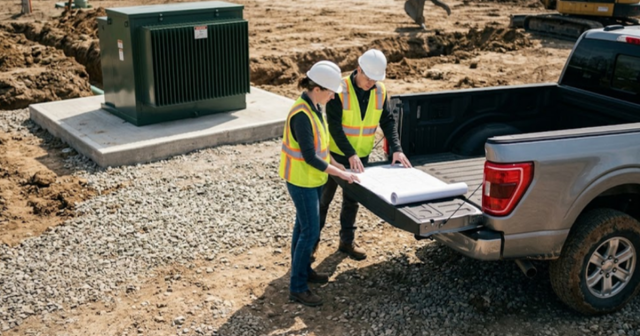
A practical look at how the megawatt charging system works, how it differs from CCS and how charger controls are tested before a truck site is energized.
Automotive
10 / 19 / 2026
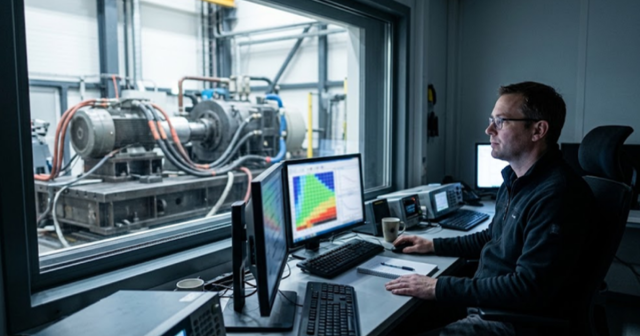
Dynamometer testing and motor emulation compared for e-drive programs
A comparison of dynamometer testing and motor emulation for e-drive programs, covering what each method proves, what it costs and how teams sequence both.

Power Electronics
10 / 17 / 2026
How wide bandgap devices push converter power density
Wide bandgap devices raise converter power density through faster switching and smaller passives, and this guide traces that chain from device physics to thermal limits to validation.