
Key Takeaways
- IEEE PES GM 2026 will be most useful when you filter the program through your current validation problem.
- The exhibit hall, panels, and hospitality events will pay off when each one serves a specific technical question.
- A focused plan will make IEEE PES General Meeting 2026 a productive week for validation, comparison, and follow-up.
IEEE PES 2026 will reward engineers and technical leads who arrive with a short list of grid questions tied to active work. Global renewable capacity additions reached almost 510 GW in 2023. That scale puts more pressure on controls, protection, interoperability, and test methods across utility, vendor, and university settings. A packed conference only becomes useful when each session, booth visit, and reception serves a technical question you already need to answer.
IEEE PES 2026 focuses on applied power system questions
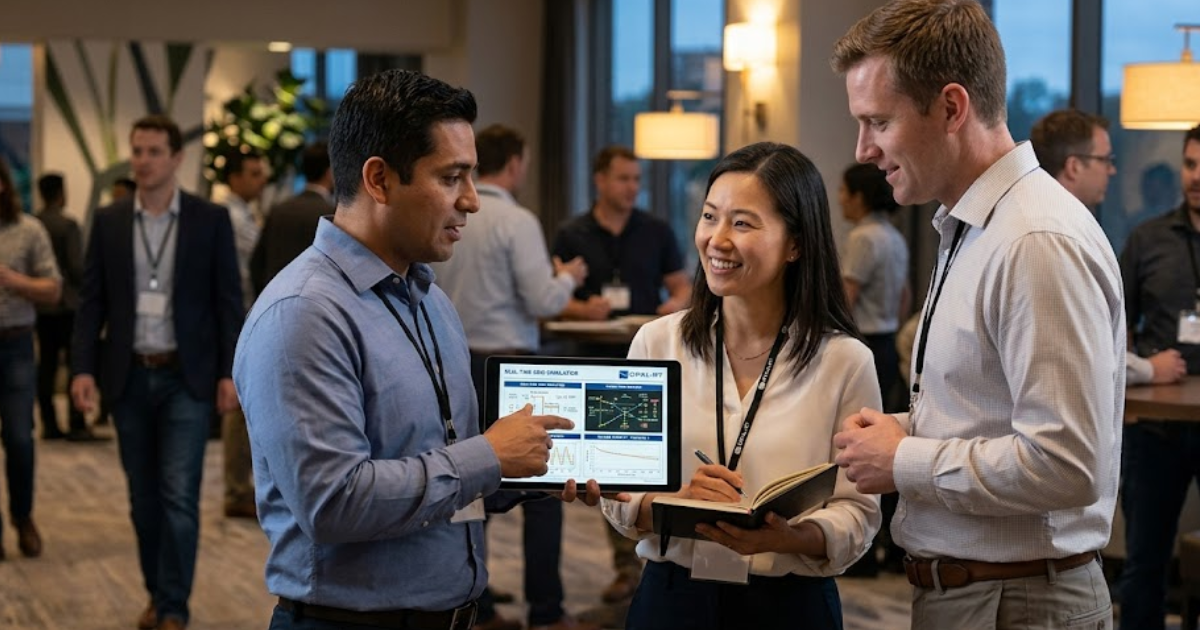
What is happening at IEEE PES 2026 comes down to practical power system issues. The program will centre on stability, protection, inverter-heavy grids, planning limits, and validation methods that stand up outside a paper. Sessions carry the most value when they connect models to hardware, utility practice, or operational constraints.
A utility engineer scanning the program should look for material on electromagnetic transient studies, grid-forming inverter tests, digital substations, and protection performance near distributed energy resources. A researcher will get more value from the same tracks by listening for model limits, solver assumptions, and references to measured timing. Those details separate a promising idea from a method you can trust in a lab. They also reveal where hallway questions will pay off.
That focus matters because the event will feel broad even when your problem is narrow. You don’t need to sample every theme to understand the week. You need a short list of sessions that speak directly to the operating conditions, control loops, and test budgets you deal with now. That filter will make every later choice easier.
“You need a short list of sessions that speak directly to the operating conditions, control loops, and test budgets you deal with now.”
The Montreal schedule rewards early choices over last-minute planning
The IEEE PES General Meeting 2026 schedule will reward visitors who lock in a few anchor sessions before they arrive. Parallel tracks, poster blocks, panels, and exhibitor meetings will compete for the same hours. Early planning keeps your day aligned with the questions that sent you to Montreal in the first place.
A useful schedule starts with fixed commitments and then leaves room for targeted comparison. If a morning session covers protection for inverter-based resources, keep the next exhibit hall block free for two or three related demos. If an afternoon panel includes utility operators or planners, protect that time and move casual booth browsing to another slot. That structure keeps your questions fresh while the technical context is still clear.
| Conference block | How to use the time well |
|---|---|
| Opening technical session | Use the first block to confirm which track maps most closely to your active project and trim the rest of your plan. |
| Mid-morning exhibitor time | Meet exhibitors right after a related session so your questions stay specific and grounded in what you just heard. |
| Panel discussion slot | Reserve panel time when utility constraints or commissioning issues appear on the agenda because those details seldom surface elsewhere. |
| Poster period | Use posters to test model assumptions and ask what data, hardware, or field measurements supported the published results. |
| Evening reception | Continue one technical discussion that ran out of time during the day so the conversation stays focused and useful. |
This kind of schedule will feel restrained, yet you’ll leave with deeper answers. Five purposeful conversations beat fifteen shallow stops. Conference weeks create pressure to keep moving, and that pressure leads to thin notes and repeated questions. A simple plan gives you room to listen, compare, and write down what still needs proof.
Technical teams should start with validation-focused conference sessions
Validation-focused sessions should come first because they expose assumptions before you enter the exhibit hall. Papers and panels that discuss model credibility, controller limits, hardware timing, and test repeatability will give you language for sharper questions. They also show which methods survive outside a polished slide deck.
A protection engineer comparing hardware-in-the-loop options will learn more from a session that shows fault playback, controller response, and measurement lag than from a broad overview of digital testing. A university lab lead weighing power hardware-in-the-loop will care about solver partitioning, amplifier limits, and repeatability across test runs. Those details matter when budget approval depends on trust in the method. They also help you spot when two speakers are solving very different problems.
The need for that scrutiny is visible in grid buildout. Renewables accounted for 86% of new power capacity added globally in 2023. More inverter-heavy systems mean your validation questions will touch controls, interoperability, and fault behaviour more often. A session that explains test evidence will serve you better than a session that only celebrates results.
The exhibit hall works best with clear comparison criteria
The exhibit hall becomes useful when you’re comparing exhibitors against your current bottlenecks. Clear criteria will save time and will separate polished messaging from tools that fit your model size, I/O needs, and test cadence. You will get more value from five disciplined questions than from a full pass through every booth.
Use one set of criteria every time you stop at a booth so your notes stay comparable. A lab manager evaluating IEEE PES GM 2026 Montreal exhibitors can keep the same filter across simulator vendors, measurement suppliers, and grid test services. That kind of consistency makes post-event review much easier. It also helps you compare tools with very different presentation styles.
- Ask how large models are split across compute targets.
- Check which I/O and protocol options match your present racks.
- Compare timing during faults, switching events, and controller updates.
- Note the work required before the first closed-loop test starts.
- Request evidence that accuracy holds beyond the demo script.
These criteria matter because tradeoffs hide inside setup work and workflow fit. A platform with strong timing performance can still create friction if your team faces heavy model preparation or awkward data export. A university lab and a utility test centre will weight those tradeoffs differently, so your comparison will only work if it reflects your own rack, staff time, and validation pace.
Booth demos matter most when they mirror lab setups
A booth demo matters when it resembles the way your team already builds and validates systems. The useful demo shows model import, I/O behaviour, fault scenarios, and measurement timing under conditions close to your lab. That is where setup friction, repeatability, and latency become visible.
A visit with OPAL-RT is most useful when the sequence mirrors your own workflow: load the model, connect controller hardware, trigger a disturbance, and inspect timing. A power electronics engineer won’t get much from a glossy dashboard alone. You need to see behaviour during saturation, recovery, and repeated test runs. Those moments reveal where an impressive demo also fits everyday lab work.
The same rule applies across the hall. If your team runs protection studies, ask to see fault insertion, breaker logic, and I/O response under stress. If you work on microgrids, look for transitions, controller handoff, and recovery after disturbances. A demo that mirrors your setup will give you clearer follow-up tasks once the conference ends.
Panels are useful when speakers address utility constraints
Panels are worth your time when speakers discuss utility constraints, procurement limits, staffing, commissioning pressure, and grid code interpretation. Those details show how methods fare once field conditions and approval chains enter the picture. They also help you judge how much effort sits between a strong idea and a usable workflow.
A panel on grid-forming inverters becomes useful when a utility planner explains acceptable test evidence, a manufacturer explains control limits, and a researcher explains what the model still misses. That mix gives you a fuller picture than a single perspective can offer. It also creates sharper hallway questions because you can ask where evidence, timelines, or data access broke down. Those answers rarely appear on slides.
Listen for friction points rather than polished consensus. You’ll hear more from a speaker who names protection settings, interconnection review delays, or operator training gaps than from one who stays at principle level. Those specifics help you decide which ideas fit your team now and which ones require work you cannot absorb this year. Good panels compress months of scattered context into one hour.
“The useful demo shows model import, I/O behaviour, fault scenarios, and measurement timing under conditions close to your lab.”
Evening events create space for longer technical conversations
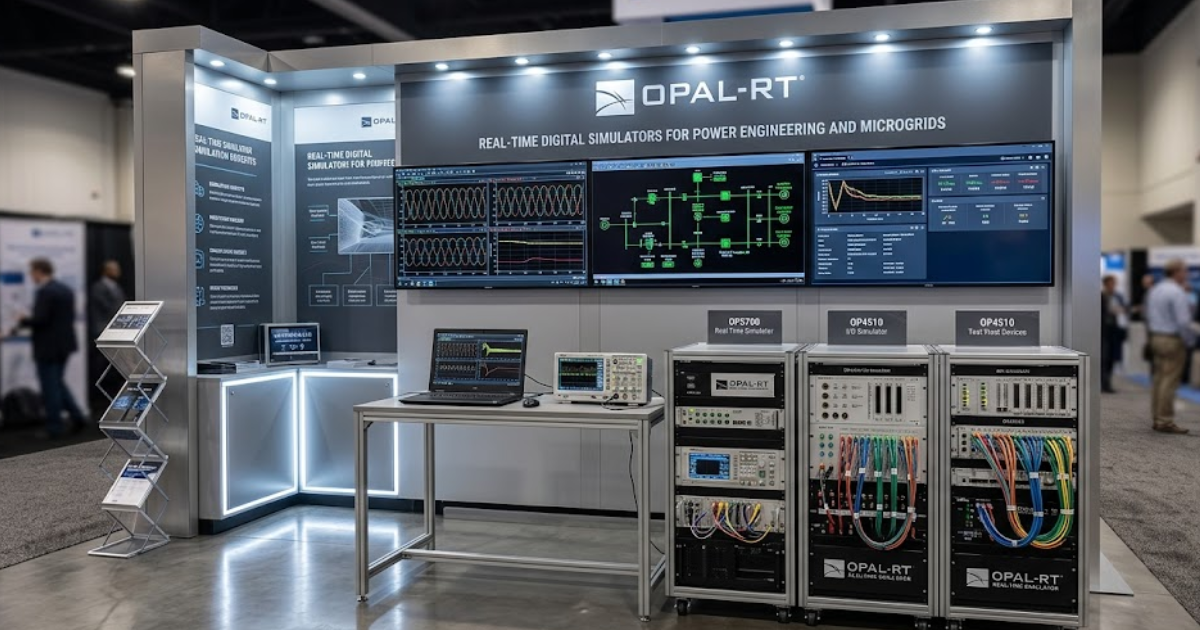
IEEE PES 2026 hospitality events matter when you use them to continue technical questions that ran short during the day. The strongest conversations often happen after a panel or demo, when people speak plainly about what worked, what failed, and what took longer than planned. That candour is hard to capture during formal sessions.
A reception in Montreal can help you test one unresolved question with people who handle it from different angles. A lab director might explain rack space limits, a utility engineer might explain review cycles, and a researcher might explain why a published model never made it into routine testing. That range of detail will sharpen your notes far more than a general chat about industry trends. Keep the conversation centred on one issue so the answers stay concrete.
Use evening time for depth. Follow one panel speaker, one exhibitor contact, or one peer conversation that already surfaced a genuine gap in your planning. Ask what took the most staff time, what proof satisfied a cautious reviewer, and what they would rewrite before the next test campaign. Those are the questions people will answer more candidly once the day slows down.
A focused follow-up plan turns meetings into progress
The value of IEEE PES GM 2026 comes from the actions you’ve queued within a week of leaving Montreal. Notes, demo photos, unanswered questions, and next tests will turn a crowded event into a short list of useful moves. Without that discipline, even strong conversations fade into disconnected impressions.
A focused follow-up plan starts with ownership. If a conversation with OPAL-RT clarified a gap in your hardware-in-the-loop plan, write the missing test case, the required interfaces, and the person who will verify each item. Apply the same rule to panels, exhibitors, and peer contacts. A conference becomes productive once each promising lead has a named action, a time frame, and a clear reason to continue or stop.
The people who get lasting value from IEEE PES General Meeting are the ones who turn conference impressions into scoped work. A disciplined follow-up list will beat a full notebook every time. Montreal will give you plenty to see, yet progress comes from the few items you can test, price, or discard once you’re back in the lab. That judgment is what makes the week useful.
Join OPAL-RT at IEEE PES GM 2026
Meet our team in Montréal for live demos, technical presentations, expert discussions, and immersive events focused on the future of power and energy simulation.
Automotive
10 / 21 / 2026
Megawatt charging system validation for heavy duty trucks
A practical look at how the megawatt charging system works, how it differs from CCS and how charger controls are tested before a truck site is energized.
Automotive
10 / 19 / 2026
Dynamometer testing and motor emulation compared for e-drive programs
A comparison of dynamometer testing and motor emulation for e-drive programs, covering what each method proves, what it costs and how teams sequence both.
Power Electronics
10 / 17 / 2026
How wide bandgap devices push converter power density
Wide bandgap devices raise converter power density through faster switching and smaller passives, and this guide traces that chain from device physics to thermal limits to validation.