Using hardware-in-the-loop to test and validate energy storage systems
Power Systems
11 / 13 / 2025

Key takeaways
- Hardware-in-the-loop shifts the riskiest learning into a safe, repeatable lab setup that exposes timing and integration faults early.
- Real-time simulation uncovers issues that static benches miss, including converter switching artifacts, thermal effects, and communications glitches.
- BMS validation benefits from scripted extreme scenarios that prove protections, estimators, and recovery logic under stress without risking hardware.
- A layered workflow that combines software-in-the-loop, controller-in-the-loop, and power hardware as needed speeds development and strengthens evidence.
- Open, scalable HIL platforms keep models, interfaces, and test records consistent across programs, which improves audit readiness and reduces rework.
Hardware-in-the-loop lets you test extreme battery scenarios safely before any prototype exists, cutting months off schedules and reducing risk. We advocate making real-time Hardware-in-the-loop (HIL) simulation the center of energy storage testing from day one because it ties engineering effort to clear outcomes: faster validation, fewer prototype rebuilds, and documented reliability. Stakeholders ask for evidence across hundreds of operating conditions, and physical prototypes alone rarely deliver that breadth. Public labs are signaling the same need for speed at scale; the U.S. Department of Energy’s Rapid Operational Validation Initiative targets investment‑grade projections of fifteen‑plus years of storage performance from less than one year of data, which underscores the value of accelerated, simulation‑based validation. HIL helps you create that proof quickly, safely, and repeatably.
Traditional testing falls short for complex energy storage systems
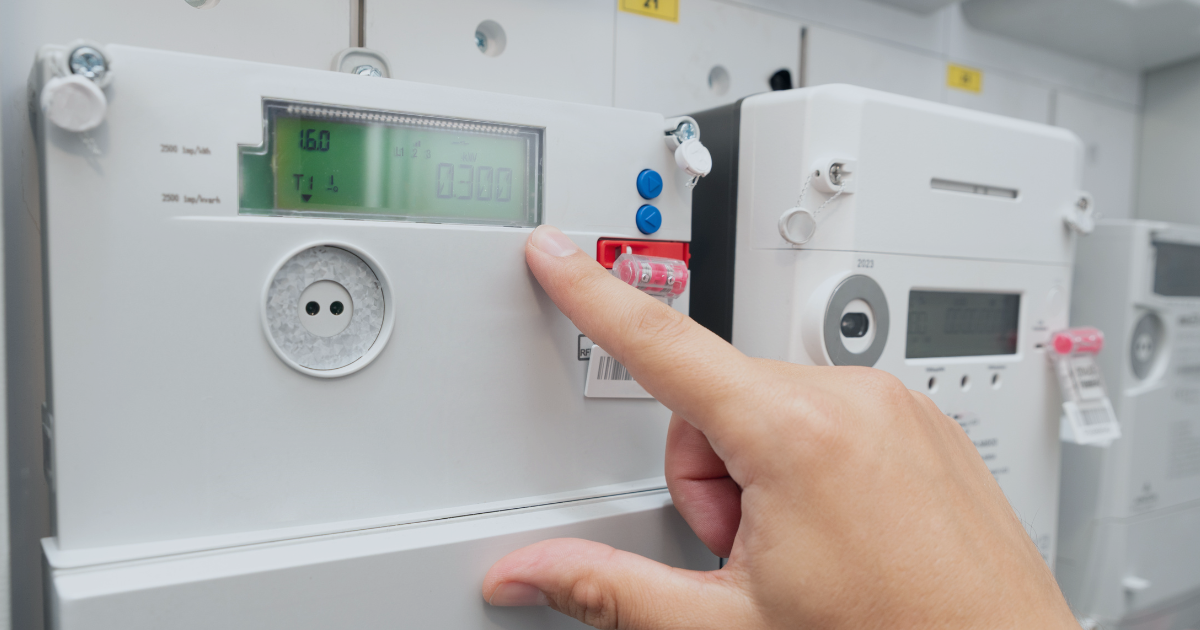
Complex interactions in batteries and power electronics defy simple bench tests. Fast switching, non‑linear thermal behavior, and grid transients create edge cases that surface only under precise combinations of load, temperature, and communications timing. Physical test rigs struggle to stage rare faults safely, and offline models miss behavior tied to firmware timing, measurement noise, or message delays. Teams either accept blind spots or spend heavily on custom fixtures that still cannot sweep through hundreds of corner cases without downtime.
| Challenge | Why static tests miss it | Impact on program |
| Sub‑microsecond switching artifacts | Sample rates and scopes capture signals, but controller timing, quantization, and interrupts are absent | False confidence in protection thresholds |
| Thermal‑electrical coupling | Benches hold temperature setpoints, yet they cannot reproduce uneven cell heating during aggressive transients | Hidden drift in state of charge and health estimates |
| Grid‑forming and islanding transitions | Lab sources approximate faults, yet system‑level resonance and timing diversity are hard to stage | Unverified ride‑through and black‑start behavior |
| Communications quirks | Scripts ping devices, yet queuing, jitter, and loss under stress are rarely exercised | Latent timeouts and failover bugs during field trials |
Engineers need an approach that preserves hardware timing while scaling across hundreds of trials. HIL delivers that balance: controllers stay in the loop, the plant model runs on a real‑time simulator, and faulted conditions can be dialed in repeatably. Safety improves because high‑energy events happen in software, not in a battery room. Cost improves because the same rig exercises dozens of designs, firmware versions, and networks with no rewire.
Real-time simulation catches what static tests miss
High‑fidelity real‑time simulation reproduces battery and converter dynamics fast enough to expose issues your bench never sees. Independent reviews from research institutes show CPU‑only real‑time solvers struggle below one microsecond time steps, while Field‑Programmable Gate Array methods have demonstrated steps as small as forty nanoseconds, which is vital for wide‑bandgap switching and tight protection margins. Timing at this scale unmasks ripple‑induced trips, quantizer effects, and protection races that show up only when control cycles and switching transients interact.
- Switching interactions: emulate converter dead‑time, reverse recovery, and dv/dt so control loops are tuned for stability, not just nominal plots.
- Electro‑thermal coupling: drive cell core and surface temperatures, tabs, and busbars under realistic cooling to validate derating and limits.
- Grid events: feed line faults, frequency excursions, and asymmetry into the controller to verify ride‑through, droop, and black‑start logic.
- Communication disruptions: inject latency, jitter, packet loss, and stale timestamps to test timeouts, retries, and degraded modes.
- Sensor imperfections: add noise, offset, drift, and saturation to verify filtering, diagnostics, and plausibility checks.
- Cyber‑physical edge cases: replay malformed frames, out‑of‑order messages, and power‑cycle bursts to harden start‑up and recovery.
These stressors arrive within a controlled envelope, so you repeat exactly the same run after each firmware change. Teams can sweep parameters overnight, capture coverage metrics, and promote only those builds that pass a growing test catalog. Leaders gain confidence because results are consistent, comparable, and traceable to the scenarios that matter for safety and performance. Program risk drops as the number of unknowns shrinks in lock‑step with every automated test batch.
Hardware-in-the-loop validation proves BMS performance under extreme conditions
Hardware-in-the-loop lets you test extreme battery scenarios safely before any prototype exists, cutting months off schedules and reducing risk.
Battery management system (BMS) validation demands proof that protections, estimators, and communications hold up when everything moves at once. Controller‑HIL lets you stage multi‑hour operational narratives while keeping risk contained. National Renewable Energy Laboratory work documents controller‑HIL evaluations that sustained islanded operation for twenty‑four hours, with automated transitions, secondary control, and black‑start checks, on microgrids that include battery energy storage and photovoltaic assets. Remote HIL studies further show practical scale, with detailed microgrid models including a 26‑MWac photovoltaic plant and 1‑MW battery energy storage, exercised through standard protocols and measured with real control hardware.
Energy storage testing also benefits from power‑hardware‑in‑the‑loop when you want the inverter, charger, or a subset of the pack to see real current and voltage. NREL reports show PHIL tracking oscillations around four hundred hertz and damping them within ten to twenty milliseconds, using interfaces designed for a seven megavolt‑ampere grid simulator. Results like these matter because transient fidelity determines whether the BMS trips early, trips late, or behaves as designed under converter and grid stress. HIL gives you that fidelity without risking equipment, while keeping tests scriptable and repeatable for certification or audit.
Simulation-based testing speeds development and builds confidence

HIL shortens the path from concept to certification by moving the riskiest learning into a repeatable, automated lab workflow. Engineers create a library of scenarios tied to requirements, then run hundreds of seeded variations each week without waiting for pack builds or field slots. Issues surface when they are cheapest to fix, and fixes are verified immediately against the same trials. Leaders get evidence for regulators, customers, and insurers, without staking schedules on scarce hardware or test windows.
High-fidelity real-time simulation reproduces battery and converter dynamics fast enough to expose issues your bench never sees.
The throughput and realism of a modern real‑time simulator accelerate learning across the stack. Teams link controller‑HIL for firmware with power‑HIL for converter margins, then fold results into software‑in‑the‑loop regressions to keep pace with change. Facilities such as NREL’s multi‑megawatt PHIL setups show how grid‑scale interfaces let you stage large faults, validate recovery, and still protect equipment with tight loop timing; reported tests damped fault‑induced oscillations within ten to twenty milliseconds while driving a 7‑MVA interface. Programs that adopt this simulation‑first rhythm close technical gaps sooner, reduce late‑stage rework, and present stakeholders with evidence that stands up to scrutiny.
Common questions
How can real-time simulation improve energy storage testing?
Real‑time simulation reproduces converter and battery physics on a timeline the controller can sense, so your tests exercise firmware, timing, and communications exactly as deployed. You can run thousands of variations on operating modes, ambient conditions, and grid events without changing hardware. Results line up with your requirements because every run is scripted, repeatable, and traceable. That level of control turns energy storage testing into a measurable, auditable process.
Why hardware-in-the-loop matters for BMS validation?
BMS validation lives or dies on edge cases, and HIL lets you bring those edges into the lab safely. Protections, estimators, and diagnostics must work when sensors are noisy and communications glitch under load. Controller‑in‑the‑loop testing exposes firmware to the same latency, jitter, and quantization it will see during operation. You learn how the BMS behaves under harsh sequences without risking a pack fire or a test stand outage.
What fidelity do virtual battery models need for HIL?
Aim for models that capture electrical dynamics and thermal coupling at the level your controller expects to see, including cell‑to‑cell variation and contact resistance. Add aging hooks for sthe tate of health so you can test thresholds across the pack’s life. Ensure measurement interfaces honor sample rates, quantization, and filtering compatible with your I/O. Tie the model to a parameter set your team can trace to pack build data and keep under version control.
How do teams stage communication faults or cybersecurity scenarios with HIL?
Replay log files, inject malformed frames, and script deterministic latency, jitter, and loss patterns. Exercise redundancy and degraded modes by dropping buses, flapping links, and delaying critical time sync messages. Record the exact timing of controller decisions so you can show how the firmware responded and what was recovered automatically. Treat each scenario as a requirement with a pass or fail criterion to keep discussions focused.
When should a program shift from software-in-the-loop to HIL?
Move when firmware stabilizes enough to benefit from closed‑loop timing and when you have a baseline of software‑in‑the‑loop regressions to keep velocity high. Start with controller‑in‑the‑loop to de‑risk communications and logic, then introduce power‑HIL as your converter or pack hardware becomes available. Keep MIL and SIL running to test algorithms offline while HIL catches integration issues. The goal is a layered pipeline where each tool finds the faults it is best suited to catch.
HIL becomes a force multiplier when you connect it to requirements, traceability, and automation. Teams that treat every defect as a new scripted scenario see coverage grow with each fix. Leaders get clean reports, and auditors see a methodical approach that stands up to scrutiny. That combination of speed and confidence is what makes HIL hard to ignore for energy storage programs.
OPAL-RT and the path to reliable energy storage HIL

Building on that speed and confidence, teams need a practical way to scale from a first rig to a repeatable, maintainable HIL capability. The essentials include a high‑performance real‑time simulator, open interfaces to your preferred simulation tools, and support for both controller‑HIL and power‑HIL so the same setup matures with your product. Equally important is guidance on model partitioning, solver selection, and I/O so fidelity matches test intent without over‑engineering. A thoughtful rollout plan starts with a small number of high‑value scenarios, grows into automated regression, and ends with traceable evidence that satisfies internal gates and external reviews.
One vendor with deep roots in this field is OPAL-RT, known for open, scalable platforms that support MATLAB and Python workflows, field‑programmable gate array acceleration, and modular I/O tailored for power electronics, microgrids, and transportation. The value to engineering leaders comes from an ecosystem that spans software‑in‑the‑loop, controller‑HIL, and power‑HIL, so teams keep one toolchain across phases. That continuity shortens onboarding, improves model reuse, and keeps your validation records consistent across programs. The payoff is a proven route to energy storage testing that is faster, safer, and easier to defend with data.
Real-time solutions across every sector
Explore how OPAL-RT is transforming the world’s most advanced sectors.
Industry applications, Simulation
03 / 31 / 2026
Managing high-frequency switching in real-time EMT simulation
Precision in testing complex power systems is essential to avoid failures, accelerate innovation, and integrate new technologies safely.
Simulation
03 / 30 / 2026
Understanding timestep requirements for modern power converters
Practical criteria for selecting EMT and real time simulation timesteps for power converters, covering switching resolution, control and PWM timing alignment, multirate approaches, and verification checks.
Industry applications, Simulation, Energy
03 / 29 / 2026
Validating data center energy management systems using real-time HIL
This piece explains how AI workload variability affects data centre power stability and how closed-loop HIL testing helps validate EMS control behaviour under site and grid stress.
EXata CPS has been specifically designed for real-time performance to allow studies of cyberattacks on power systems through the Communication Network layer of any size and connecting to any number of equipment for HIL and PHIL simulations. This is a discrete event simulation toolkit that considers all the inherent physics-based properties that will affect how the network (either wired or wireless) behaves.