
Key Takeaways
- Microgrid energy management works best when control, protection, storage, and forecasting are planned as one coordinated strategy from the earliest design stages.
- Real-time simulation and hardware in the loop testing give engineers a safe way to validate control logic, protection settings, and operating modes before connecting to field assets.
- Clear operating modes, robust communication protocols, and fault tolerant schemes reduce outages and make it easier to maintain reliable service for critical loads.
- Data centred optimisation, predictive analytics, and structured performance reviews help refine microgrid design and operation over time, aligning decisions with cost, reliability, and sustainability targets.
- Standardised practices for documentation, models, and change management support interoperability and long term scalability across controllers, devices, and new microgrid assets.
Microgrids only deliver their full value when energy is managed with precision from day one. For many engineers, the toughest part is not building the assets, but orchestrating how every kilowatt flows across modes, faults, and islanded operations. Control strategies, forecasting methods, protection schemes, and validation workflows all shape how reliable, resilient, and cost effective a microgrid can be over its lifetime.
“Strong energy management gives your team confidence to scale projects, integrate new resources, and satisfy tight technical and financial constraints.”
Power systems, control, and test engineers face constant pressure to shorten development cycles while still proving that designs behave safely under edge cases. Stakeholders expect clear evidence that protection, controls, and communications will hold up across outages, grid disturbances, and asset failures. Clear thinking around microgrid energy management helps you align modelling, controller tuning, hardware selection, and validation so every requirement traces back to measurable objectives. A practical view of energy flows, constraints, and uncertainties gives teams a shared technical language to move from concept to tested, ready-for-field systems.
Understanding why microgrid energy management matters
Microgrid energy management connects generation, storage, loads, and control systems into a coherent operational strategy rather than a loose collection of assets. Without a clear strategy, a microgrid can meet peak power needs on paper yet struggle with voltage excursions, frequency swings, or unexpected trips during contingencies. A structured energy management approach sets priorities such as resiliency for critical loads, reduction of fuel consumption, or optimisation of export to the main grid. These priorities guide everything from control architecture and sizing studies to test cases in your simulation and hardware labs.
Engineers also have to align energy management choices with regulatory rules, interconnection requirements, and customer expectations around cost and sustainability. For example, a campus microgrid may care most about riding through faults, while an industrial site might focus on power quality for sensitive equipment and process continuity. Clear objectives influence how much storage you specify, how aggressively you curtail renewable production, and how you schedule maintenance or islanding tests. Strong management of energy flows therefore becomes a practical tool to reduce risk, document compliance, and keep long term performance close to the original design intent.
9 effective approaches to managing energy in a microgrid
Energy in a microgrid rarely behaves as a neat, steady stream, so engineers rely on a mix of control and planning techniques to keep things stable. Some techniques focus on fast control loops, while others act over minutes, hours, or even days through forecasting and scheduling. Treating these approaches as a coordinated toolkit helps you match time scales, communication needs, and test coverage to your project constraints. Clear structure across control, forecasting, optimisation, protection, and validation gives you a roadmap for improving energy performance without losing sight of constraints such as safety and cost.
1. Implementing advanced microgrid control systems for real-time optimization

A dedicated microgrid control system coordinates all resources so that setpoints, limits, and modes stay consistent, even as operating conditions shift. Hierarchical control is common, with primary control handling fast protection and local stability, secondary control managing frequency and voltage at the point of common coupling, and tertiary control optimising power flows and costs over longer horizons. Engineers choose between centralised controllers, distributed schemes, or hybrids that let local controllers act autonomously while still following high level objectives. Key functions include islanding and reconnection logic, load shedding schemes, black start sequences, and clear handling of contingencies so operators always know which asset is in charge.
Strong control starts with accurate models of generators, inverters, storage, and loads that reflect limits, ramp rates, and control dynamics. Engineers also define operating modes such as grid connected, islanded, and backup feeding of specific feeders, then describe the transitions between those modes in detail. Hardware and software choices should support deterministic timing, secure communications, and straightforward integration with plant controllers and supervisory control and data acquisition systems. Thorough testing of the control system through software-in-the-loop and hardware-in-the-loop techniques reduces risk when the microgrid controller finally connects to field devices.
2. Integrating renewable generation with adaptive load management
Renewable sources such as solar photovoltaic arrays and wind turbines introduce variability, but thoughtful control keeps their impact on voltage and frequency within acceptable limits. Engineers often combine renewable generation with inverter based controls that support voltage regulation, reactive power support, and even synthetic inertia when required. Adaptive load management adds another degree of control by adjusting flexible loads, such as electric vehicle charging or heating and cooling, based on available generation and price signals. This combination lets a microgrid prioritise critical loads while shifting or curtailing less important consumption so renewable utilisation stays high without compromising stability.
Practical implementation starts with classifying loads into tiers such as critical, important, and flexible, and then assigning clear rules for shedding or rescheduling. Control logic can link these tiers to key indicators including state of charge, forecast solar output, or feeder loading, so that adjustments happen before limits are reached. Clear communication to facility operators and occupants about how load management works helps reduce confusion when non critical loads change behaviour during events. Detailed logging of curtailed energy, response times, and comfort impacts also makes it easier to improve algorithms over time and to justify investments in more flexible loads.
3. Using energy storage systems to stabilize and balance supply and load
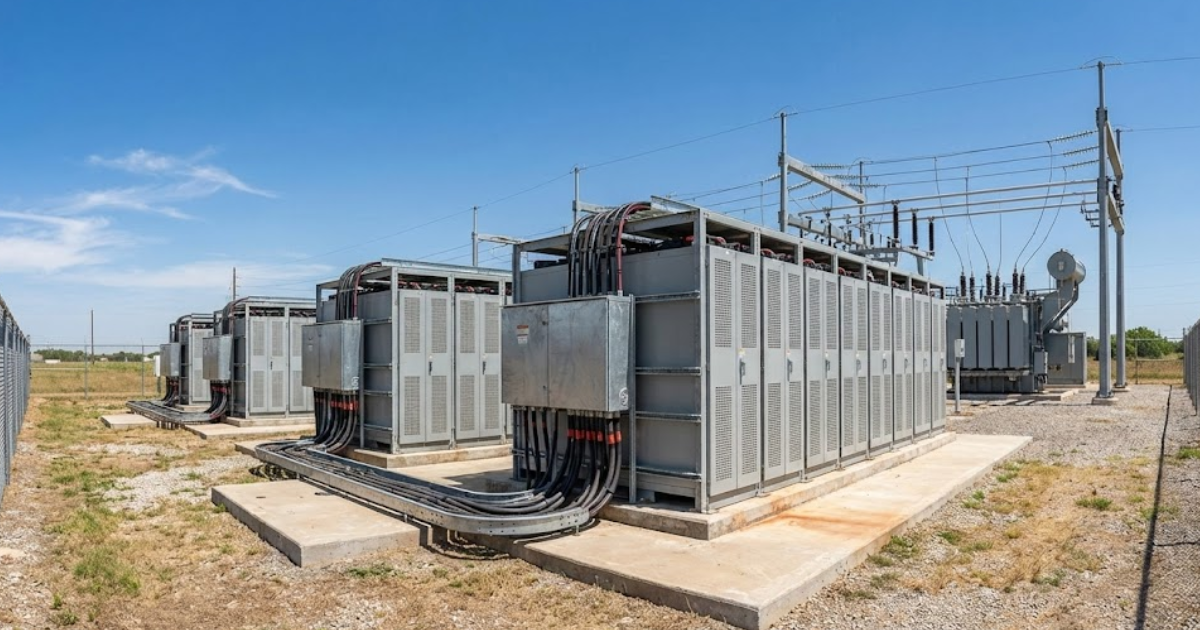
Energy storage smooths the gap between generation and load, which is especially important when a microgrid operates in islanded mode or faces intermittent renewable production. Short term storage such as flywheels or supercapacitors can help with fast frequency support, while batteries and other technologies manage energy shifting over minutes to hours. Well designed control strategies define how storage responds to frequency, voltage, and state of charge, and how it coordinates with conventional generators and inverters. Engineers also need clear rules for reserving capacity for ride through of faults, peak shaving, and participation in external services such as grid support or tariffs.
Sizing storage begins with detailed profiles of load and renewable production, along with assumptions about outage duration, islanding frequency, and target reliability. Tools such as time series simulation, probabilistic analysis, and scenario studies provide insight into how different storage configurations perform across seasons and operating modes. Integration with the microgrid controller should support both automatic actions and operator interventions, for example overriding state of charge targets before a known storm. Monitoring of cycling, temperature, and degradation indicators then feeds back into maintenance planning and replacement strategies, which protects long term performance and safety.
4. Applying predictive analytics to forecast energy usage and generation
Predictive analytics uses historical data, weather information, and operational context to forecast both load and renewable production. Engineers can start with basic statistical models and progress to machine learning approaches that capture more complex relationships between inputs and outputs. Forecasts help planners schedule storage charging, dispatch generators, and prepare for possible islanding or market events hours or days in advance. Improved forecasts translate directly into fewer start stop cycles, better fuel usage, and tighter control of emissions and operating costs.
Data quality has a strong influence on forecast performance, so careful work on metering, time synchronisation, and outlier handling pays off quickly. It also helps to distinguish between short term forecast tasks such as predicting the next few hours and long term horizons covering weeks or seasons, since model structures and inputs differ. Engineers can integrate forecast outputs directly into supervisory control layers so schedules update automatically while still allowing operators to review, adjust, and approve major changes. Continuous tracking of forecast accuracy, along with incident reviews when outcomes deviate strongly from predictions, keeps the forecasting process grounded and transparent for all stakeholders.
5. Coordinating distributed energy resources with robust communication protocols
Distributed energy resources such as inverter based generators, storage units, and controllable loads need consistent and reliable communication so the microgrid controller can coordinate their actions. Communication architectures often combine fieldbuses for fast local interactions with higher level protocols for supervisory control and data acquisition. Clear data models define signals such as statuses, setpoints, measurements, and alarms, which reduces integration time and confusion during commissioning. Resilience against faults, cyber threats, and misconfigurations requires careful design of network topology, redundancy, and security controls.
Standard protocols give engineers a common language for devices from different vendors, but project teams still need strict conventions for naming, scaling, and timing. Simulation of communication delays, packet losses, and failure modes reveals issues before they appear in the field, and helps tune watchdogs and fallback modes. Clear separation between safety critical signals and less critical monitoring traffic also avoids congestion and supports more predictable response times. Documentation of communication interfaces, acceptance tests, and maintenance procedures becomes part of the long term asset management plan so future upgrades do not break existing behaviour.
6. Conducting real-time simulation to validate energy management strategies
“Real-time simulation lets engineers test microgrid energy management strategies against detailed models before controllers interact with plant equipment.”
Hardware-in-the-loop (HIL) testing connects actual controllers, protection relays, or even power hardware to a simulator that mimics voltages, currents, and grid events at true time scales. This approach makes it possible to assess behaviour during faults, islanding sequences, communication delays, and sensor failures without risking equipment or service to customers. Scenario libraries then help teams repeat tests consistently after software updates, parameter changes, or hardware replacements.
Model fidelity is key, so microgrid models should capture generator dynamics, inverter control behaviour, protection settings, and communication latencies to the extent needed for each study. Engineers often start with simplified models for early validation, then refine parts of the model where test results show gaps or where field data suggests different behaviour. Close collaboration between modelling specialists, control engineers, and test engineers reduces mismatches between simulated and observed responses. Validated simulation workflows then become reference assets that shorten future projects and help new team members understand complex microgrid interactions more quickly.
7. Designing resilient protection and fault-tolerant control schemes
Protection and control need to work hand in hand so faults clear safely without unnecessary loss of supply to critical loads. Engineers must consider fault current levels, inverter fault behaviour, coordination of relays and breakers, and special cases such as unintentional islanding. Protection studies for microgrids often require revisiting traditional assumptions, since inverter based resources may not supply enough fault current for legacy schemes to operate correctly. Newer approaches rely more on voltage and frequency signatures, directional elements, and communication assisted schemes to distinguish internal from external faults.
Fault tolerant control adds another layer of resilience by defining how the microgrid reacts when a controller, sensor, or actuator fails. This can include redundant controllers, safe fallback modes, and gradual degradation of functionality instead of abrupt loss of service. Testing protection and fault tolerant schemes through staged events in real-time simulation builds confidence before field implementation. Clear records of test cases, pass fail criteria, and observed margins also support future audits and updates to protection settings.
8. Applying data centred optimization for improved efficiency and flexibility
Data centred optimization uses measured and historical data to fine tune setpoints, schedules, and control parameters for better efficiency and resilience. Objective functions might include fuel use, emissions, start stop cycles, power quality indices, or a combination of several metrics with different weights. Constraints capture equipment ratings, ramp limits, voltage bounds, and reliability requirements, which keeps solutions physically meaningful. Once formulated properly, optimisation problems can run on schedules ranging from seconds for fast economic control to hours for day ahead planning.
Engineers can start modestly with simple rule based improvements, then progress to formal optimisation formulations as understanding of the microgrid improves. Practical deployment often requires approximation methods, since optimisation must finish within strict time limits and work every time, not only in ideal cases. Close monitoring of key performance indicators after deployment, such as fuel per kilowatt hour or unserved energy, shows whether optimisation actually delivers benefits. When needed, offline what if studies help tune penalty weights, adjust constraints, and refine models before pushing updated optimisation logic into production controllers.
9. Standardizing best practices for interoperability and long-term scalability
Standardisation of models, naming, interfaces, and documentation makes it much easier to extend a microgrid as assets are added, replaced, or reconfigured. Clear data models and interface specifications support interoperability between controllers, protection devices, meters, and higher level systems such as energy management platforms. Consistent processes for change control and testing keep upgrades from introducing regressions or unexpected interactions between devices. Engineers also benefit from template based approaches to one line diagrams, control logic, and test plans, which reduces repetition and human error.
Scalability often depends less on any single device and more on whether teams share a common view of how projects should be specified, built, and validated. Shared playbooks for naming, version control, access rights, and test evidence simplify onboarding of new staff and external partners. Participation in standards working groups and industry forums can help align internal practices with broader trends on communication protocols, cybersecurity, and grid codes. Careful attention to these process aspects means microgrids can grow in capacity, function, and complexity without constant rework of the underlying architecture.
Coordinated energy management in a microgrid rests on consistent control, high quality data, and proven validation workflows. When engineers connect storage, renewables, protection, communication, and optimization into a coherent strategy, each investment in hardware or software produces clearer value. That clarity shortens engineering cycles, simplifies stakeholder communication, and reduces surprises during commissioning or operation. Teams that treat energy management as an integrated discipline instead of an afterthought build microgrids that stay reliable, flexible, and cost effective over many years.
How effective energy management improves microgrid design and reliability

Effective energy management improves microgrid design by forcing early, quantitative discussion of priorities such as resilience, cost, and emissions. Engineers translate those priorities into design criteria, for example maximum outage duration for critical loads, target fuel consumption, or acceptable power quality indices. These criteria guide sizing of feeders, transformers, storage, and generation, and also influence the choice of control topologies and communication architectures. Design work then proceeds with a clear mapping between requirements, model assumptions, and planned test cases, which reduces rework later in the project.
Reliability gains come from treating microgrid design and microgrid energy management as two views of the same system instead of separate disciplines. Control modes, protection settings, and operating procedures are all defined with reference to design margins such as thermal limits, short circuit current levels, and ride through capabilities. Real-time simulation and staged field tests provide direct evidence that these margins hold under faults, islanding, and unusual load profiles. As a result, operators see fewer nuisance trips, planners gain confidence to support new connections, and asset owners gain clearer insight into how design choices affect long term performance.
Best practices for achieving long-term microgrid performance
Long term performance depends on consistent habits more than on any single piece of hardware or software. Engineers who treat microgrids as living systems with clear maintenance, testing, and upgrade practices see fewer unexpected outages and smoother expansions. Good practices cover topics such as documentation, monitoring, spare strategies, and structured validation whenever changes occur. A disciplined approach keeps original design intentions visible years after commissioning, even as staff, requirements, and regulations shift.
- Maintain a single source of truth for models and documentation: Store network diagrams, settings, models, and operating procedures in a controlled repository with version history. Consistent documentation reduces errors during upgrades, supports audits, and helps new engineers understand constraints before modifying anything.
- Monitor key performance indicators with clear thresholds: Track metrics such as outage frequency, unserved energy, power quality, fuel usage, and storage cycling in a central dashboard. Clear thresholds for investigation prompt timely root cause analysis before small issues grow into serious reliability problems.
- Standardise change management for software and settings: Require impact assessment, peer review, and structured testing for any change to control logic, protection settings, or communication configurations. Careful records of proposed changes, test results, and approvals create traceability and reduce the chance of regressions.
- Plan maintenance with data from condition monitoring: Use information from thermal sensors, breaker operations, insulation tests, and storage health indicators to schedule maintenance before failures occur. Linking asset condition to risk and cost makes it easier to justify maintenance budgets and replacement decisions.
- Invest in operator training and rehearsed procedures: Provide regular training on control modes, alarms, and emergency procedures, and run drills for events such as islanding, black start, and communication failures. Confident operators respond more consistently under stress and give better feedback to design and test teams.
- Review performance and incidents on a regular cadence: Hold structured debriefs after trips, near misses, or significant configuration changes, using event logs and simulation to reconstruct what happened. Lessons from these reviews feed back into models, settings, and procedures, steadily raising the quality of microgrid performance.
| Best practice | Primary focus | Key tools or artefacts | Example metric |
| Single source of truth for models and documentation | Consistency of design data and settings | Version controlled repositories, model libraries, operating procedures | Number of uncontrolled files used in projects |
| Monitoring key performance indicators | Early detection of performance drift | Monitoring platform, log analysis, reporting scripts | Percentage of metrics within target range |
| Structured change management | Safe updates to code and settings | Change requests, test plans, approval records | Share of changes validated before deployment |
| Condition based maintenance planning | Reliability and asset life | Condition reports, inspection results, maintenance schedules | Unplanned outage hours per year |
| Operator training and drills | Human response under stress | Training plans, simulation scenarios, drill reports | Time to detect and respond to critical events |
| Regular performance and incident reviews | Continuous improvement culture | Review meetings, incident timelines, action trackers | Closure rate of corrective actions within target time |
These practices seem simple, but teams that follow them consistently see clear gains in reliability and clarity over the life of a microgrid. Clear responsibilities, documented workflows, and reliable data reduce the chance that small configuration changes introduce unexpected side effects. Regular reviews also create space to revisit assumptions about load profiles, equipment ratings, and regulatory requirements without waiting for a major incident. Treating long term performance as a shared responsibility across design, operations, and test teams keeps microgrid assets aligned with their original goals for many years.
How OPAL-RT supports advanced microgrid energy management
OPAL-RT helps engineering teams test microgrid energy management strategies under realistic conditions before they reach field equipment. High performance simulators and software from OPAL-RT allow you to run detailed microgrid models in real time, connect controllers and protection devices through HIL setups, and observe behaviour under faults, communication issues, and extreme operating points. This approach shortens the path from concept to verified controller logic, because engineers can experiment with new control modes, storage strategies, and communication architectures without risking disruption to live feeders. Tight integration with standard modelling tools, automation scripts, and data analysis workflows also helps teams reuse assets across projects instead of starting every study from scratch.
For microgrid projects specifically, OPAL-RT platforms support high fidelity models of converters, storage, renewable sources, and network elements, so you can study fast transients and slower scheduling effects in a single simulation setup. Engineers can validate microgrid control systems, tune protection schemes, and rehearse operating procedures with operators before commissioning, using repeatable scenarios and automated result checks. Flexible hardware options and open interfaces make it easier to connect to existing lab assets, including controller prototypes, relays, and power hardware, which protects earlier investments. Specialist support from OPAL-RT engineers, combined with proven use in demanding power system projects, gives technical leaders confidence that microgrid simulations and tests rest on a trustworthy and well validated foundation. This combination of technology, expertise, and project experience positions OPAL-RT as a reliable partner for teams aiming to raise the quality and assurance of microgrid energy management.
Real-time solutions across every sector
Explore how OPAL-RT is transforming the world’s most advanced sectors.
Industry applications, Simulation
03 / 31 / 2026
Managing high-frequency switching in real-time EMT simulation
Precision in testing complex power systems is essential to avoid failures, accelerate innovation, and integrate new technologies safely.

Simulation
03 / 30 / 2026
Understanding timestep requirements for modern power converters
Practical criteria for selecting EMT and real time simulation timesteps for power converters, covering switching resolution, control and PWM timing alignment, multirate approaches, and verification checks.

Industry applications, Simulation, Energy
03 / 29 / 2026
Validating data center energy management systems using real-time HIL
This piece explains how AI workload variability affects data centre power stability and how closed-loop HIL testing helps validate EMS control behaviour under site and grid stress.
EXata CPS has been specifically designed for real-time performance to allow studies of cyberattacks on power systems through the Communication Network layer of any size and connecting to any number of equipment for HIL and PHIL simulations. This is a discrete event simulation toolkit that considers all the inherent physics-based properties that will affect how the network (either wired or wireless) behaves.