Your guide to sensor and drone simulation testing for defense readiness
Simulation
08 / 06 / 2026

Key Takeaways
- Defense simulation only supports readiness when every test maps to a mission task, a failure condition, and a pass threshold.
- Sensor and drone HIL matter because timing faults, I/O delays, and degraded inputs expose failures that clean software runs will miss.
- Traceable lab evidence gives safety, engineering, and program teams a shared basis for flight clearance and defect closure.
Defense readiness depends on sensor and drone simulation that proves system behavior under mission stress before field testing starts.
Air systems now carry expensive payloads, complex autonomy, and tighter safety constraints, so a lab test has to answer more than flight stability. The United States Department of Defense requested $849.8 billion for fiscal year 2025, which shows how costly late validation failures become once a program leaves bench testing. Sensor simulation, drone simulation, and defense simulation matter because they prove timing, perception, and control performance before scarce flight hours are spent. You won’t get readiness from clean software runs alone.
Defense simulation should map directly to mission requirements
Defense simulation should start with a mission task, a failure condition, and a pass threshold. That keeps the test tied to readiness instead of visual appeal. A model only matters when it answers what the aircraft must do under pressure. You need traceability from mission need to lab evidence.
A route-clearance drone offers a simple example. If the aircraft must hold altitude through gusts while sending usable video to a remote operator, your test has to include wind disturbance, link delay, and image quality thresholds. A mission map without those limits leaves too much room for assumption. That weakens every later claim about readiness.
Good defense simulation also forces agreement across teams. Flight controls, payload, communications, and safety leads can each define what failure looks like before the first run starts. You’ll catch disagreements early, such as one team accepting a two-second target reacquisition delay while another team treats that delay as mission loss. That alignment is what turns simulation from analysis into proof.
“Defense simulation should start with a mission task, a failure condition, and a pass threshold.”
Sensor simulation exposes perception failures before flight clearance
Sensor simulation testing should expose what the aircraft sees, misses, and misclassifies under mission conditions. A clear daytime feed won’t tell you how perception behaves in smoke, glare, vibration, or partial signal loss. You need corrupted inputs as much as ideal inputs. That is how flight clearance gets grounded in evidence.
A reconnaissance platform can fuse electro-optical video, inertial data, and GNSS timing while tracking a vehicle near a ridgeline. Smoke, haze, and low sun can break that fusion long before the pilot notices an issue on the screen. NOAA recorded 28 separate weather and climate disasters in the United States during 2023, which shows that degraded visibility, heat, and wind are test conditions you should cover directly.
Sensor simulation matters because perception failures often look small at first. A frame drop, a timestamp slip, or a noisy range return can become a false track a few seconds later. You’re better served when the lab injects blur, dropouts, multipath, and saturation early. That work will reveal where calibration, filtering, or fusion logic breaks before a flight crew has to deal with it.
Drone simulation must stress autonomy under contested operating conditions
Drone simulation for defense should pressure the autonomy stack with disrupted timing, lost links, and conflicting cues. Stable waypoint following proves very little on its own. Readiness comes from showing how the aircraft responds when assumptions collapse. The aircraft must stay predictable even when the mission area does not.
A surveillance drone that reroutes around terrain can look excellent in clean runs yet fail once packet delay hits the command link. Another common case appears when GNSS quality drops and the aircraft has to lean on inertial estimates for longer than planned. If the route planner, estimator, and recovery logic were tested separately, the fault path stays hidden. Closed-loop simulation brings that path into view.
Contested conditions do not need to mean a single dramatic event. Short bursts of latency, intermittent range bias, and false-positive detections are enough to expose fragile autonomy. You should test how fast the aircraft demotes a bad input, how it regains track confidence, and how it reports degraded mode to the operator. Those details decide mission continuity far more than nominal path accuracy.
HIL testing verifies timing fidelity that software tests miss
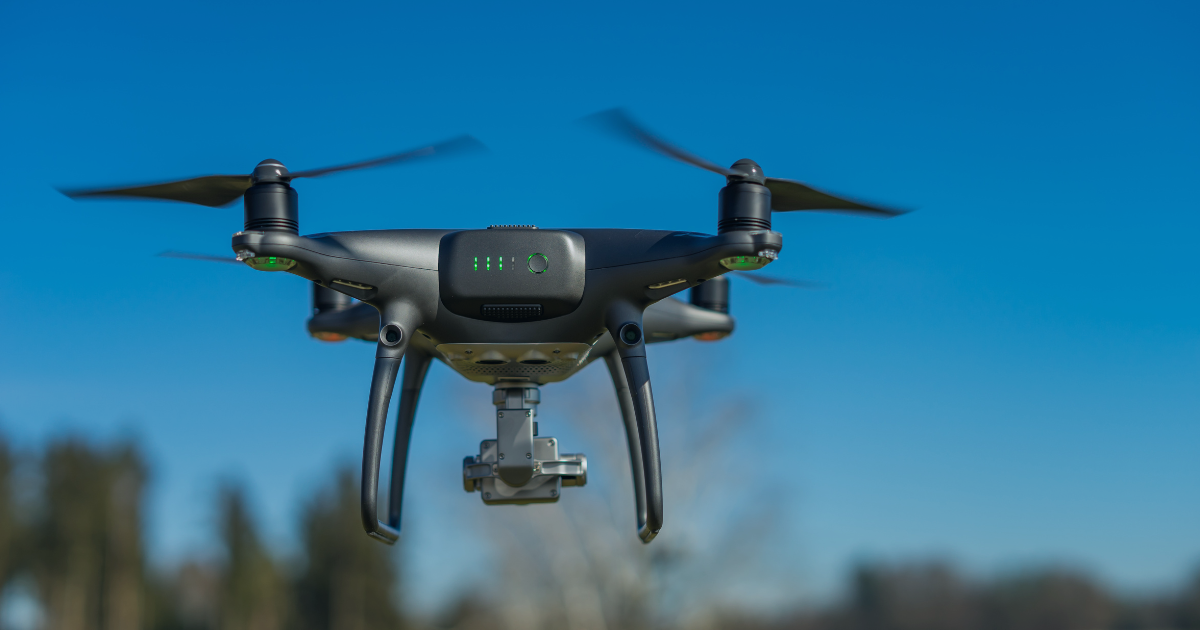
Hardware-in-the-loop testing verifies that software logic still works once timing, I/O, and hardware constraints are present. Pure software simulation can hide jitter, bus delays, and interface saturation. HIL testing for defense systems brings the controller into the loop where those faults appear. That makes timing fidelity measurable instead of assumed.
A flight controller can pass every desktop scenario and still miss an actuator deadline once it talks to actual interfaces. A few milliseconds of delay between the navigation estimate and the motor command can shift the aircraft response enough to spoil a landing or tracking task. Sensor triggers can drift, buses can queue, and power events can interrupt an update cycle. HIL is where those small defects finally become visible.
Fault exposure is part of the value. HIL also gives you repeatable timing evidence that software-only tests can’t provide. You can rerun the same disturbance with the same controller image and compare logs at the signal level. That repeatability is what makes a fix credible after a defect is found.
| Test layer | What the evidence should prove |
|---|---|
| Software model only | Control logic works in principle before hardware timing enters the loop. |
| Sensor feed emulation | Perception and fusion remain stable when inputs arrive late, noisy, or incomplete. |
| Controller I/O closure | Commands leave the processor on time and match the expected control state. |
| Actuator and bus timing | Latency, saturation, and packet loss are visible before they appear in flight. |
| Mission fault replay | The same fault produces the same measured response on every rerun. |
| Readiness record | Logs, thresholds, and pass criteria stay traceable for safety and program review. |
How do you test drones in simulation for readiness
You test drones in simulation for readiness with a closed loop that includes the aircraft model, sensor inputs, flight code, interface timing, and mission faults. That loop must produce measurable pass or fail evidence. A replayable scenario matters more than a visually rich scenario. The goal is measured behavior under stress with evidence you can replay.
A practical setup starts with a flight dynamics model tied to the actual controller and its I/O timing. Then the lab injects sensor feeds, link disturbances, and power events while logging command outputs, estimator states, and recovery logic. OPAL-RT is often used in defense labs this way, with sensor and drone HIL benches that let engineers rerun the same fault path until the measured response is understood. That repeatability shortens the path from defect to validated fix.
A useful readiness workflow also defines stop conditions before testing begins. You’ll want clear thresholds for loss of track, recovery time, altitude deviation, and operator alerting. Once those limits are written, the team can compare every run against the same standard. That protects the program from vague claims that the aircraft “looked stable” during a difficult case.
Start with flight critical functions before mission level expansion
You should start with flight critical functions because they carry the highest risk and the least tolerance for timing error. Mission-level scenarios only add value once the aircraft can stay stable, recover safely, and report degraded states clearly. Readiness grows in layers. The first layer is always controllability and safe recovery.
A disciplined sequence keeps the lab focused on the defects that matter first. Teams usually gain more from proving a clean recovery path than from building a large scenario library too early. Start with these checks before you widen the mission scope.
- Stabilize attitude control during sensor dropouts
- Verify propulsion limits during aggressive maneuvers
- Confirm datalink loss logic during return-to-base sequences
- Check payload power interactions during peak current draw
- Measure landing performance on degraded navigation inputs
After those functions are stable, you can add mission logic with far more confidence. A target-tracking scenario means little if the aircraft cannot hold attitude after a bad inertial update. A search route also loses value when landing logic falls apart after navigation quality drops. Order matters because readiness builds step by step.
Test coverage fails when sensor timing stays idealized
Test coverage fails when sensor timing stays idealized because autonomy depends on arrival time as much as data content. Perfectly aligned feeds create a false sense of robustness. Aircraft software rarely receives neat updates once hardware, buses, and payload triggers interact. You need skew, jitter, and stale data in the test loop.
A camera running at 30 Hz and an inertial unit running at 200 Hz will only fuse cleanly if timestamps stay trustworthy. Add a delayed frame trigger or a queued bus message and the estimator can start correcting against old information. The operator will often see a soft drift at first. A few seconds later, the track handoff or landing flare can be wrong enough to matter.
Idealized timing also hides integration debt between subsystems. Payload teams can verify image quality while controls teams verify stability, yet neither test shows what happens when both compete for bandwidth during a maneuver. That is why sensor simulation has to include timing faults, trigger drift, and bus congestion. Coverage means little if the lab keeps the hardest variable frozen.
Readiness claims require traceable evidence from repeatable lab validation
Readiness claims require a record that links mission requirements, fault cases, measured outputs, and pass thresholds. Anything less is opinion dressed up as testing. Teams earn confidence when they can rerun a case and get the same evidence again. That standard is what separates readiness proof from hopeful interpretation.
A solid validation package will show the exact sensor conditions, controller build, timing setup, and failure criteria used in each run. If a lost-link recovery worked on Tuesday and failed on Thursday, you need enough traceability to explain why. Flight clearance should rest on logs and thresholds. Memory will not support a serious review.
“Anything less is opinion dressed up as testing.”
Teams working with OPAL-RT usually treat sensor and drone HIL as proof equipment rather than a side activity. That is the right posture for defense readiness, because a clean bench rerun carries more weight than a persuasive meeting. Simulation earns trust when it exposes weak points early, measures them honestly, and documents what the aircraft will do next time the same stress appears.
Common Questions
What is military simulation software used for in tactical drone programs?
Military simulation software helps engineering teams recreate mission scenarios with real-time accuracy, supporting validation of flight controls, communication protocols, and sensor fusion systems. These simulations allow teams to replicate unpredictable threats and terrain without needing to fly physical prototypes. This approach reduces risk and accelerates design iteration cycles while meeting stringent defence validation standards. OPAL-RT supports teams by providing ultra-low-latency simulation platforms that scale across development, testing, and mission-readiness phases.
How does drone simulation testing help meet defence compliance standards?
Drone simulation testing allows you to validate control systems, perception algorithms, and safety margins under controlled, repeatable, and fully auditable scenarios. These simulations help generate structured evidence to meet airworthiness and mission-readiness certifications across multiple mission types. Your team can expose systems to edge cases—like degraded comms or spoofed GPS—without live field trials. OPAL-RT enables this level of depth and precision by delivering real-time platforms that are built to support compliance across every phase of your workflow.
Why should I use sensor simulation in defence instead of real-world testing alone?
Sensor simulation in defence enables controlled testing of edge conditions—such as glare, fog, and interference—that are difficult or unsafe to replicate live. Simulation allows you to adjust parameters precisely, inject faults, and reproduce the same tests repeatedly across firmware versions. This method significantly improves validation coverage while lowering operational costs. OPAL-RT provides modular simulation ecosystems that let you integrate your actual hardware with synthetic sensors for full closed-loop control.
What are the benefits of real-time simulation over traditional drone testing methods?
Real-time simulation removes guesswork between the design phase and deployment by executing models in lockstep with hardware timing. You can identify root causes early, reduce the number of physical prototypes, and scale validation efforts across multiple subsystems. Real-time execution also allows for scenario automation and hardware-in-the-loop integration, helping your team accelerate testing cycles. With OPAL-RT, you gain access to open-architecture platforms that support exact timing, closed-loop feedback, and scalable performance.
How can I reduce drone validation costs without compromising reliability?
You can reduce validation costs by shifting more of your testing and fault injection to simulation platforms instead of expensive field trials. Simulation lets you experiment with extreme conditions, iterate faster, and test interoperability without deploying full teams or equipment. This lowers the need for repeated travel, expendable munitions, and manual data collection. OPAL-RT helps engineering teams like yours reduce cost-to-validate by providing reliable, scalable, and affordable real-time simulation platforms.
Real-time solutions across every sector
Explore how OPAL-RT is transforming the world’s most advanced sectors.
Power Electronics
09 / 30 / 2026
FPGA simulation for power electronics and motor drives
A technical comparison of CPU and FPGA solver architectures for power electronics and motor drive simulation, covering the timestep each reaches and how to split a model between them.
Power Electronics
09 / 29 / 2026
How to model and control a T-type three level inverter
An engineering overview of the T-type three level inverter leg, covering how it reaches three voltage levels, where device stress lands, and how neutral point balancing and modulation shape control.
Simulation
09 / 28 / 2026
How CHIL signal-level testing validates embedded controllers
A practical look at signal level controller hardware in the loop testing, covering I/O ranges, sensor emulation, latency and the setup checks that make embedded controller results trustworthy.