10 common mistakes engineers make when skipping HIL testing
Industry applications
10 / 29 / 2025

You shipped a controller, and field issues surfaced that a bench test never caught. Most teams have felt that sting at least once, and the fix always costs more than expected. Hardware-in-the-loop (HIL) testing exists to expose those faults early, under timing and I/O conditions that desktop models cannot reproduce. Skipping HIL looks like speed, but it trades time now for longer delays, higher spend, and shaken confidence later.
Engineers across energy, automotive, aerospace, and academia rely on fast feedback to protect schedules and safety margins. Without HIL in testing pipelines, interface mismatches, quantization effects, and corner-case loads stay hidden until hardware arrives. Those surprises ripple through procurement, supplier coordination, and compliance, which pulls attention away from core design. An upfront commitment to HIL testing pays back in fewer unknowns, tighter iterations, and cleaner handoffs to production.
Why skipping HIL testing creates unnecessary engineering risks

Relying on model-in-the-loop or software-in-the-loop alone leaves blind spots that only physical I/O, quantization, and solver step timing will reveal. Scheduler jitter, ADC saturation, sensor bias, and protocol edge cases stack up under load, yet they rarely appear in idealized simulations. Teams discover them during late integration when change is hardest, longest, and costliest. That pattern affects energy controls, aerospace actuation, and HIL automotive testing alike.
A pragmatic approach places HIL testing early so control code and hardware interfaces meet under realistic timing, signal levels, and failure modes. Plant models drive the controller, fault cases are induced on purpose, and test sequences are automated for repeatability. You gain traceable coverage and usable data, not just a pass or fail, with HIL technology supporting engineers as they align integration practices to real-world performance.
10 common mistakes engineers make when skipping HIL testing
Treat automation as part of HIL testing, not an optional extra.
1. Assuming software-only models provide enough validation
Desktop simulations help shape algorithms, but they mask hardware effects that change controller behaviour under tight sampling and quantization. Integer wraparound, fixed-point scaling, and anti-windup clearance look fine on a workstation, then misbehave when ADC resolution and PWM timing are applied. Interrupt service routines reorder tasks, and shared buses introduce contention that is invisible in an ideal loop. HIL testing places the controller inside a timing-accurate loop so software interacts with signals and delays as they actually occur.
Teams also miss the way noise and sensor lag alter estimator performance at boundaries. A motor model that ignores dead time and back electromotive force can show stable torque tracking, while the same code chatters on hardware. Energy converters show similar gaps when switching ripple and filter corner frequencies are not represented with sufficient fidelity. Use HIL in testing to uncover these effects before field trials lock design choices.
2. Relying on prototypes instead of early-stage HIL testing
Physical prototypes feel concrete, yet they shift the learning curve to the most expensive phase. Each build consumes parts, lab time, and attention that could have been focused on algorithm quality and interface clarity. When issues appear, hardware changes drag through supply checks, fabrication, and retesting. Early HIL testing accelerates learning without waiting for a full prototype to sit on a bench.
A small investment in a controller-in-the-loop bench with a credible plant model will surface integration issues weeks earlier. That timeline protects you from long-lead components and scarce fixtures that stall progress. In automotive and energy projects, one avoided redesign can reclaim more budget than the HIL setup costs. The result is a cleaner prototype cycle that confirms known-good behaviour instead of hunting for basic faults.
3. Ignoring hardware integration until late in development
Interface assumptions harden fast, and late alignment is painful. Voltage levels, pinouts, pull-ups, and reference frames often drift from early intent, especially across multiple suppliers. Controller area network traffic, time sync expectations, and diagnostic frames need proof under realistic bus load, not just assumptions in a document. HIL testing exercises those links under noise, arbitration pressure, and corner timing.
Late discovery leads to kludges that increase complexity and risk. Teams add adapters, pad timing, or ship with constrained features that complicate future work. A modest HIL bench catches mismatches in scaling, byte ordering, and reference directions before they drive costly changes. Your integration plan becomes fact-based, not wishful.
4. Overlooking controller faults that surface only under load
Open-loop checks miss the way loads distort sensors and saturate actuators. Thermal drift, contact resistance, and inductive transients act as multipliers that alter control loops under stress. Overshoot that seemed acceptable in a static test becomes oscillation when inertia, latency, and rate limits stack up. HIL automotive testing replicates these conditions so regenerative braking, traction events, and temperature shifts are seen early.
Energy teams face similar pitfalls when grid-tied converters meet weak sources or sudden step loads. Aerospace controls feel the same when aerodynamic lag stretches across multiple axes. HIL testing lets you tune thresholds and fallback logic under credible stress without risking equipment. The outcome is a controller that behaves predictably when the system is busy, hot, or at the edge of its envelope.
5. Underestimating the cost impact of delayed issue detection
Defects found late cost more to diagnose, fix, and verify because more elements are now involved. Engineering time tilts toward firefighting, while schedules absorb rework and retest cycles. Stakeholders lose confidence, and the team spends energy on triage instead of optimization. HIL testing reduces this exposure by moving discovery to earlier phases when change is cheap.
A transparent cost curve helps align choices with value. Instead of budgeting for late surprises, you invest in HIL rigs, test sequences, and coverage metrics that consistently pay back. The accounting is simple, even without a spreadsheet. Fewer lab crises and steadier velocity usually outweigh the set-up cost of HIL testing tools.
Hardware-in-the-loop (HIL) testing exists to expose those faults early, under timing and I/O conditions that desktop models cannot reproduce.
6. Missing fault injection testing for safety-critical systems
Safety cases expect evidence that faults were considered and mitigated. Power supply dips, sensor freezes, encoder dropouts, and stuck actuators must be shown to trigger safe responses. Reproducing those cases on live hardware is risky and hard to control. HIL testing provides consistent, repeatable fault injection without putting people or equipment at risk.
You can also test escalation and recovery logic that relies on timers, counters, and state machines. Does the system latch correctly, log the event, and enter a safe mode that preserves data for diagnosis. Can the controller rejoin normal operation after a staged recovery path. The answers are clearer when faults can be applied, varied, and repeated under timing-accurate conditions.
7. Failing to replicate power electronics switching dynamics
Average-value plant models hide switching effects that matter for control stability, current ripple, and thermal loading. Gate delays, dead time, and diode recovery shape behaviour in ways that simple models cannot represent. Without these details, current controllers look stable on paper but show limit cycles and audible noise in the lab. HIL testing with high-fidelity switching models exposes these traits before copper sees current.
Measurement paths also matter as much as the plant. Anti-aliasing filters, ADC sampling, and synchronous sampling strategies alter what the controller believes is happening. HIL lets you iterate on filter corners, sampling phases, and modulation choices without soldering a new board. That saves hardware re-spins and gives you cleaner control margins.
8. Skipping interoperability checks with third-party systems
Multi-vendor systems raise practical questions about messaging, timing, and shared assumptions. A supplier may meet its data sheet, yet still fail under combined traffic, retries, and diagnostic chatter. Time synchronization, boot sequencing, and error-handling policies need proof in a setting that looks and feels like the final setup. HIL testing brings these parts into one loop so they talk, disagree, and recover under supervision.
Those sessions find more than protocol mistakes. Teams learn how to degrade gracefully when a unit goes quiet, returns corrupt data, or reboots at a bad moment. You can tune watchdogs, retry counts, and keepalive intervals with immediate feedback. Interoperability becomes a property you can test, not just a hopeful outcome.
9. Trusting supplier validation without independent testing
Suppliers do solid work, but their tests aim at component acceptance, not your full system’s behaviour. Your operating limits, interfaces, and safety goals are unique, and you own the risk if integration falls short. Treat supplier results as inputs, then verify in your own loop with your models and criteria. HIL testing gives you that independence while keeping collaboration constructive.
This approach builds leverage during design reviews and acceptance gates. Evidence from your bench clarifies findings and accelerates resolution because it removes ambiguity. It also protects you from hidden couplings that a supplier cannot see from outside your system. Independent HIL data is a practical guardrail for complex programs.
10. Neglecting the role of HIL testing tools in automation
Ad hoc testing is tempting when deadlines loom, yet it leads to gaps, inconsistent data, and missed regressions. Teams that skip automation spend time repeating manual steps rather than learning from results. Test logs are incomplete, and failures are hard to reproduce. Mature HIL testing tools provide scheduling, versioning, and reporting that turn effort into durable knowledge.
Automation also unlocks breadth and depth without more stress. You can sweep parameters, replay traces, and capture artefacts for debugging while your bench runs unattended. That rhythm keeps code and models aligned as changes land, which trims risk before reviews. Treat automation as part of HIL testing, not an optional extra.
How engineers can avoid these HIL testing mistakes
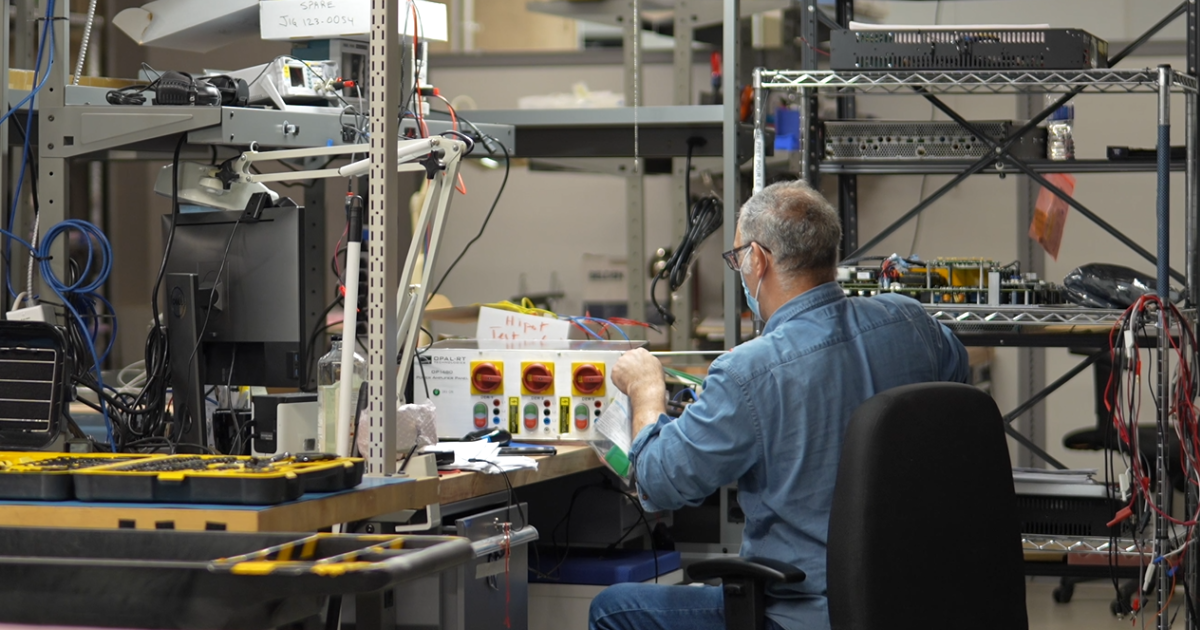
Thoughtful structure prevents most surprises before hardware arrives. Teams that start with a clear scope for plant fidelity, I/O coverage, and timing targets build confidence early. Automation keeps tests consistent, traceable, and fast to run. A short, repeatable workflow turns HIL testing into a habit rather than a special event.
- Start HIL scoping during requirements: Define plant fidelity, timing budgets, I/O ranges, and pass criteria so expectations are explicit. This prevents late debates over “good enough” fidelity when schedules tighten.
- Build a minimal viable plant model: Capture dominant dynamics first, then layer details that influence control, protection, and safety. This approach gets you learning value without waiting for a perfect model.
- Standardize on HIL testing tools for automation: Adopt a framework for orchestration, logging, and report generation so every run produces comparable data. Regression suites then tell you what changed, not just that something changed.
- Treat networks as first-class items: Exercise CAN, LIN, and Ethernet traffic under bursty loads, retries, and diagnostics. This is essential for HIL automotive testing where bus health drives controller behaviour.
- Plan a fault injection matrix: Cover sensor freezes, range violations, actuator limits, dropouts, and supply dips with clear responses, thresholds, and timing. Repeat those cases after every major change.
- Integrate supplier units early on your bench: Validate assumptions about scaling, byte order, units, and boot sequences well before a full prototype. This guards against late integration scrambles.
- Track quantitative metrics: Record solver step, loop jitter, CPU load, coverage, and throughput so you can judge readiness with numbers, not anecdotes. Numbers guide the next test as much as they mark progress.
Disciplined habits turn HIL in testing from a checkbox into an asset that shortens schedules and reduces uncertainty. Each of these steps is small, but they compound into fewer surprises and steadier delivery. Leaders gain clearer status because results map to criteria, not opinions. The payoff is a system that behaves as intended, with fewer late nights in the lab.
Common questions on HIL testing risks and process
What are common mistakes when skipping HIL testing?
Late hardware surprises often stem from untested I/O scaling, protocol mismatches, and scheduler timing gaps. Safety-critical paths are another weak spot, since staged faults are difficult to repeat on physical prototypes. Skipping HIL in testing means those gaps persist until final validation, when changes are harder to implement. Early closed-loop benches reduce this exposure with timing-accurate runs and repeatable fault cases.
Why is skipping HIL testing risky?
When issues surface late, project costs rise sharply and confidence drops across teams and stakeholders. Integration partners may meet their own test criteria, yet combined performance falters under bus load or fault stress. Safety cases also lose strength because fault response data is thin or incomplete. Running hil automotive testing or power electronics validation early creates the evidence base you need for predictable delivery.
How can engineers avoid HIL testing mistakes?
Practical steps include scoping plant model fidelity to fit project goals, defining pass criteria, and automating runs. Teams that treat bus traffic, sensor dropouts, and recovery paths as first-class test cases find fewer late problems. Automation also gives you traceable logs and coverage metrics that guide development rather than just report it. These habits make HIL testing tools a natural part of daily engineering rather than an afterthought.
What does HIL automotive testing include compared to bench checks?
Automotive controllers face traction events, regenerative braking, and thermal swings that static benches cannot replicate. HIL automotive testing introduces realistic load models, network stress, and safe fault injection under repeatable conditions. That approach validates fallback modes, error logging, and recovery paths well before vehicles hit the track or road. Engineers gain confidence that safety and performance will hold under real loads, not just ideal conditions.
How OPAL-RT supports engineers with proven HIL testing solutions
OPAL-RT helps teams in energy, automotive, aerospace, and academia adopt HIL testing where it delivers the most value. Real-time digital simulators combine CPU and FPGA computation to represent power electronics switching, grid dynamics, and fast actuation with timing accuracy. The software stack supports orchestration, data capture, and interfaces that fit established toolchains, which protects workflows already in place. Engineers can start with a focused setup, then scale fidelity, channels, and scenarios as projects grow.
Program leads and lab managers appreciate how open architecture, I/O flexibility, and protocol support reduce integration risk without locking teams into a single stack. Safety cases benefit from consistent fault injection and repeatable test sequences, while automation produces artefacts that make reviews productive. For teams shipping vehicles, converters, flight controls, or teaching labs, this approach shortens the distance between intention and verified behaviour. OPAL-RT focuses on practical, tested capability that turns HIL testing tools into a dependable part of daily work so your systems perform as designed.
Real-time solutions across every sector
Explore how OPAL-RT is transforming the world’s most advanced sectors.
Automotive
10 / 21 / 2026
Megawatt charging system validation for heavy duty trucks
A practical look at how the megawatt charging system works, how it differs from CCS and how charger controls are tested before a truck site is energized.
Automotive
10 / 19 / 2026
Dynamometer testing and motor emulation compared for e-drive programs
A comparison of dynamometer testing and motor emulation for e-drive programs, covering what each method proves, what it costs and how teams sequence both.

Power Electronics
10 / 17 / 2026
How wide bandgap devices push converter power density
Wide bandgap devices raise converter power density through faster switching and smaller passives, and this guide traces that chain from device physics to thermal limits to validation.