Grid modernization and where real-time simulation fits the roadmap
Microgrid, Simulation
05 / 13 / 2026

Key Takeaways
- Grid modernization matters most where inverter controls, protection settings, and grid strength interact under stress.
- Utilities get better results when they rank work by grid stability risk before they rank it by asset age or equipment type.
- Real time simulation belongs between planning studies and field commissioning because that is where timing and control issues become visible.
Grid modernization succeeds when utilities test stability before they deploy new controls and devices.
Utilities are adding solar, storage, power electronics, and digital protection into networks built for slower mechanical behaviour. Combined, utility scale solar and battery storage were expected to make up 81% of new U.S. generating capacity additions in 2024. That mix shifts planning from one-time studies toward continuous validation of voltage, frequency, and protection response. You can’t treat modernization as a purchasing exercise when it is an operating problem.
A useful roadmap starts with stability risks. A long list of new equipment comes later. Utilities that validate controls early will avoid repeat field work, protection resets, and delayed interconnections. Real time simulation fits the roadmap where planning assumptions meet hardware, controller code, and actual timing.
“You can test behaviour under faults, switching events, and weak grid conditions before crews touch a live feeder or substation.”
Grid modernization means operating a more variable power system
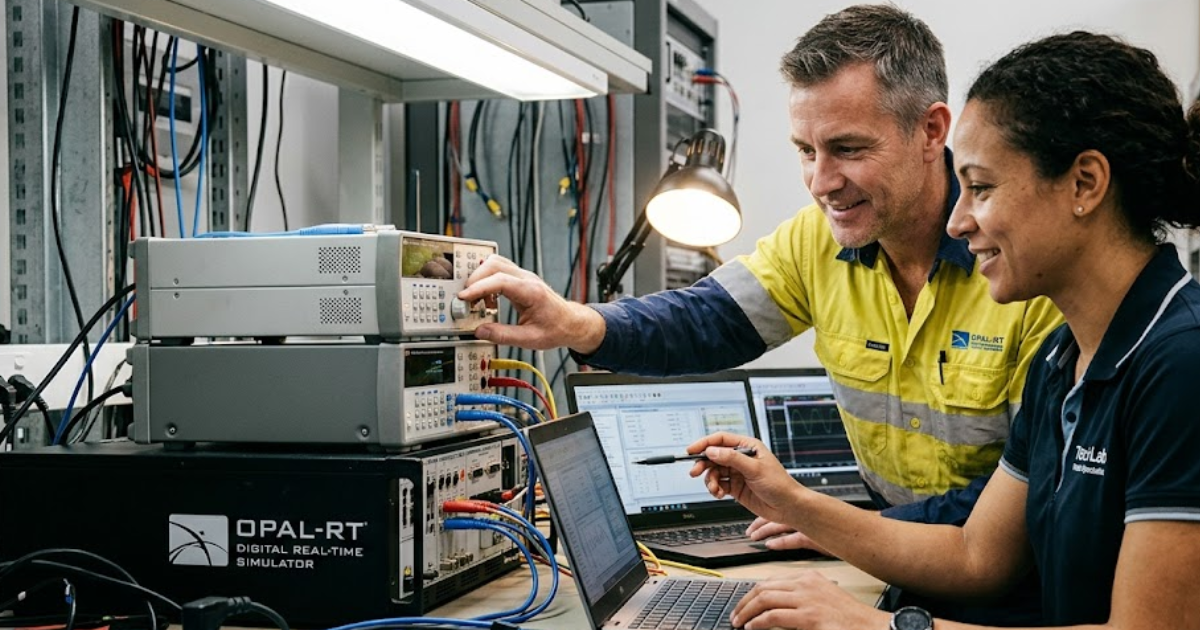
Grid modernization means preparing a grid to stay stable with more inverter-based generation, distributed devices, and software control. It matters because power quality, protection, and restoration now depend on timing, data exchange, and controller settings as much as wires and transformers.
A feeder with rooftop solar and battery systems can show normal voltage at noon in a planning model yet oscillate when cloud cover passes and multiple inverters respond at once. That issue does not look like a traditional thermal overload. It shows up as poor voltage recovery, nuisance trips, or flicker complaints. You will miss it if modernization is defined only as replacing ageing assets.
Modernization also shifts ownership of system behaviour. Planning, protection, operations, and communications teams must work from the same assumptions or you’ll commission devices that work alone but clash in service. That is why the term matters to utilities. It resets the scope from asset replacement to coordinated system performance.
Utilities should rank upgrades by grid stability risk first
Utilities should rank upgrades by grid stability risk first because the costliest failures come from unstable control interactions, weak grid conditions, and protection miscoordination. Asset age still matters, but replacing old hardware without testing system response leaves major operational risk in place.
Interconnection pressure shows why this order matters. At the end of 2023, U.S. interconnection queues held more than 2,600 GW of active capacity, and over 95% was zero-carbon generation and storage. That volume will reach weak buses, feeders, and substations first, so your screening method should flag low short circuit strength, limited reactive support, and long restoration times before it flags cosmetic gaps in automation.
A utility can compare a breaker replacement, a feeder automation package, and a solar cluster study in the same capital cycle. The breaker is important, yet the solar cluster moves up when it exposes voltage swings or relay blinding on adjacent circuits. Risk-first ranking gives you a workable sequence for modernization rather than a list shaped only by asset age.
| System condition | First modernization focus | Reason for the priority |
|---|---|---|
| A weak rural feeder has high midday solar exports. | Study voltage control and protection coordination before adding automation. | Voltage instability will disrupt service sooner than a communications upgrade will improve it. |
| An urban substation faces battery interconnections and heavy charging load. | Validate reactive power controls and fault response. | Controller interaction will shape grid stability more than basic capacity ratings alone. |
| A transmission pocket relies on a new wind plant for local support. | Assess weak grid performance and ride through behaviour. | Plant controls must stay stable during disturbances or the area loses support when it needs it most. |
| An ageing feeder has frequent restoration delays after faults. | Review protection timing before replacing field devices. | Restoration speed improves only when the fault is isolated correctly on the first operation. |
| A critical facility plans a microgrid with islanding capability. | Test transfer logic and resynchronization response. | Microgrid controls can create unstable transitions if the switching sequence is not validated early. |
Legacy planning tools miss timing issues from inverter controls
Legacy planning tools miss timing issues because they solve steady state or electromechanical behaviour on coarse time steps. Inverter controls, protection logic, and communication delays act in milliseconds, so the error is not minor. It can reverse the study result.
A feeder model can show acceptable voltage during a fault ride-through study while an actual inverter trips because a phase-locked loop loses synchronism for a few cycles. Another case appears when a relay sees current contribution drop faster than the study assumed and opens the wrong breaker. Those failures come from timing and control detail that a static or averaged model will smooth away.
This gap matters when settings are approved from averaged models. You end up with a plan that looks stable on paper and fails during commissioning. Utilities still need off line planning tools for screening and expansion work, but those tools stop short of controller timing, firmware logic, and input/output latency. That is why modernization roadmaps need a validation stage beyond planning studies.
Real-time simulation tests system behaviour before field deployment
Real-time simulation supports grid modernization by running the system fast enough to interact with actual controllers, relays, and communication links. You can test behaviour under faults, switching events, and weak grid conditions before crews touch a live feeder or substation.
A protection team can connect a controller to a digital simulator and replay a low-voltage ride-through event with realistic network impedance. OPAL-RT systems are often used this way to keep the controller code, plant model, and input/output timing in one closed-loop test. That setup shows when a control loop saturates, when a relay pickup is too tight, or when a plant controller recovers too slowly after a disturbance.
The value is not limited to safety. You shorten commissioning because settings are checked against a broader fault set, and you catch integration problems while engineers can still edit code. It isn’t unusual for a single lab session to remove weeks of field retesting. That places real time simulation after planning studies and before field energization.
Hardware in the loop validates protection settings before deployment
Hardware in the loop validation confirms that relays, controllers, and gateways react correctly when signals arrive with actual timing and noise. That matters for grid stability because protection errors often start at interfaces. The protection equations are only part of the story.
Consider a battery plant tied to a weak substation. The relay setting looks correct in a study package, yet the controller sends a reactive power request a few milliseconds late and the relay sees a deeper voltage dip than expected. Hardware-in-the-loop testing exposes that sequence and shows whether the trip threshold or filter time is too tight. You can then adjust settings before the site crew finds the problem under pressure.
You also gain better change control. Firmware updates, new communication mappings, or revised deadbands can be retested against the same cases before they reach site. Utilities that skip this step often treat field commissioning as the first integrated test. That is where schedule slips start, and it is also where confidence in the broader modernization plan starts to erode.
Simulation tool selection should match study speed requirements
Simulation tool selection should follow the speed and fidelity of the question you need to answer. Long-horizon planning, electromagnetic transient studies, controller testing, and device certification are different jobs, and one tool will not cover all of them well.
You will get better results when the study objective is explicit before any model is built. A distribution planner studying hosting capacity does not need the same solver speed as a lab engineer validating a plant controller. The mix below keeps the tool choice tied to the technical question instead of habit or internal ownership.
- Use steady state tools for capacity screening and network reinforcement studies.
- Use dynamic stability tools when frequency response or oscillations are the issue.
- Use electromagnetic transient tools when switching events or inverter controls shape the result.
- Use real-time simulation when actual controller hardware must stay in the loop.
- Use shared model standards when results must pass across planning and commissioning teams.
If you blur those use cases, you pay twice. First, teams rebuild models for each stage. Second, false confidence creeps in because a successful study is treated as proof for a different task. A good tool chain keeps the same assumptions traceable as work moves from planning to validation.
Open model exchange reduces rework across planning teams
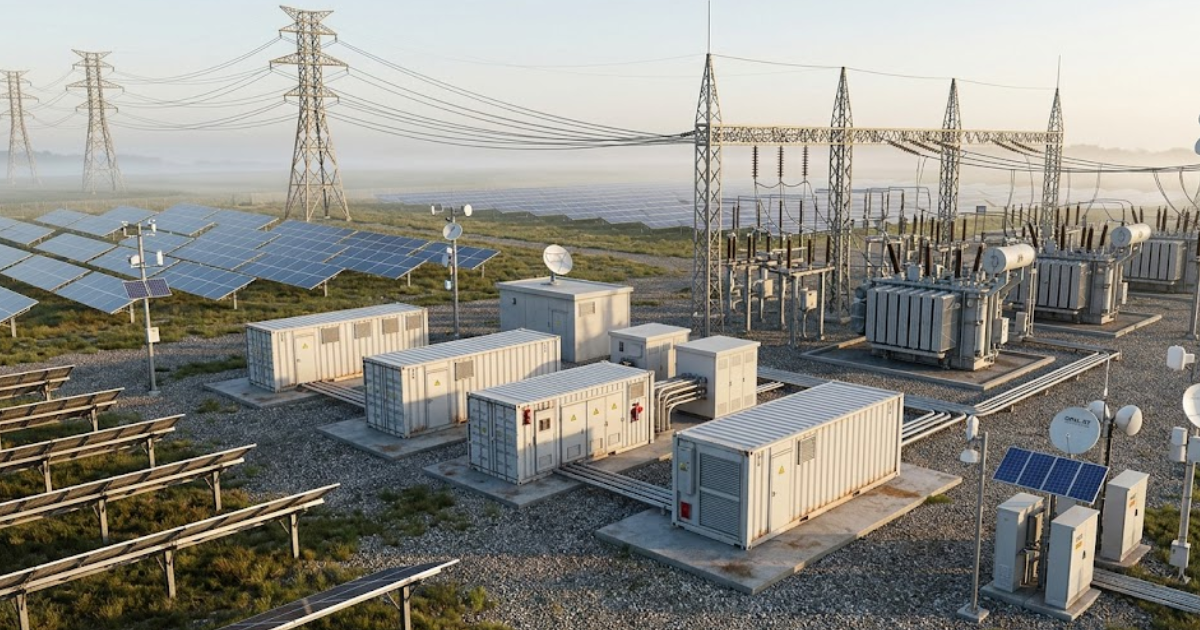
Open model exchange reduces rework because utilities stop rebuilding the same network, controller, and protection data in separate tools. When teams pass models with clear assumptions, they spend less time translating files and more time checking system response.
A transmission planner can build a plant interconnection case, then a protection engineer needs the same bus data, impedances, and control blocks for a disturbance replay. If those models move cleanly, the second team starts with a tested baseline instead of a manual recreation that can shift a relay pickup or a timing constant. That saves time, but it also removes a quiet source of technical error.
Open exchange supports governance as well. You can track which model version was used for the approval study, the lab validation, and the field setting file. That trace matters when operators or project partners ask why a device was commissioned with a given settings set. It also keeps modernization work from fragmenting into isolated studies that can’t be reconciled later.
“Utilities that treat simulation as a gate in the roadmap will build grid stability into commissioning, instead of trying to recover it after problems appear.”
A utility roadmap should phase validation before deployment
A utility roadmap should phase validation before deployment because modernization fails at the handoff between planning and field work. The right sequence is screening, detailed studies, controller validation, hardware in the loop checks, and then site commissioning with fewer unknowns.
Teams that follow this order spend less time reopening studies after a failed site test. A feeder automation upgrade, a battery interconnection, and a remedial action scheme each benefit from the same discipline: prove behaviour under stress before the switch is closed. OPAL-RT fits here as test infrastructure that lets utilities verify timing, protection, and control interactions before those interactions reach the grid.
Grid modernization goes beyond a list of devices to install over five years. It is the ongoing work of making a more variable system behave predictably. Utilities that treat simulation as a gate in the roadmap will build grid stability into commissioning, instead of trying to recover it after
Real-time solutions across every sector
Explore how OPAL-RT is transforming the world’s most advanced sectors.

Power Systems
10 / 24 / 2026
800 VDC power distribution for AI data centers
An explanation of how 800 VDC power distribution carries power from the grid to AI racks, covering conversion stages, DC fault protection and bus stability.
Automotive
10 / 21 / 2026
Megawatt charging system validation for heavy duty trucks
A practical look at how the megawatt charging system works, how it differs from CCS and how charger controls are tested before a truck site is energized.
Automotive
10 / 19 / 2026
Dynamometer testing and motor emulation compared for e-drive programs
A comparison of dynamometer testing and motor emulation for e-drive programs, covering what each method proves, what it costs and how teams sequence both.