Key Takeaways
- Digital twin simulation turns power electronics design into a proactive, insight-led workflow where you test ideas safely in a virtual lab long before hardware is built.
- High-fidelity digital twin power electronics models reduce dependence on costly prototypes and shift more of the risk and learning into controlled, repeatable simulations.
- AI simulation systems extend the value of digital twins by spotting patterns, updating models with new data, and helping you search for better converter and inverter designs faster.
- Continuous validation with digital twin models means each design step is checked against realistic scenarios, so hardware tests confirm results instead of exposing late surprises.
- Organisations that integrate digital twin simulation, AI workflows, and real-time platforms into everyday practice give engineers more freedom to pursue ambitious designs with confidence.
Every power electronics project carries risk: even a small design mistake can trigger costly failures or delays. Traditional design processes rely on building prototypes and fixing flaws after the fact, which wastes valuable time and money. Digital twin simulation shifts this paradigm. Testing a converter design in a high-fidelity virtual environment lets you catch issues before hardware exists. Studies show companies that use virtual prototyping cut development time by up to 75% and halve overall development costs. This simulation-first strategy makes the entire design process safer and faster. This proactive approach means problems are resolved in the digital realm first, avoiding the high stakes and uncertainties of late-stage hardware tests.
Traditional power electronics design methods struggle with complexity and risk
Modern power electronics systems are extremely complex. Converters and inverters use high-speed switching, advanced control algorithms, and interact with batteries, grids and other components. Traditional offline simulations often simplify or overlook these transient details. When a flaw appears, teams must fix it on a physical prototype, exposing them to unexpected risks.
Without real-time insight into every scenario, engineers typically build hardware prototypes to validate designs. This trial-and-error process is slow and risky. Building and testing each prototype can take weeks, so any late-stage issues can derail project schedules. Engineering teams often end up relying on guesswork and miss subtle edge cases.
Digital twin simulation creates a safer, faster path for power electronics design
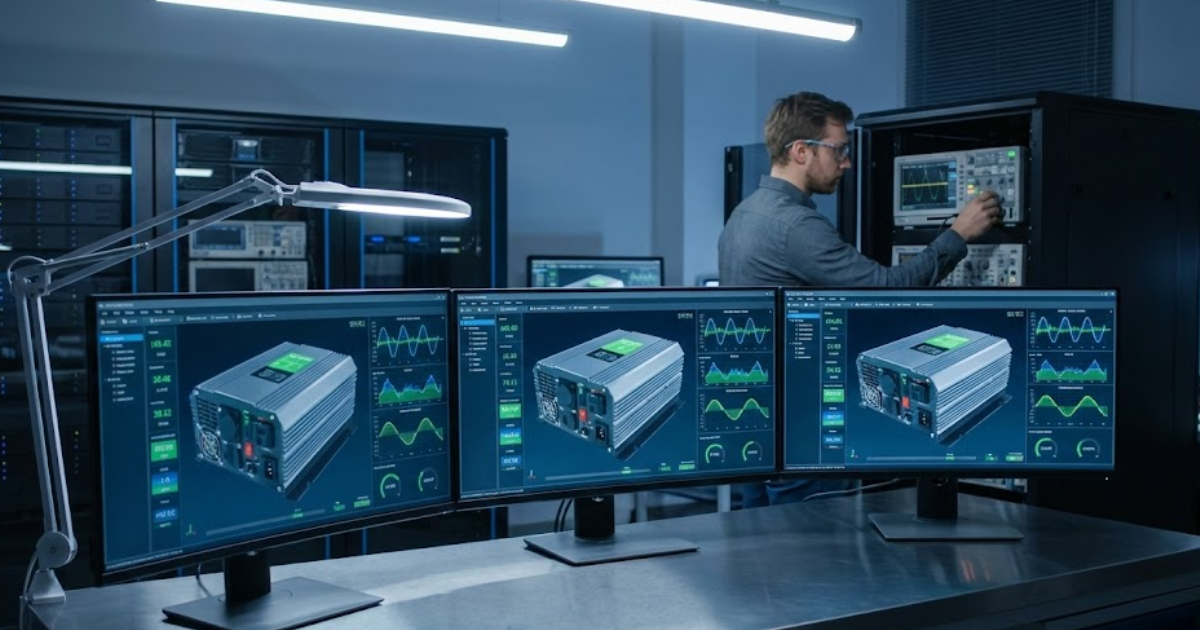
Embracing a digital twin means testing and validating designs in software before hardware exists. Simulating a converter in real time yields deep insight into its behavior without risking physical equipment. The benefits unfold across the entire development cycle:
- Extreme scenario testing: Simulate fault conditions, surges, and unusual events virtually so no real system is endangered.
- High-resolution simulation: Achieve switch-level fidelity with simulation time steps as short as 100 nanoseconds, capturing detailed converter dynamics accurately.
- Rapid iteration cycles: Tweak design parameters in the twin and see results instantly, allowing multiple design iterations with no downtime.
- Fewer physical prototypes: Replace many expensive hardware tests with a single virtual prototype, saving cost and build time.
- Performance optimization: Use the twin to collect data on efficiency, losses, and thermal behavior under varied conditions, then fine-tune your design for optimal performance and reliability.
- Hardware-in-the-loop testing: Connect your actual controller or inverter hardware to the twin, so software and hardware interact in real time and can be validated simultaneously.
“Every power electronics project carries risk: even a small design mistake can trigger costly failures or delays.”
Each of these capabilities accelerates development and reduces risk. Over time, running virtual tests instead of multiple hardware loops can cut weeks off schedules and reveal problems long before deployment.
Integrating AI in digital twin simulation systems amplifies predictive power in design
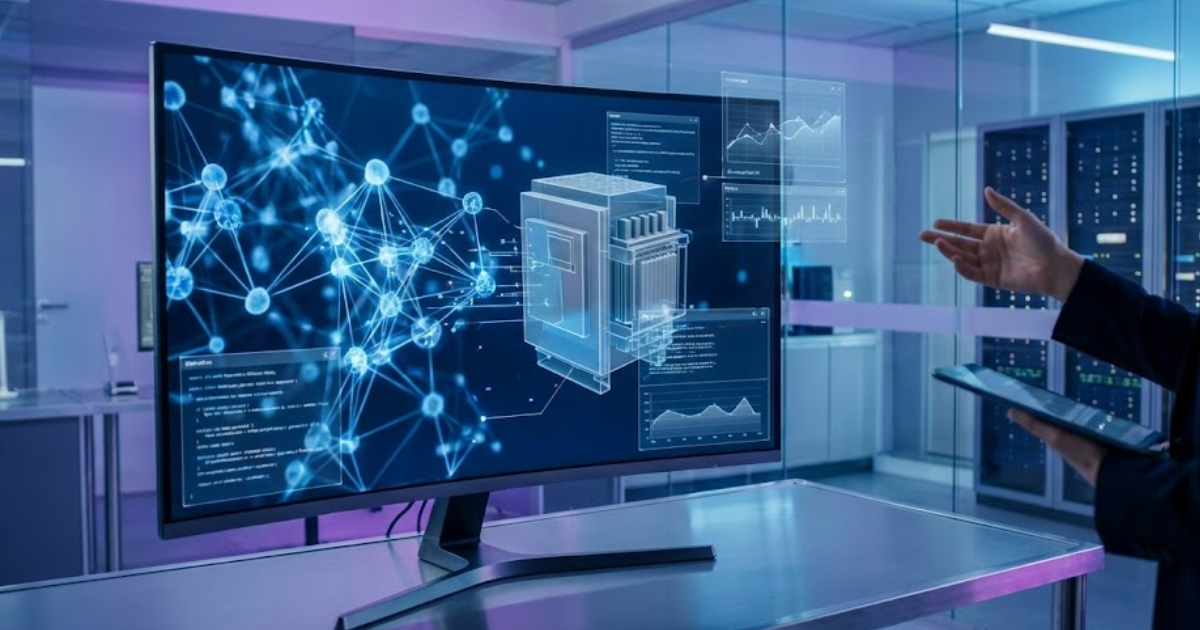
Integrating AI into the digital twin makes the virtual testbed more intelligent. Machine learning algorithms can process the twin’s data to predict failures, tune models, and optimize designs. This adds a predictive layer on top of simulation: the twin not only shows what is happening, but suggests what could happen and how to improve.
Machine learning for predictive insights
AI-based analytics can sift through simulation data to identify early signs of component wear or failure. By recognizing patterns in component behavior, the twin can flag anomalies before they cause damage. In fact, digital twins combined with AI-based maintenance have been shown to reduce unplanned downtime by about 20% in industrial settings. This predictive capability means your team can prevent problems in the field by addressing them virtually first.
Adaptive model calibration
AI can continuously refine the digital model for higher accuracy. When real test data or sensor measurements become available, machine learning algorithms adjust the twin’s parameters and equations to better match reality. This keeps the simulation aligned with actual performance over the life of the design. The result is a self-updating twin that stays precise even as system behavior changes.
Design optimization through AI
You can also use the twin with AI optimization techniques. Algorithms such as genetic optimization or reinforcement learning can explore millions of design variations in software, searching for optimal performance metrics. This automates tasks like tuning switching frequencies, component sizing, or control algorithms. The combined twin and AI approach helps find high-performing design solutions that might be hard to discover manually.
Digital twin models move engineering from trial-and-error to continuous validation
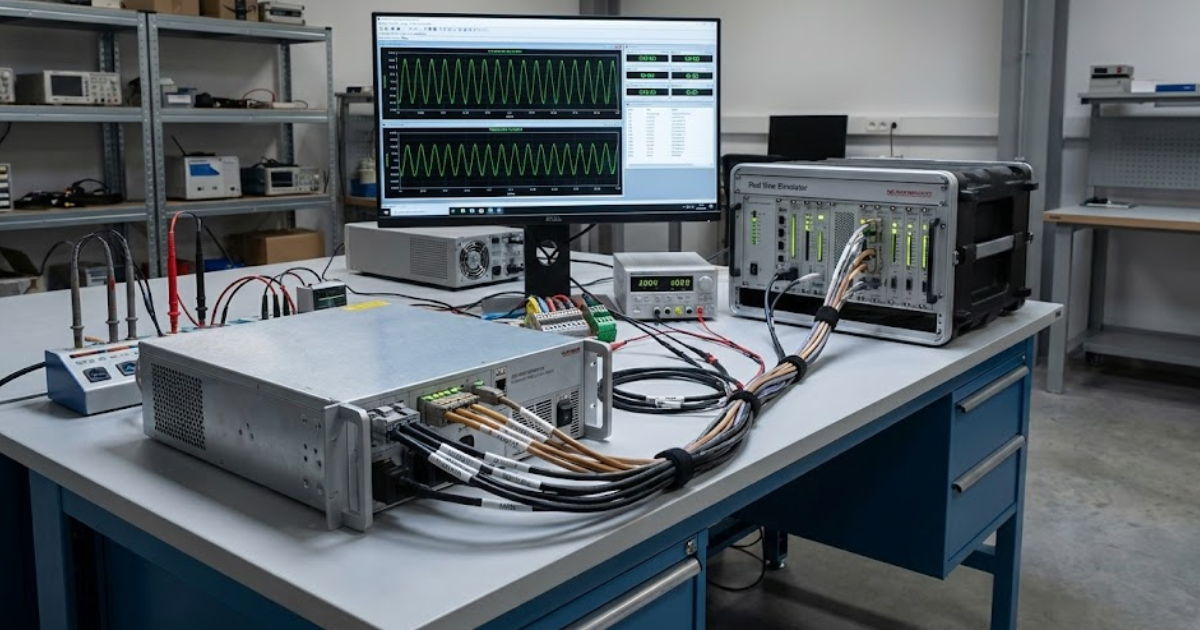
Digital twin models turn power electronics design into a closed-loop process. Instead of building a circuit and then testing it for failures, you continuously validate and refine your design virtually at every step. The twin receives live control code and real operating data, so the model stays aligned with actual conditions. As you tweak your converter’s parameters, the twin immediately shows how those changes play out, effectively closing the loop between design and testing.
“Digital twin models turn power electronics design into a closed-loop process.”
This continuous validation approach replaces trial-and-error with insight-driven engineering. With each simulation pass, you gain confidence that your design works under real conditions. By the time a physical prototype is built, most bugs and inefficiencies have already been ironed out. The end result is faster development cycles, fewer surprises in the field, and power electronics that meet performance goals on first deployment.
OPAL-RT and real-time digital twins in power electronics design
Building on the power of continuous validation, OPAL-RT delivers real-time simulators and software that turn each design cycle into a virtual lab. Our scalable FPGA- and CPU-based platforms replicate your power electronics models in true time. You can plug in actual control code or high-fidelity models and see exactly how your inverter responds to every condition. This tight loop between simulation and control gives you confidence: you’ve already tested the worst conditions before the first hardware prototype is built.
Our open architecture and compatibility with industry-standard tools mean you can integrate existing models and data easily. We support AI and hardware-in-the-loop workflows, letting simulation intelligence grow as data comes in. The result is a strategic testing environment that keeps pace with innovation, so your team can focus on breakthrough design rather than endless debugging. In short, our real-time digital simulators deliver the proactive, data-driven workflow of simulation-first design that leads to reliable, optimized power electronics.
Real-time solutions across every sector
Explore how OPAL-RT is transforming the world’s most advanced sectors.
Power Electronics
12 / 16 / 2025
7 Top power electronics simulation tools for engineers
Power electronics engineers use targeted simulation tools to improve modelling fidelity, de-risk controller validation, and link offline studies with real-time and hardware-in-the-loop testing.
Simulation
12 / 12 / 2025
8 reasons engineers rely on hardware in the loop systems for power electronics
Hardware in the loop testing for power electronics helps your team validate controllers earlier, study demanding grid and fault conditions safely, and build a reliable path from models to high-confidence hardware results.

Simulation
12 / 10 / 2025
9 simulation approaches supporting advanced batteries and hydrogen storage
Engineers gain a clear view of how advanced simulation strengthens energy storage innovation across batteries, hydrogen storage, and grid modernization programs.
EXata CPS has been specifically designed for real-time performance to allow studies of cyberattacks on power systems through the Communication Network layer of any size and connecting to any number of equipment for HIL and PHIL simulations. This is a discrete event simulation toolkit that considers all the inherent physics-based properties that will affect how the network (either wired or wireless) behaves.