Key Takeaways
- FPGA-based real-time simulation helps engineers test high speed converters accurately without simplifying models.
- The approach reduces hardware risk through safe virtual fault testing and detailed stress evaluation.
- Real time performance gives control designers faster iteration and higher confidence in timing sensitive behaviour.
- Integrating FPGA simulation early in development reduces late stage surprises and cuts prototyping costs.
- Teams that treat simulation as a core design tool progress faster and deliver more reliable converter designs.
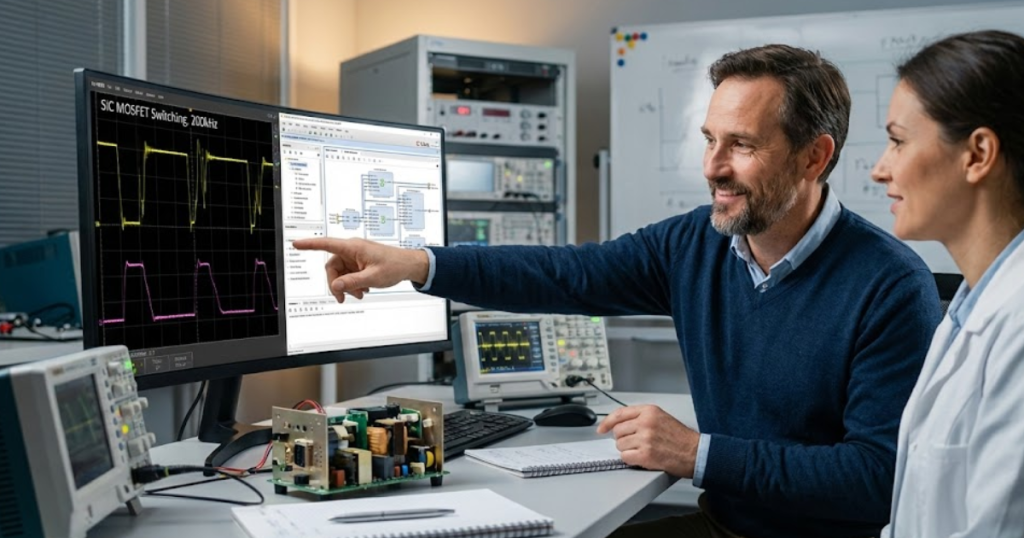
Conventional testing often lags behind the advanced circuits it is supposed to verify in modern power electronics design. Many emerging converters routinely switch at frequencies from 20 kHz up to 1 MHz, requiring simulation time steps on the order of 100 ns or less to capture their behavior. Traditional CPU-based simulators and lab setups simply can’t keep pace: to avoid missing events, they either run slower than real time or use simplified models. This means critical faults and edge-case behaviors may not show up until expensive hardware tests. That can cause delays and even safety hazards late in development.
For engineers, this problem is all too real. In power electronics, high-fidelity FPGA-based simulation isn’t a luxury but a fundamental design practice. We have seen teams that integrate real-time FPGA testing early, iterate faster, catch issues sooner, and deliver robust converters on tighter schedules. This proactive approach accelerates development and helps eliminate costly surprises.
“In power electronics, high fidelity FPGA-based simulation isn’t a luxury but a fundamental design practice.”
Traditional testing struggles to keep up with high-speed power electronics

Even as converter designs advance, testing tools hit limits. Standard CPU-based simulators and lab setups can’t keep pace with high-speed switching or complex control algorithms. As a result, engineers often accept slowed-down simulations or reduced model accuracy just to keep things moving. These constraints translate into several challenges for power electronics teams:
- Limited simulation speed: CPU-based tools struggle to update high-frequency converter models fast enough. Simulators often have to slow down (losing real-time behavior) or skip fast events completely, which leaves gaps in the analysis.
- Simplified models: To meet deadlines, designs are often simplified or linearized for CPU simulators. This misses subtle phenomena like switching transients or parasitic oscillations that can matter in real systems.
- Hidden fault conditions: Rare events and edge-case faults may never trigger in a coarse simulation. Designers often only discover these issues when running the actual hardware, which is late and costly.
- High prototyping costs: Without real-time testing, teams must build physical prototypes early to validate designs. Building and iterating hardware is expensive, time-consuming, and increases risk.
- Safety risks: Testing fault conditions on actual power electronics can be dangerous. Without a safe virtual environment, engineers risk damaging equipment or creating unsafe scenarios during late-stage testing.
- Sluggish iteration: Waiting for limited lab or hardware availability creates bottlenecks. Each design change may require scheduling and waiting, slowing the overall development cycle.
These challenges highlight the need for a new approach. FPGA-based real-time simulation addresses each of these limitations. It delivers the speed and fidelity that conventional methods lack.
FPGA-based real-time simulation delivers the speed and fidelity that modern power electronics require
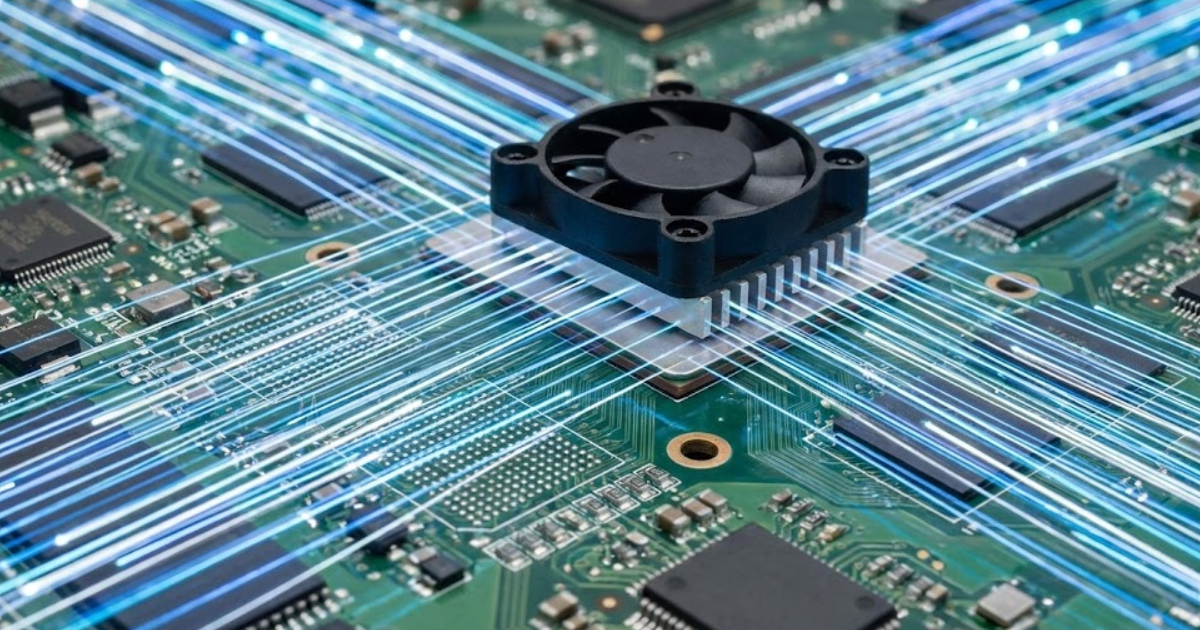
FPGA-based simulators use parallel hardware to solve circuit equations much faster than software. Such platforms can achieve sub-100 ns time steps, far finer than typical converter switching periods. In one demonstration, an FPGA system computed each simulation step in about 100 ns – roughly 1/500 of the converter’s 50–100 μs switching period. Because the FPGA’s logic cells run computations concurrently, even complex converter topologies and control loops can be simulated at real-time pace without lag.
These speed gains translate directly into high-fidelity results. Modern FPGA implementations have achieved time steps as small as 25 ns, among the finest resolutions ever reported. With this ultra-fine time scale, even the fastest switching dynamics and transient behaviors of today’s converters are captured accurately. Engineers can include detailed circuit models (even with parasitic effects and nonlinearities) without slowing down the simulation. In practice, the FPGA-simulated converter stage behaves like real hardware, maintaining correct timing and dynamics.
Safer, faster validation accelerates innovation in power converter design
Using FPGA-based real-time simulation turns testing into a safer, faster process that fuels innovation. Removing real-time constraints allows teams to test more scenarios in less time. The virtual setup closely mimics actual hardware, making tests more reliable. These advantages give power electronics developers shorter, safer, and more efficient design cycles. Key benefits of this approach include:
- Ultra-fast iteration: FPGA simulation gives you immediate feedback. Each design change or control update can be tested immediately, so teams don’t wait hours or days for batch simulations to finish.
- Detailed fault testing: You can safely inject and test extreme faults—shorts, overloads, component failures—in a virtual environment. Because no real hardware is at risk, designers thoroughly vet failure modes and protection strategies without danger.
- Hardware-level accuracy: The FPGA simulator responds in precise sync with hardware timing, so control systems see true switching behavior. This fidelity means that passing simulations translate into confidence that the actual hardware will behave correctly.
- Cost and time savings: By finding bugs in the simulated setup, teams reduce expensive prototype builds and crash scenarios. Fewer hardware iterations and less lab time cut development costs and keep projects on schedule.
- System-level testing: FPGA platforms can simulate entire multi-stage power systems (for example, multiple converters or grid interfaces) in parallel. This holistic testing reveals integration issues that simpler tests might miss.
These benefits mean teams can push designs harder and faster without compromising safety or accuracy. Real-time FPGA simulation becomes a springboard for innovation, letting developers refine converters much faster without hardware bottlenecks.
Making FPGA-based simulation integral to power electronics development
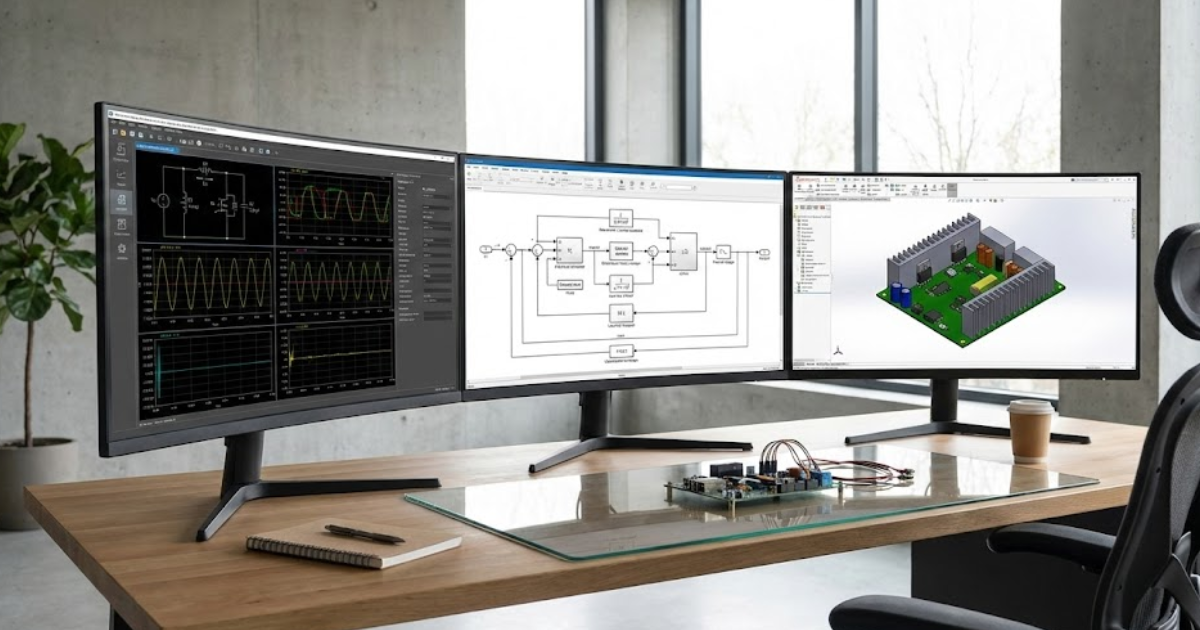
“Real-time FPGA simulation becomes a springboard for innovation, letting developers refine converters much faster without hardware bottlenecks.”
In practice, the value of FPGA-based simulation multiplies when it’s embedded in the workflow from day one. Instead of treating it as a final check, designers use the real-time platform alongside modeling and coding. The development process becomes a continuous loop: control software is tested on the simulated power stage as soon as it’s written, revealing subtle issues early. Designers build their control and converter models with simulation in mind, then deploy those models directly on the FPGA-based simulator to check behavior. For example, engineers can recompile and deploy a new control algorithm to the FPGA-based simulator in minutes. This enables fast closed-loop iteration without waiting for physical prototypes.
Over time, this approach changes the development cycle. Problems that would typically emerge only at hardware testing are flagged during design. Instead of long waits for lab time, engineers run automated real-time tests with each iteration. In short, making real-time simulation a priority means converters are validated before hardware exists, reducing late fixes and risk.
OPAL-RT’s FPGA-based real-time simulation solutions
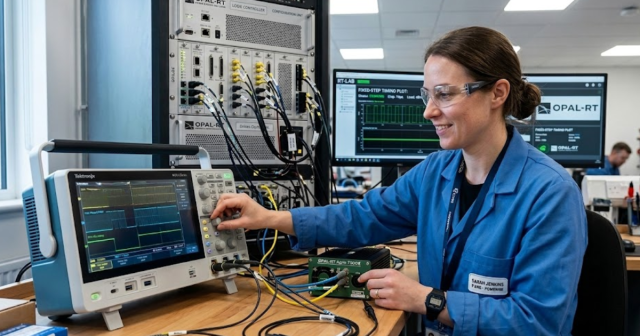
Continuing this integration, OPAL-RT’s FPGA-based platforms bring high-fidelity testing directly into the design workflow. These real-time digital simulators achieve sub-100 ns time steps, so they run detailed converter models at full hardware speed. Engineers can deploy their control algorithms and power stage models to the FPGA platform and connect real controllers in a closed loop. It behaves exactly as with actual hardware. Because the system is open and standards-based, it integrates with common modeling tools and workflows.
These tools have been adopted by leading research labs and manufacturers for precisely these advantages. OPAL-RT’s specialists work closely with customers to tailor the platform and guide simulation-based workflows. This makes real-time testing a routine part of every project. This matches the belief that simulation isn’t an afterthought but a fundamental part of design. With these solutions, design teams turn FPGA-based simulation into a daily practice, so they can confidently stress-test and refine converter designs.
Real-time solutions across every sector
Explore how OPAL-RT is transforming the world’s most advanced sectors.
Industry applications, Simulation
03 / 31 / 2026
Managing high-frequency switching in real-time EMT simulation
Precision in testing complex power systems is essential to avoid failures, accelerate innovation, and integrate new technologies safely.
Simulation
03 / 30 / 2026
Understanding timestep requirements for modern power converters
Practical criteria for selecting EMT and real time simulation timesteps for power converters, covering switching resolution, control and PWM timing alignment, multirate approaches, and verification checks.
Industry applications, Simulation, Energy
03 / 29 / 2026
Validating data center energy management systems using real-time HIL
This piece explains how AI workload variability affects data centre power stability and how closed-loop HIL testing helps validate EMS control behaviour under site and grid stress.
EXata CPS has been specifically designed for real-time performance to allow studies of cyberattacks on power systems through the Communication Network layer of any size and connecting to any number of equipment for HIL and PHIL simulations. This is a discrete event simulation toolkit that considers all the inherent physics-based properties that will affect how the network (either wired or wireless) behaves.