
Key Takeaways
- Women leaders in power systems matter most when their visibility is tied to technical authority on grid planning, resilience, and security.
- Strong support for women in energy careers comes from public speaking roles, programme leadership, and recognised ownership of hard engineering topics.
- The most useful role models show how collaboration, utility practice, renewable integration, simulation, and cyber work fit inside one engineering discipline.
Visible women leading technical grid work give more engineers a clear path into power systems.
That visibility matters because women still hold only 16% of jobs in the traditional energy sector, which leaves too few examples of technical authority in public view. These six speakers stand out for a practical reason: each one is linked to a problem power engineers must solve now, from renewable integration to cyber resilience. You’re not looking at symbolic representation here. You’re looking at people whose work helps define what strong engineering leadership looks like.
6 IEEE PES Women in Power speakers reflect grid priorities

These six speakers matter because their panel roles line up with the work power teams already face every day. Their topics point to the same pressure points you see across utilities, labs, and universities. Collaboration, renewable integration, simulation, utility operations, and cyber resilience sit close to the centre of power engineering practice. That makes their visibility practical and important.
The Montréal programme makes that pattern clear. One panel centres on sustainable development and collaboration, while another focuses on grid resiliency and real-time simulation. That pairing shows how technical progress and professional support have to move in step. A speaker line-up like this gives students, early-career engineers, and hiring leaders a better picture of what women in energy careers actually look like when the work gets specific. It also helps employers and organisers see where technical leadership is already being exercised in public. That matters when conference line-ups, committee roles, and mentoring choices shape who gets recognised.
| Speaker and focus | What readers should notice |
|---|---|
| Uzma Siddiqi builds access to technical participation | Her role shows that career support works best when women are visible in organising, speaking, and technical community leadership. |
| Lise Reinhardt Laforce connects sustainability with coordination | Her presence points to a leadership style that turns broad energy goals into aligned action across teams and institutions. |
| Farah Sheriff keeps renewable integration tied to planning | She represents the work of fitting new renewable resources into systems that still need stability, timing, and operational clarity. |
| Diane Desjardins brings simulation into resilience work | Her focus makes testing and validation visible as a direct part of grid engineering during design review and system validation. |
| Nasim Rashidirad adds utility operating judgement | She shows why resilience depends on engineers who understand how systems behave under normal and stressed conditions. |
| Deepa Kundur puts cyber resilience inside power engineering | Her work makes it clear that secure grid design belongs within core engineering practice and leadership development. |
Uzma Siddiqi builds space for women in power systems
Uzma Siddiqi’s value to women in power systems comes from making participation visible, credible, and easier to picture. Her leadership role signals that support for women in energy careers works best when it is attached to technical communities. Many engineers don’t leave the field over technical difficulty. They leave when they can’t see a route into influence.
A conference session is a good example of how that route starts to appear. When a chair introduces speakers, frames the discussion, and makes room for newer voices, you can see the mechanics of belonging at work. That kind of leadership helps a graduate student picture herself as a future panellist, reviewer, or working group lead. It also helps managers spot a simpler truth: support isn’t abstract when it changes who gets seen as technically credible.
Lise Reinhardt Laforce links sustainability to industry collaboration
Lise Reinhardt Laforce shows that sustainability in power engineering is a coordination problem as much as a technical one. The work only moves when utilities, suppliers, researchers, and public institutions can align around timing, risk, and shared goals. Her role brings that operational side of leadership into view. You can’t support women in power engineering well if you only celebrate technical depth and ignore who holds groups together.
Consider a utility planning meeting where electrification targets, public policy, and capital limits all meet the same deadline. Someone has to connect technical options with budget, regulatory timing, and partner expectations. That is the kind of leadership many engineers recognise immediately once they’ve seen it named. It reminds you that women in energy careers are shaping outcomes through executive coordination as well as design work, and both forms of authority deserve equal attention. You can see the same skill in conference panels that turn broad themes into clear next steps. That work often determines which ideas move from discussion into action.
Farah Sheriff keeps renewable integration close to grid planning
Farah Sheriff represents one of the clearest pressure points in modern power systems: adding renewable resources without losing operational discipline. Her work matters because renewable integration is not just a generation question. It is a planning, controls, and system-behaviour question. Engineers need leaders who can connect those pieces cleanly. She helps make that connection visible.
The scale of the issue is easy to see. Renewable sources accounted for 86% of new power capacity added globally in 2023, which means integration work will keep shaping utility practice and research priorities. Picture a planner assessing how a new solar project affects voltage behaviour, ramping needs, and protection settings on a feeder that already has distributed resources. That scenario needs engineers who speak across studies, operations, and policy. Farah Sheriff’s presence reinforces that women leading renewable energy innovation are already working in that exact space.
Diane Desjardins shows why simulation belongs in grid resilience
“Simulation belongs inside core power engineering because it lets teams examine timing, controls, and fault response under conditions that are risky or costly to test on live networks.”
Diane Desjardins makes a simple point visible: grid resilience depends on serious testing before systems face stress. Her panel topic matters because it places validation close to design and operations.
A protection engineer studying inverter behaviour during a disturbance needs more than a static model and a slide deck. The work gets better when teams can test controller response, communication timing, and edge cases under realistic constraints. OPAL-RT fits naturally into that discussion because real-time simulation gives engineers a practical way to validate assumptions before field deployment. When women lead those technical conversations, you’re not seeing representation added after the fact. You’re seeing authority tied directly to how resilient systems are built.
Nasim Rashidirad brings utility insight to resilient system design
Nasim Rashidirad shows why utility experience matters when resilience becomes a design requirement. Engineers working close to operating systems understand where planning models, protection philosophy, maintenance limits, and field conditions meet. That judgement is hard to replace with theory alone. Her presence helps ground women in power engineering within the practical discipline of keeping systems stable and serviceable.
A utility engineer reviewing a substation upgrade has to think beyond ideal performance. Winter peaks, restoration priorities, operator workload, and asset age all shape what a good design looks like. That is where utility insight sharpens technical work instead of narrowing it. You can also see why visible women leaders matter here. They give younger engineers proof that deep operating knowledge leads to respected technical authority, not just internal support roles.
Deepa Kundur makes cyber resilience part of power engineering
Deepa Kundur’s work matters because cyber resilience now sits inside the daily practice of power engineering. Grid reliability depends on secure communications, trustworthy control logic, and systems that keep operating under stress or intrusion. That means cyber risk belongs in design reviews, lab testing, and operator training. Her visibility helps close the false gap between power engineering and cyber expertise.
A microgrid controller that responds well to a frequency event can still create trouble if data integrity fails or commands are delayed. That is why cyber resilience must show up early, when control strategies and communications architecture are still under review. Her leadership also broadens what role models look like for students. A woman leading in this area tells you that advanced power work includes security, systems thinking, and technical judgement across several layers of the grid.
Support starts with visible technical speaking roles
“Support lasts when it shapes who gets heard, who gets trusted, and who gets asked to lead again.”
Support for women in power engineering starts working when women are trusted with visible technical authority in public forums. Speaking roles, panel leadership, and programme design shape who the field treats as credible. That has a direct effect on hiring, mentoring, and retention because engineers pay attention to who frames the hard questions. Support becomes durable when it is attached to recognised expertise.
You can make that support concrete in ways that don’t depend on slogans. Teams and event organisers should focus on actions that place women close to technical judgement, not only community outreach. That means speaker selection, session chairs, moderator choices, and project visibility all matter. A student who sees women leading discussions on simulation, renewable integration, and cyber resilience won’t need anyone to explain where she fits.
- Give women ownership of technical sessions with high attendance.
- Pair early-career speakers with visible senior engineering sponsors.
- Choose moderators who will draw out technical depth, not biography.
- Track who speaks on core grid topics across each event cycle.
- Show engineering paths that include research, utility, and lab roles.
That is why programmes like Women in Power matter when they are built with care. OPAL-RT appears most useful here as a coordinating partner that helps put women in front of the industry on subjects that carry technical weight. That consistency turns a single appearance into a career signal that hiring leaders remember. It also shows younger engineers that visibility and technical depth can grow side by side. That pattern helps committees and managers pick future speakers with more confidence.
Real-time solutions across every sector
Explore how OPAL-RT is transforming the world’s most advanced sectors.
Automotive
10 / 21 / 2026
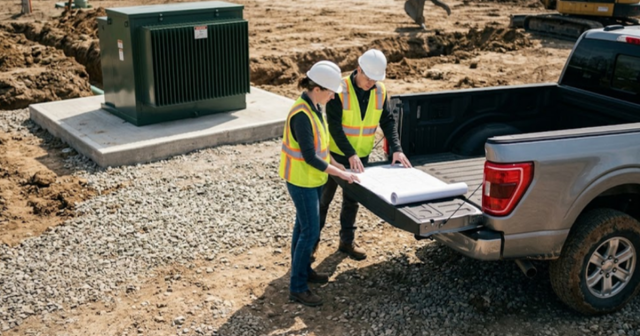
Megawatt charging system validation for heavy duty trucks
A practical look at how the megawatt charging system works, how it differs from CCS and how charger controls are tested before a truck site is energized.
Automotive
10 / 19 / 2026
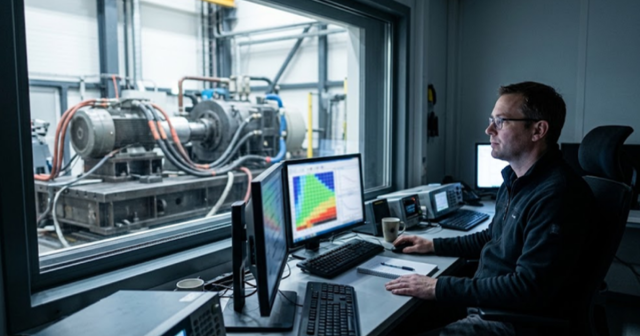
Dynamometer testing and motor emulation compared for e-drive programs
A comparison of dynamometer testing and motor emulation for e-drive programs, covering what each method proves, what it costs and how teams sequence both.

Power Electronics
10 / 17 / 2026
How wide bandgap devices push converter power density
Wide bandgap devices raise converter power density through faster switching and smaller passives, and this guide traces that chain from device physics to thermal limits to validation.