
Key takeaways
- A data center digital twin turns guesswork into tested actions that cut risk, waste, and delay.
- Energy savings accelerate when airflow, setpoints, and controls are validated virtually against your load and climate.
- Predictive maintenance reduces incidents and service disruption by using condition data to plan work at the lowest-cost window.
- Capital projects gain speed when scenarios are scored for cost, reliability, and service impact before purchase orders are signed.
- Real-time simulation connected to live data keeps teams aligned on evidence, outcomes, and clear payback.
Energy waste and unplanned outages turn data centers into cost sinks; a data center digital twin flips that equation with ROI you can measure in months. We see operators wrestling with rising energy bills, safety margins that hide unused capacity, and midnight incidents that steal cycles from strategic work. A simulation-backed digital twin gives you a live model that mirrors operations, so every adjustment can be tested virtually before it touches production. That shift from guesswork to evidence shortens time to value, aligns people on facts, and protects uptime where it matters most. The stakes are clear, as Oak Ridge National Laboratory estimates data centers already consume about 1.8% of U.S. electricity, so shaving waste directly improves financial performance.
Energy waste and unplanned outages turn data centers into cost sinks; a data center digital twin flips that equation with ROI you can measure in months.
Digital twin simulation removes guesswork from data center operations

A data center digital twin is a continuously updated virtual replica that blends physics-based and data-driven models with live telemetry from power, cooling, and IT loads. Think of it as an operations playbook that recalculates itself every few seconds, revealing what is happening now and what will happen next if you change setpoints, add racks, or switch power paths. Teams can compare options side by side, quantify risks, and stage changes with confidence. Instead of reacting after an alarm, you can forecast drift, test mitigations, and schedule the least costly path forward.
That clarity shows up on the balance sheet. A twin reduces over-provisioning because capacity constraints and thermal choke points are visible in advance. It supports better capital planning because you can quantify the impact of containment, liquid cooling pilots, uninterruptible power supply upgrades, or firmware changes before committing budget. Most importantly, it builds a single source of operational truth shared across facilities, IT, and finance teams, so decisions connect to measurable business outcomes—lower energy intensity, fewer outages, and higher utilisation.
Cutting energy waste boosts the bottom line
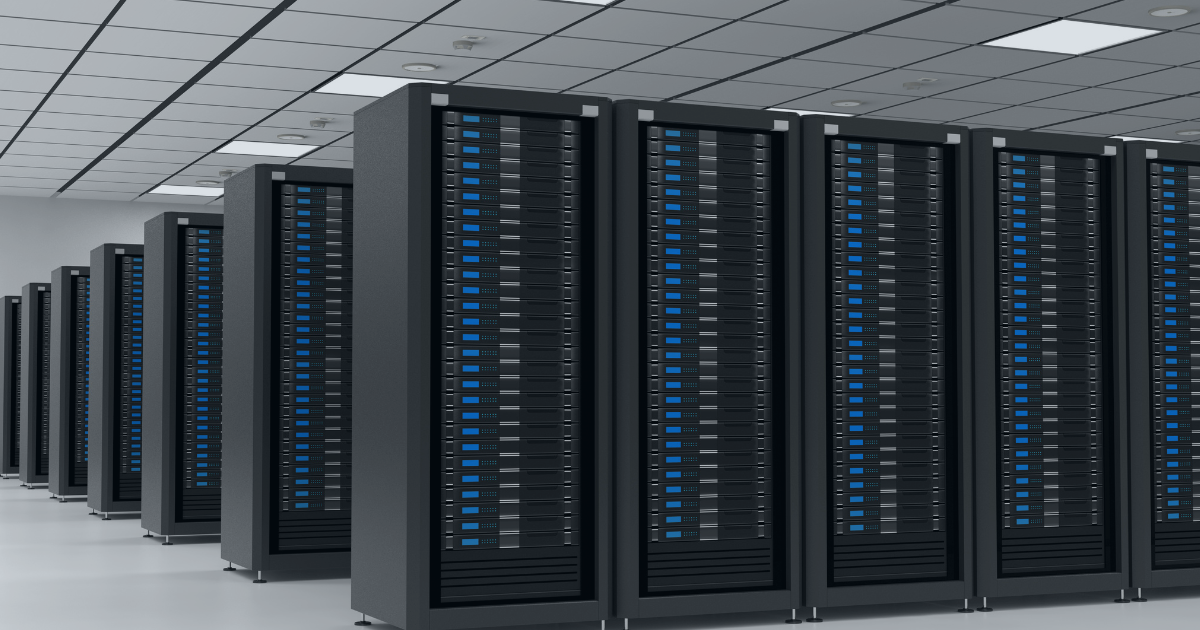
Energy is usually the largest controllable operating expense, and cooling is a prime lever. A twin lets you test airflow fixes, sequencing strategies, or alternative cooling technologies against your exact load profile and weather patterns, not someone else’s averages. Lawrence Berkeley National Laboratory reports that economizers can deliver an average 20% reduction in cooling energy when compared with designs that do not use economization, which underscores how configuration choices translate into real savings. A virtual model helps you verify which economizer mode, filtration plan, and humidity range your facility can support without risk.
- Hot and cold aisle containment: simulate temperature gradients, then target the gap that yields the best kilowatt drop for the least retrofit time.
- Supply air temperature resets: confirm how far you can raise supply temperatures while meeting equipment limits and service-level objectives.
- Variable speed everywhere: test fan and pump curves to validate where variable frequency drives return the fastest payback.
- Economizer strategies: compare water-side versus air-side economization hours across seasons, then validate filtration and corrosion risk.
- Liquid cooling pilots: estimate rack density gains, model coolant loop controls, and forecast the impact on power usage effectiveness.
- IT load awareness: connect scheduling and workload placement to thermal maps, so low-cost megawatts align with batch windows.
Energy savings compound when you stack improvements that have already been validated virtually. A digital twin guides sequencing, helps you avoid rebound effects, and shows the combined impact on power usage effectiveness and utility bills. That turns “try-and-see” into a targeted plan your finance partners can support.
Predictive maintenance prevents costly downtime
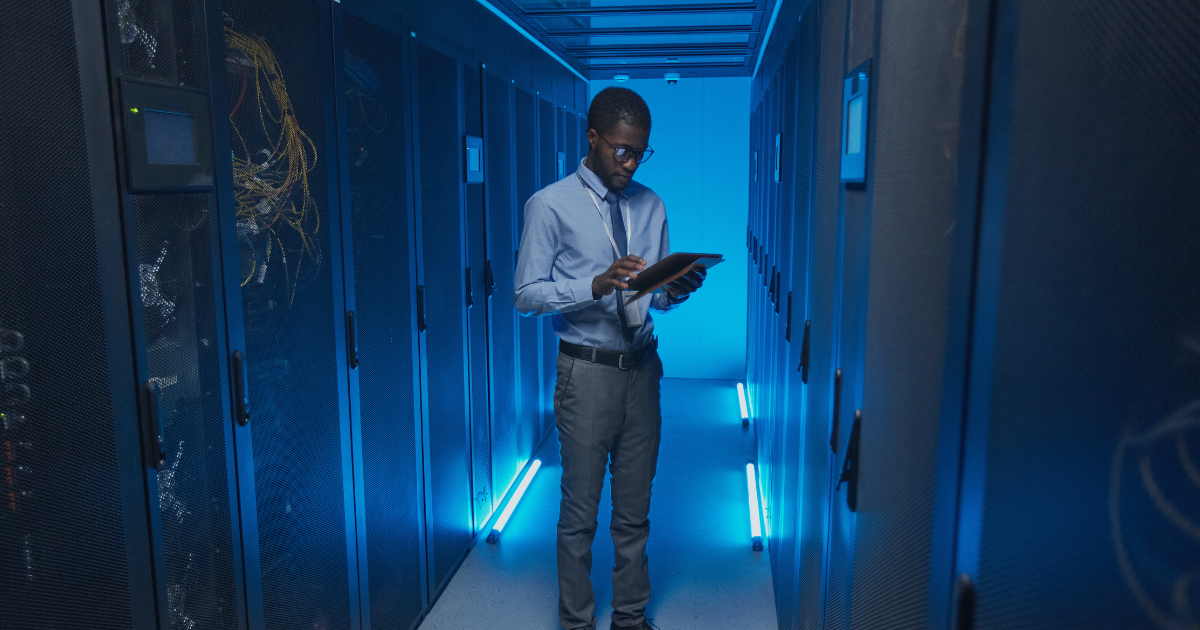
Unexpected failures tend to cost more than planned service, not only for parts and labour, but also for lost revenue, missed commitments, and warranty risk. A twin strengthens reliability by using live condition indicators—vibration, temperature, harmonics, and switching behaviour—to anticipate failures and plan interventions at the lowest-cost window. The goal is simple: move from firefighting to forecasted maintenance windows that never disturb service.
Evidence from the U.S. Department of Energy’s Federal Energy Management Program shows why this pays off. Documented results for mature predictive maintenance programmes include a 35% to 45% reduction in downtime, a 25% to 30% drop in maintenance costs, and a 70% to 75% elimination of breakdowns versus reactive approaches. Those gains translate directly to fewer incidents and slimmer sparing requirements. With a twin, you can see the effect of maintenance timing on capacity, test failure contingencies against your power distribution model, and schedule work when risk and cost are lowest.
Validate decisions before committing budget

Capital projects succeed when engineering and finance share the same evidence. A twin provides that evidence by running “what if” studies before you sign a purchase order. You can assess containment retrofits against liquid cooling, compare new chiller plants against a controls upgrade, or evaluate battery augmentation against changes in redundancy policy. Each option gets a forecast of energy, reliability, and service impact under realistic workloads and weather.
Consider cooling strategy shifts. Oak Ridge National Laboratory has reported that moving from cold-water to warm-water cooling at a leading facility was projected to lower cooling costs by more than half, saving nearly one million dollars per year. That is the sort of decision you want to validate for your site with a digital twin, because building geometry, rack density, and climate will shape your payback. The twin quantifies outcomes up front—capital, operating expense, schedule risk, and commissioning effort—so your board sees a clear return, not a best-case story.
A twin reduces over-provisioning because capacity constraints and thermal choke points are visible in advance.
How OPAL-RT helps you turn validated decisions into ROI
Building on those common questions, the path forward is to turn answers into an execution plan that reduces risk and pays back quickly. We focus on simulation-backed twins that run fast enough to test operations at the cadence your site needs, and open enough to connect with existing tools. The right approach unites facilities, IT, and finance around a shared model that reports on risk, cost, and service in one place. That is how you get measurable outcomes across energy, reliability, and capacity planning without adding complexity.
Our view is simple: a twin is a strategic investment when it combines high‑fidelity models with live operational data so every change is validated virtually and tied to expected returns. OPAL-RT provides real-time simulation technology and toolchains that help teams build these high‑fidelity models and keep them in step with operations. The outcome is a proactive operations asset that replaces guesswork with tested improvements, connects engineering decisions to business objectives, and makes ROI visible to everyone. That is how you move from reactive fixes to repeatable gains that compound quarter after quarter.
Common questions
Leaders often ask how a digital twin differs from point tools they already own, how it fits with existing building management systems, and how to quantify return. The short answer is that a twin does not replace your controls or analytics stack; it connects and augments them with high-fidelity models that answer “what happens if we change X.” That connection is what lets your team test changes safely and choose the option with the best business outcome. Clarity on definitions helps everyone move faster and avoid misaligned expectations.
What is a data center digital twin?
A data center digital twin is a continuously updated virtual model of your facility’s power, cooling, and IT systems that syncs with operational data. It uses physics-based and data-driven models to represent airflow, electrical behaviour, and workload heat. Teams use it to test changes, such as airflow adjustments or new power paths, and to forecast the effect on risk, cost, and service. The result is a safer, faster way to make decisions that affect uptime, efficiency, and capacity.
What does a digital twin data center mean?
The phrase digital twin data center refers to a site where the operational model is not a static drawing, but a living mirror of the facility. The twin ingests telemetry and alarms, then updates its state so operators can see how conditions are trending. That view supports proactive choices such as moving workloads, changing setpoints, or scheduling maintenance. You get the benefits of continuous commissioning without experimenting on production.
How does digital twin simulation help with data centers?
Digital twin simulation lets you trial options for cooling, power distribution, and redundancy without touching equipment. You can compare multiple scenarios, score each one on risk and return, and stage the best plan with clear steps. The model reveals interactions that point tools miss, such as how changes in fan speed impact pump energy or how workload placement shifts thermal risk. You reduce surprises because the plan has already been rehearsed under realistic conditions.
What is data center simulation?
Data center simulation is the use of computational models to study airflow, heat transfer, electrical flows, and controls under different conditions. It ranges from steady-state capacity checks to high-speed scenarios that mimic transients, such as breaker operations or chiller trips. Teams use simulation to check designs, plan retrofits, and explore failure contingencies. When paired with live data, it becomes a digital twin that tracks operations and forecasts outcomes.
How do you measure ROI for a data center digital twin?
Return comes from reduced energy, avoided downtime, and smarter capital allocation. Start with a baseline for energy intensity, incident costs, and planned projects, then use the twin to quantify savings and risk reductions for each improvement. Track realised results against forecasts to build confidence in the model and refine assumptions. Many teams find that early wins in airflow and controls fund deeper changes that deliver larger, multi-year benefits.
Clarity on these fundamentals helps teams align on scope, budget, and success criteria. When everyone understands what the model does and how results will be measured, adoption moves faster. You get fewer debates about methods, and more focus on tested plans that protect uptime and reduce cost. That is how the twin shifts your operations from reaction to intentional improvement.
Real-time solutions across every sector
Explore how OPAL-RT is transforming the world’s most advanced sectors.

Power Electronics
10 / 17 / 2026
How wide bandgap devices push converter power density
Wide bandgap devices raise converter power density through faster switching and smaller passives, and this guide traces that chain from device physics to thermal limits to validation.
Power Electronics
10 / 15 / 2026
Flying capacitor converter simulation for multilevel designs
How a flying capacitor converter balances its capacitor voltages through switching, where that balance breaks, and what a switching-accurate simulation has to capture.
Industry applications
10 / 12 / 2026
Validating eVTOL electric propulsion before the first flight article
A walk through motor, inverter and battery validation for eVTOL aircraft and the points where real-time simulation carries propulsion evidence ahead of flight test.