
Key Takeaways
- FPGA simulation matters most when switching detail, controller timing, and repeatable closed loop tests shape the answer you need.
- Accuracy comes from the full timing chain, so latency budgets, model partitioning, and interface design deserve as much attention as solver speed.
- Open toolchains and hybrid CPU FPGA setups keep converter test programmes useful as scope grows from a single stage to a larger system.
FPGA-based real-time simulation cuts converter test cycles while improving switching accuracy.
Power electronics testing now carries more scope and more risk because converters sit in vehicles, chargers, drives, storage systems, and grid assets. That shift makes timing errors expensive and slow bench iteration hard to justify. Global renewable capacity additions reached almost 510 GW in 2023, nearly 50% higher than 2022, which points to a much larger installed base of converter heavy systems that must be validated with tighter timing discipline. FPGA simulation matters most when you need switching detail, closed-loop interaction, and repeatable timing in the same test setup.
When FPGA-based simulation earns its place in power electronics
FPGA-based simulation earns its place when electrical events happen faster than a CPU model can resolve them and when you need closed-loop contact with controller hardware. Power converter switching, protection logic, and sensor timing fit that case. Costly bench failures also fit that case. You’ll get the biggest return where time resolution directly shapes controller behaviour.
A traction inverter is a clear example. Gate pulses, dead time, and current feedback all interact within microseconds, so a slower plant model hides faults that appear on hardware. A grid tied converter shows the same pattern when phase lock, current control, and fault ride through logic must respond without jitter. Global electric car sales exceeded 17 million in 2024, which shows how much validation pressure now sits on inverter and charger programmes.
You do not need FPGA simulation for every study. Average value models still work for early sizing, thermal trends, or slow supervisory logic. The turning point comes when switching detail starts to alter your conclusions. That is where FPGA-based power electronics testing stops being a luxury and becomes basic lab discipline.
Real-time FPGA models capture converter switching within each timestep
Real-time FPGA models improve switching fidelity because they update at fixed submicrosecond steps and keep that timing stable over long runs. PWM edges land where the controller expects them. Dead time appears in the correct interval. Current ripple and protection windows stay consistent from test to test.
A buck converter makes the benefit easy to see. When the duty cycle changes near a current limit threshold, the inductor current waveform shifts within a few switching periods, and the controller reacts to those small timing differences. A coarse solver smooths that behaviour and can hide false trips or missed trips. An FPGA keeps the switching sequence discrete, so the control code sees the same sequence every run.
This matters because converter bugs are often timing bugs first and math bugs second. You’re not only checking steady state voltage. You’re checking whether the controller samples at the wrong instant, whether blanking time masks a spike, and whether a protection latch fires one cycle late. Those test questions need deterministic switching detail and will not yield clear answers from averaged approximations.
Closed-loop execution shortens converter control validation cycles
Closed-loop execution shortens validation cycles because the controller interacts with a live plant model in the same timing frame used during hardware tests. Software changes show their effect immediately. Fault cases can be repeated exactly. You can move from code edit to observed plant response without rebuilding a power stage.
Consider a current controller that behaves well under nominal load yet becomes unstable during a DC bus sag. A real-time FPGA setup lets you inject the sag, hold sensor timing constant, and observe the gate response on the next cycle. The same setup also lets you repeat the event after a tuning change and compare traces without wondering if the bench conditions shifted. That repeatability saves days across a tuning campaign.
Speed comes from fewer physical rebuilds and fewer ambiguous results. Engineers don’t waste time asking if a capacitor warmed up, a probe moved, or a load bank drifted. Closed-loop testing keeps the plant behaviour repeatable while the controller code changes. That is how FPGA simulation accelerates power electronics testing in a way a desktop solver simply can’t match.
Accuracy depends on latency limits across the full test chain
Accuracy depends on the whole loop because the FPGA is only one part of the timing path. Signal conversion, I/O transport, controller execution, and actuator update each add delay. One weak link will distort timing. You’ll only trust the result when the latency budget is defined from sensor input to gate command output.
A hardware-in-the-loop setup for a three-phase inverter shows the issue quickly. The plant model can run at a very fine step, yet extra delay in analogue input conditioning or digital output mapping still shifts current regulation and fault response. A 2-microsecond control delay can be acceptable for one converter and completely wrong for another. The acceptable limit depends on switching frequency, sampling method, and protection thresholds.
Latency budgeting needs plain numbers backed by measurement. Measure the controller cycle, I/O delay, transport time, and model execution time as separate pieces. Then compare the total against the switching period and the protection windows you care about.
“Accuracy is set by the slowest part of the closed loop.”
Fixed step partitioning decides what belongs on FPGA fabric

Fixed step partitioning works when the fastest electrical behaviour stays on FPGA fabric and slower calculations stay where larger solvers make sense. That split keeps timing strict without wasting resources. Power stages, modulation, and fast protection often belong on the FPGA. Thermal, supervisory, and long horizon control layers usually do not.
A battery inverter programme shows this split well. The semiconductor bridge, carrier comparison, and overcurrent protection should sit on the FPGA because they react at the switching timescale. State of charge estimation, operator commands, and long period energy management can sit elsewhere without hurting fidelity. When teams place everything on one side, they either oversimplify fast behaviour or overload the fine step model.
Good partitioning starts with a question you can verify in the lab. If the answer depends on switching edge timing, put that path on FPGA fabric. If the answer depends on slower energy flow or longer control intervals, keep it outside the fine step loop. That discipline will keep your FPGA simulation focused and stable.
Hybrid CPU FPGA setups fit mixed fidelity power stages
Hybrid CPU FPGA setups fit mixed fidelity power stages because most programmes contain a small set of timing critical elements and a larger set of slower subsystems. You don’t need identical fidelity everywhere. You need the right fidelity in the right place. Hybrid execution keeps cost, model effort, and timing discipline in balance.
An electric drive bench is a common case. The inverter switching bridge belongs on FPGA fabric, while the mechanical load, battery pack, and thermal model can stay on CPU solvers with larger steps. A grid storage setup follows the same pattern when breaker logic, converter switching, and selected protections need strict timing, yet network level power flow does not. Teams using OPAL-RT often structure programmes this way because the split keeps fast converter paths precise while larger system context remains practical.
| Model focus | Best execution choice | Main reason |
|---|---|---|
| The switching bridge updates every carrier cycle. | FPGA fabric is the better fit. | Strict timing preserves PWM edges and protection windows. |
| The gate and fault logic reacts within microseconds. | FPGA fabric should hold that path. | Extra delay here changes controller response and trip timing. |
| The thermal model moves over milliseconds or seconds. | CPU execution is usually enough. | The slower state changes do not need fine electrical timesteps. |
| The battery or source model sets broader system context. | A CPU solver often works best. | You keep range and flexibility without loading the fine step loop. |
| The supervisory control coordinates operating modes. | CPU execution usually makes more sense. | Those functions care more about logic range than edge timing. |
Test intent makes that choice easier to review. Hybrid setups work best when interfaces are treated as engineering boundaries with defined ownership and timing. Sample rates, scaling, and data ownership should be fixed early. If you leave those details loose, the CPU and FPGA halves will disagree in subtle ways. If you define them early, you’ll get a model that stays useful as tests expand.
Common FPGA simulation errors start with model simplification choices
Common FPGA simulation errors start with simplification choices because every shortcut removes a physical effect, a timing path, or a nonlinearity. Some cuts are harmless. Some will erase the very failure you’re trying to test. You need simplification rules that match the question on the bench.
A frequent mistake appears when a team uses an averaged converter model to test gate timing, dead time compensation, or desaturation logic. The model runs cleanly, yet the clean response is the problem because the removed switching detail carried the fault signature. Another mistake shows up when sensor delay is ignored, which makes a controller look more stable than it will be on hardware. The fastest way to miss a bug is to simplify the path that creates it.
- Removing switching ripple from a model used for current loop tuning hides phase margin loss.
- Ignoring dead time skews voltage estimation and distorts low-speed control checks.
- Treating I/O delay as zero makes protection logic appear faster than it is.
- Using ideal switches masks recovery effects that can trip control code.
- Skipping saturation limits produces controller behaviour that hardware will never match.
You can keep models lean without making them blind. Match each simplification to a stated test objective, then review the removed effects before signoff. That review should happen every time the test intent shifts from nominal operation to fault handling or protection checks. If the objective changes, the model should change too.
Open toolchains matter when test programs need room to grow
“Open toolchains matter because power electronics test programs rarely stay small for long.”
A single converter model turns into a full drive, a charger rack, or a multi-converter system with external controllers and lab I/O. Closed toolchains slow that growth. Open ones let you keep proven models while extending the test scope with less rework.
A team might start with a motor inverter controller and later add battery emulation, grid interaction, or supervisory software from another group. That shift creates pressure on model exchange, scripting, automation, and I/O integration. If the simulation stack resists those additions, engineers end up rewriting models instead of testing control logic. Open integration protects the work you’ve already done and keeps the timing discipline that made the original setup valuable.
The lasting lesson is simple. FPGA simulation pays off when you use it with timing discipline, clear partitioning, and a toolchain that accepts growth without forcing a reset of your models or workflows. That is why teams working with OPAL-RT tend to treat openness as part of accuracy and as a practical software choice. The better outcome comes from a lab process you can repeat, trust, and extend.
Real-time solutions across every sector
Explore how OPAL-RT is transforming the world’s most advanced sectors.

Power Electronics
09 / 30 / 2026
FPGA simulation for power electronics and motor drives
A technical comparison of CPU and FPGA solver architectures for power electronics and motor drive simulation, covering the timestep each reaches and how to split a model between them.
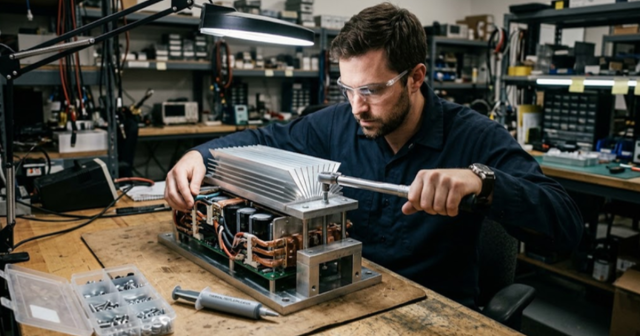
Power Electronics
09 / 29 / 2026
How to model and control a T-type three level inverter
An engineering overview of the T-type three level inverter leg, covering how it reaches three voltage levels, where device stress lands, and how neutral point balancing and modulation shape control.
Simulation
09 / 28 / 2026
How CHIL signal-level testing validates embedded controllers
A practical look at signal level controller hardware in the loop testing, covering I/O ranges, sensor emulation, latency and the setup checks that make embedded controller results trustworthy.