
Key Takeaways
- Model-based design works best when models stay executable across design, code generation, and HIL testing instead of stopping at concept work.
- Timing budgets, interface contracts, and requirement traceability matter more than model detail when you are preparing for reliable bench execution.
- Traditional automotive development pushes integration risk late, while disciplined model partitioning and traceable validation keep failures visible earlier.
Model-based design cuts validation risk when your simulation model becomes the same asset you execute in HIL.
Teams lose time when models stay trapped in early design work and never mature into repeatable test assets. Road crashes caused 20,400 fatalities across the European Union in 2023, which keeps validation discipline tied to public safety rather than process preference. You’ll need one workflow that keeps timing, interfaces, and requirement evidence visible before code reaches a bench.
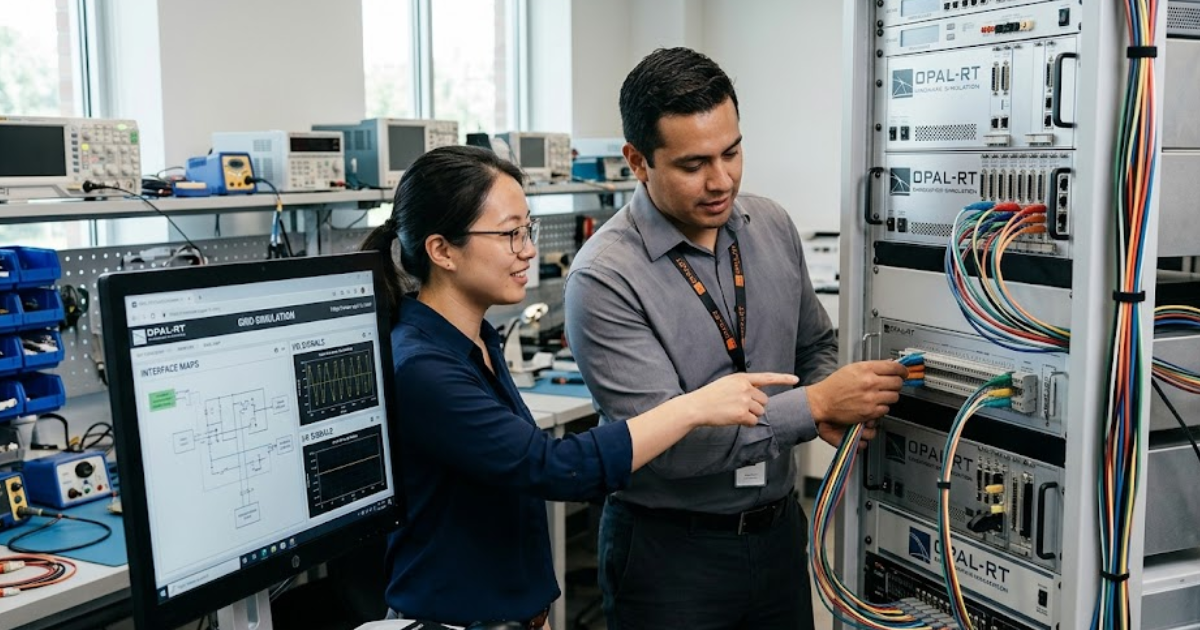
Model-based design turns simulation models into executable test assets
Model-based design for simulation means your plant and control models become executable test assets that stay useful from early design through HIL validation. The value comes from reuse with discipline. You will catch interface and timing faults sooner because the same behaviour gets exercised at each stage.
A motor control team gives this shape quickly. The controller model starts as a control concept, then runs against a plant model for closed-loop tuning, then feeds code generation, and later runs with fault injection on a HIL rack. You’re no longer redrawing intent at each phase. You are refining one executable description of behaviour.
That shift matters because every handoff adds interpretation error. If the current limiter, sensor scaling, and state machine timing already exist in the model, you will see mismatches before hardware arrives. You will also write sharper test cases because the model already exposes normal and abnormal operating states instead of leaving them buried in separate documents.
The V model links control design to validation evidence
The V model in automotive work matters because it ties each design choice to a matching validation activity. Model-based design fits this structure when every requirement, model element, and test case stays connected. That link turns validation from a late checkpoint into a chain of evidence you can inspect.
A battery management requirement offers a clear case. A temperature derating rule starts on the left side of the V as a system need, then appears as logic in the controller model, then returns on the right side as MIL, SIL, and HIL tests with defined pass limits. Validation engineers aren’t guessing what a test proves because the path stays visible.
“Model-based design for simulation means your plant and control models become executable test assets that stay useful from early design through HIL validation.”
| Development checkpoint | What you confirm before moving on | What tends to fail later if you skip it |
|---|---|---|
| System requirement review | You confirm the expected behaviour, limits, and fault conditions in plain engineering terms. | Test teams inherit vague acceptance criteria and argue about intent during bench work. |
| Plant and controller model alignment | You confirm that inputs, outputs, units, and states match the required closed loop scenario. | Bench failures appear as interface defects that look like control defects. |
| Code generation readiness | You confirm that sample times, solver choices, and data types reflect the target constraints. | Generated code passes review but misses timing once it runs on hardware. |
| HIL test definition | You confirm that each test traces back to a requirement with measurable pass limits. | Coverage looks high on paper while important failure modes stay untested. |
| Result review and signoff | You confirm that failed cases feed model updates and requirement updates through one record. | Teams close issues locally and lose the evidence needed for release confidence. |
The V model doesn’t fix weak modelling habits on its own. It becomes useful when your models are specific enough to support proof during design review. That is why validation engineers care about traceability as much as controller engineers care about control performance.
Start with closed-loop use cases before model refinement
Closed-loop use cases should come before model refinement because they tell you which behaviours must run correctly under timing pressure. A detailed model without a test intent will waste effort. You will spend weeks polishing dynamics that never affect the validation question you actually need answered.
An electric power steering program shows the sequence well. Start with parking assist, lane keep correction, torque overlay, and sensor fault recovery. Those use cases define torque bandwidth, steering rack dynamics, and failure injections that the model must support. The plant only needs enough detail to expose the controller behaviour under those conditions.
That approach keeps the model useful for HIL testing. If the next bench target is fault recovery within 20 milliseconds, you refine the parts that affect recovery timing and leave secondary detail for later. You are setting scope from the closed-loop job to be done, which keeps execution cost under control and makes validation evidence easier to trust.
HIL workflows start with timing budgets instead of block diagrams
HIL workflows should start with timing budgets because real-time execution fails on latency long before it fails on visual model structure. Your block diagram can look clean and still miss deadlines. Timing budgets force you to assign sample times, I/O delays, and computational limits before the model reaches the target.
A traction inverter bench makes the issue obvious. The control loop runs at 50 microseconds, the plant step at 1 microsecond, and the I/O update at another fixed interval. If signal conditioning, communication, and logging consume too much of that budget, you can’t trust the test result even if the control logic is correct.
That’s why strong HIL teams budget timing like a hardware resource. You will partition tasks earlier, reduce unnecessary logging, and separate slow supervisory logic from fast loops. When you leave those choices until late integration, overruns look random and debugging turns into a long search across tools, hardware, and model structure.
Simulink models need explicit interfaces before real-time deployment
Simulink models deploy cleanly to real-time targets when interfaces are explicit, fixed, and testable before execution starts. Interface discipline matters more than model size. If your I/O, units, startup states, and fault flags are ambiguous, the model will compile yet still fail the first useful HIL session.
A brake controller is a common example. The logic will look sound on a desktop run, but deployment breaks when wheel speed scaling differs from the I/O map or when the startup state assumes a sensor value that never exists on the bench. Teams using OPAL-RT usually solve this earlier by making the interface contract visible before the model gets compiled for the target.
- Fix sample times for every input and output path.
- Lock units, scaling, and data types before code generation.
- Define startup states for plant and controller blocks.
- Expose fault flags as testable inputs instead of hidden logic.
- Document I/O mapping where model names match bench signals.
That checklist is small, but it removes many late surprises. You are preparing the model to behave like a lab asset rather than a desktop simulation. Once those interfaces are stable, deployment becomes a validation step instead of a debugging marathon.
“The main difference between model-based design and traditional document-led development is when integration risk becomes visible.”
Model-based systems engineering keeps requirements traceable during testing
Model-based systems engineering keeps testing honest because it preserves the link between requirement intent, model behaviour, and test evidence. Validation engineers need that chain to explain why a result passed or failed. Without it, test execution produces logs, but it will not produce defensible proof.
A charging control requirement makes the point. The requirement states a current limit during thermal derating, the system model links that limit to signals and modes, and the HIL test checks both the limit value and the transition time after a temperature fault. When the test fails, you can trace the issue to logic, calibration, or requirement wording instead of debating ownership.
This is where model-based design and model-based systems engineering meet. One gives you executable behaviour. The other keeps that behaviour tied to system intent. If you are a validation engineer, that pairing will save review time because every failed test already has context, assumptions, and acceptance bounds attached to it.
Traditional development hides integration risk until late automotive testing
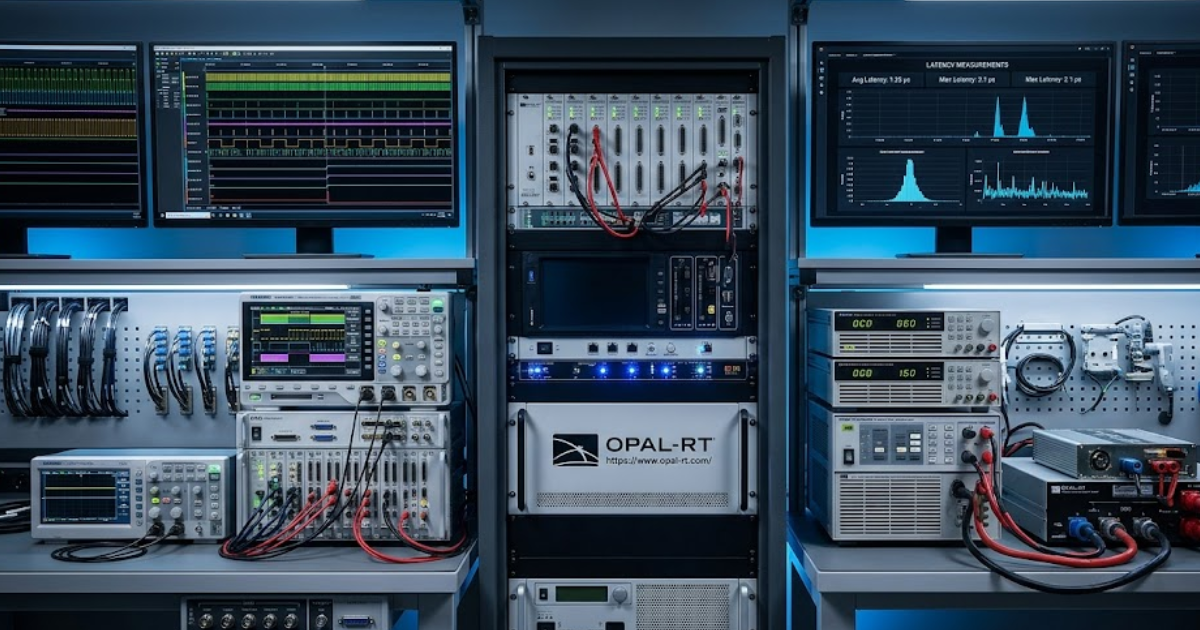
The main difference between model-based design and traditional document-led development is when integration risk becomes visible. Model-based design exposes behaviour, timing, and interface issues while you still can rerun the model quickly. Traditional flows push many of those discoveries into bench and vehicle testing, where each fix costs more time.
A conventional handoff shows the pattern. Requirements sit in one tool, control logic lives in another, and the HIL team receives compiled software with limited visibility into assumptions. When a torque arbitration fault appears, the team must inspect documents, code, and bench configuration at the same time. Poor software quality cost the United States at least $2.41 trillion in 2022, which shows how expensive late defect discovery becomes when integration feedback arrives after design handoff.
You are not choosing between documentation and models. You still need both. The better choice is to make the model carry executable intent, then use documentation to frame requirements, assumptions, and release evidence. That sequence keeps automotive testing focused on proof instead of reconstruction.
Poor model partitioning breaks determinism on real-time targets
Poor model partitioning breaks determinism because fast and slow tasks interfere once they share the wrong execution path. Real-time targets need clean separation between plant detail, control loops, communications, and logging. If that separation is weak, overruns will hide inside normal test activity and your results won’t stay trustworthy.
A power electronics bench often exposes this first. The switching model belongs on a fast execution path, while supervisory control, user interaction, and file logging belong on slower paths. If you place all of them in one partition, a harmless logging change can shift latency enough to corrupt a current loop result. Engineers then chase a control issue that is really a scheduling issue.
Good model-based design ends with disciplined partitioning because determinism is part of validation evidence, not a technical footnote. Teams that keep that discipline usually get more value from OPAL-RT because the simulator is fed a model structure that respects timing, interfaces, and test intent from the start. That is what gives you confidence in the bench result after the debug work is done.
Real-time solutions across every sector
Explore how OPAL-RT is transforming the world’s most advanced sectors.

Microgrid
05 / 20 / 2026
Grid forming vs grid following inverters and why the difference matters for protection engineers
This guide explains how grid forming and grid following inverters differ in source behaviour, fault response, frequency support, testing, and relay coordination.

Power Systems
05 / 19 / 2026
IEC 61850 GOOSE messaging and how to test it for substation automation projects
A practical guide to IEC 61850 GOOSE messaging, latency targets, interoperability checks, test tools, and the separate role of DNP3 in substation automation.

Microgrid, Energy
05 / 18 / 2026
Battery energy storage system testing that grid operators trust
This piece explains how utilities validate a battery energy storage system through acceptance criteria, closed-loop testing, commissioning, protection checks, duration tests, and traceable evidence.