
Key Takeaways
- Rapid control prototyping pays off when timing, I/O, and limits are treated as requirements, not setup details.
- RCP should start only after the plant model can run fixed-step and represent the constraints that shape closed-loop behaviour.
- Traceable tests and repeatable logs turn RCP results into a reliable gate for HIL and production work.
It’s tempting to think rapid control prototyping is just a faster way to run a controller on hardware, but the real payoff comes from catching control and integration issues while you can still change them quickly. Software defects remain expensive because teams validate too late or validate the wrong thing, and software errors are estimated to cost the U.S. economy $59.5 billion each year. RCP puts your controller in a closed loop early, so you can prove behaviour under real-time constraints before a full HIL rig or production ECU work begins.
“Rapid control prototyping works when you treat timing and interfaces as first-class requirements.”
You’ll get the best results when you treat RCP as a disciplined test method with clear acceptance criteria, not a demo step. That means defining what “good” looks like for sampling, I/O scaling, actuator limits, and failure handling, then instrumenting the run so results are repeatable. If you do that, RCP becomes a reliable gate that tells you when to move forward and when to fix the model, the controller, or the integration details.
Define rapid control prototyping and the problems it solves
Rapid control prototyping, or RCP, is a method where you run a controller on a real-time target while the plant is simulated, so you can test the complete closed loop with realistic timing. It solves the gap between desktop simulation and hardware tests. It also exposes issues that only show up with I/O, quantization, delays, and scheduling.
RCP is most valuable when your risk is not “does the control law work on paper,” but “does it still work once signals and clocks get involved.” Many control failures come from details that basic simulation hides, such as rate transitions, sensor filtering, saturation, and fault flags that arrive late. A successful RCP run makes those details visible, then ties them to specific controller states and signals so you can act on them.
RCP will not replace careful modelling or good requirements. It will also not give reliable answers if you treat the plant model as a placeholder with no limits, noise, or delay. The goal is practical truth: if the controller survives realistic timing and I/O constraints while meeting performance targets, you’ve reduced risk before higher-cost testing phases.
Choose RCP when models are ready for closed-loop tests
Choose RCP once you can close the loop with a plant model that matches the control bandwidth and has defensible limits. You’re looking for a model that is stable, causal, and suitable for fixed-step execution. RCP fits best when you need to validate timing, scaling, and logic paths before investing in full hardware setups.
A simple readiness check is to ask if the model can answer the same questions your controller will face on hardware. That includes actuator saturation, sensor ranges, sample rate effects, and the fault cases you expect to handle. If the plant model is still being rewritten daily or requires variable-step solvers to remain stable, the RCP target will become a debugging trap instead of a validation step.
RCP is also a strong choice when you need to validate integration across teams. Controls, software, and test groups can agree on I/O definitions and timing budgets early, while changes are still cheap. If the goal is only to tune gains in a clean simulation, desktop runs will be faster and clearer.
Set up the RCP workflow from model to target hardware
An RCP workflow starts with a fixed-step controller model, compiles it for a real-time target, then connects physical or emulated I/O so the loop behaves like hardware. You then run repeatable tests with logging tied to the same time base as the controller. The output should be traceable back to model versions and parameter sets.
A concrete scenario helps set expectations: you’re tuning a motor drive speed controller while the plant model simulates inverter limits, current sensing noise, and load steps, and the controller runs at a 10 kHz loop on a target with analog inputs and PWM outputs. The point is not “does it spin,” but “does it hold stability and meet transient targets once sampling, scaling, and saturation act like hardware.” That single setup will quickly reveal integrator windup, filter phase lag, and rate mismatch mistakes.
Keep the workflow tight and repeatable. Freeze interfaces early, use clear naming for signals, and treat parameter management like source code. If your team can’t reproduce yesterday’s run, you’re not prototyping anymore, you’re guessing.
Select hardware, I/O, and timing to meet latency targets
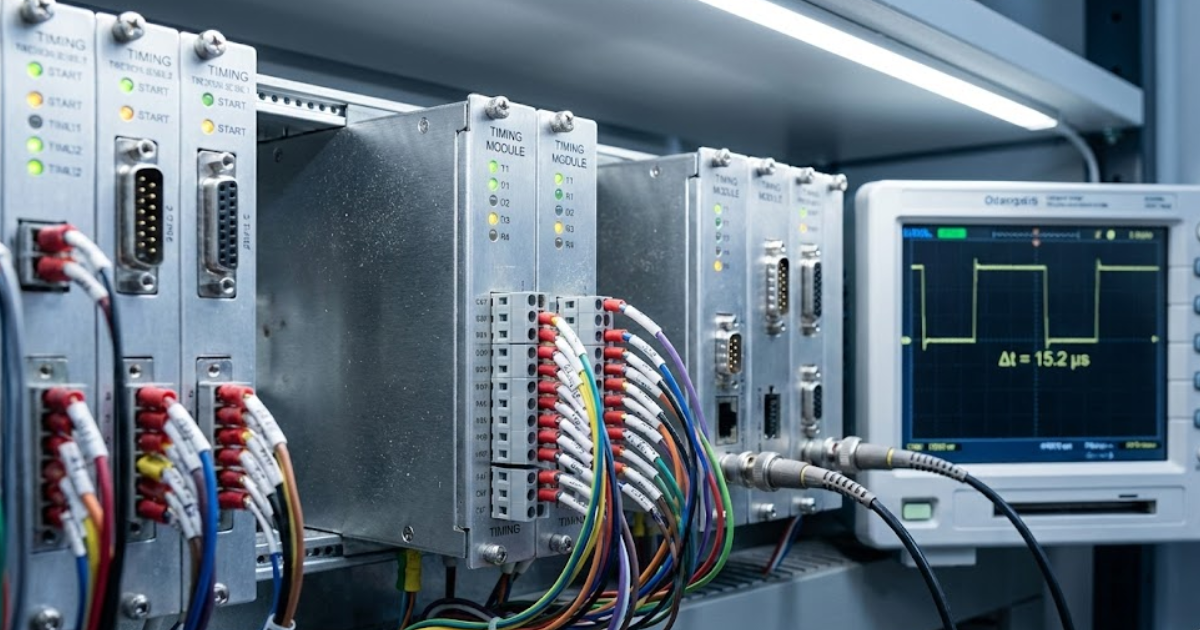
Hardware choice in RCP is about determinism first, then I/O fidelity, then compute headroom. You need a target that hits the controller sample time with margin, and I/O that matches voltage levels, resolution, and update rates. Latency is a system property, so measure end-to-end delay from input sampling to output update.
Start with the timing budget and work backward. Your controller period, ADC timing, computation time, and output update schedule must fit inside the step size without overruns. I/O selection also shapes behaviour: low-resolution sensors add quantization, and filtering adds delay, which changes stability margins. If you can’t defend your timing and scaling, any “good” plot you see is fragile.
Use this checkpoint table as a quick sanity check before long test sessions.
| What you must verify before trusting results | What a passing state looks like in plain terms |
|---|---|
| The controller step size is fixed and enforced. | The model runs with a fixed-step solver and never switches rates. |
| Worst-case execution time fits with margin. | The target finishes computation comfortably before the next tick. |
| Input and output paths have known delays. | You can state the end-to-end latency in milliseconds and verify it. |
| I/O scaling and units are consistent end to end. | A 1 V change at an input means the same physical value everywhere. |
| Limits and saturations match the intended hardware. | Actuator clamps and sensor ranges behave like the target system. |
| Logging is time-aligned with controller execution. | Traces line up to control ticks so debugging is not guesswork. |
Verify and tune controllers using instrumentation and automated tests
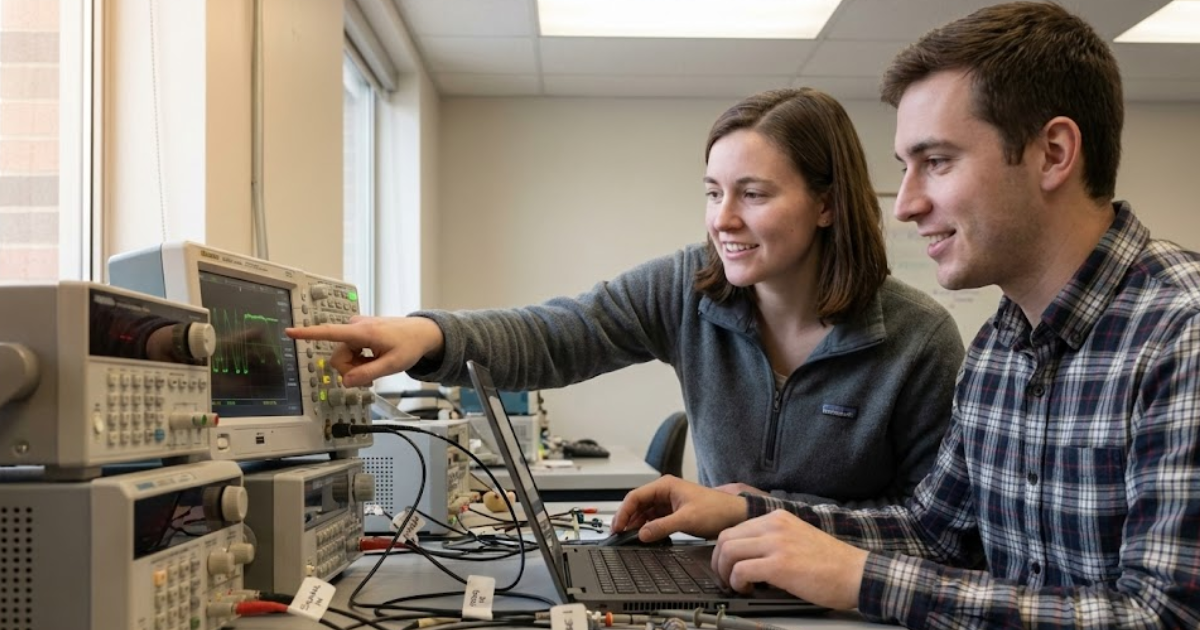
Verification in RCP means proving the controller does what you expect under realistic timing, signal conditioning, and fault handling, then tuning based on evidence you can reproduce. Instrumentation matters as much as the control law. If you can’t observe internal states, timing, and limits, tuning will become trial and error.
Build tests that stress what breaks controllers: saturations, rate changes, sensor dropouts, and limit cycles. Log key internal states, not just outputs, and track timing metrics alongside control signals so performance and determinism get evaluated as a single package. Better test infrastructure is not overhead, since about $22.2 billion of the annual software error cost could be saved with improved testing practices and tools.
Keep tuning disciplined. Change one parameter set at a time, keep the same test conditions, and compare against acceptance criteria that include stability margins and saturation behaviour, not just a “looks good” transient. When the controller passes, capture the evidence package so the next phase inherits results instead of repeating work.
Move from RCP to HIL and production code with traceability
Moving from RCP to HIL and then production code works best when you keep interfaces stable and keep a clean chain from requirements to model to test results. RCP proves your controller can run under real-time constraints. HIL then adds more detailed plant behaviour and hardware interfaces, while production work focuses on deployment constraints and safety cases.
Traceability is the difference between a prototype you trust and a prototype you redo. Lock down signal definitions, scaling, and sample rates, and keep versioned records of model files, controller parameters, and test scripts. If you use auto-generated code, treat the code generator settings as part of the configuration, because small differences in types and scheduling can shift behaviour.
Platforms such as OPAL-RT are often used at this handoff point because teams want continuity in real-time execution and I/O mapping while expanding from controller-on-target tests to fuller closed-loop setups. The key is not the logo on the rack, but the discipline around reproducible runs, shared interfaces, and timing proof that survives each step toward deployment.
Avoid common RCP failure modes in models and integration
“Most RCP failures come from treating the test as “model runs on hardware” instead of “closed-loop system runs in real time.””
The fix is usually boring and specific: rates, scaling, limits, and observability. If you tighten those basics, RCP becomes a trustworthy filter that prevents weak designs from moving forward.
These five failure modes show up often because they feel minor until the loop closes. Catch them early, and you’ll spend your time improving control behaviour instead of chasing mismatched plots and phantom instability.
- Letting rate transitions and sample times drift across subsystems until timing becomes non-deterministic.
- Skipping unit checks so scaling errors look like control instability.
- Using a plant model without saturation and delay, then being surprised when hardware clamps signals.
- Logging only top-level signals, which blocks root-cause analysis of state machines and limiters.
- Declaring success after a single clean run instead of repeating tests with the same setup.
The strongest teams treat RCP as an engineering contract with themselves: if timing, I/O, and tests are disciplined, results will generalize to later stages. If those basics are loose, the prototype will mislead you, no matter how good the controller looks. OPAL-RT teams tend to see the best outcomes when RCP is run as a repeatable lab practice with clear pass criteria and traceable configurations, not as a one-off milestone.
Real-time solutions across every sector
Explore how OPAL-RT is transforming the world’s most advanced sectors.

Power Electronics
09 / 30 / 2026
FPGA simulation for power electronics and motor drives
A technical comparison of CPU and FPGA solver architectures for power electronics and motor drive simulation, covering the timestep each reaches and how to split a model between them.
Power Electronics
09 / 29 / 2026
How to model and control a T-type three level inverter
An engineering overview of the T-type three level inverter leg, covering how it reaches three voltage levels, where device stress lands, and how neutral point balancing and modulation shape control.
Simulation
09 / 28 / 2026
How CHIL signal-level testing validates embedded controllers
A practical look at signal level controller hardware in the loop testing, covering I/O ranges, sensor emulation, latency and the setup checks that make embedded controller results trustworthy.