Reducing late stage electrification rework with closed loop testing
Power Electronics
01 / 11 / 2026

Key Takeaways
- Closed loop testing cuts late stage rework by proving interfaces under timing, limits, and faults.
- HIL electrification finds I/O, latency, and recovery issues before high energy testing starts.
- A small set of strict scenarios run often beats a large set of loose checks run rarely.
Late-stage electrification rework shrinks when closed-loop tests catch integration faults early. You stop finding wiring, timing, and control gaps during final builds and start catching them while software is still cheap to adjust. Closed-loop testing forces your controller to react to realistic electrical and mechanical behaviour.
Testing gaps carry a real price tag, even before you touch high-voltage hardware. Poor software testing infrastructure costs the U.S. economy up to US$59.5 billion each year. Electrification programmes stack software, power electronics, machines, and safety logic, so gaps show up as missed milestones and last-minute change orders. Closed-loop testing cuts risk by exposing integration behaviour earlier.
“Cost escalation is measurable and brutal.”
Late-stage electrification rework signals upstream validation gaps
Late-stage rework means your earlier checks validated parts, not interfaces. Requirements looked fine, component tests passed, and then the system misbehaved when signals met power. That pattern points to missing closed-loop evidence for timing, limits, and fault reactions. Fixing it late forces changes across code, wiring, calibration, and test plans.
A traction inverter controller can look stable on a bench supply, then chatter when the battery management system (BMS) starts limiting current. Torque requests arrive over CAN, voltage sags under a transient, and the controller hits an untested corner case. The team edits current limits, rewrites fault latches, and adds a sensor input that the original pinout cannot support.
Cost escalation is measurable and brutal. A NASA analysis found that if fixing a requirements error during the requirements phase costs 1 unit, fixing it during integration and test costs 21 to 78 units, and fixing it during operations ranges from 29 to more than 1500 units. Earlier interface tests keep fixes local, instead of spreading changes across the full system.
Closed-loop testing shortens feedback cycles between control and hardware
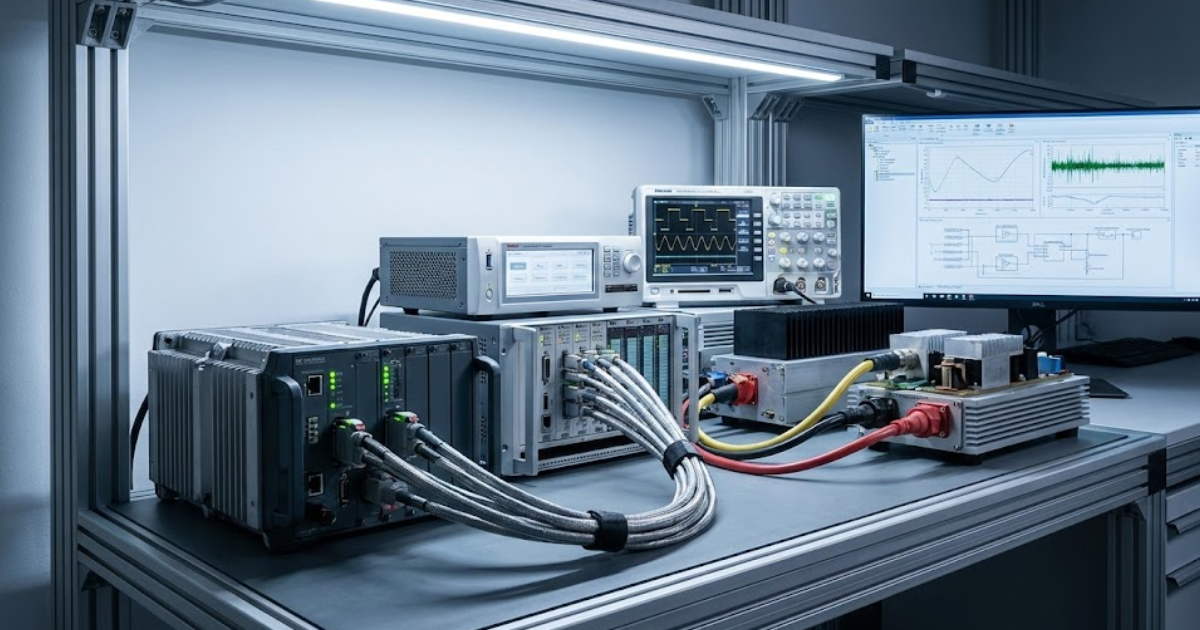
Closed-loop testing links your control code to a live plant response, so every change proves itself against physics and timing. You stop waiting for the next prototype build to see what broke. Short loops turn calibration and fault tuning into daily work. Rework drops because mistakes surface when they are introduced.
A regenerative braking update can pass unit tests, yet push pack voltage high during a cold soak and trigger a protection trip. A closed-loop setup runs the control logic against a battery and inverter model that reacts to voltage rise, temperature limits, and contactor state. The same scenario then shows the fix when the controller clamps current before the trip occurs.
Short loops only matter if the checks are strict. Pass and fail criteria should tie to signals you can measure, such as DC bus voltage, phase current limits, and fault state transitions. Automation matters, since a test that takes an hour will not run on every commit.
HIL electrification exposes integration faults before physical builds
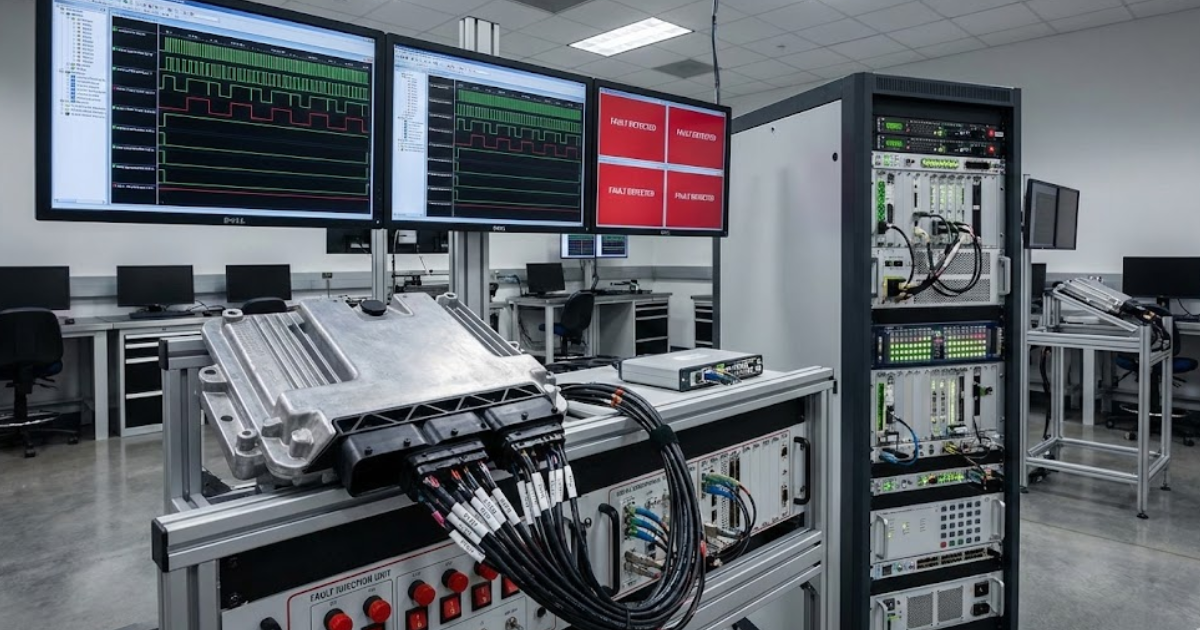
Hardware in the loop (HIL) puts your real controller hardware against a simulated plant, so you test I/O, timing, and fault paths without a high-energy bench. The controller reads sensors, writes PWM and contactor commands, and the simulator reacts in real time. Timing jitter, scaling errors, and missing debounce logic show up quickly. Desktop simulation often misses these details.
Small mapping errors can block an entire build. A digital input has the wrong pull configuration, so a fault line reads healthy when it is not, and the controller refuses to arm. Resolver or encoder polarity can also be wrong, where angle goes the wrong way and the speed loop becomes unstable before any rotor ever spins. HIL catches these faults with the exact I/O path you plan to ship.
HIL works best when you test limits and recovery, not just nominal control. Your plant model should include sensor noise, quantization, and actuator saturation, since those conditions trigger edge cases. Fault injection needs intent, with cases such as a stuck current sensor, a contactor weld, or a DC link undervoltage. That effort pays off when hardware and control logic meet earlier, not at the final build.
Program risk rises when testing fidelity lags system complexity
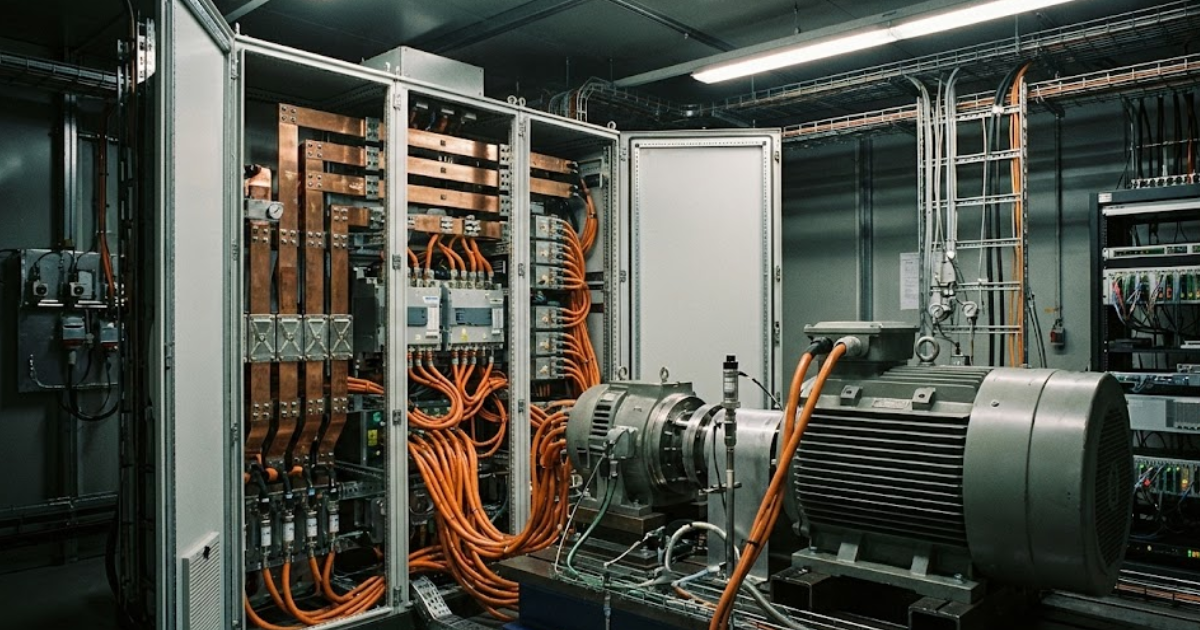
Electrification program risk rises when tests are easier than the system you plan to ship. Low-fidelity models hide coupling, saturation, and time delays, so controllers look stable until the first high-power run. Closed-loop testing reduces rework only when the feedback matches the physics.
Multiphase machines make this gap obvious. A 12-phase permanent magnet synchronous machine (PMSM) used in an aerospace actuator or a high-power traction unit has coupling and fault modes that a simple average model will miss. A controller can pass speed and torque tests, then fail to hold current balance when one phase set is disabled. That shows up as torque ripple, thermal stress, and protection trips, plus a cycle of code and calibration edits.
Higher fidelity needs more compute and more discipline. Tight step times and stable switching behaviour often call for FPGA-based plant simulation, plus clear limits on what you approximate. OPAL-RT is one example of a platform teams use to run detailed motor drive plants in real time, which keeps control hardware honest about timing and I/O. Better fidelity shifts problems earlier, when you still have room to act.
Where closed-loop testing delivers the highest rework reduction
The biggest rework cuts come from interfaces that cross teams and carry safety impact. Focus on places where control, power, and diagnostics meet, since those seams break late. Closed-loop testing earns its time during transitions, not steady state. Start with paths that can stop a build or trigger a protection shutdown.
System arming is a strong starting point. Contactor sequencing, precharge timing, and voltage plausibility checks look simple until wiring and sensor scaling meet dynamics. The torque request path from vehicle controller to inverter is another strong case, since rate limits, traction control, and fault derates collide. Closed-loop scenarios replay these transitions with the same timing every run, so fixes stick.
| Closed-loop test focus area | What it prevents late in the programme |
| High voltage precharge and contactor sequencing | Trips and state machine edits that block builds |
| Torque request to current control under limits | Oscillations and repeated calibration resets |
| Derate logic tied to thermal and voltage models | Protection threshold churn after missed checks |
| Fault handling and recovery across ECUs | Fault mismatches that fail system tests |
| Charging and regen transitions under pack constraints | Overvoltage and charge aborts found late |
Pick the rows that map to your largest failure costs. Five strict scenarios run daily beat fifty loose checks run monthly. Each scenario needs a trigger and a measurable expected response.
Common electrification testing shortcuts that cause late failures
Late failures rarely come from a single big mistake. Small shortcuts look reasonable when schedules are tight, then stack up until the first integrated build collapses. Closed-loop testing breaks that pattern by forcing you to face timing, limits, and faults early. Skipping those checks moves risk to the most expensive point in the programme.
Power control is a common trap. A battery model holds voltage flat, so regen looks clean, then the physical pack rises and trips on overvoltage during a downhill event. Diagnostics can be another trap, since log messages feel reassuring while the system state machine stays wrong. Each shortcut leaves a gap that shows up as late rework because the first full system run becomes the test plan.
- Open-loop simulations that skip sensor noise and actuator limits
- Manual bench tests that cannot be replayed after a code change
- Clean lab signals that hide scaling, offsets, and quantization effects
- Fault tests that cover detection but skip recovery behaviour
- Timing treated as secondary, so sampling and task load stay untested
“We see schedule confidence grow when you refuse to ship unknown behaviour, one repeatable loop at a time.”
Applying closed-loop testing across the electrification lifecycle
Closed-loop testing works when you treat it as a lifecycle practice, not a late-phase rescue. Early stages should prove control intent with simple plants, then move to HIL once hardware I/O and timing matter. Each stage keeps the same behavioural checks, so you do not rewrite tests every time hardware changes. That continuity stops rework from piling up at the end.
A practical progression starts with a motor and inverter model that runs on a desktop, then moves to the actual controller hardware connected to a real-time plant. The same scenarios run again after a wiring revision, a new sensor, or a safety update, and the expected behaviour stays constant. Late-stage effort shifts from firefighting to verification.
Disciplined closed-loop testing turns electrification program risk into checks you can run when you need them. You will still find issues, but you will find them when fixes are cheap and the cause is clear. A stable HIL setup built on OPAL-RT can help keep timing and model fidelity consistent across teams. We see schedule confidence grow when you refuse to ship unknown behaviour, one repeatable loop at a time.
Real-time solutions across every sector
Explore how OPAL-RT is transforming the world’s most advanced sectors.

Automotive
10 / 21 / 2026
Megawatt charging system validation for heavy duty trucks
A practical look at how the megawatt charging system works, how it differs from CCS and how charger controls are tested before a truck site is energized.
Automotive
10 / 19 / 2026
Dynamometer testing and motor emulation compared for e-drive programs
A comparison of dynamometer testing and motor emulation for e-drive programs, covering what each method proves, what it costs and how teams sequence both.

Power Electronics
10 / 17 / 2026
How wide bandgap devices push converter power density
Wide bandgap devices raise converter power density through faster switching and smaller passives, and this guide traces that chain from device physics to thermal limits to validation.