The role of hardware-in-the-loop testing in cybersecure energy systems
Energy, Simulation
12 / 23 / 2025

Key Takeaways
- HIL will validate cybersecurity only when tests stay closed-loop and time-accurate.
- Ranking threats by physical impact will focus security work on interfaces that change actuation and protection.
- Repeatable HIL runs will turn security updates into controlled engineering changes with clear evidence.
Hardware-in-the-loop testing will make cybersecurity validation for energy controls measurable at the device level. Reported losses exceeded $16 billion in 2024, and energy teams can’t treat that risk as a paperwork problem. Testing must prove what happens when hostile inputs reach control logic. HIL does that with closed-loop runs that link cyber events to physical response.
Energy control systems react fast and they don’t forgive bad data. A single spoofed measurement or blocked feedback signal will push a controller into a bad operating state, trip protection, or stress equipment. Offline security checks stop at packets and logs, so the physical impact stays untested. HIL puts your actual controller, relay, or gateway on the bench with a real-time plant model. You get evidence that security controls protect safety and uptime, not just networks.
Hardware-in-the-loop testing provides direct cybersecurity validation under live conditions
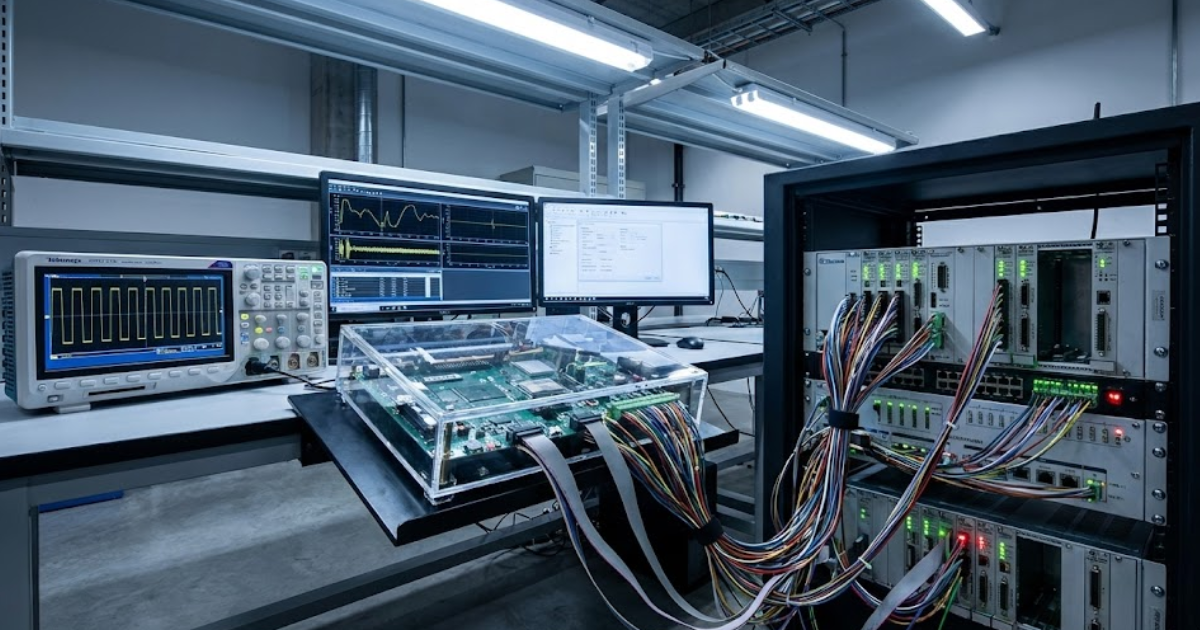
Hardware-in-the-loop testing validates cybersecurity by proving how your physical control hardware behaves under hostile inputs. The controller runs its normal code while a real-time simulator supplies plant signals. Cyber actions become altered measurements, commands, and feedback loss at the same ports your device already trusts. Results tie security claims to system behavior you can observe and repeat.
A typical setup connects a physical inverter controller to a simulated grid through analog and digital I/O. A test injects a forged voltage measurement on the same channel used during normal operation, then watches how the controller responds. Safe behavior looks like rejection, fallback limits, or a controlled stop, not silent acceptance. That single run will tell you where input checks belong and what failure mode your operators will see.
HIL testing matters because cyber defence is judged on consequences in energy systems. An alert that arrives after a bad command lands is still a failure for operations. Closed-loop runs will show when protective logic helps and when it trips too late. Teams can tune detection and safety logic as one system, not as separate checklists.
“HIL testing matters because cyber defence is judged on consequences in energy systems.”
Real-time HIL exposes timing and interface weaknesses missed by offline tests
Real-time HIL exposes cybersecurity weaknesses that only appear when timing, ordering, and interfaces are tight. Control loops assume signals arrive in a stable cadence and in the right sequence. Attackers and network faults break those assumptions through delay, replay, and message loss. Offline tests hide that risk because they can pause, reorder, or smooth timing.
Consider a protection relay that decides to trip from a steady stream of measurements. A replay attack can feed older values that look plausible while the simulated plant drifts into a bad state. The relay fails for a timing reason, not for a threshold reason, and you won’t see it in static analysis. Real-time HIL forces the relay and the plant model to stay on the same clock, so timing faults show up as wrong decisions.
Timing issues also appear at gateways where protocols, buffering, and scheduling meet. A single late message won’t break the loop. Repeated delays will trigger oscillation or nuisance trips. HIL lets you test those edges under control, then adjust design so security controls don’t create new operational failures.
Hardware-based testing clarifies which cyber risks deserve priority first
Hardware-based testing clarifies priorities by ranking threats on physical impact in your control loop. You’ll see which interfaces change power flow, open switching devices, or bypass interlocks. You’ll also see which attacks only corrupt reporting and never touch actuation. That clarity keeps security work tied to operations.
A microgrid controller can illustrate the difference in one lab run. Altering an operator display value can confuse staff while the loop stays stable. Altering the active power setpoint changes converter behavior and can trigger trips. HIL makes the contrast obvious.
- Command channels that change modes and setpoints
- Inputs used by protection and safety interlocks
- Time sync and sequencing used for coordinated actions
- Remote configuration and update access paths
- Gateways that bridge office and control networks
That list becomes a test plan and a budget filter. Each high-impact surface maps to a few repeatable attack cases and clear pass criteria. Low-impact surfaces still matter, but they don’t get first-call lab time. The result is cybersecurity validation you can finish and defend.
HIL cybersecurity testing links control behavior to attack impact
HIL cybersecurity testing links a cyber action to control behavior under stress. You watch stability, trips, and recovery, not just traffic. This separates anomalies from attacks that push operation unsafe. It gives security and controls a shared severity scale.
A test can bias a frequency measurement used for regulation. The plant shifts while the measurement stays believable, so the controller reacts wrong. Oscillation or a trip shows up fast, and you see which alarm fired first. Recovery steps become clear.
| Cyber action to emulate | Closed-loop proof needed |
| A forged sensor value hits a control input | The device rejects it or enters safe mode. |
| A valid command comes from an untrusted source | Authorization blocks it and safe state holds. |
| Feedback arrives late or out of order | Response stays bounded and protection stays stable. |
| A gateway drops critical status | Fallback logic holds power within limits. |
| A replayed measurement stream looks valid | Cross-checks flag it before actuation goes unsafe. |
Linking behavior to impact improves reviews. Security can set objectives tied to limits, and controls can turn them into interlocks. Severity debates shrink because the bench run shows the response. Evidence stays usable across releases.
Real-time simulation supports repeatable and auditable cyber defence testing
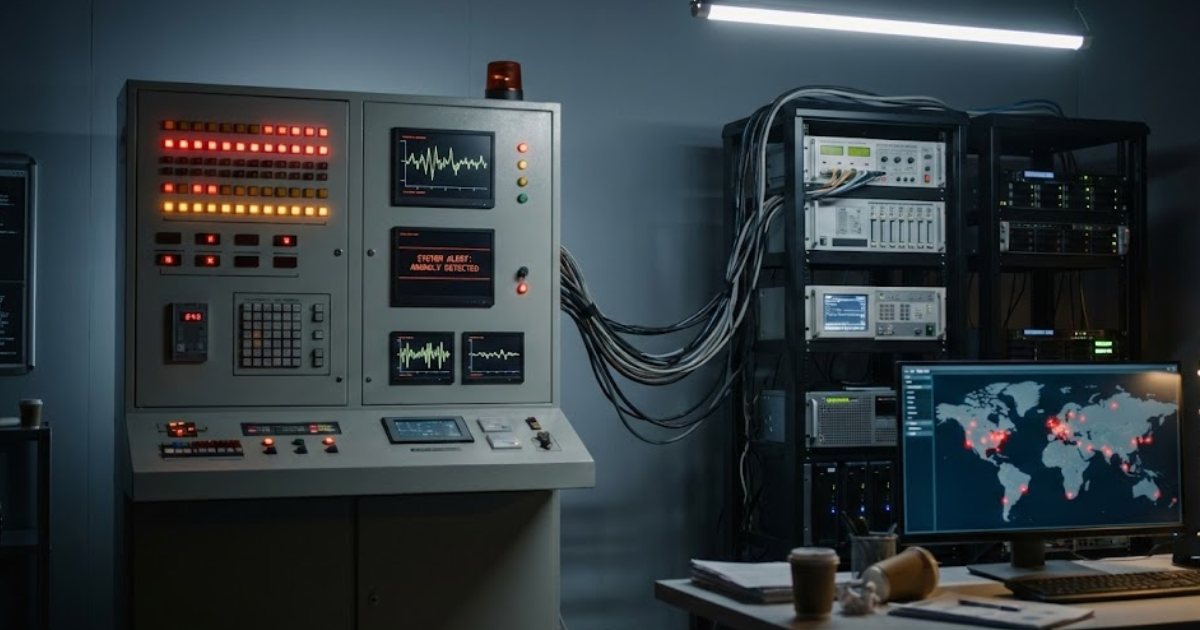
Real-time simulation supports cyber defence testing that you can repeat and audit across releases. The same plant scenario can run again after a firmware change or a security rule update. Logs from controller I/O, network traffic, and simulator states align on one time base. Regression testing becomes routine lab work, not a debate.
A team can script an intrusion sequence that pushes a configuration change to a field device, then hides the change with spoofed measurements. Running the same sequence again shows if the fix removed the risk or only changed the symptom. OPAL-RT is often used to keep the plant model deterministic while your physical hardware and security stack stay unchanged. That discipline creates evidence you can reuse during internal reviews and audits.
Pressure for that level of proof is already here. Some 64% of organizations are accounting for geopolitically motivated cyberattacks such as disruption of critical infrastructure. Auditable HIL runs will show how your defences hold when the goal is disruption, not data theft. Progress becomes measurable, not anecdotal.
Common limits reduce the value of hardware-in-the-loop cybersecurity results
HIL results lose value when the test setup does not match what runs in the field. Simplified plant models can hide unstable behavior, and idealized I/O can hide sensor faults. Weak network modeling can remove the timing stress you need to validate. A lab that overfits to one scripted attack will also miss broader weaknesses.
A frequent failure shows up when a protection function is replaced with a simple threshold block in the simulator. A replay attack looks harmless because the simulated protection never reaches the internal states the real device would hit. Another failure comes from feeding clean, noise-free measurements, so input validation looks perfect while field sensors drift and saturate. Those shortcuts create confidence that will collapse during commissioning.
Strong HIL practice treats fidelity as a requirement, not a nice extra. You’ll validate plant models against known operating behavior and include the same firmware and interfaces used in the field. You’ll also test more than one attack path so results represent control weakness, not a single script. That discipline keeps HIL results useful for design choices.
“Investment choices become tied to observed failure modes, not assumptions.”
HIL testing outcomes guide security architecture and test lab investments
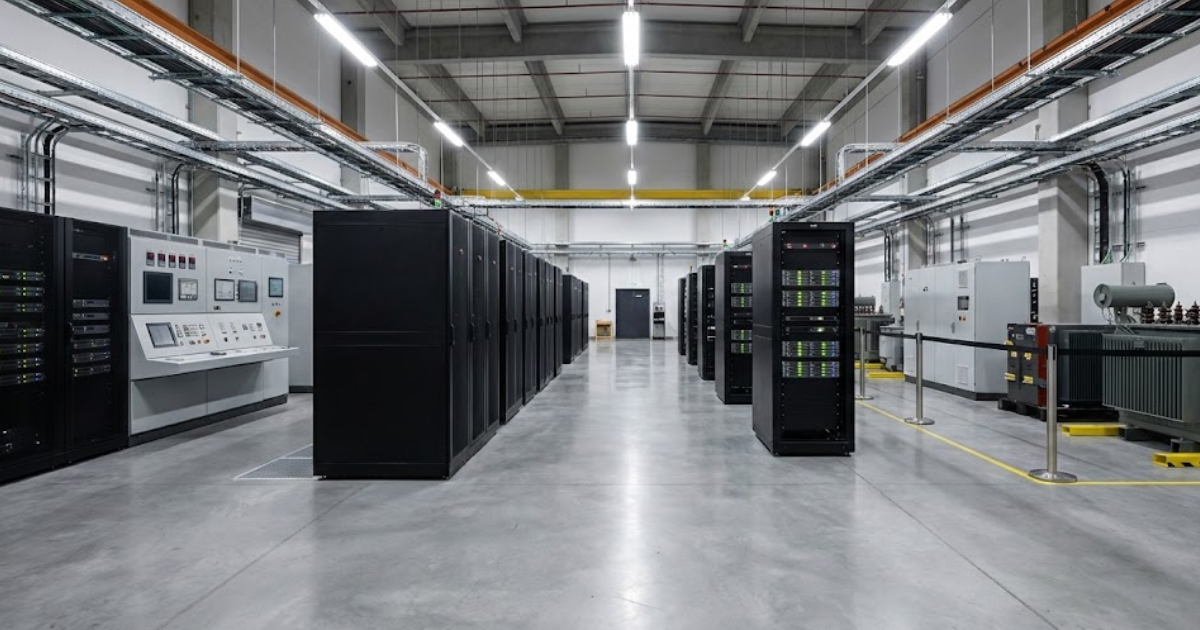
HIL outcomes guide security architecture by showing which controls will prevent unsafe behavior under attack. Bench results point to where you need plausibility checks, command authorization, and safe fallback logic. The same results show where segmentation and monitoring will matter most for operational integrity. Investment choices become tied to observed failure modes, not assumptions.
Tests will show outcomes like a spoofed measurement pushing a controller into unsafe output before any alarm triggers. That calls for redundant sensing, cross-check logic, and tighter limits inside the control device. You’ll also see remote commands reaching switching actions through overlooked service paths. That calls for hardening configuration access and adding interlocks that require local confirmation.
Closing the loop means keeping security and controls in the same validation workflow, with clear pass criteria and repeatable test cases. OPAL-RT fits naturally when you need a real-time plant model that stays consistent while the physical controller runs its normal code. Teams that treat HIL as ongoing lab discipline will ship updates with confidence because the response under hostile inputs is already proven. Teams that skip that discipline will keep guessing and reacting after incidents.
Real-time solutions across every sector
Explore how OPAL-RT is transforming the world’s most advanced sectors.

Automotive
10 / 21 / 2026
Megawatt charging system validation for heavy duty trucks
A practical look at how the megawatt charging system works, how it differs from CCS and how charger controls are tested before a truck site is energized.

Automotive
10 / 19 / 2026
Dynamometer testing and motor emulation compared for e-drive programs
A comparison of dynamometer testing and motor emulation for e-drive programs, covering what each method proves, what it costs and how teams sequence both.

Power Electronics
10 / 17 / 2026
How wide bandgap devices push converter power density
Wide bandgap devices raise converter power density through faster switching and smaller passives, and this guide traces that chain from device physics to thermal limits to validation.