Why faster than real time simulation is transforming grid planning
Microgrid, Simulation
01 / 01 / 2026

Key Takeaways
- Faster than real time simulation pays off when study throughput limits planning scope, since more runs expose sensitivities you can act on.
- Simulation acceleration improves planning accuracy through coverage of sequences and long duration checks, not through polishing a single base case.
- Faster than real time and real time simulation work best as a staged workflow with shared models, strict version control, and targeted lab validation.
Faster than real time simulation cuts planning turnaround when you need many studies, not one. It gives you runs to compare upgrades, interconnection requests, and operating limits. That speed matters because planning has to keep up with queues and filings. More cases will prevent long lived mistakes.
Study teams screen hundreds of projects, loads, and operating rules on timelines. Interconnection work and transmission plans stall when studies stack up. Nearly 2,300 GW of total generation and storage capacity was actively seeking connection to the grid at the end of 2024. Slow runs shrink scope, so planners accept extra risk.
Faster than real time simulation defined through grid planning use cases
Faster than real time simulation runs a grid model faster than the clock on your wall. It compresses minutes, hours, or days of system behavior into a shorter compute run. The goal is study throughput, not closed loop hardware timing. You use it to test many operating points and contingencies with consistent inputs.
A transmission planner can simulate a 24 hour dispatch sequence, then replay it across outage patterns. A distribution engineer can run feeder voltage checks across a year of time series quickly. A protection team can stress relay settings against many fault locations without waiting for wall clock time. Outputs stay familiar, just sooner.
Speed still has to respect physics and numerics. You will pick the right model type for the question, such as electromechanical stability for system swings or electromagnetic transients for fast inverter controls. You will also choose where to simplify, because detail always costs compute. Faster runs let you spend that compute budget on more cases instead of more assumptions.
Why grid planners need results sooner than physical time allows
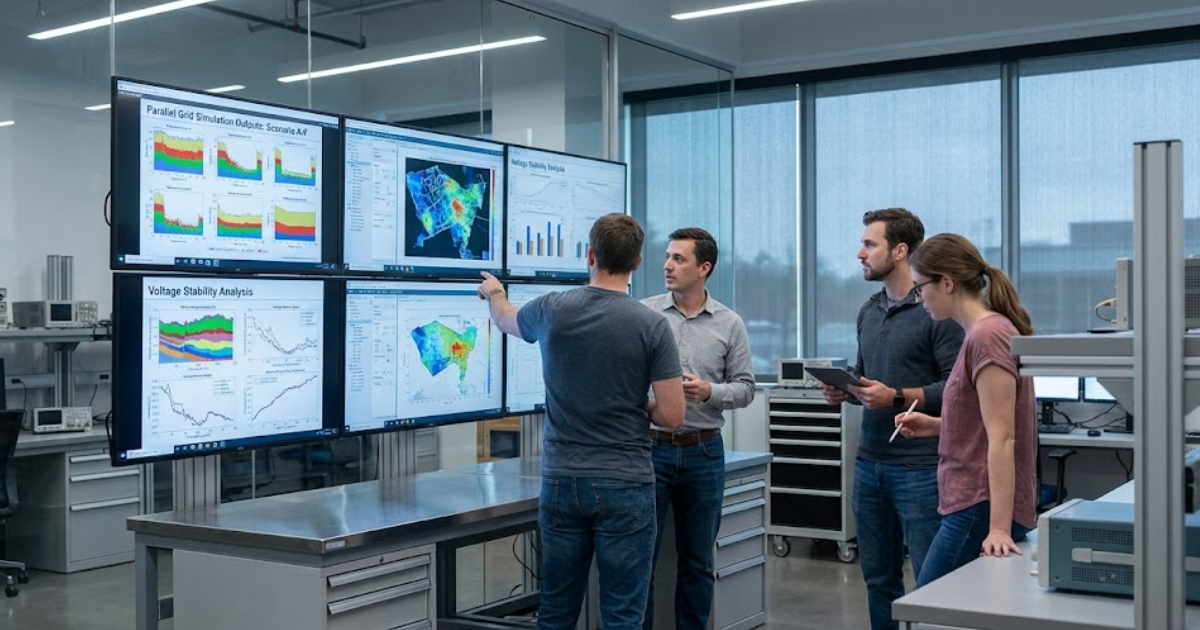
Grid assets take years to permit and build, but study cycles still run in serial loops. A 10 minute run will always take 10 minutes in real time simulation. Planning needs many runs per question, and it needs them while scope is still negotiable. Faster than real time runs remove the wall clock bottleneck so iteration stays practical.
Interconnection screening shows pain. A planner has to test multiple dispatch levels, outage lists, and control settings for inverter based resources. Slow runs force assumptions to freeze early, then stay locked even when proposals shift. Faster runs keep the model aligned with what developers and operators are proposing.
Turnaround time also shapes review quality. Fast results give engineers time to challenge odd behavior and correct inputs before reports harden. Slow results push teams toward schedule triage and weaker checks. Faster than real time simulation moves effort from waiting to reviewing.
Simulation acceleration shifts planning from single studies to scenario sweeps
Simulation acceleration turns planning into a search across conditions, not a single verdict. You stop asking if the base case is stable and start asking where stability breaks. Patterns show up across runs, so sensitivity is easier to see. A wider sweep also exposes the few inputs that control results.
A planning team assessing a new 230 kV line can run thermal checks across seasonal load shapes, generator outage patterns, and dispatch cases. Another team can screen frequency response under low inertia operating points across many fault locations, then flag cases for deeper transient study. Parallel runs on a compute cluster finish a sweep overnight instead of stretching it across weeks. The output becomes a ranked set of sensitivities you can act on.
Budget stakes make broader screening practical, not optional. Grid investment needs to nearly double by 2030 to over USD 600 billion per year. Faster than real time studies help you focus spend on upgrades that reduce congestion and risk across many conditions. Discipline still matters, so scenarios and scripts need strict version control.
Planning accuracy improves when long term risks are tested quickly
Planning accuracy improves when you test combinations that break the system, not only the average day. Many failures start as issues that line up: a corridor limit, a control setting, and a sequence of outages. Faster than real time simulation gives you runs to include those sequences. That coverage will raise plan quality more than polishing a single case.
“Simulation acceleration turns planning into a search across conditions, not a single verdict.”
A heat wave week with low wind and heavy air conditioning load stresses both thermal limits and voltage support. A planner can simulate a sequence where one line trips, another hits an overload limit, and inverter controls reduce reactive power at the wrong moment. A night time heat event stresses frequency and reserves in a different way, especially when large plants are offline. Faster runs let you test these timelines without cutting study duration.
Longer windows also reveal slower interactions. Protection and control issues can appear minutes after the first fault clears. Remedial actions can solve one contingency yet create a new constraint later in the hour. Faster than real time simulation makes long duration checks standard.
Where faster than real time simulation fits against real time simulation
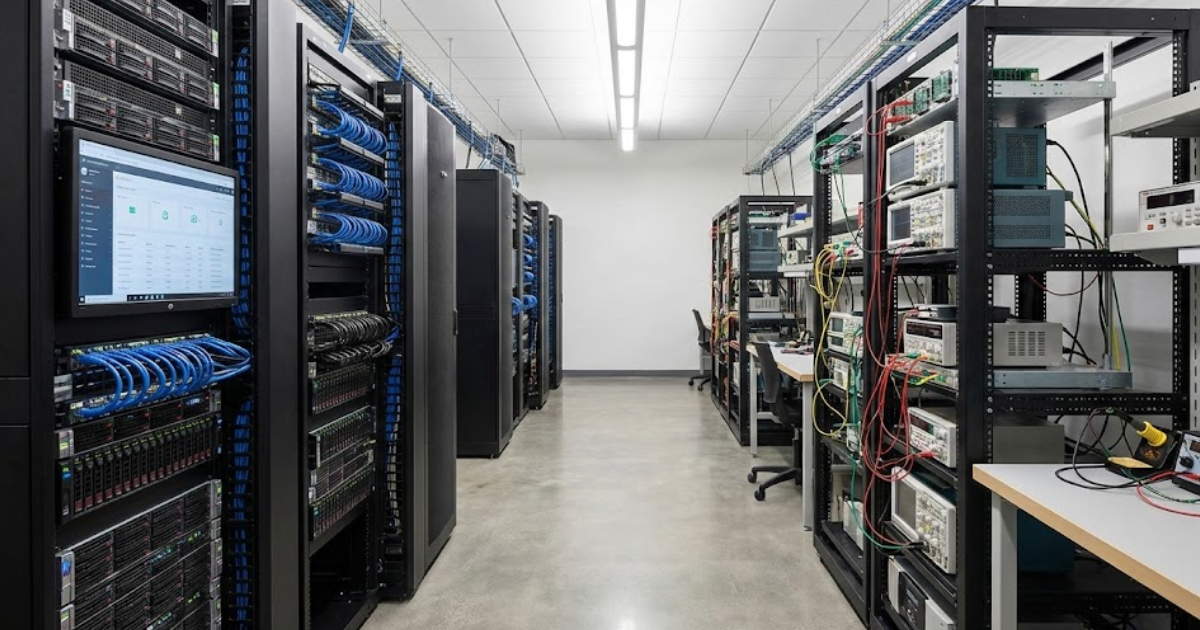
The main difference between faster than real time simulation and real time simulation is what the clock is used for. Faster than real time focuses on case throughput so you can cover many scenarios and long durations. Real time focuses on deterministic timing so hardware and controls interact repeatably. Both modes fit different stages of the same grid question.
Teams start with accelerated sweeps to find the handful of risky cases. Those cases then move into real time simulation when closed loop validation with a controller or protection device is required. Labs that use OPAL-RT for real time testing can keep network and control models aligned across both steps. Consistent limits and scripts keep the handoff clean.
| Checkpoint in your workflow | Faster than real time simulation fits when | Real time simulation fits when |
| Study time is the limiter | You will run many cases per day. | You will run one case with wall clock timing. |
| Breadth beats timing | You will compare bounds across scenarios. | You will capture timing traces for hardware. |
| Model scope is the tradeoff | You will simplify detail to widen coverage. | You will keep detail to match devices. |
| Input confidence is low | Gaps will hide in a wide sweep. | Repeatable events will expose timing gaps. |
| Next action is different | You will pick cases to stress next. | You will approve a setting change. |
Using the two modes in sequence keeps planning grounded. Faster than real time highlights risky corners and key sensitivities. Real time confirms the selected fix under tight timing. The handoff works when models and events are versioned.
Constraints that limit value without the right models and data
Acceleration will not rescue a weak model, and it will amplify a weak assumption. Stale network data will produce stale answers faster. Simplified inverter controls will miss trips and reactive power limits that matter. Faster than real time simulation only pays off when model validity keeps up with speed.
Inverter based resource studies show this risk clearly. A generic plant model can look stable across a sweep, then a small disturbance on the grid triggers logic the model never captured. A feeder model with missing regulator schedules can hide a daytime voltage problem that appears every summer. A fast sweep still helps, but only after the model is corrected and checked against measured behavior.
Guardrails keep speed useful. Clear model ownership, change control, and reference cases will catch drift over time. You also need the right granularity, since a coarse time step misses fast control interactions and a fine step limits case count. Teams that treat acceleration as a method, not a shortcut, get results they can defend.
“Faster than real time simulation is only valuable when it sharpens engineering judgment, not when it hides uncertainty.”
How utilities and operators should prioritize faster than real time studies
Faster than real time studies pay off when backlogs are large and uncertainty is wide. Parallel runs replace serial debate with evidence. That works when the question repeats across projects, inputs are scoped tightly, and outputs map to an action. Prioritization keeps speed from turning into noise.
Start with work that has clear knobs and acceptance limits. High volume interconnection screening fits because outage and dispatch sets can be standardized. Hosting capacity and voltage checks fit because limits are explicit. Frequency support screening fits when operating points are defined cleanly.
- High volume interconnection screening with standard outage and dispatch sets
- Transmission upgrade ranking across seasonal loading and outage patterns
- Hosting capacity checks for feeders with fast load and solar swings
- Frequency and voltage support screening under low inertia operating points
- Remedial action testing across minutes, not only cycles
Good execution keeps you honest over time. A small team can build the scenario library, automate collection, and force assumptions into version control. OPAL-RT fits naturally here, since planning sweeps and lab validation stay aligned without extra translation work. Faster than real time simulation is only valuable when it sharpens engineering judgment, not when it hides uncertainty.
Real-time solutions across every sector
Explore how OPAL-RT is transforming the world’s most advanced sectors.

Power Systems
10 / 24 / 2026
800 VDC power distribution for AI data centers
An explanation of how 800 VDC power distribution carries power from the grid to AI racks, covering conversion stages, DC fault protection and bus stability.

Automotive
10 / 21 / 2026
Megawatt charging system validation for heavy duty trucks
A practical look at how the megawatt charging system works, how it differs from CCS and how charger controls are tested before a truck site is energized.
Automotive
10 / 19 / 2026
Dynamometer testing and motor emulation compared for e-drive programs
A comparison of dynamometer testing and motor emulation for e-drive programs, covering what each method proves, what it costs and how teams sequence both.