Accelerating renewable integration projects with HIL and SIL simulation
Simulation
12 / 08 / 2025
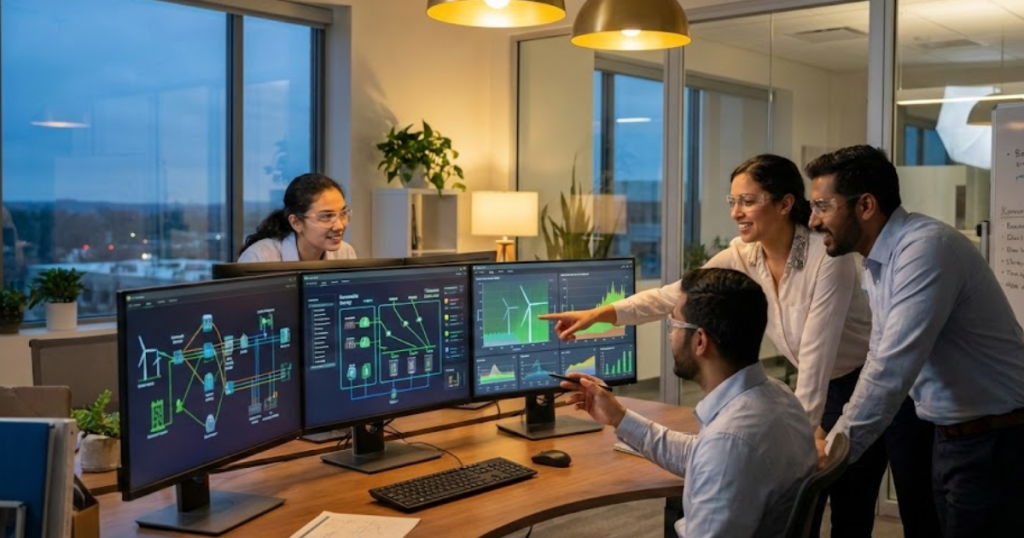
Key Takeaways
- Renewable integration projects move faster and with less risk when HIL and SIL simulation shift validation into the lab instead of relying mainly on field trials.
- Traditional testing methods struggle to cover complex interactions between solar, wind, storage and aging grid infrastructure, so a simulation-first approach closes critical gaps.
- Real-time simulation acceleration turns project validation into an iterative process where you refine control strategies, tune protection and stress test systems before deployment.
- HIL and SIL create a continuous path from control prototyping to hardware verification, which helps your team prove performance and compliance with fewer on site surprises.
- OPAL-RT positions real-time simulation as a central tool for renewable integration, helping engineers and leaders align technical work with schedule, reliability and grid modernization goals.
Renewable integration projects often stall under the weight of complexity and risk, turning ambitious plans into prolonged efforts. Engineers must bring solar, wind and storage into aging grid infrastructure without destabilizing it. The old way of validating each device and control logic – manual field tests, isolated component trials and occasional lab experiments – can’t cover every scenario. As a result, projects suffer costly delays and on-site failures, and teams struggle to meet strict reliability and compliance requirements. In fact, one recent analysis notes nearly 1,000 GW of solar and 500 GW of wind projects are stuck in waiting queues for grid connections, highlighting the gap between intent and reality.
Now, a simulation-first strategy is shifting this trajectory. By using high-fidelity real-time models and hardware-in-the-loop (HIL) and software-in-the-loop (SIL) testing, engineers can uncover problems in hours instead of weeks. Control software can be prototyped and refined quickly in SIL, and actual controllers can be stress-tested in HIL against realistic grid events. This accelerates project timelines, slashes risk of outages or equipment damage, and gives teams clear evidence their solutions will meet grid codes and performance targets. Real-world experience shows that open, high-fidelity simulation empowers engineers to push boundaries without compromising reliability.
“Now, a simulation-first strategy is shifting this trajectory.”
Traditional testing cannot keep up with renewable integration
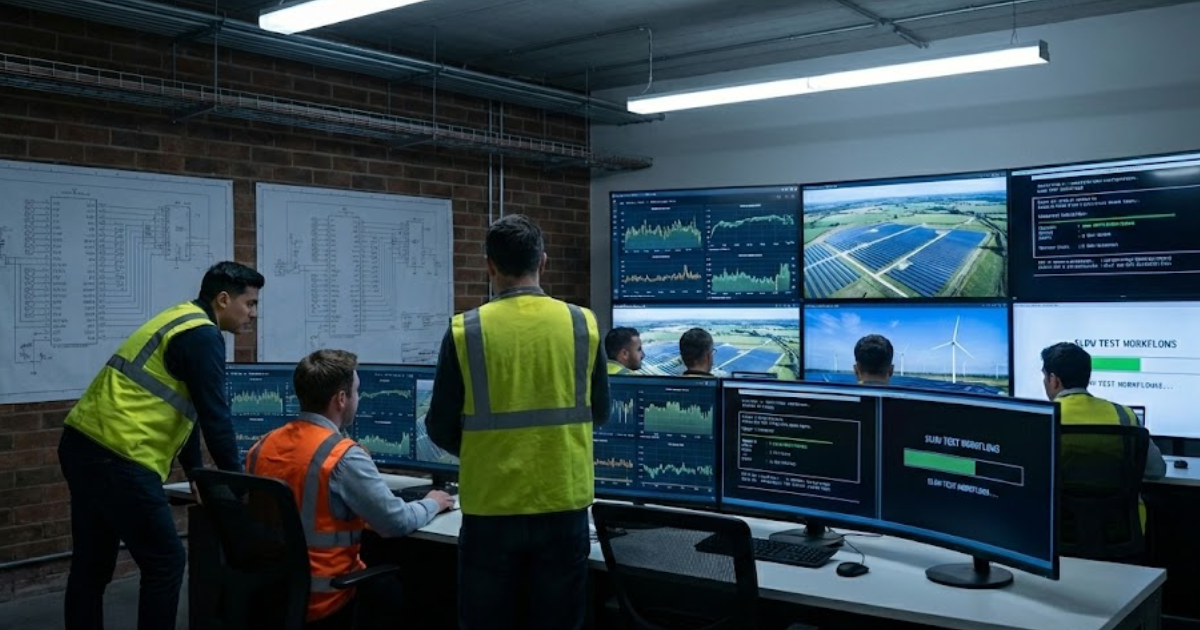
Traditional validation methods can’t keep up with today’s renewable workloads. Engineers still rely on a sequence of field trials, lab prototypes and small-scale tests to prove each component individually. These tests typically simplify the network or test one device in isolation. In practice, plugging a new inverter or controller into the grid involves interactions and edge conditions that no single test can reveal. The result is a blind spot in project development: engineers proceed with incomplete information, making integration slow and risky.
- Outdated grid assumptions: Traditional tests use static, simplified network models, but modern power systems have variable loads and volatile renewable generation that are hard to capture offline.
- Limited scenario coverage: Manual testing covers only a handful of predefined situations. Rare or extreme conditions remain unexplored until the equipment is live on the grid.
- Slow iterative cycles: Each new test or field trial requires weeks or months of scheduling. This delays feedback loops and slows down development of control software and firmware.
- Safety and cost constraints: Replicating fault conditions or worst-case events on actual hardware is too risky or expensive. Many potential failure modes go unchecked.
- Complex system interactions: Inverters, batteries and control algorithms often interact in unexpected ways. Testing devices separately misses how they behave together on the grid.
- Regulatory and compliance pressure: Project teams must prove grid-code compliance and reliability. Disconnected tests make it hard to demonstrate performance under code requirements before deployment.
- Lack of system visibility: Without an integrated real-time model, engineers can’t see system-wide effects of new assets until they are live. This leaves planners guessing how the grid will respond.
Together, these gaps turn renewable integration into a cautious, drawn-out process. Teams may discover design issues only in the field, leading to costly fixes or outages. Delays stack up on each project – for example, in the United States the average wait for a renewable plant to connect has climbed to over three years – undermining investor confidence and dragging timelines. Until validation tools evolve, renewable integration will remain a slow, risk-prone effort rather than the agile process it needs to be.
Real-time simulation accelerates renewable integration and reduces risk
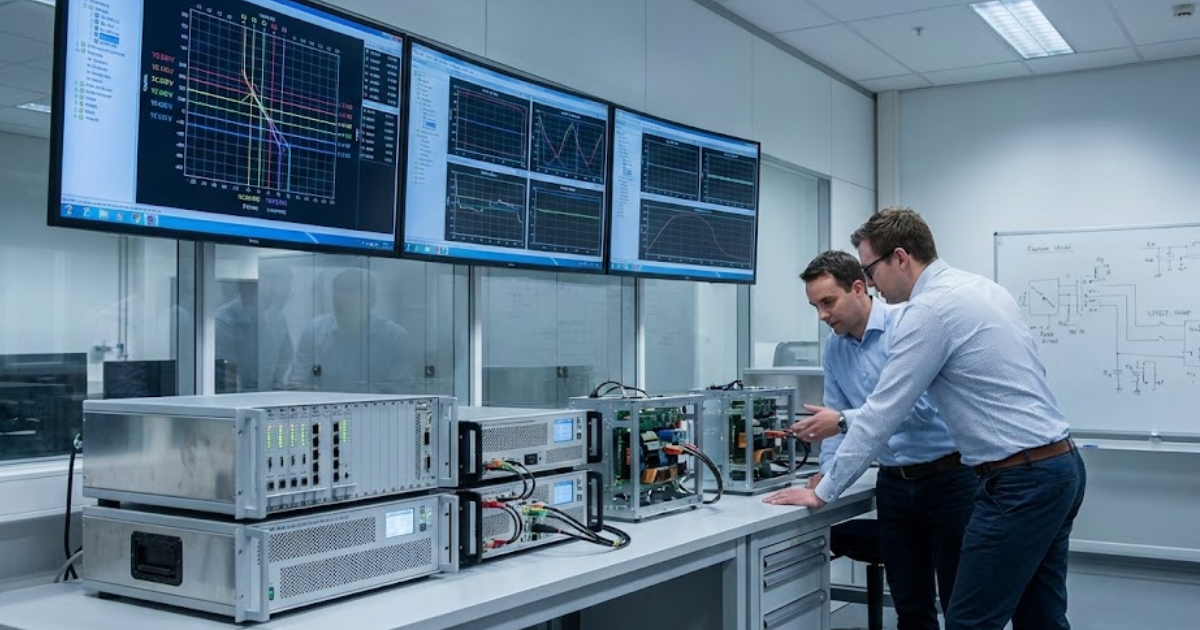
Real-time simulation drastically changes the validation process. Instead of long, sequential field tests, engineers can use high-fidelity digital models to validate systems early and often. At each development stage, control algorithms and hardware can be tested under realistic grid conditions. Teams can iterate control code in the lab and run targeted stress tests on equipment, compressing weeks or months of experimentation into days. The outcome is faster project delivery and much lower risk of surprises on site.
- Rapid control prototyping: Engineers can iterate inverter and control software in software-in-the-loop (SIL) simulations. Developing and debugging code in this virtual environment takes hours instead of waiting for each physical test.
- Comprehensive scenario testing: Advanced real-time platforms can automatically simulate hundreds of grid conditions. They sweep through extreme loads, cloudy fluctuations and fault situations, exposing problems that manual tests would miss.
- Hardware validation on demand: With HIL, actual controllers or protection devices run in closed loop with a simulated grid. Teams can safely recreate outages, faults and stressed network conditions to see how equipment responds before field deployment.
- Accelerated compliance testing: Simulation can replicate the exact voltage, frequency and fault conditions required by grid codes. This lets teams generate clear proof of compliance in the lab rather than chasing rare events in the field.
- Risk reduction and reliability: By catching flaws virtually, the approach dramatically slashes the chance of on-site failures. HIL setups allow safe exploration of fault and edge cases under realistic conditions, boosting system confidence.
- Faster timelines and lower cost: Overall, simulation moves projects along quickly. With testing shifted to the lab, rollouts stay on schedule, expensive rework is avoided and stakeholders gain confidence that the system will perform reliably.
Ultimately, real-time HIL and SIL testing make integration agile. Proving technology in the lab first means avoiding costly rework in the field, and stakeholders gain confidence that the system will work as intended.
HIL and SIL bridge the gap between simulation and actual grid conditions
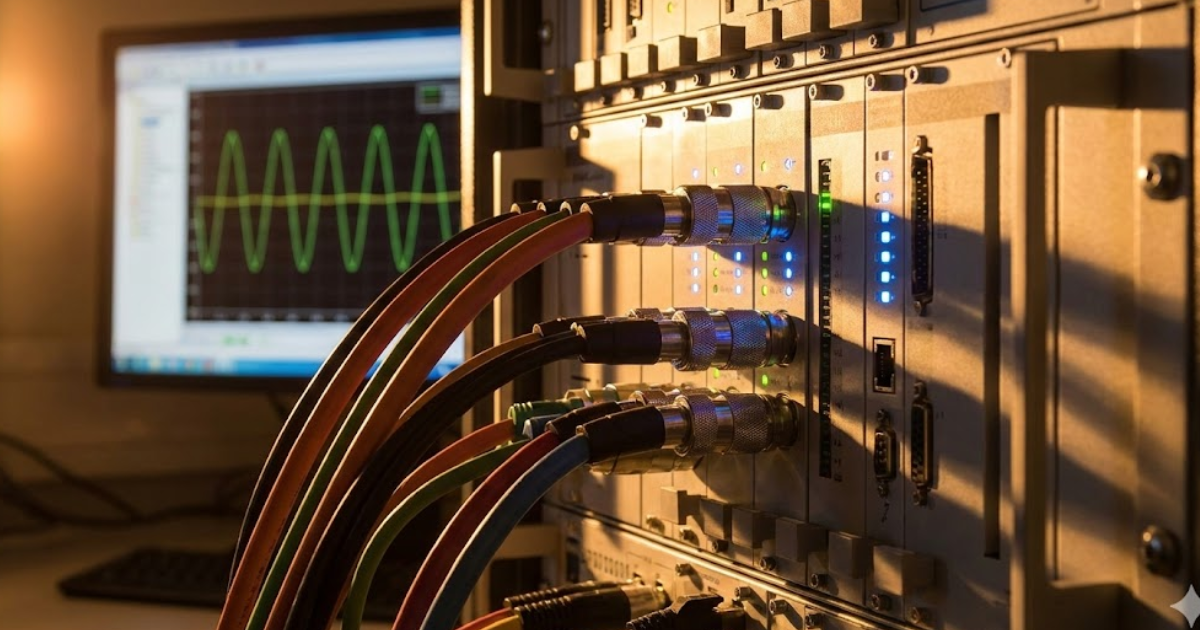
SIL and HIL fill missing links between pure simulation and the real grid – experts describe these methods as “indispensable” for validating renewable systems. SIL allows the team to run control software in a fully virtual environment, while HIL plugs real controllers or inverters into that simulated world. This progression from code to hardware exposes faults that neither approach alone could catch and lets engineers refine designs at each step.
Software-in-the-loop (SIL) simulation
Software-in-the-loop simulation runs actual control code on a computer interacting with a virtual grid model. Engineers can test software behavior under a wide range of conditions, from normal operation to severe faults, with no risk to physical hardware. This method catches issues in the control algorithm or model early, before a physical controller is needed.
Hardware-in-the-loop (HIL) testing
Hardware-in-the-loop testing brings real devices into the loop. For example, an inverter’s controller or a protection relay is connected to a real-time grid simulator. The controller sends commands to the simulated network and receives live feedback as if it were in the field. This reveals how timing delays and hardware constraints affect performance. Because simulation runs quickly, engineers can tweak parameters on the fly and find the best settings in days instead of months.
Integrated SIL and HIL approach
“Combined, SIL and HIL form a continuous development loop.”
Engineers typically start with SIL to refine control logic and then move to HIL for hardware verification, iterating back if issues appear. This integrated approach makes the lab environment mimic the real grid. The closed-loop nature of HIL lets us safely study any failure scenario, and every test is repeatable on demand. In practice, this capability bridges the gap between limited lab prototypes and unpredictable real-world grids.
Simulation keeps renewable integration and grid modernization on track
Even after initial tests, real-time simulation continues to keep projects on track. Teams often maintain a “digital twin” of the system to try out changes or disturbances before touching hardware. This ongoing validation means integration milestones are verified continuously rather than once at the end. Each time a design changes – from a tweak in inverter code to a new battery schedule – engineers can immediately check the impact in the lab. This makes the development cycle much more agile.
For example, some utilities use nightly automated simulation runs of their updated grid model to catch regressions early. These continuous regression tests provide traceable evidence that new firmware or controls still meet grid codes. Stakeholders get advance warning of any issues, so projects stay on schedule. In effect, simulation becomes a project manager’s ally, ensuring confidence and keeping renewable integration moving forward without surprises.
OPAL-RT’s simulation-first approach for renewable integration
In keeping projects on track, OPAL-RT’s simulation suite integrates high-fidelity grid models at every development phase. Engineers begin with software-in-the-loop testing to rapidly iterate and debug control code. These same open models can then run in hardware-in-the-loop, so algorithmic refinements carry seamlessly into physical testing. This continuity speeds up validation and ensures that critical interactions don’t slip through the cracks. The result is faster, more reliable integration projects aligned with performance targets from day one.
As a pioneer in real-time simulation, we partner closely with utilities and manufacturers to tackle renewable integration challenges. Our platforms are open and scalable by design, adapting to projects big and small. Embedding SIL and HIL into the workflow helps each project meet its timetable and technical requirements. Engineers gain clear lab-based evidence for compliance and reliability, letting stakeholders move ahead with confidence in grid modernization outcomes.
Real-time solutions across every sector
Explore how OPAL-RT is transforming the world’s most advanced sectors.
Power Electronics
12 / 16 / 2025
7 Top power electronics simulation tools for engineers
Power electronics engineers use targeted simulation tools to improve modelling fidelity, de-risk controller validation, and link offline studies with real-time and hardware-in-the-loop testing.
Simulation
12 / 12 / 2025
8 reasons engineers rely on hardware in the loop systems for power electronics
Hardware in the loop testing for power electronics helps your team validate controllers earlier, study demanding grid and fault conditions safely, and build a reliable path from models to high-confidence hardware results.

Simulation
12 / 10 / 2025
9 simulation approaches supporting advanced batteries and hydrogen storage
Engineers gain a clear view of how advanced simulation strengthens energy storage innovation across batteries, hydrogen storage, and grid modernization programs.
EXata CPS has been specifically designed for real-time performance to allow studies of cyberattacks on power systems through the Communication Network layer of any size and connecting to any number of equipment for HIL and PHIL simulations. This is a discrete event simulation toolkit that considers all the inherent physics-based properties that will affect how the network (either wired or wireless) behaves.