What a DERMS platform actually does and why utilities need one now
Power Systems
05 / 07 / 2026

Key Takeaways
- DERMS matters when utilities need verified control of distributed assets at feeder level, not just visibility of network conditions.
- Solar integration problems usually start with static rules, weak telemetry, and unclear control authority rather than a lack of software features.
- Utilities get better DERMS outcomes when they test dispatch against feeder physics and choose platforms with open control interfaces.
Utilities need DERMS now because solar, storage, and other inverter-based resources will not stay reliable under static rules and manual curtailment.
The pressure is immediate. Solar and battery storage are expected to account for 81% of new U.S. electric generating capacity added in 2024. That growth pushes voltage control, reverse power flow, and dispatch timing into daily operations on feeders built for one-way power. A DER management system gives utilities the control loop they’re missing.
DERMS turns distributed assets into dispatchable grid services
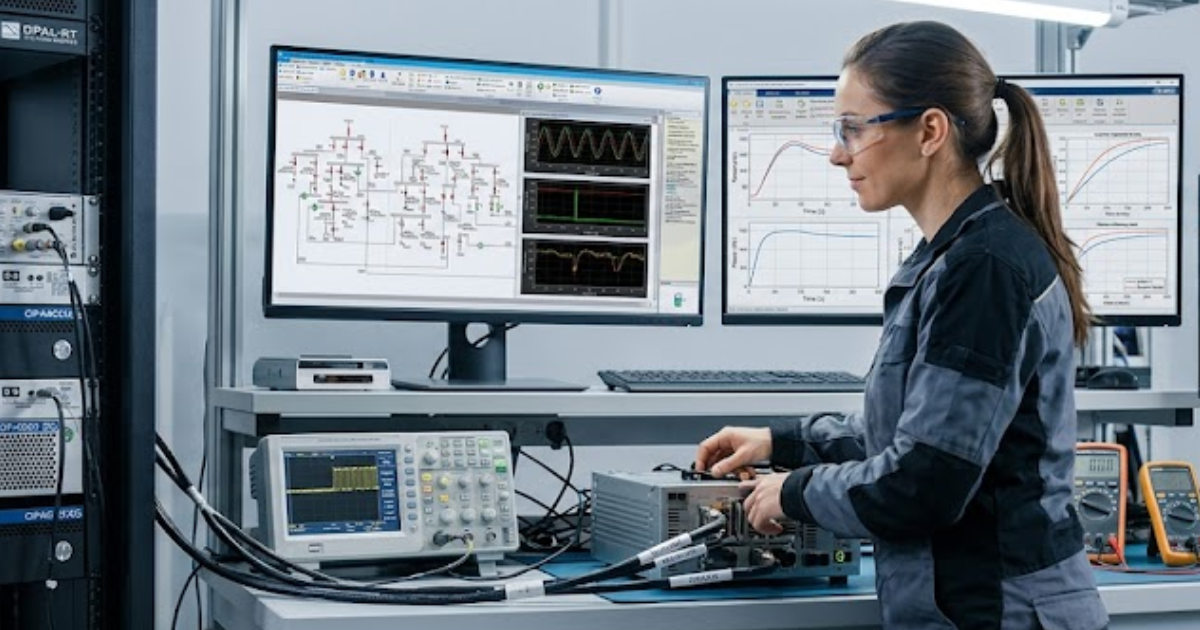
A DERMS platform is the control layer that turns distributed energy resources into dispatchable grid services. It gathers telemetry, applies operating constraints, sends commands, and checks response. You can think of it as the system that connects planning intent to feeder action. Without that layer, distributed assets stay visible yet loosely coordinated.
A utility managing rooftop solar, batteries, and fleet chargers on one feeder will use a DER management system to cap exports during a voltage event. The platform can request reactive power from advanced inverters, pause charging, and discharge local batteries for a short interval. Each action is tied to feeder limits and time stamps. Operators see who responded and who did not.
That distinction matters because dispatch only works when the grid can verify compliance and recover safely from missed responses. A DERMS also manages priorities across programs, tariffs, and protection settings. You’re no longer relying on a broad export cap that treats every site the same. Control becomes local, conditional, and measurable.
“A DERMS platform is the control layer that turns distributed energy resources into dispatchable grid services.”
ADMS stops short of DER-level orchestration
The main difference between a DERMS and an ADMS is scope of control. ADMS manages distribution operations such as switching, outage restoration, and network awareness. DERMS manages the behaviour of distributed assets connected to that network. Utilities need both once inverter-based resources start affecting feeder limits every day.
A storm outage shows the gap clearly. ADMS will identify the faulted section, isolate it, and restore service paths. DERMS will manage the rooftop solar and battery fleets that must ride through the event, reconnect in sequence, or remain limited on export after restoration. Each system acts on a different control problem.
Confusion starts when utilities expect ADMS to perform feeder-level DER dispatch with device-specific constraints. Some vendors blur the line because both systems consume network models and SCADA data. Control authority is the dividing line you should test. If a platform cannot issue, verify, and adjust commands to many edge devices, it is not acting as DERMS.
| Grid situation | System role |
|---|---|
| A feeder switch stays open after a fault, so the utility is handling a network state problem. | ADMS is the lead system because it manages switching paths and restoration logic. |
| Export must drop on one solar-heavy lateral for 15 minutes to hold voltage within limit. | DERMS is required because the action depends on device-level dispatch and verification. |
| A utility needs a feeder model with outages, alarms, and crew status in one operating view. | ADMS fits that need because it supports broad distribution operations awareness. |
| A battery fleet must absorb surplus generation only at sites with available state of charge. | DERMS fits that job because it has to respect asset constraints and send targeted commands. |
| A circuit returns to service after repair and customer-owned devices must reconnect in an orderly sequence. | Both systems matter, but DERMS handles the device response while ADMS handles the network state. |
Solar growth exposes the limits of static operating rules
Static operating rules stop working once solar output shifts feeder conditions hour by hour. A fixed export ceiling will protect one period and waste capacity in the next. Grid planners aren’t solving a niche issue when solar PV supplied about 75% of the 510 GW of renewable capacity added globally in 2023.
A suburban feeder can sit within limits at 8 a.m. and exceed voltage thresholds near noon, then need support again after sunset as load returns. Static settings ignore that swing. One rule leaves solar generation stranded at midday. Another rule leaves operators exposed during light-load periods.
Utilities feel that pain first in hosting capacity studies, complaint handling, and interconnection backlogs. Engineers can identify a feeder issue, yet field crews and customer programs still need a control path. DERMS closes that gap. It lets operations apply feeder-specific limits without freezing new connections across an entire service area.
Inverter-based resources require closed-loop dispatch logic
Inverter-based resources need closed-loop dispatch because their output is controllable, fast, and local. DERMS sends a setpoint, checks telemetry, and corrects for mismatch or delay. Open-loop instructions are not enough when thousands of devices respond through different aggregators, communications paths, and firmware settings. Closed-loop control keeps feeder limits credible.
Consider a voltage rise event on a circuit with heavy rooftop solar. DERMS can request reactive power support from selected inverters, then trim active power only on the sites that still push the feeder beyond limit. That sequence preserves more customer production. It also avoids blunt curtailment across every connected site.
Storage adds another layer. A battery fleet can absorb excess generation at noon and then support the feeder ramp later in the day, but only if the platform tracks state of charge and local constraints. DERMS has to respect those physical limits. Dispatch that ignores them will look elegant in software and fail when field data arrives.
Dispatch algorithms must be tested against feeder physics
DERMS dispatch algorithms should be tested against feeder physics, communications delay, and device response before they ever touch a live circuit. A control strategy that works in offline studies will fail under latency, telemetry gaps, or inverter saturation. Teams using OPAL-RT for hardware-in-the-loop validation can test those edge cases with the controller, network model, and device interfaces closed in the same loop.
One useful test starts with a feeder model that includes voltage regulators, line impedance, rooftop solar clusters, and a mix of battery states of charge. The test then injects delayed telemetry, dropped packets, and stale measurements during a midday export event. You’ll see quickly if the dispatch algorithm oscillates, overcorrects, or loses selectivity. That behaviour matters far more than a clean planning screenshot.
Commissioning needs the same discipline. Lab tests should cover fail-safe states, command priority, aggregator handoff, and recovery after communications return. You also need acceptance criteria tied to feeder outcomes, such as voltage compliance duration and curtailment volume. Those checks separate a promising algorithm from one that operators will actually trust.
“A control strategy that works in offline studies will fail under latency, telemetry gaps, or inverter saturation.”
Poor telemetry can break DERMS performance before launch
Poor telemetry will break DERMS performance before launch because control quality depends on timing, granularity, and trust in each measurement. A platform cannot coordinate what it cannot observe with enough precision. Missing phase information, stale state of charge, or site data that arrives every 5 minutes will corrupt dispatch logic. Utilities usually feel this problem after procurement, not before.
A battery aggregator might report total feeder export at the portfolio level, while the utility needs phase-specific data from individual sites near a known constraint. Those are different inputs. One dataset helps billing and settlement. The other supports feeder control, protection coordination, and post-event verification.
You can spot most telemetry risk before launch if you ask a narrow set of questions. Refresh rate, clock sync, device identity, phase mapping, and bad-data handling have to be explicit. Each one affects control quality in its own way. A short checklist keeps that review concrete.
- Telemetry refresh intervals match the dispatch interval.
- Time stamps stay synchronized across all systems.
- Each device has a stable mapped identifier.
- Phase assignment is verified near feeder constraints.
- Bad data triggers a defined fallback state.
Control authority gaps slow DERMS deployment after procurement
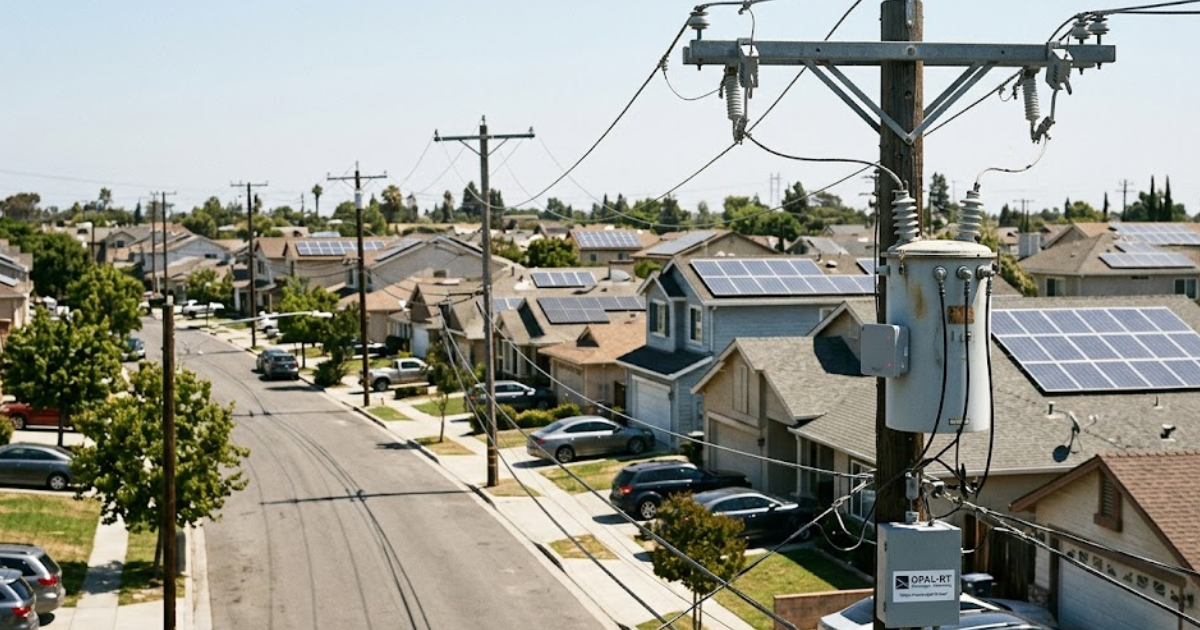
Control authority gaps slow DERMS deployment after procurement because software alone does not grant the right to act on field devices. Utilities need clear command paths, operating agreements, and override rules for each asset class. Rooftop solar enrolled through an aggregator will have different permissions than a utility-owned battery. Those differences shape commissioning more than interface screens do.
A utility can buy a capable platform and still stall when one municipal feeder includes customer-owned solar under legacy interconnection terms, a third-party battery program, and a feeder regulator owned by the utility. Each asset has a different operator and contract boundary. One dispatch plan now crosses legal, operational, and customer-service lines. The engineering problem becomes an operating model problem.
You’ll move faster when control authority is mapped feeder by feeder before rollout. That work should define who can issue a command, who validates it, how exceptions are handled, and which asset classes stay advisory only. DERMS deployment goes sideways when governance is treated as paperwork. It is a control design issue with direct operational effects.
Platform selection should favour interoperable control interfaces
Platform selection should favour interoperable control interfaces because DERMS value depends on data exchange and command execution across many systems. You need clean links to outage management, distribution operations, aggregators, meters, and device gateways. Closed stacks look simple during procurement and painful during scale-up. Utilities should judge platforms on control fit, testability, and operational clarity first.
A useful buying screen asks direct questions about interface openness, model fidelity, fail-safe behaviour, test access, and operator workflow. A platform that supports feeder studies but blocks hardware-in-the-loop validation will leave blind spots before go-live. A platform that talks to one aggregator but resists others will slow every expansion step. Those constraints become expensive after contracts are signed.
That is why disciplined execution matters more than feature volume. Utilities that pair clear control authority with feeder-accurate testing end up with a DERMS that operators trust on difficult days. OPAL-RT fits that discussion where teams need to validate dispatch logic against power system behaviour before field rollout. Confidence comes from proving the control loop under stress, then deploying only what has earned that trust.
Join OPAL-RT at IEEE PES GM 2026
Meet our team in Montréal for live demos, technical presentations, expert discussions, and immersive events focused on the future of power and energy simulation.
Energy
09 / 21 / 2026
Battery modeling approaches for EV and grid storage validation
An overview of equivalent circuit and electrochemical battery modelling approaches and how fidelity, ageing and thermal coupling shape EV and grid storage validation.
Microgrid
09 / 19 / 2026
Hybrid AC-DC microgrid emulation with power hardware-in-the-loop
An examination of how hybrid AC-DC microgrid stability is set at the interlinking converter and why power hardware in the loop is required to test that boundary at full power.

Power Electronics
09 / 17 / 2026
BLDC motor control fundamentals with simulation examples
A technical primer on six step BLDC commutation, Hall sensor and sensorless back EMF position sensing, torque ripple at each switching instant, and the simulation exercises a teaching lab can run.